
We were staying in Montpellier over New Year, and by the third day the boys had run out of city. Someone at the hotel said Sète was twenty minutes on the train. That sounded like a lie — it was twenty minutes.
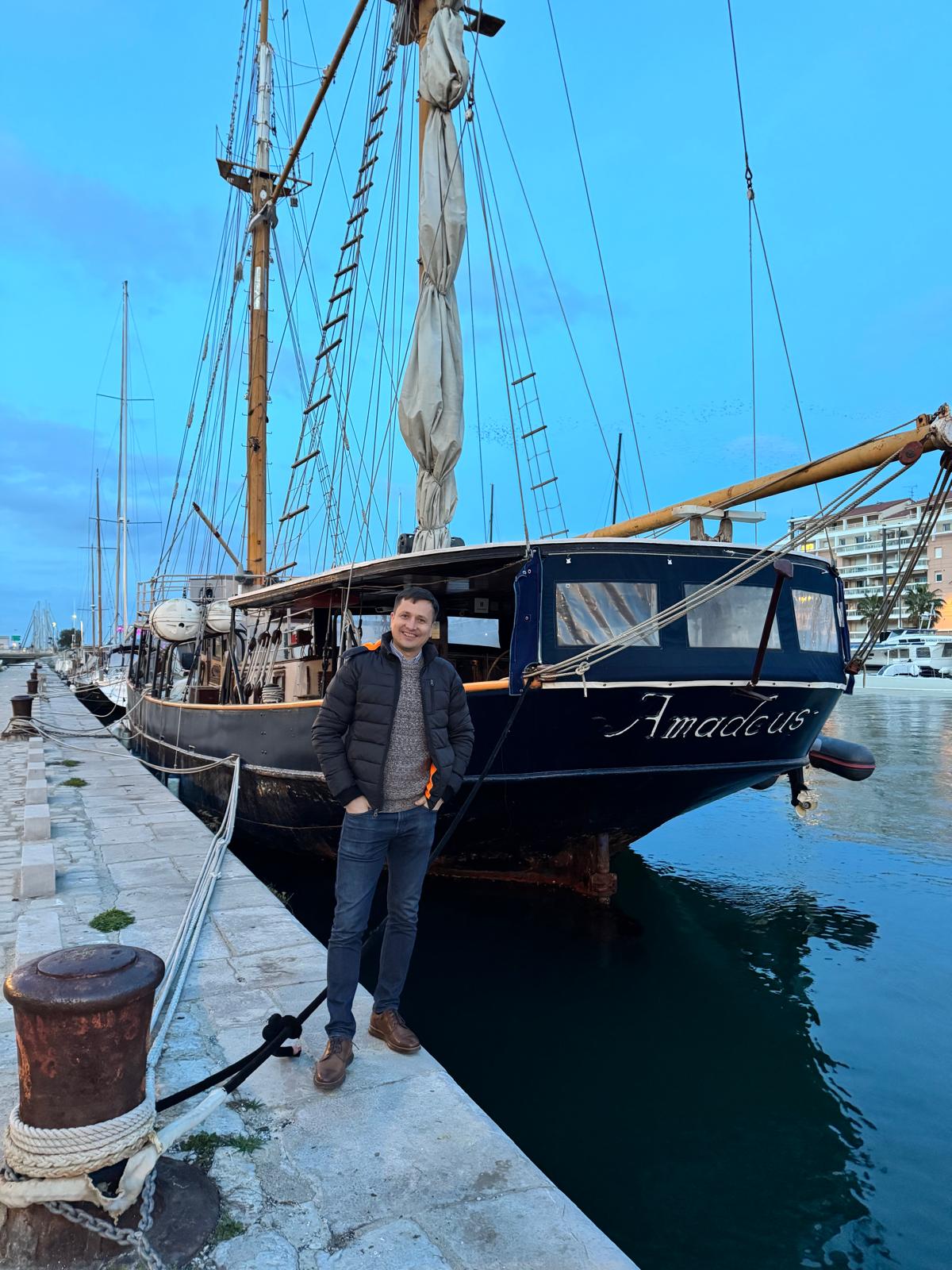
What we found was not a resort. Sète is a working port, the biggest fishing port on the French Mediterranean, and it smells like one. Nets, ice, diesel, fish. Damian pulled a face for about four minutes and then spent the rest of the evening watching boats come in.
If you’re in Montpellier with children and you have half a day spare, this is the trip. Here’s how to do it properly.
Where to stay for Sète: our top 3
Hotel Belaroïa, Montpellier – 4 minutes from Saint-Roch station, and Sète is 20 minutes by train.
Grand Hôtel Sète – a classic hotel on the Canal Royal, in the middle of everything.
Campanile Montpellier Saint-Roch – in the Belaroïa building, for less.
Getting to Sète from Montpellier
| Time | Notes | |
|---|---|---|
| Train (TER) | 20 minutes from Montpellier Saint-Roch | Drops you in the centre of Sète. No parking problem. This is the way to do it. |
| Car | ~30 minutes, 35–40 km | A9 or the D612. Parking is genuinely difficult in high season. |
| Bus (line 602) | 45–60 minutes | Cheapest, slowest. |
The train wins and it isn’t close. Sète station is a short walk from the Canal Royal, you skip the parking problem entirely, and a 20-minute train ride is the kind of journey where nobody asks “are we there yet.” Check current TER Occitanie timings and fares before you travel.
If you do drive: the multi-storey above the Halles has 277 spaces with a lift straight down into the market building, but the ramp has a 2.10 m height limit — worth knowing before you commit a roof box or a van. The Quai du Maroc car park is the closest free option; Mas Coulet is free and about ten minutes’ walk. Parking du Canal and Aristide Briand are paid and central.
Sète calls itself the Venice of Languedoc — here’s what that actually means
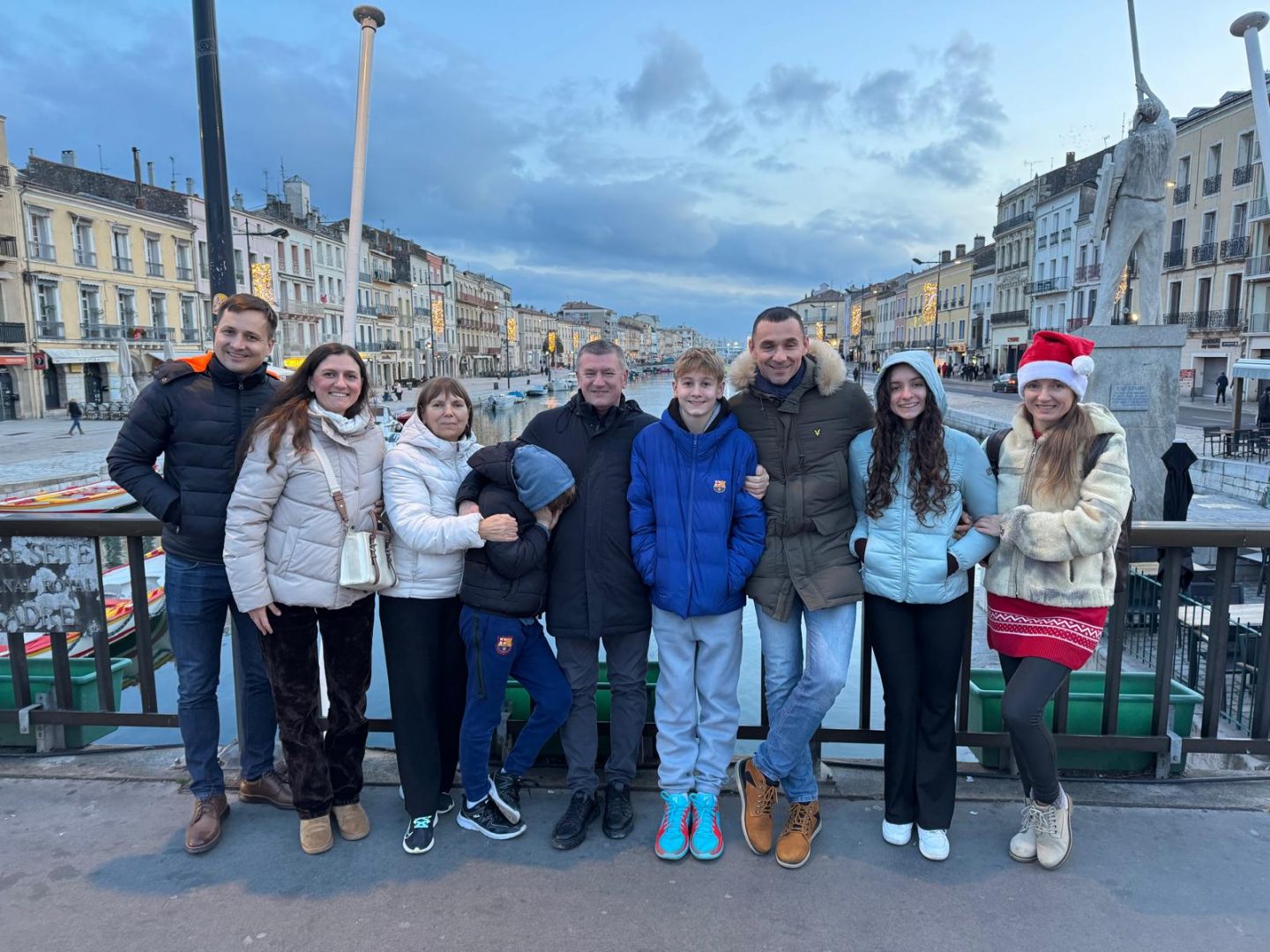
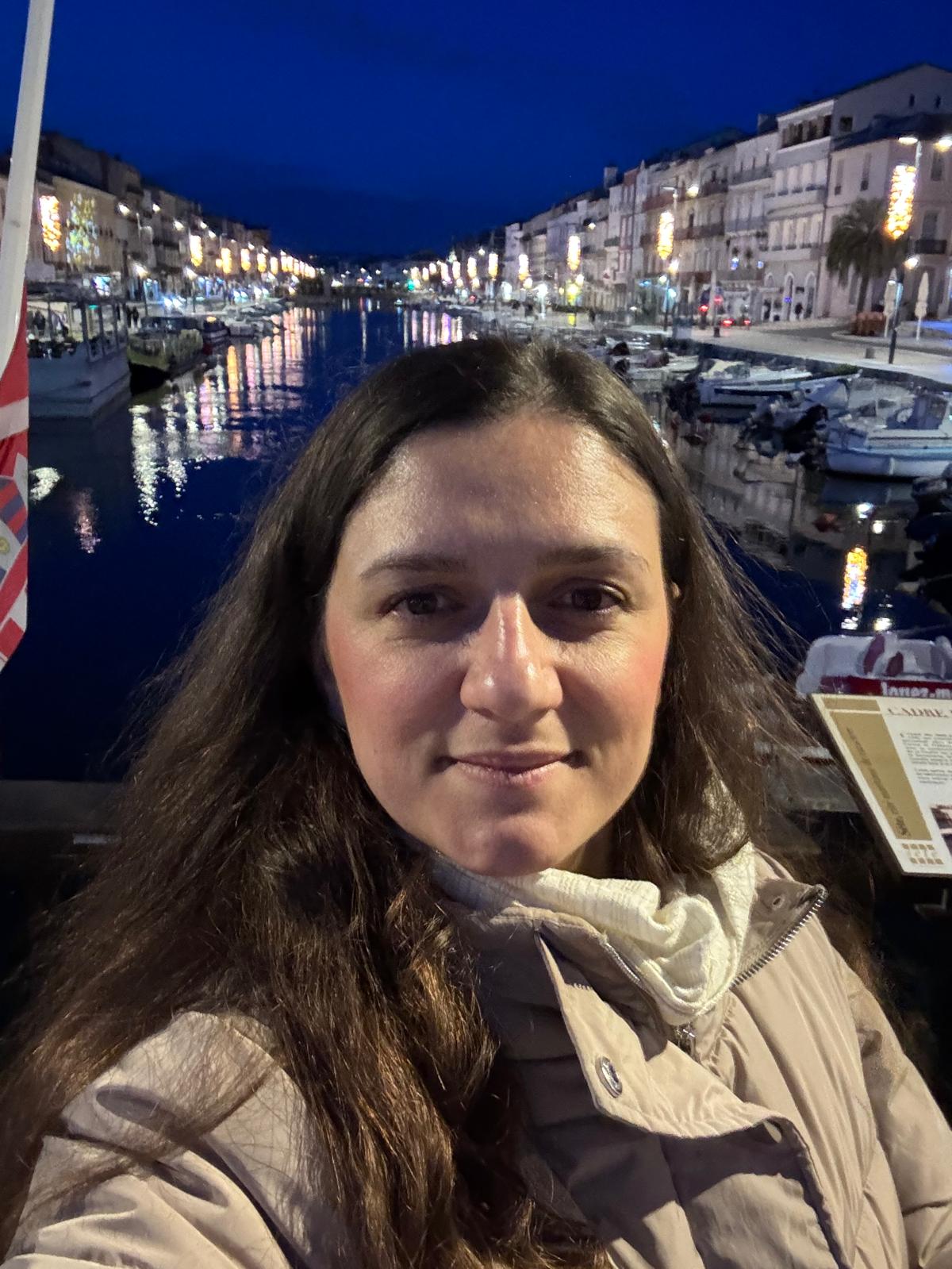
Canals cut through the town, and the main one is the Canal Royal, now officially the canal de Sète. It runs through the centre with quays on both sides, restaurants along them, and boats moving through.
This is the bit that works with children, and it’s why the evening is the right slot: you walk one side, cross a bridge, walk back down the other. Twenty minutes if you’re brisk, an hour if you stop. No entry fee, no queue, nothing to book. Marc walked the whole thing looking for cats.


The water jousting — Sète’s real thing
If your dates line up, this is the best thing about the town and nobody outside France knows about it.
Joutes nautiques. Two boats, each carrying a rower crew, a musician, and a jouster standing on a raised platform at the stern holding a shield and a lance. They row at each other on the Canal Royal and try to knock each other into the water. Blue boat is lo Quartier Naut, red boat is la Poncha — the two historic fishing neighbourhoods of the town.
When:
- The season runs roughly late spring to early autumn, with tournaments on scattered dates. The calendar changes every year — check with the Sète tourist office or the city.
- The big one is the Grand Prix de la Saint-Louis, in late August, over six days. The Monday is the heavyweight regional tournament and the trophy presentation, and it’s a local public holiday in Sète. The tournament dates from 1743, and the first jousts were held at the inauguration of the port itself.
- The jousts run on the Canal Royal between the Savonnerie and Civette bridges. Stand on the quay.
- The winner gets a pavois — a shield painted each year by a regional artist.
It is loud, it is old, it is completely free to watch from the quay, and a nine-year-old will understand the rules in ten seconds. If you can plan your Montpellier trip around a jousting date, do it.
Mont Saint-Clair — the view, and it’s free
If you only do one thing above sea level in Sète, do this one.
Mont Saint-Clair is a limestone hill of volcanic origin, 175 metres, the highest point in the town. You can see its big cross from the centre. At the top there’s an orientation table, and the panorama runs from Bouzigues and the oyster beds on the étang de Thau, across the strip of dune between the lagoon and the sea that connects Sète to Agde, out to the lighthouses of the port. On a clear day you can see the Pyrenees.
Also at the summit: the Chapelle Notre-Dame de la Salette, built on the ruins of a seventeenth-century fort.
Access is free and open all year.
Below the summit is the forêt des Pierres Blanches — 20 hectares of pine forest, more than 700 plant species, some of them rare and brought back by sailors, with walking paths, benches and picnic tables. If your children have energy left, this is where to spend it.
Best timing: go up for sunset, come down for dinner. That’s the whole evening in one move.
The Halles de Sète — but only if you come earlier
Worth knowing about even though it doesn’t work for an evening trip: the Halles de Sète is the covered market and the town’s centre of gravity. More than 75 traders — fishmongers, oyster sellers, greengrocers, butchers, bakers, wine, restaurants — under one roof, with the day’s catch from the morning auction on the stalls. Wednesday mornings an open-air market wraps around the whole building and doubles it.
The building has a history: the first Halles opened in 1890 in the Baltard style, by the architect Léon-Étienne Rosiès. In the 1970s it was replaced by the four-storey concrete block that’s there now, with the car park on the levels above. A major refurbishment in 2011 turned it back into a public square as much as a market.
It’s a morning place. ⚠️ Check current opening hours — it closes early in the afternoon. If you’re coming for an evening, you’ll miss it — which is an argument for making Sète a full day rather than an evening, if you have one to spare.
Two tielleries trade inside, which brings us to the food.
Is Sète worth it from Montpellier?
Yes, and it’s the easiest good decision you’ll make on a Montpellier trip. Twenty minutes, no car needed, no tickets to book, and it’s a genuinely different place from Montpellier rather than a smaller version of it.
The honest caveat: it’s a working port, not a pretty one. If you want postcard Provence, this isn’t it — Martigues is. Sète is better if you want your children to see something real.
More southern France with kids
- Montpellier with kids: a New Year’s Eve winter city break
- Hotel Belaroïa, Montpellier — family review of the Junior Suite
- Marseille travel guide: the port, Notre-Dame and winter with kids
- Campanile St Antoine, Marseille — our family stay
- Golden hour in Martigues, an evening trip from Marseille
- Our full southern France road trip itinerary with kids
Sète FAQ
How do you get from Montpellier to Sète?
The TER train from Montpellier Saint-Roch takes about 20 minutes and drops you in the centre of Sète. By car it is roughly 30 minutes and 35 to 40 km on the A9 or the D612, but parking is difficult in high season. Bus line 602 takes 45 to 60 minutes. The train is the easiest option with children.
Is Sète worth visiting?
Yes, especially as a half day or evening from Montpellier. Sète is a working fishing port rather than a resort, with canals running through the centre, a 175 metre hill with a free panorama over the étang de Thau, and a water jousting tradition dating from 1743. It is a genuinely different place from Montpellier rather than a smaller version of it.
What is there to do in Sète with kids?
Walk both quays of the Canal Royal and cross the bridges, go up Mont Saint-Clair for the view and the orientation table, watch the fishing boats come into the port, and eat a tielle sétoise. If your dates fall in summer, watch the water jousting from the quay — it is free and immediately understandable to a child.
How high is Mont Saint-Clair and is it free?
Mont Saint-Clair is 175 metres, the highest point in Sète, and access is free and open all year. At the summit there is an orientation table and the Chapelle Notre-Dame de la Salette, built on the ruins of a seventeenth-century fort. The view runs from Bouzigues and the oyster beds on the étang de Thau to the lighthouses of the port, and on a clear day as far as the Pyrenees.
What is water jousting in Sète?
Two boats, each with a rowing crew, a musician and a jouster standing on a raised platform at the stern with a shield and a lance, row at each other on the Canal Royal and try to knock each other into the water. The blue boat represents lo Quartier Naut and the red boat la Poncha, the two historic fishing neighbourhoods. The season runs from late spring to early autumn, and the main tournament is the Grand Prix de la Saint-Louis in late August, held over six days and dating from 1743. It is free to watch from the quay.
What is a tielle sétoise?
A tielle is a small round pie filled with octopus in a spiced tomato sauce, with a lattice lid. It is the local speciality of Sète, brought by the Italian community that settled in the town, and two tielleries trade inside the covered market, the Halles de Sète.
When are the Halles de Sète open?
The Halles de Sète is a morning market and closes early in the afternoon, so it does not work for an evening trip. More than 75 traders sell fish, shellfish, produce, meat, bread and wine under one roof, and on Wednesday mornings an open-air market wraps around the outside of the building. Check current opening hours before you go.
Where do you park in Sète?
The multi-storey above the Halles has 277 spaces with a lift down into the market, but the ramp has a 2.10 metre height limit. Quai du Maroc is the closest free car park and Mas Coulet is free and about ten minutes’ walk. Parking du Canal and Aristide Briand are central and paid. Parking is difficult in high season, which is why the train from Montpellier is the easier option.

1 Comment