
Menorca is 53 km from end to end and it has seven lighthouses. We reached six of them in five days, mostly by accident — you set off for a beach, see a white tower on a headland, and change the plan.
They turn out to be the best thing to do on the island when the children have had enough of sand. Here is where each one is, which ones you can still drive to, and which now need a bus.
The seven lighthouses of Menorca
| Lighthouse | Where | Built | Access |
|---|---|---|---|
| Sant Carles | Port de Maó, Es Castell | 1852 | Deactivated since 1912 — the one we missed |
| Cavalleria | Es Mercadal, north coast | 1857 | By car, across private land |
| Cap d’Artrutx | Ciutadella, south-west | 1859 | By car, in a residential area |
| Illa de l’Aire | Sant Lluís, off Punta Prima | 1860 | On an islet — view it from the beach or take a boat |
| Sa Farola | Ciutadella harbour | 1863 | Walk the promenade |
| Punta Nati | Ciutadella, north-west | 1913 | By car, then about 1 km on foot |
| Cap de Favàritx | Maó, inside the natural park | 1922 | Bus only in summer |
The oldest still working is Cavalleria, lit on 1 March 1857. Sant Carles is older — 20 March 1852 — but it was decommissioned in 1912, which is why most Menorcan sources give the title to Cavalleria. Favàritx, the most photographed of the seven, is the newest, finished in 1922.

Punta Nati — the first one we saw, and the bleakest
Punta Nati is 20 minutes north-west of Ciutadella, and every guide to the island tells you to go. They are right.
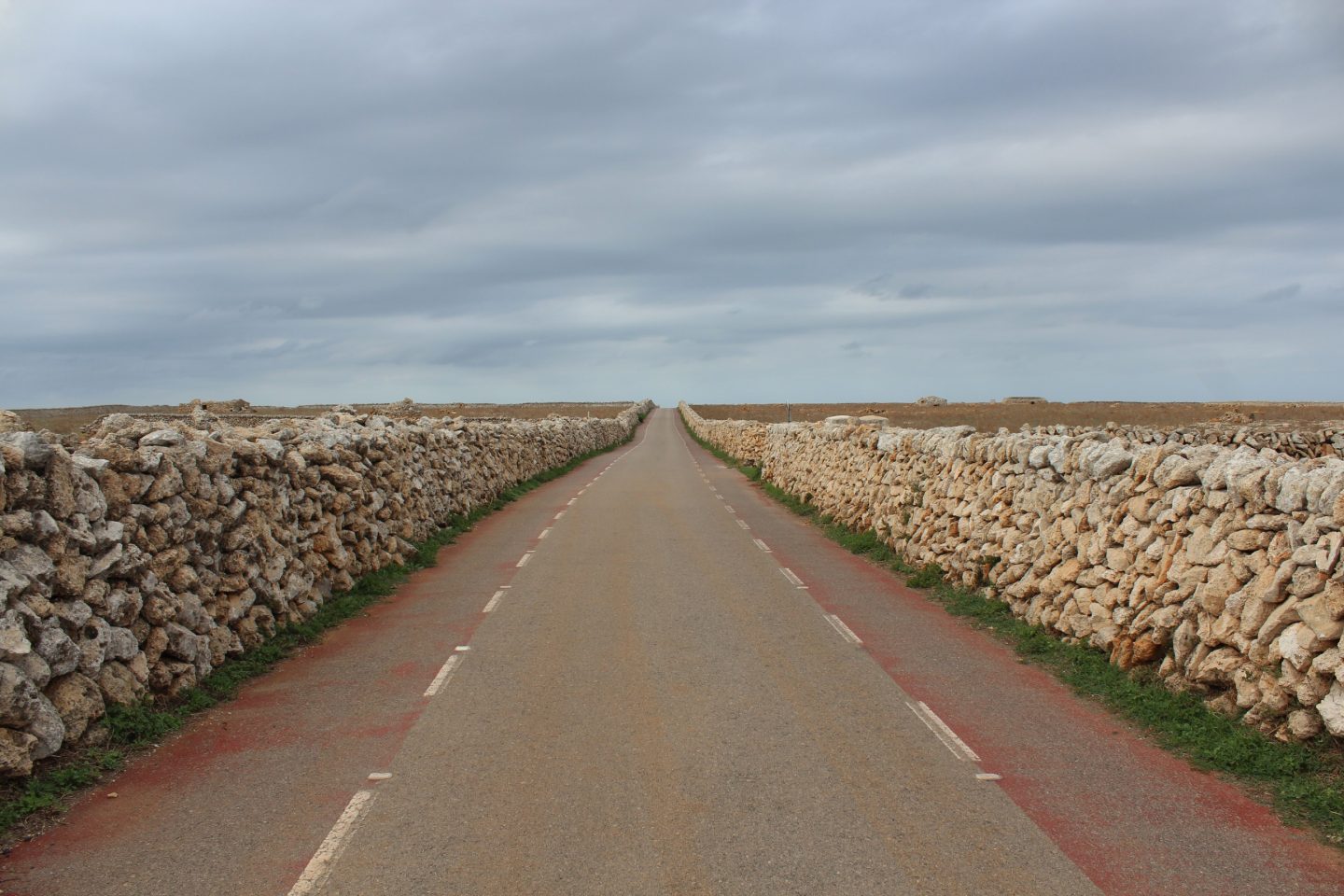
The landscape around it is low, salt-tolerant scrub and dry-stone walls, and it ends at tall cliffs with nothing between you and the sea. You park in a designated area and walk the last kilometre or so — worth knowing before you set off with a pushchair, because that stretch is rough underfoot.
It is one of the best sunset spots on the island, and one of the emptiest places we found in five days.
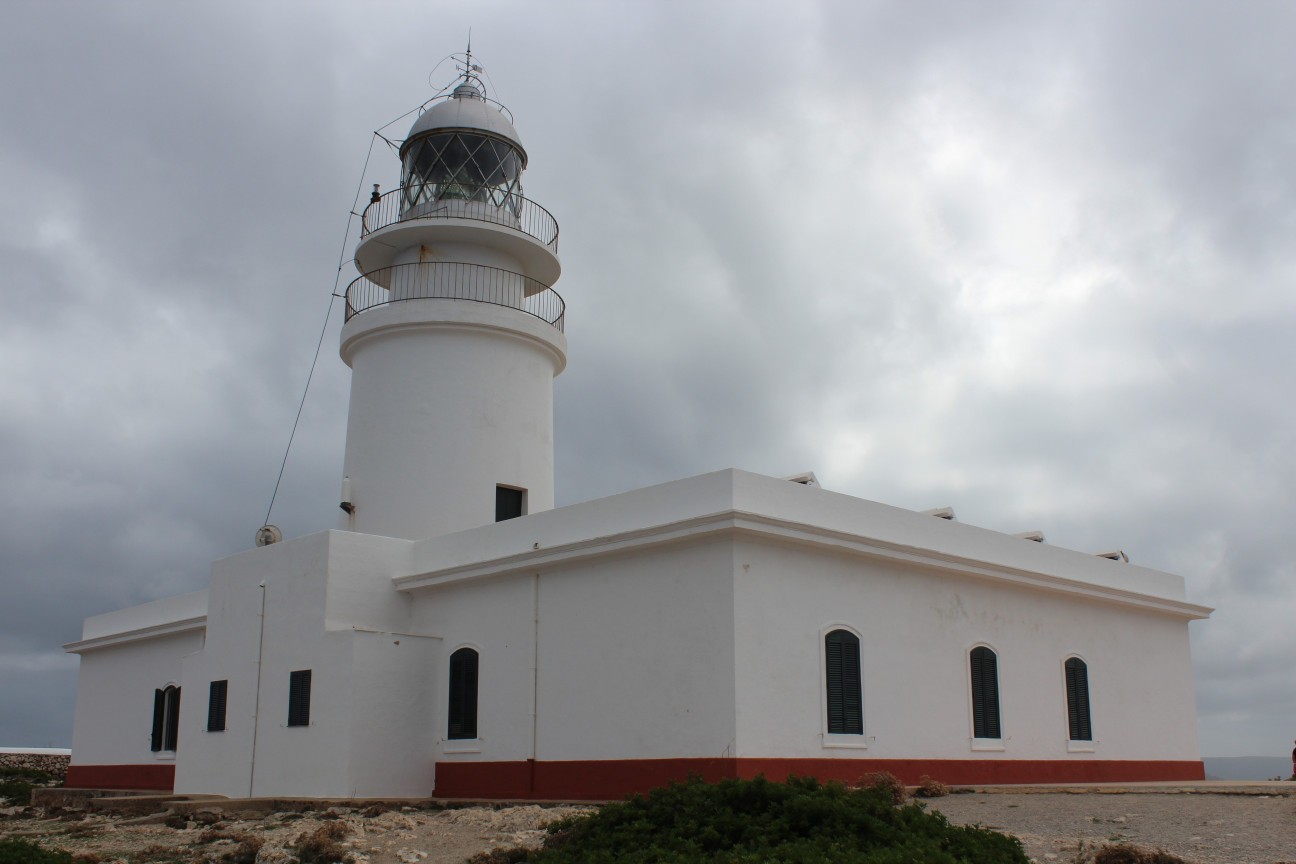
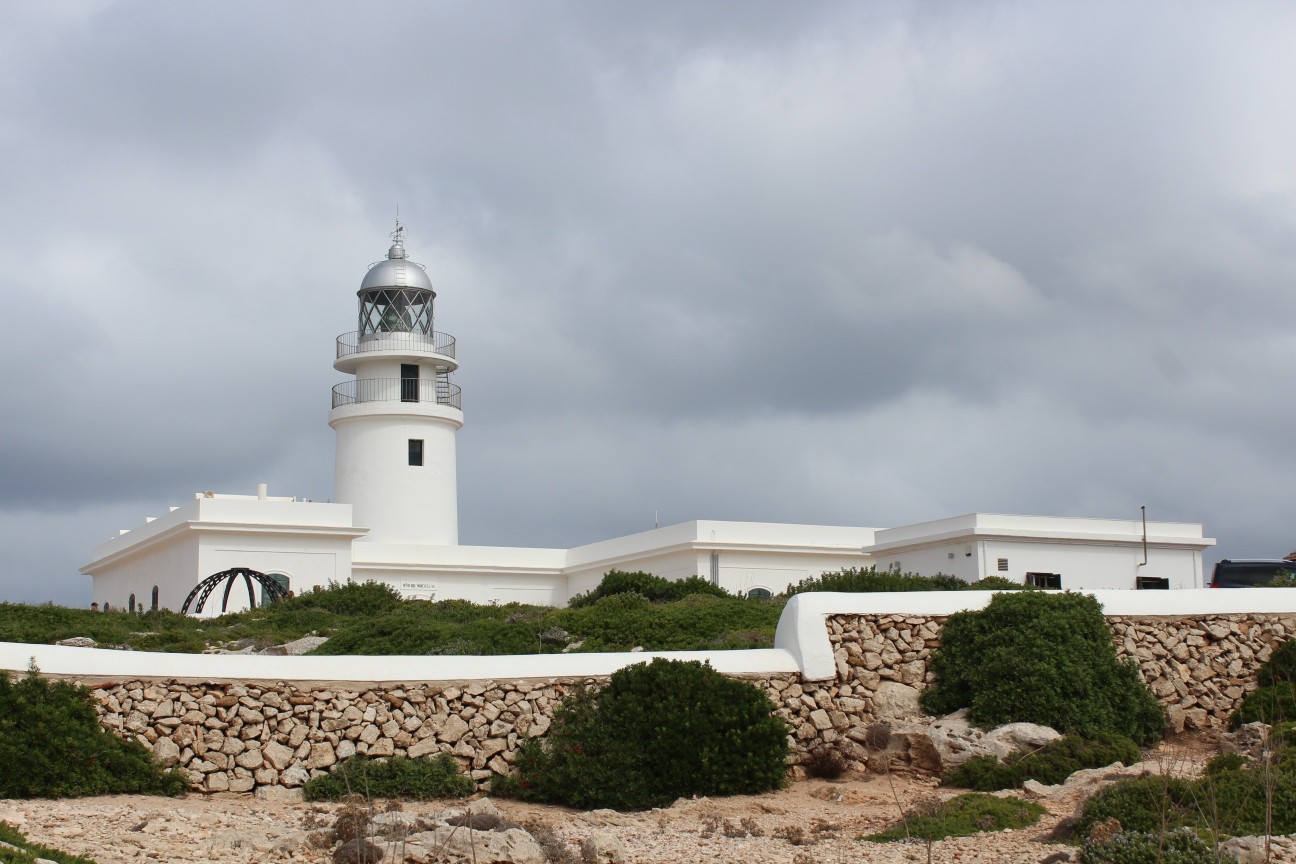
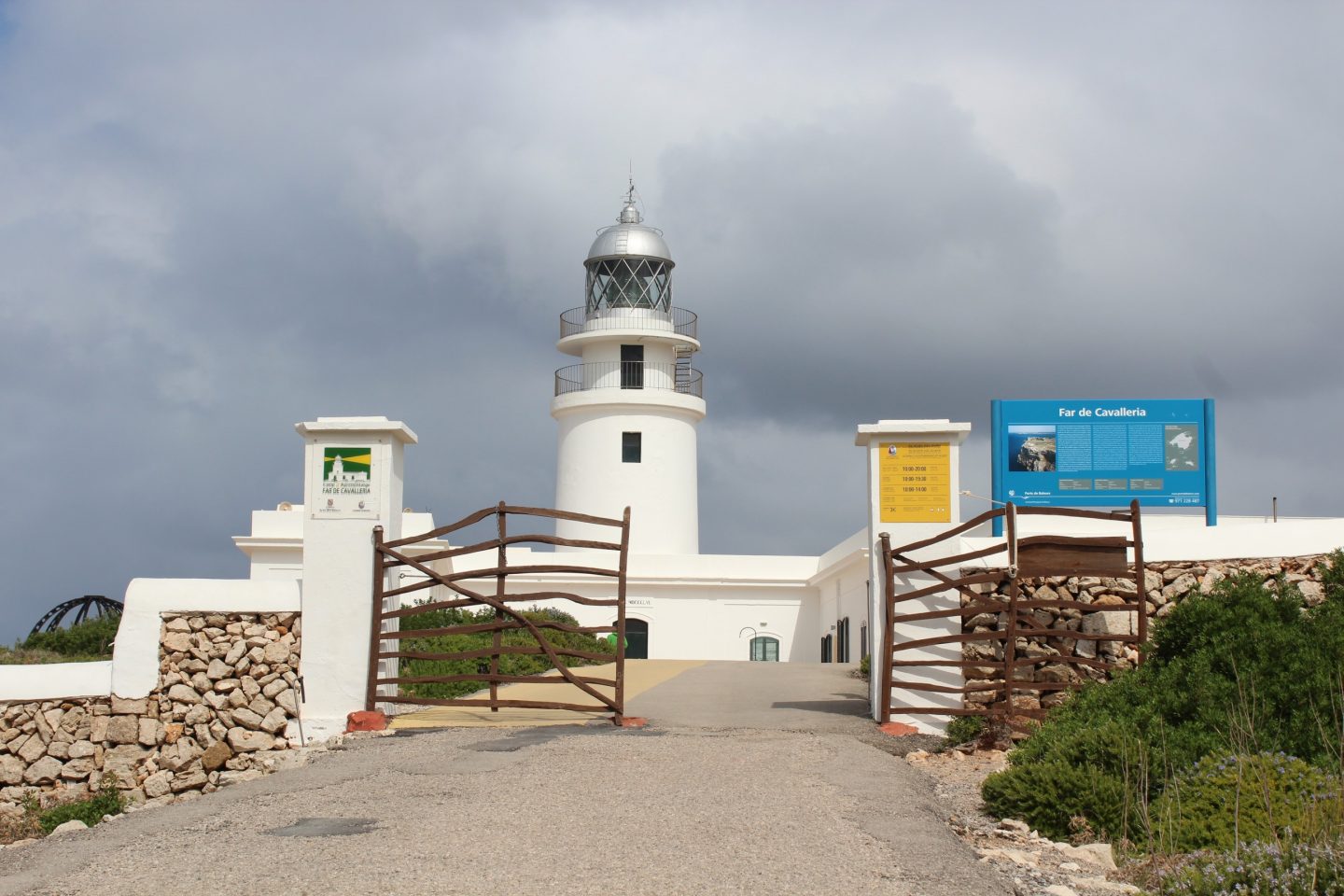
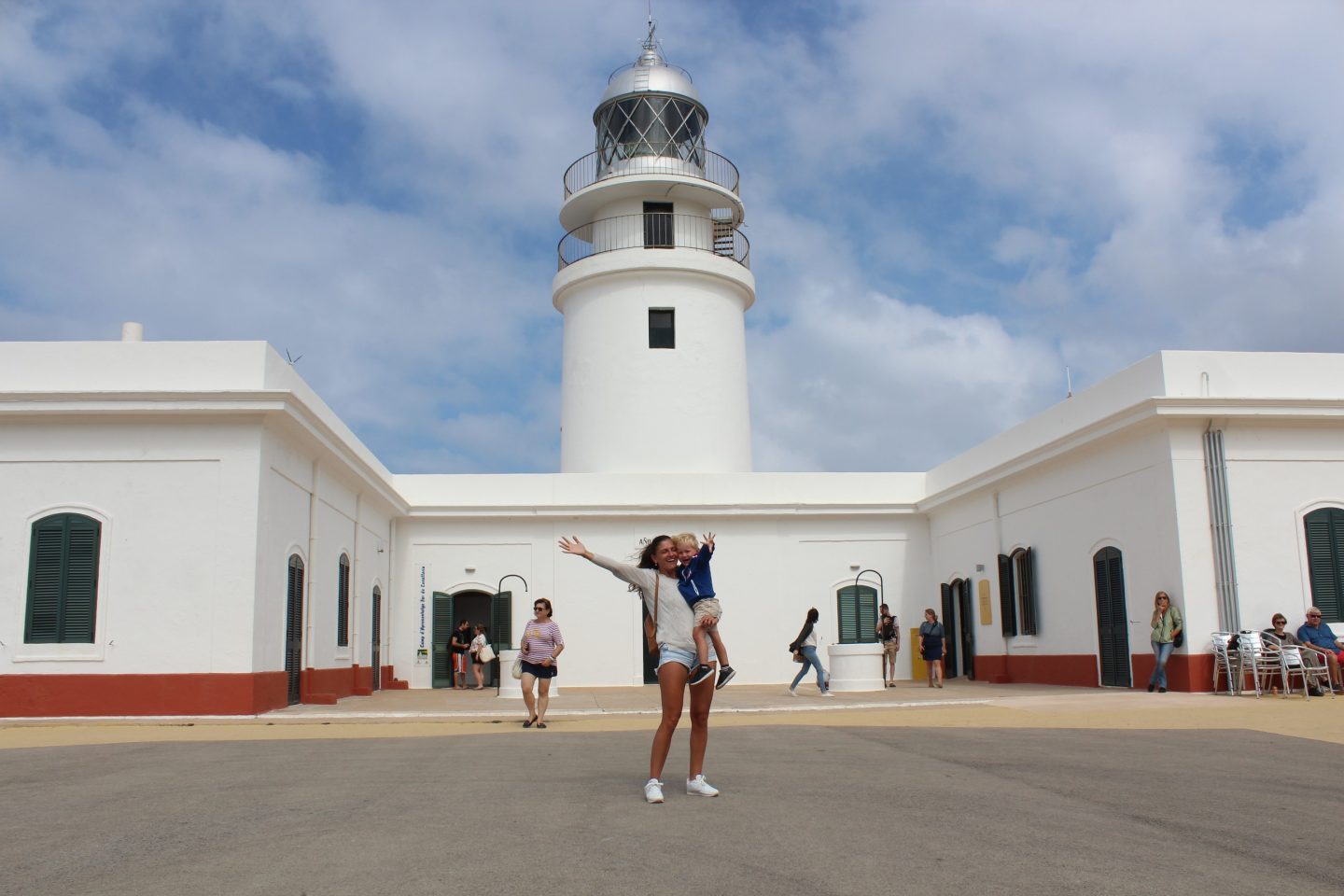
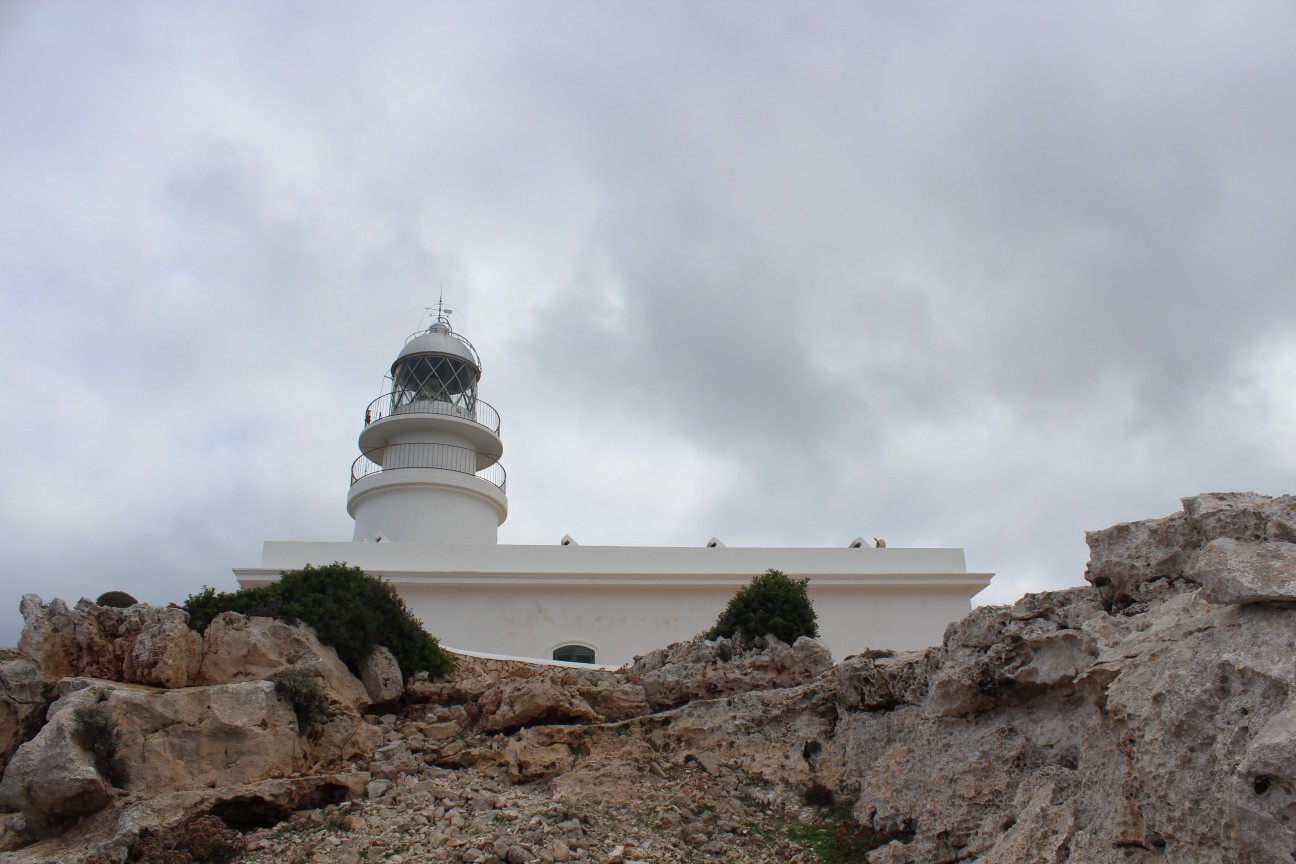
Cap de Cavalleria — the one you reach across someone’s field
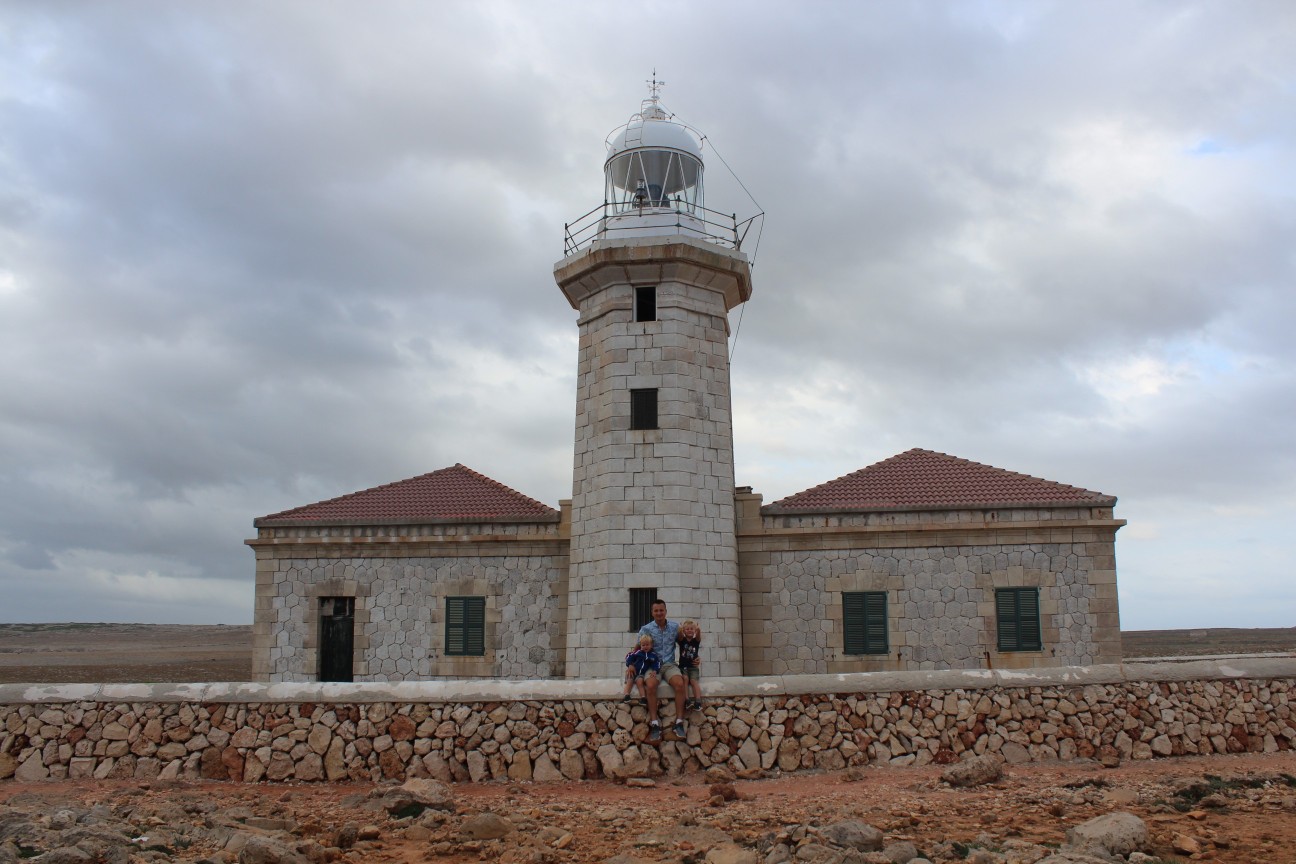
We first saw Cavalleria from the top of Monte Toro and drove there straight afterwards. It is the northernmost point of Menorca, and the view over the north coast is the most dramatic on the island.
The strange thing about it: the land you cross to reach it is private. For a long time there was no direct public access at all, and you had to go through someone’s field to get to it. The road is open to visitors now, but the land around it still belongs to somebody — so stay on the track.
Same landscape as Punta Nati: rock, low scrub, wind. Playa de Cavalleria, the largest bay on the north coast, is just below, down a wooden staircase — reddish sand, no facilities at all, bring your own water.
This is the oldest working lighthouse in Menorca, lit in 1857.
Cap de Favàritx — you now need the bus
This is the famous one: a black-and-white tower on a slate headland inside the Parc Natural de s’Albufera des Grau, with the rock around it striped dark grey and the nearby beach red.
We drove out one evening to watch the sunset there and found we could not get in. Private cars are barred through the summer season — in 2026 from 15 May, two weeks earlier than previous years.
How to get there now:
- Bus line L43 / IB08, run by Autos Fornells, Maó ⇄ Favàritx
- 18.5 km, about 25 minutes
- €3.65 single — large-family fares €2.90 and €1.80
- From 1 June: twelve departures a day, 09:45 to 19:45, Sundays included
- You can book online at least 24 hours ahead, but tickets are sold on the bus too — you do not have to book
Outside the restricted season the road is open to cars as normal. Check the current year’s dates before you drive out there; they have moved earlier each year.
One thing worth correcting, because we got it wrong the first time we wrote this up: Favàritx is not the island’s first lighthouse. It is the last, finished in 1922. The restriction is about the protected park and a single narrow road, not about age.
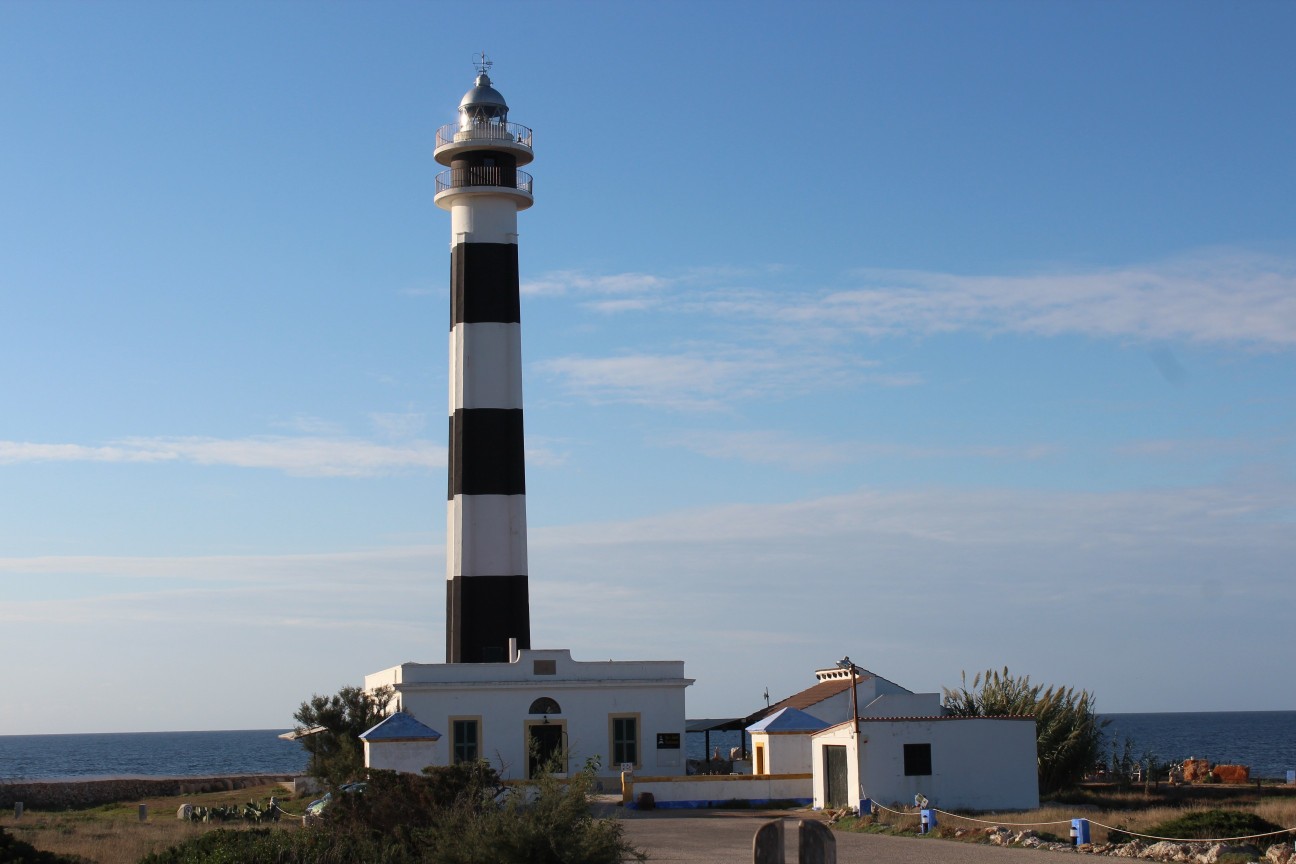
Cap d’Artrutx — the easy one
On the south-western corner, close to where we were staying. Unlike the others, Cap d’Artrutx is not on a wild headland — it stands in a residential area and has been turned into a small tourist complex with facilities around it.
That makes it the most accessible of the seven, and the one to pick if you have a pushchair or a child who has walked enough for one day. The Camí de Cavalls passes along this stretch of coast, so you can also walk to it.
Good for sunrise as well as sunset.
Illa de l’Aire — the one you look at rather than visit
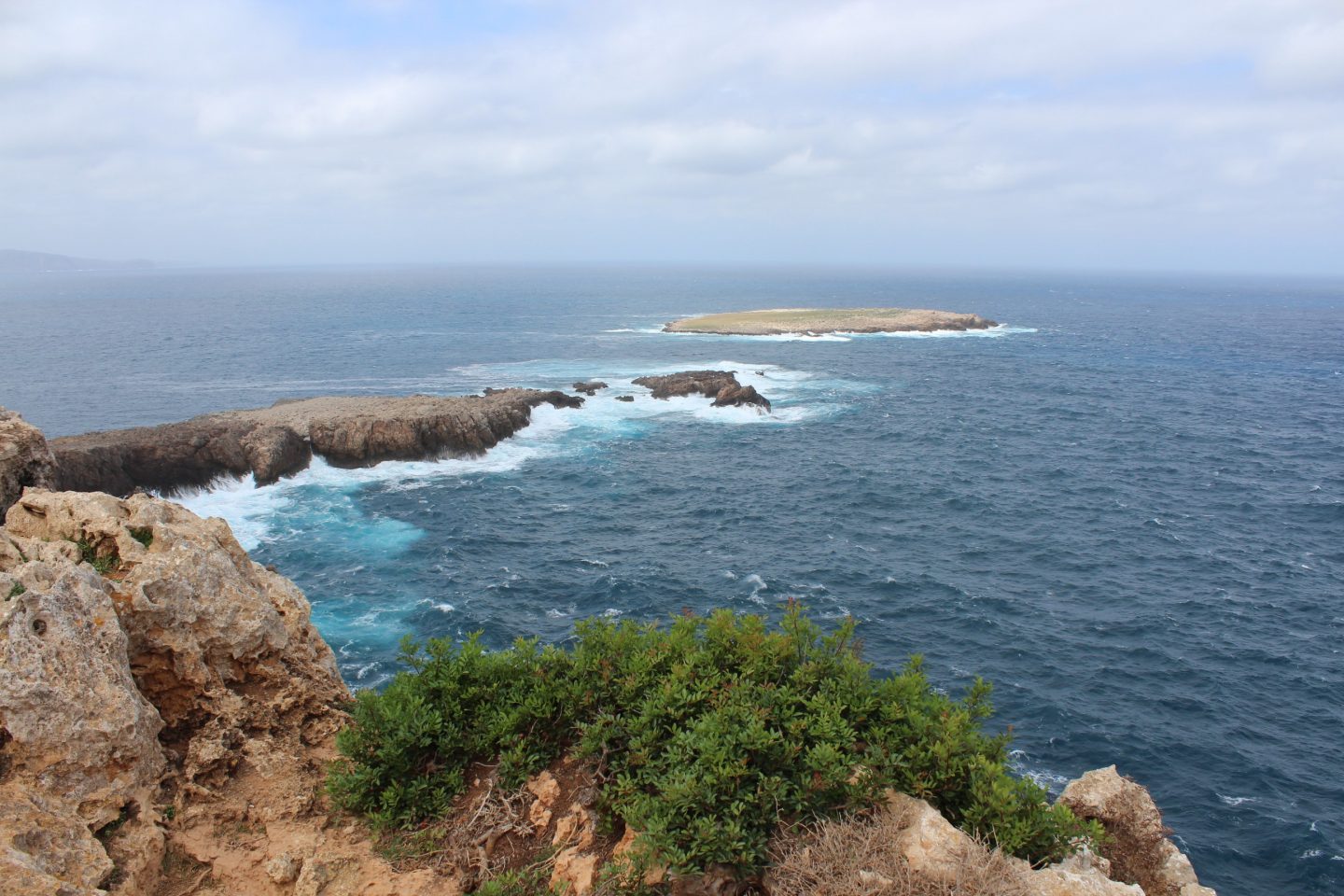
From Punta Prima, on the south-east corner, you look straight across at Illa de l’Aire and its lighthouse standing on the islet. The strait between is narrow enough that the tower is the main thing in the view.
We did not go across — we were there on our last morning before the flight. Boat excursions run to it, and the islet has a well-known population of black lizards found nowhere else.
Punta Prima itself holds a Blue Flag for 2026, and it is fifteen minutes from the airport, which makes it a good last stop on any trip.

Sa Farola — the town lighthouse
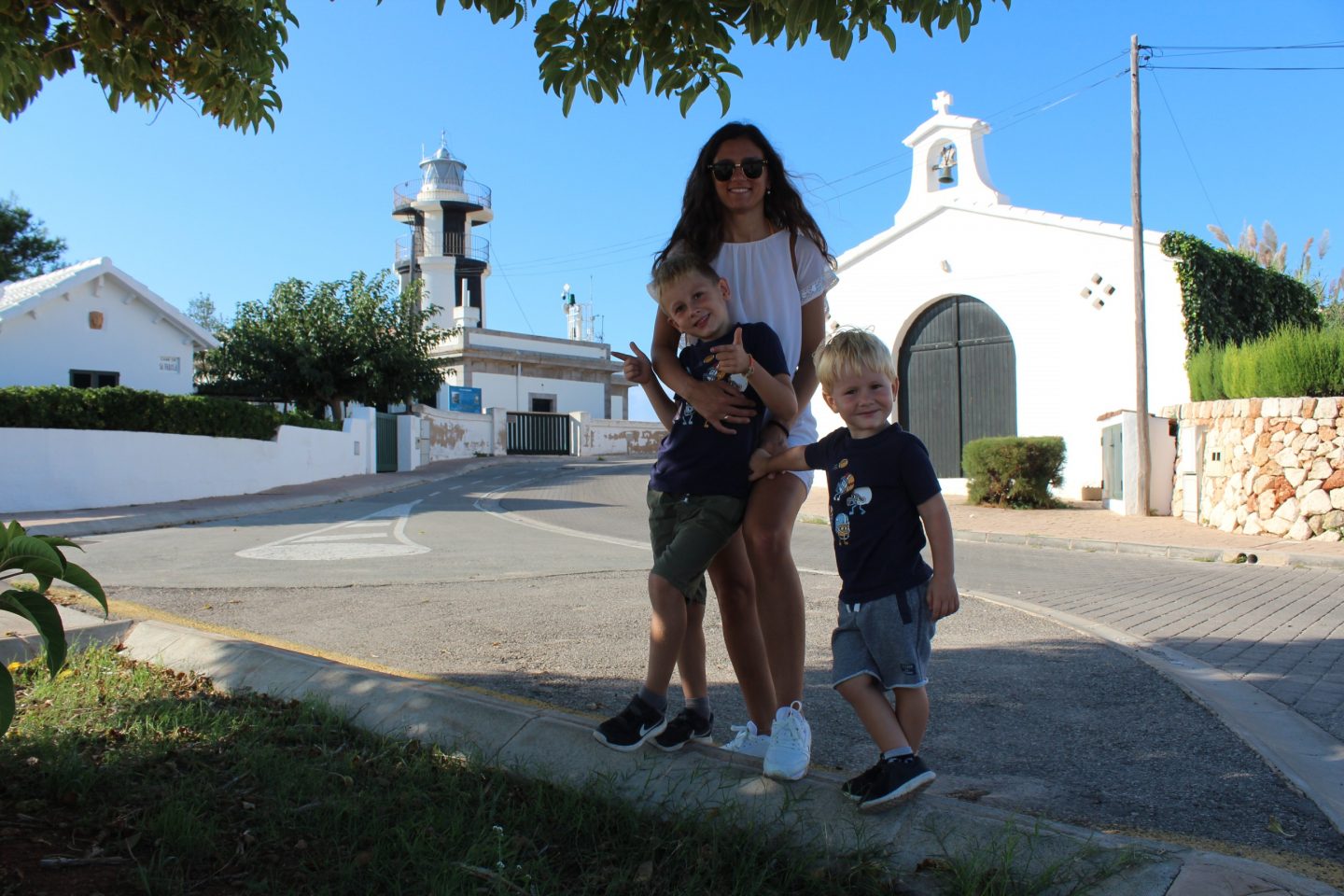
Sa Farola stands at the northern end of Ciutadella harbour. You walk out along the promenade to reach it, past the boats, with the whole port behind you.
Below it there is a small sheltered inlet that local swimmers use — we watched people getting in while we walked past. It is the most everyday of the seven and the easiest to combine with dinner.
Sant Carles — the one we missed
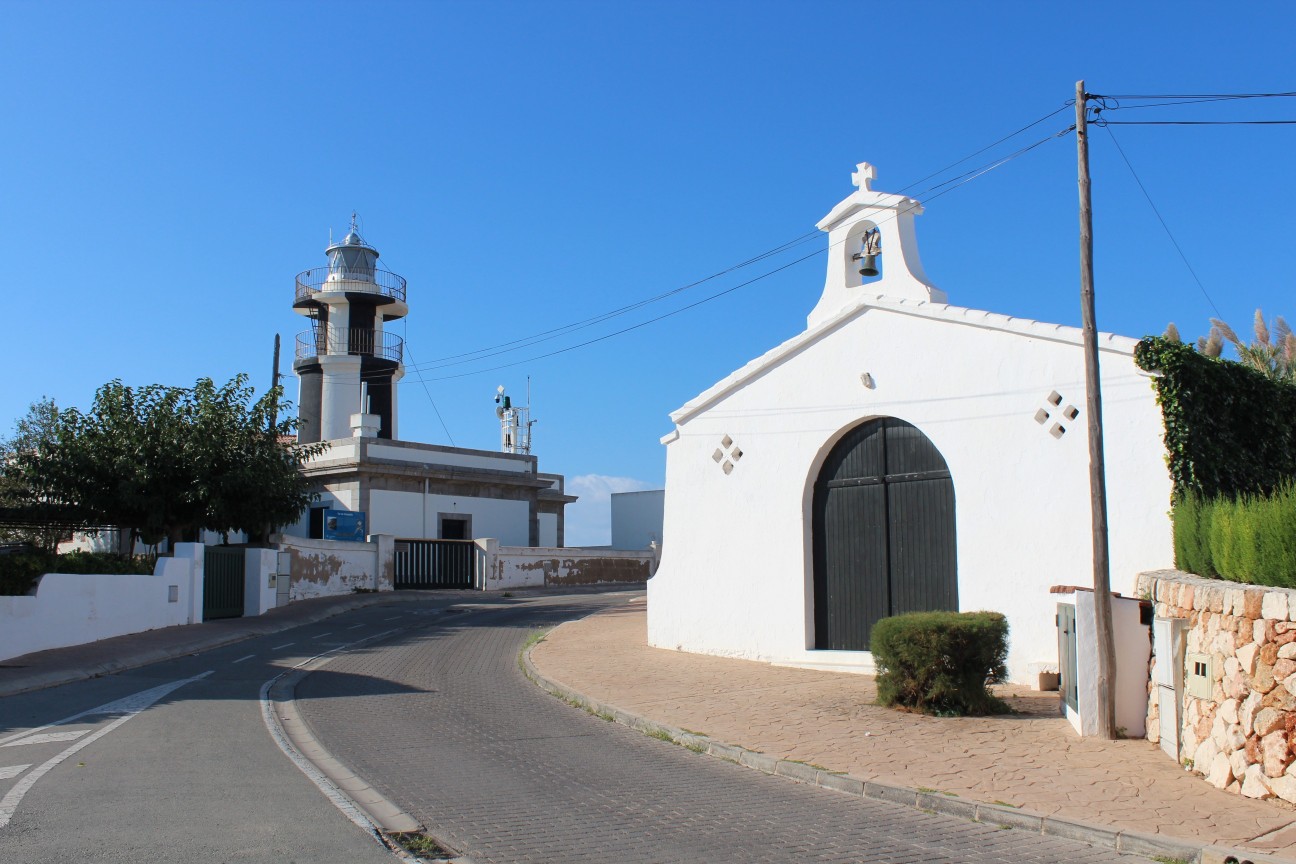
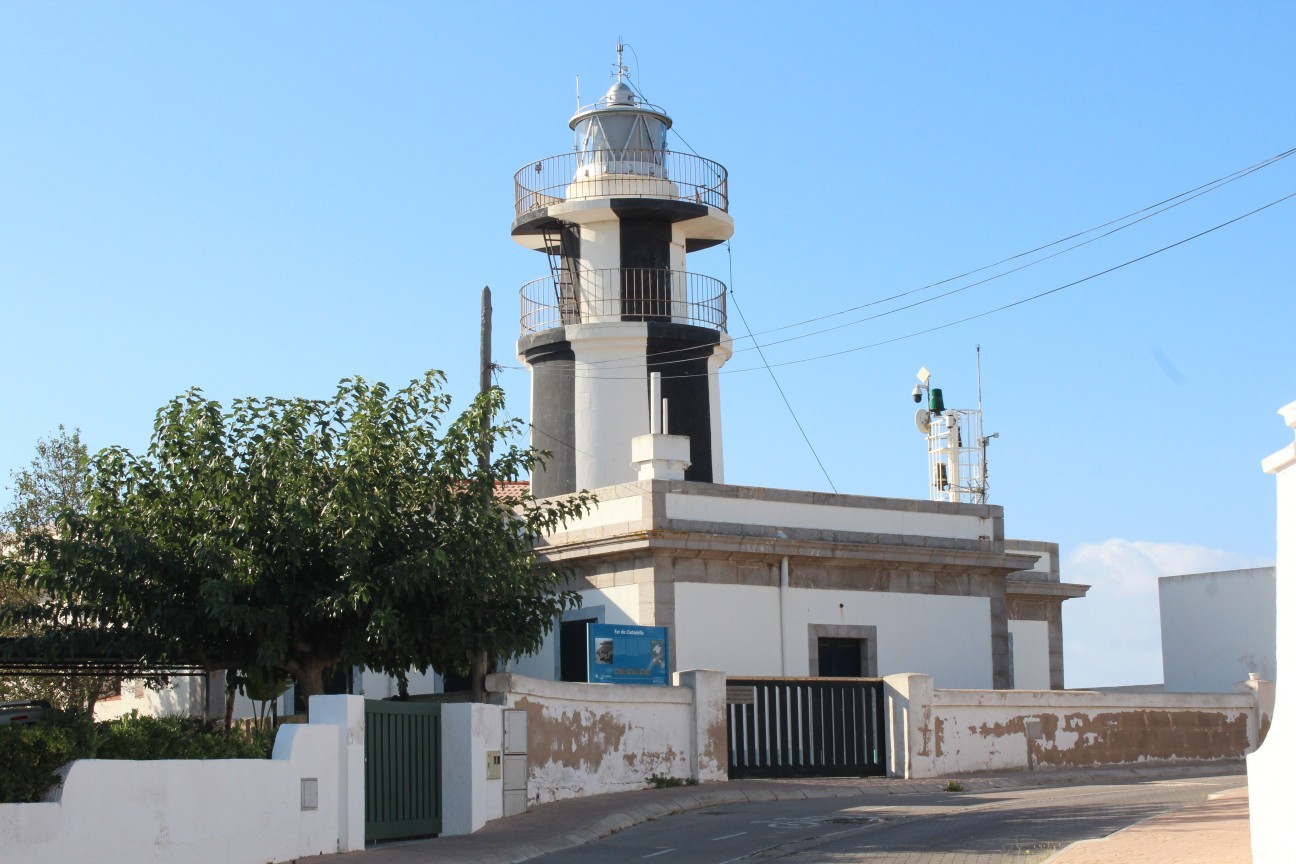
Sant Carles sits at the entrance to the port of Maó, in Es Castell. It was lit on 20 March 1852, making it the first lighthouse on Menorca, and it was deactivated in 1912 once newer towers took over.
We never got there, which is a reasonable excuse to go back.
Can you do all seven in one trip?
Six, comfortably, over a few days — we managed that without ever planning a “lighthouse day”. They divide naturally by area:
- Around Ciutadella: Punta Nati, Sa Farola and Cap d’Artrutx — all within twenty minutes of the town, easily a single afternoon and evening
- The north: Cavalleria, best combined with Monte Toro and the beach below it
- The east: Favàritx by bus from Maó, and Illa de l’Aire viewed from Punta Prima
- Maó: Sant Carles
With small children, Cap d’Artrutx and Sa Farola are the two that need no walking. Punta Nati needs a kilometre on rough ground. Favàritx needs a bus ticket and a plan.
More Menorca
Mallorca with kids: our family adventure
Menorca with kids: best beaches, where to stay and what to do
5 days in Menorca with kids: our day-by-day itinerary
Where to watch the sunset in Menorca

Menorca lighthouses: your questions answered
How many lighthouses are there in Menorca?
Seven: Sant Carles at the entrance to the port of Maó, Cavalleria on the north coast, Cap d’Artrutx and Sa Farola near Ciutadella, Punta Nati north-west of Ciutadella, Illa de l’Aire off Punta Prima, and Cap de Favàritx inside the Albufera des Grau natural park.
Which is the oldest lighthouse in Menorca?
Sant Carles, at the port of Maó, was lit on 20 March 1852 and is the oldest on the island, but it was deactivated in 1912. The oldest one still in service is Cap de Cavalleria, inaugurated on 1 March 1857. Cap de Favàritx, which is often assumed to be the first because it is the most photographed, is actually the newest of the seven — it was finished in 1922.
Can you drive to Cap de Favàritx?
Not in summer. Private cars are barred through the restricted season, which in 2026 began on 15 May. Instead take bus line L43 from Maó, run by Autos Fornells, which covers the 18.5 km in about 25 minutes and costs €3.65 single. From 1 June there are twelve departures a day between 09:45 and 19:45, including Sundays. You can book online 24 hours ahead but tickets are also sold on the bus. Outside the restricted season the road is open to cars.
Which Menorca lighthouse is easiest with small children?
Cap d’Artrutx, on the south-western corner. Unlike the others it is not on a wild headland — it sits in a residential area and has been turned into a small tourist complex with facilities, so there is no walk to reach it. Sa Farola in Ciutadella harbour is the other easy one, reached along the promenade.
How far do you have to walk at Punta Nati?
About a kilometre from the parking area to the lighthouse, over rough ground. It is manageable with children who walk but hard with a pushchair.
Can you visit Illa de l’Aire lighthouse?
The lighthouse stands on an islet off the south-east corner of Menorca, so you cannot walk to it. You can see it clearly from Punta Prima beach, and boat excursions run out to the islet, which is also home to a population of black lizards found nowhere else.
Which Menorca lighthouse has the best sunset?
Punta Nati, for the cliffs and the emptiness. Cap d’Artrutx works for both sunset and sunrise and is far easier to reach. Cap de Favàritx is spectacular but the summer bus service ends before sunset in high season, so plan around that.
Can you see all seven lighthouses in one trip?
Six is realistic over a few days. Punta Nati, Sa Farola and Cap d’Artrutx are all within twenty minutes of Ciutadella and make a single afternoon. Cavalleria pairs with Monte Toro and the beach below it. Favàritx needs a bus from Maó, and Illa de l’Aire is viewed from Punta Prima. That leaves Sant Carles at the port of Maó.

I wanted you to know that I had a great time on reading the article
Author
thank you a lot for taking time!