
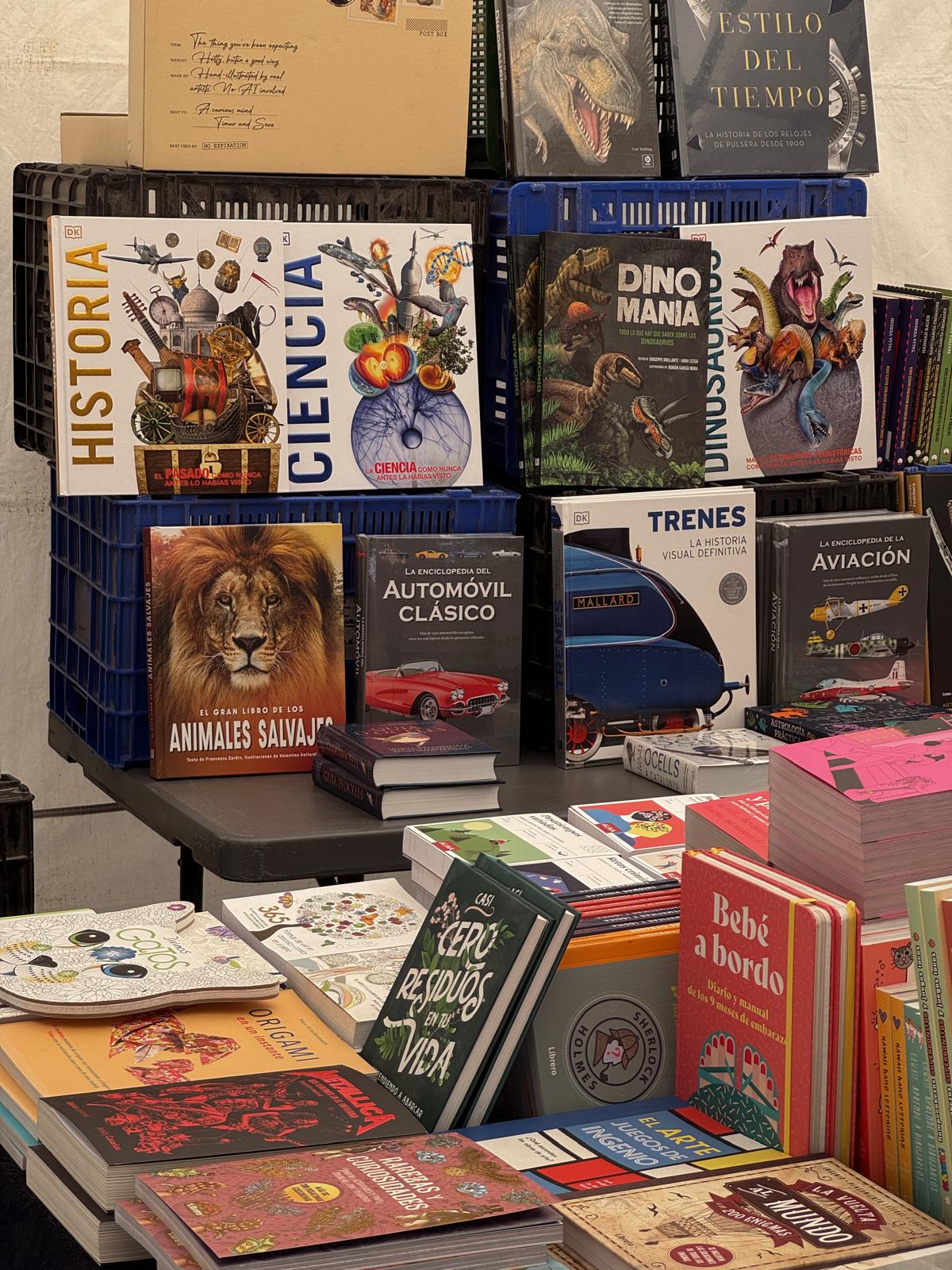
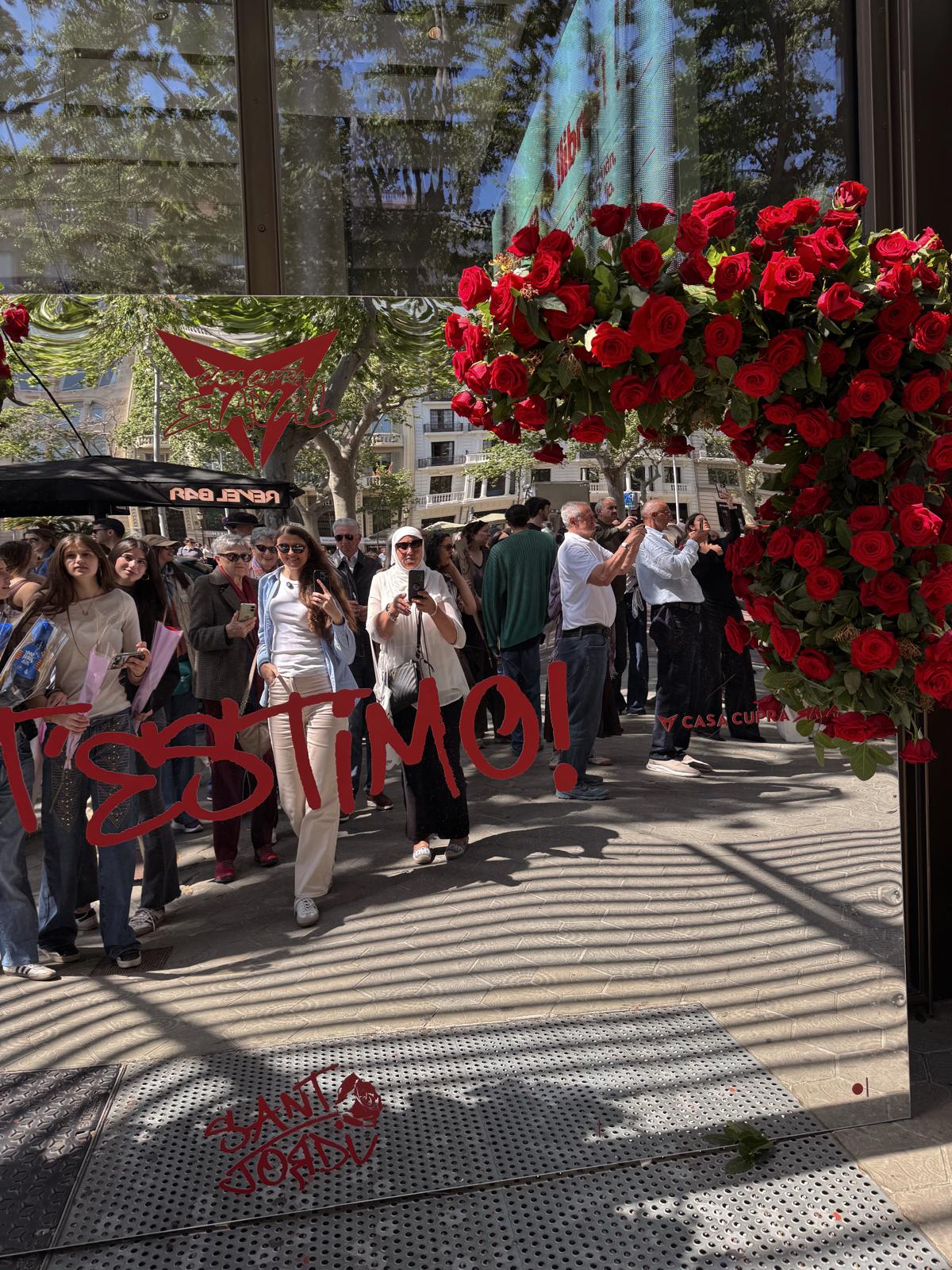
On 23 April, every year, Barcelona fills with book stalls and rose sellers, and the tradition is that you give a book and a rose to the people you love.
And everybody goes to work.
That’s the thing to understand first, because it’s what makes Sant Jordi different from every other festival in this city. It is not a public holiday. Shops are open, schools are open, offices are open — and the entire population spends a normal working Thursday buying each other books. There’s no parade, no stage, no ticket and no programme. The festival is the crowd.
We’ve done it every year since 2010. Here’s how it actually works, where the stalls are, and how to do it with children.
Where to stay in Barcelona — our three picks
Generator Barcelona – private family rooms at hostel prices, five minutes from Passeig de Gràcia and metro Diagonal (L3/L5). Rooms are small and the bar downstairs is lively, so ask for a higher floor.
H10 Cubik – on the edge of the Gothic Quarter, with the Atic rooftop terrace and pool. You can walk to the cathedral, the beach and the Born from the door, which saves you metro tickets all week.
The Cotton House Hotel, Autograph Collection – the old cotton guild building on Gran Via, a ten-minute walk from Casa Batlló and the Sagrada Família side of Eixample. Quiet, grown-up, and the rooftop is the reason to book it.
Affiliate links: if you book through them we may earn a small commission, at no extra cost to you.
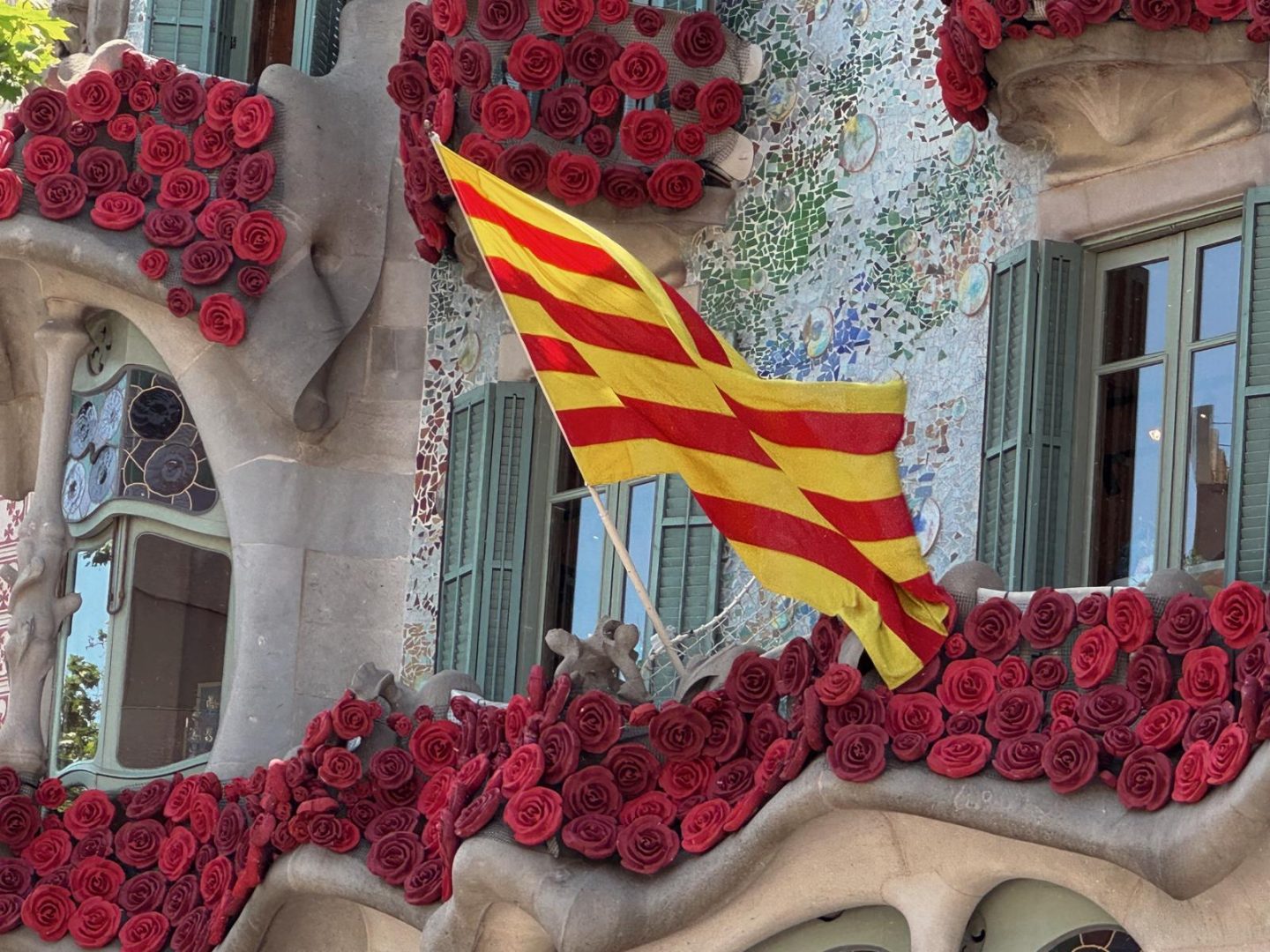
The date, and the thing nobody tells visitors
23 April, fixed, every year. It’s the feast of Sant Jordi, the patron saint of Catalonia, and the date never moves.
But it is not a public holiday in Catalonia. This trips up almost every visitor who plans around it, and in both directions:
- Good news: everything is open. Museums, shops, restaurants, transport — a normal working day. You are not going to find the city shut
- The catch: the streets are extremely busy from late morning until the evening, because the entire working population is out at lunchtime and after work. If you had a museum booked for 5pm on Passeig de Gràcia, getting there will take twice as long as you think
Plan Sant Jordi as the day itself, not as a thing to fit around other plans. That’s the practical advice.
The story, briefly
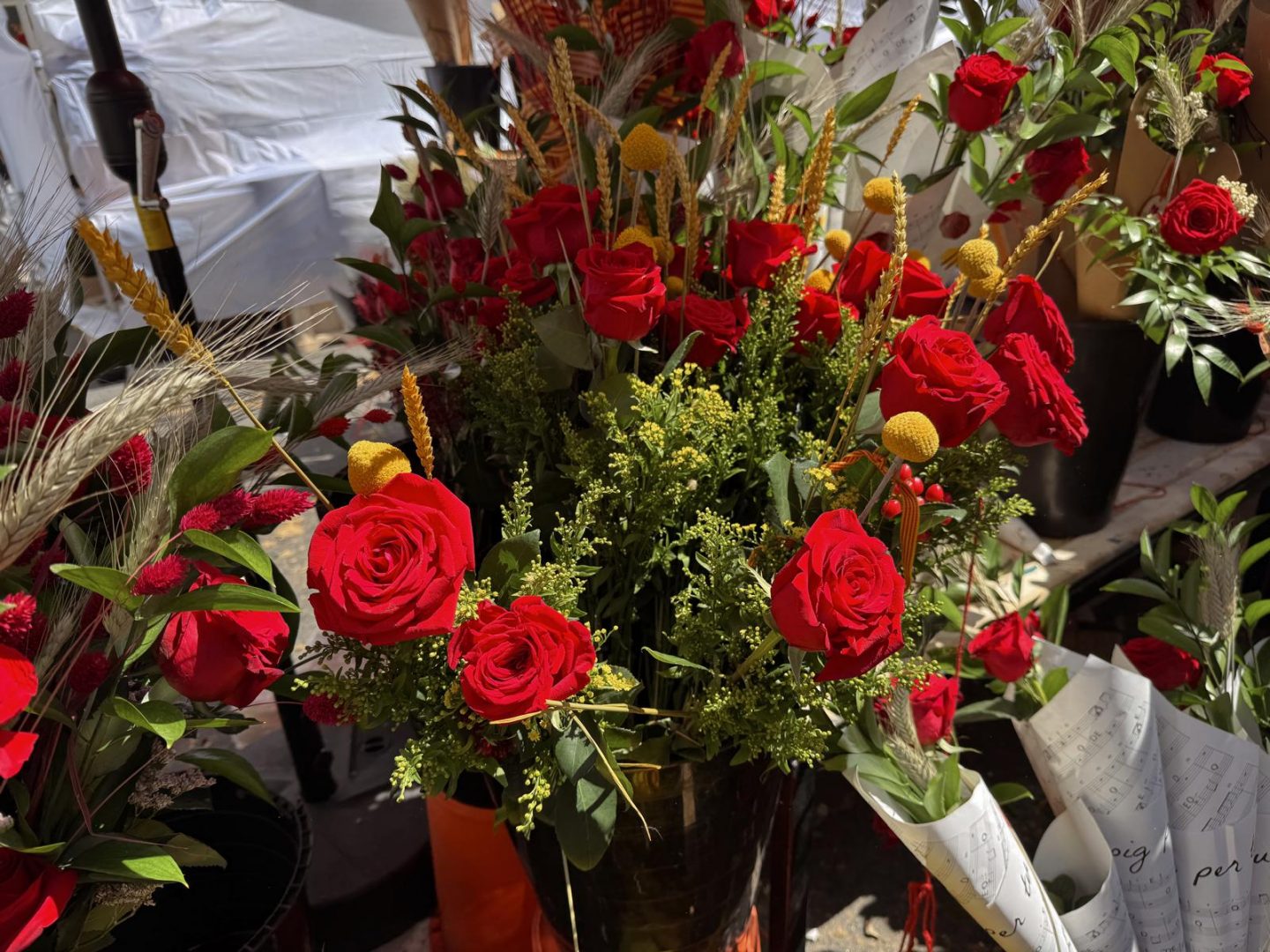
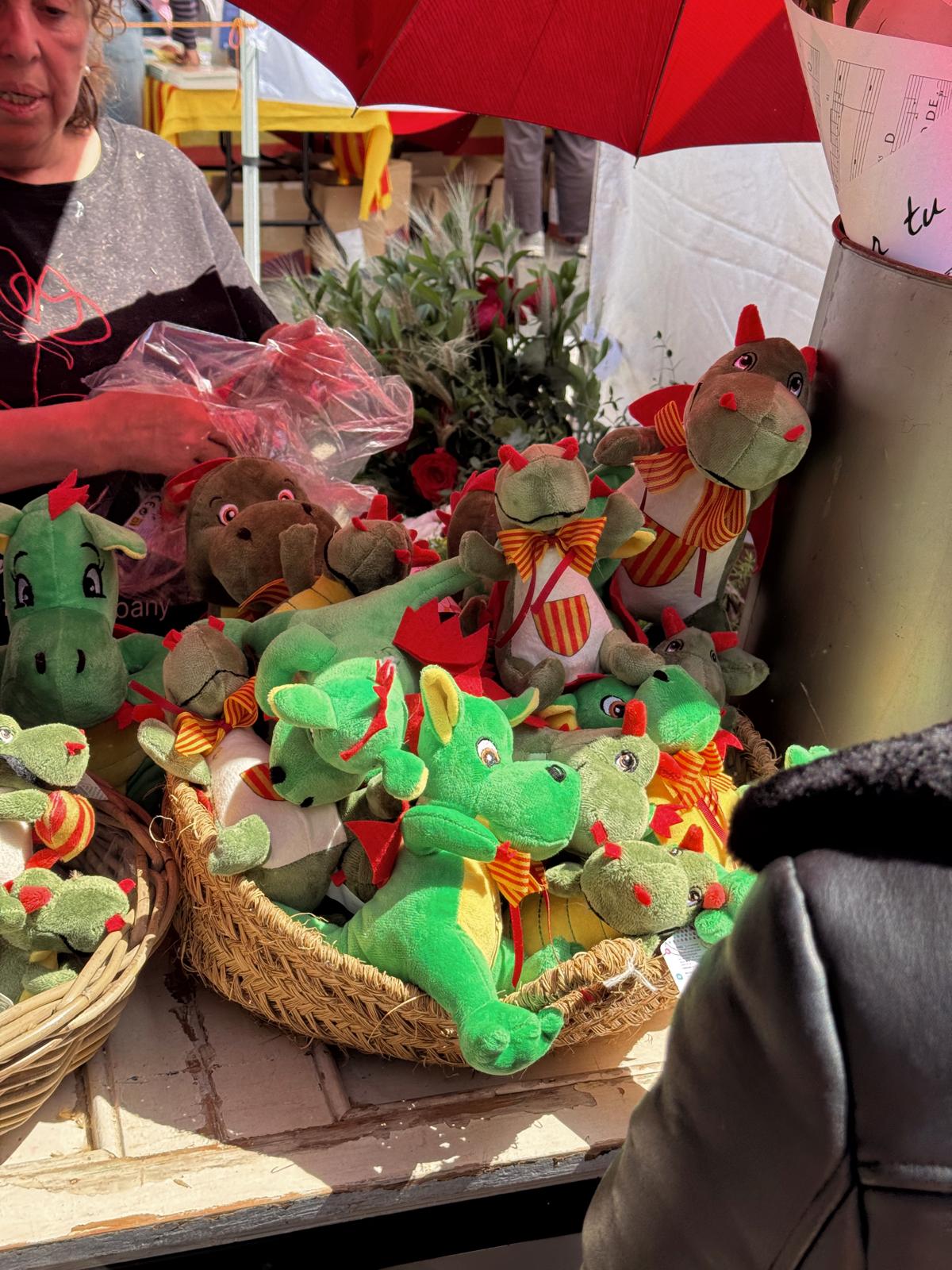
The legend is the usual one — a dragon, a princess, a knight — with a Catalan ending: where the dragon’s blood fell, a rose bush grew, and the knight picked a rose for the princess. That’s where the rose comes from.
The book is more recent and more interesting. Both Cervantes and Shakespeare are associated with 23 April, and in the 1920s a Barcelona bookseller proposed the date as a day to celebrate books. It stuck, and it grew into the largest single day of book sales in the Catalan year.
Where the stalls actually are
The city publishes the zones every year, which almost nothing written in English uses. Here’s the real map.
The main pedestrianised area covers the block bounded by Diagonal, Gran Via, Balmes and Pau Claris — so the whole central Eixample — plus all of La Rambla, and Gran de Gràcia from Pla de Nicolás Salmerón up to Carrer d’Astúries.
By district:
- Ciutat Vella — La Rambla, and Passeig de Lluís Companys
- Eixample — Plaça de Catalunya, Plaça de la Universitat, Rambla de Catalunya, Passeig de Gràcia, Passeig de Sant Joan
- Sants-Montjuïc — Rambla de Sants
- Plus designated areas in Les Corts, Sarrià-Sant Gervasi, Gràcia, Horta-Guinardó, Nou Barris, Sant Andreu and Sant Martí
And the streets close before the day even starts. In the designated Eixample area, traffic is shut out from 22:00 on 22 April until 06:00 on 24 April. Shops can also start selling on the street from 22 April, so the evening before is already busy. If you’re driving anywhere in central Barcelona on the night of the 22nd, plan around it.
Where I’d go, and where I wouldn’t
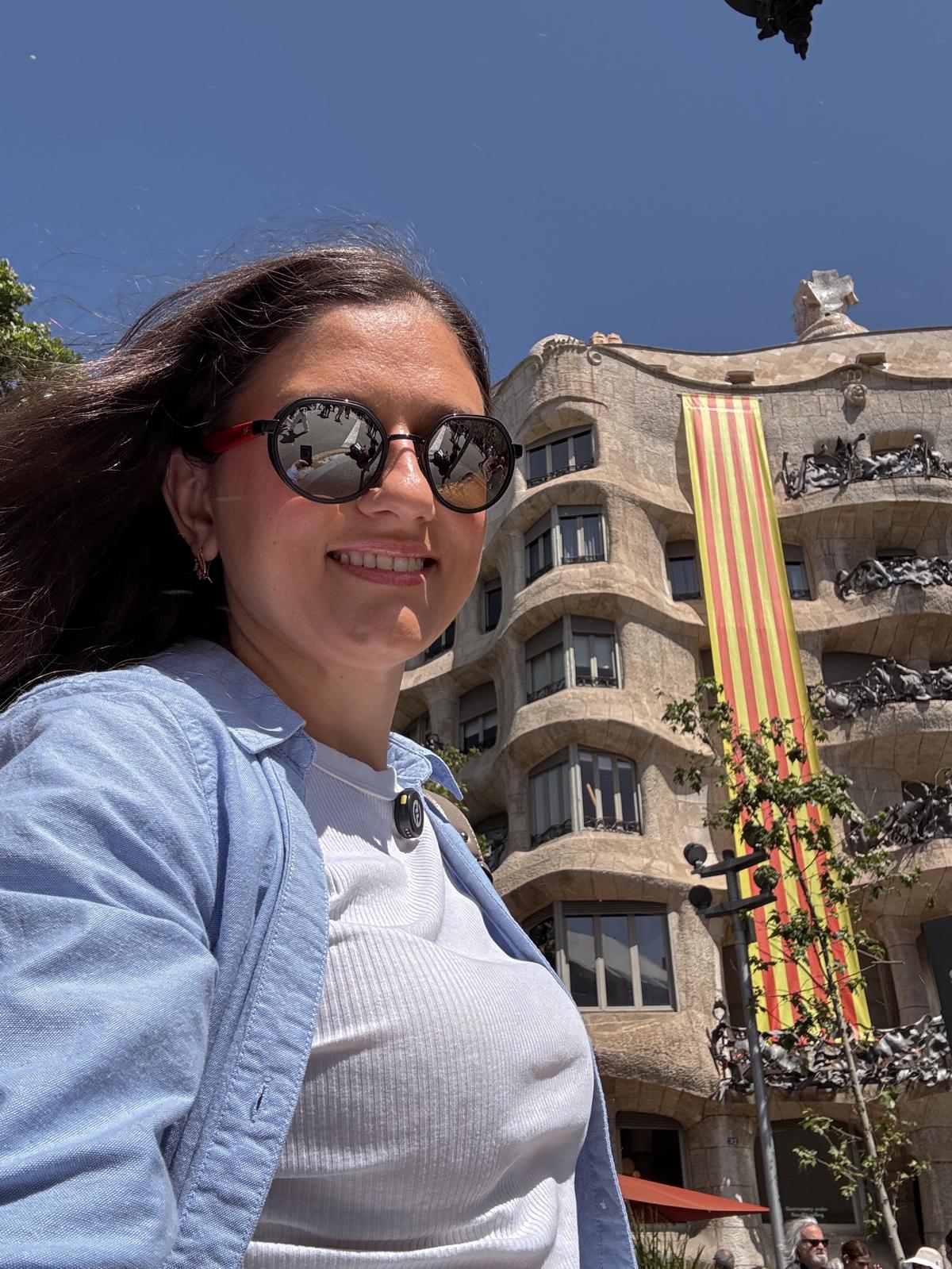
Rambla de Catalunya is the one. It’s wide, it’s flat, the stalls run down the central promenade, and there are side streets to escape into when the crush gets too much. Passeig de Gràcia is grander and busier. La Rambla is the most crowded and the most touristy — it’s where the day looks most like a photograph and feels least like the real thing.
And the districts are where Sant Jordi is actually nicest. Passeig de Sant Joan, Rambla de Sants, the designated spots out in Gràcia and Sant Andreu — that’s where local schools and libraries set up, where the crowds are neighbours rather than visitors, and where you can move.
Sant Jordi with children
It’s one of the best days of the year to have children in Barcelona, and one of the most exhausting.
What works:
- Children’s book stalls everywhere. Not a token section — a real proportion of the day’s books are for children, and buying a book on the street is a much easier sell than a bookshop
- The roses. Every child can buy one for someone, and it costs very little
- Schools and libraries run their own stalls in the district zones, so there’s often something going on aimed squarely at children
- Authors signing. If your child has a book by a Catalan or Spanish author, there’s a real chance of getting it signed
What to plan around:
- The crush. Passeig de Gràcia and La Rambla in the late afternoon are genuinely difficult with a pushchair. Go in the morning, or go to a district zone
- It’s a school day. If your children are at school in Barcelona they’ll be doing Sant Jordi things there, so the family version happens after pickup — which is also the busiest part of the day
- There’s nowhere to sit. Every terrace in the centre is full. Bring water and plan a break somewhere off the main streets
The free tip
Palau Güell is free on 23 April.
So is a list of other Diputació de Barcelona sites. Which means you can spend the morning in Gaudí’s first great house, walk out onto La Rambla into the middle of the book stalls, and have paid nothing for either.
That’s the best free day in the Barcelona calendar and I’ve never seen it written down in English.
What to buy, and what it costs
Books are sold at their normal price, often with a small Sant Jordi discount — the booksellers set their own, so it varies by stall.
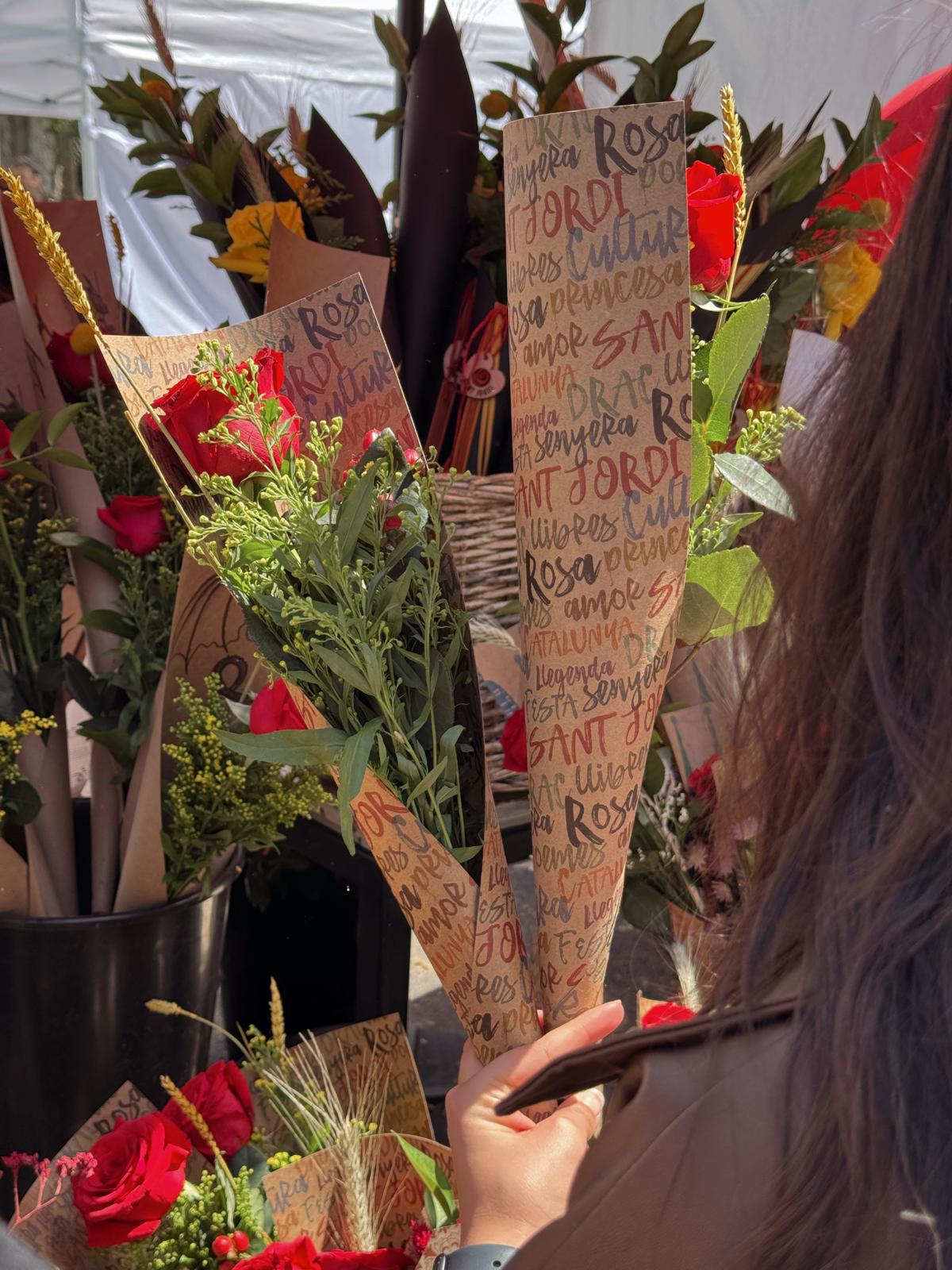
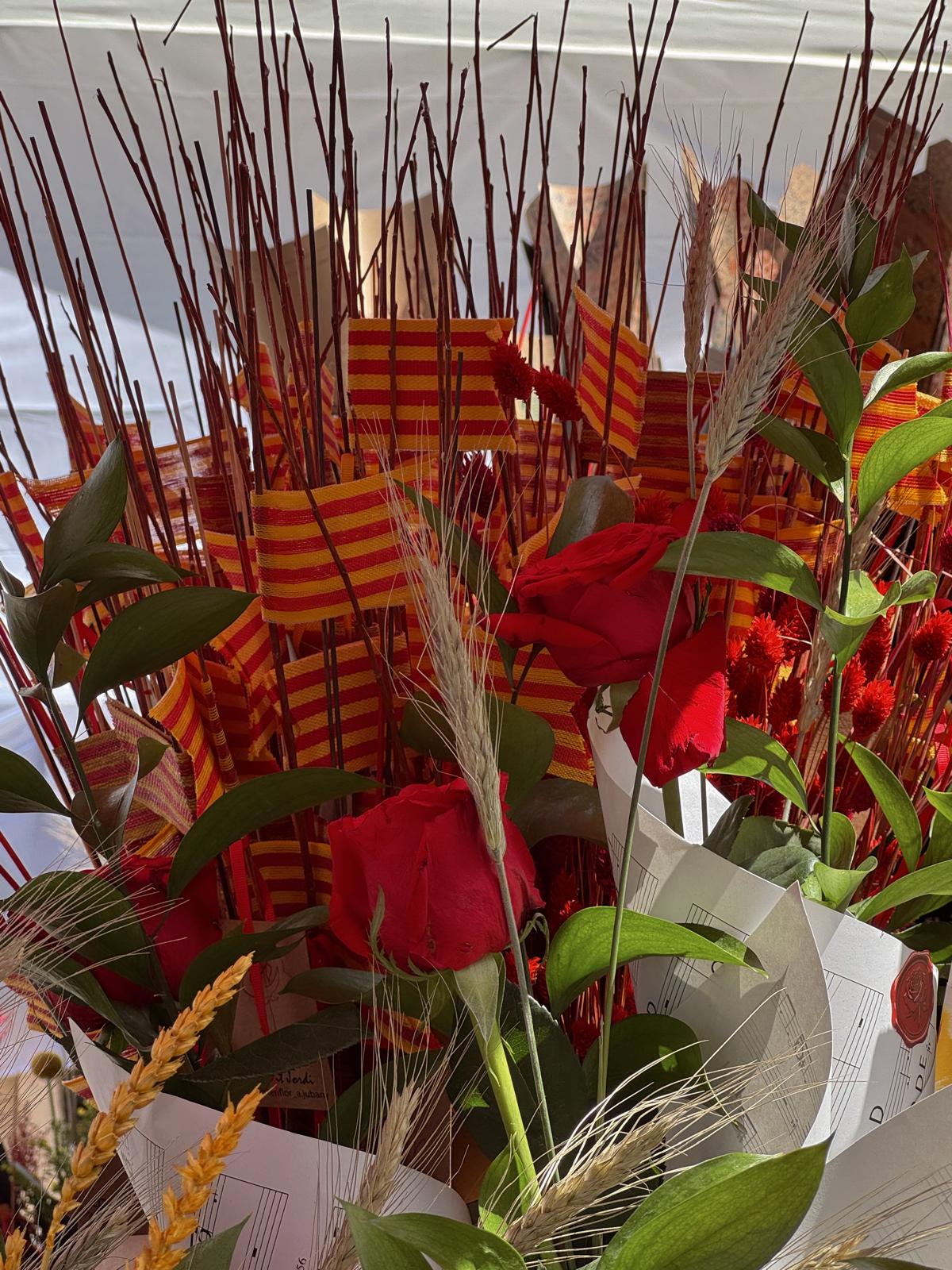
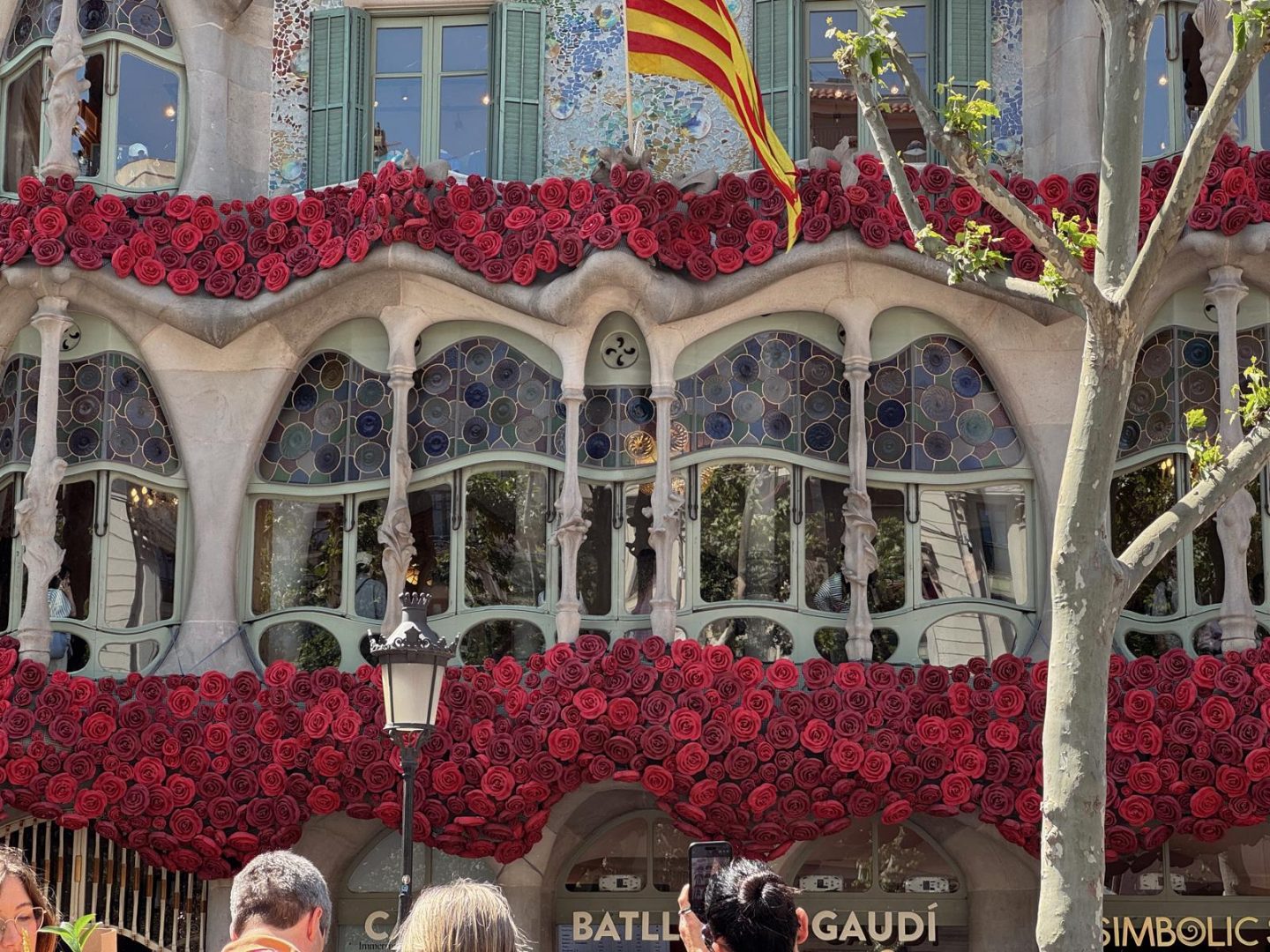
Roses run from a single stem wrapped with a small Catalan flag and an ear of wheat, up to elaborate arrangements. They’re sold from trestle tables by bookshops, florists, schools, sports clubs and charities.
If you can’t be here on 23 April
The day doesn’t move and it can’t be replicated. But Barcelona is a UNESCO City of Literature year-round, and the two things that make Sant Jordi work — a city that reads, and street bookselling — are visible at other times: the second-hand book stalls at Mercat de Sant Antoni on Sundays, and the bookshops of the Eixample and Gràcia any day of the week.
It isn’t the same. But if you’re here in a different month and you liked the sound of the idea, that’s where to look.
Verdict
If you can only be in Barcelona for one day in the year, make it this one.
It costs nothing to take part, everything is open because nobody has the day off, and the city does something on 23 April that no other city does — several million people buying each other books on a working Thursday.
Come in the morning if you have small children. Go to a district zone if you want the real version rather than the photogenic one. And go to Palau Güell first, because it’s free.
Every Catalan festival, month by month · Palau Güell, free on 23 April · What else to see in Barcelona
Stall zones and street closures from the Ajuntament de Barcelona; free-entry information from palauguell.cat. Verified September 2026 — the city updates its Sant Jordi pages each spring.
Frequently asked questions
Is Sant Jordi a public holiday in Catalonia?
No, and this is the thing most visitors get wrong. 23 April is a normal working day — shops, schools, offices, museums and transport all operate as usual. That is exactly what makes the day remarkable: the entire working population buys each other books and roses on an ordinary weekday. The practical consequence is that nothing is shut, but the streets are extremely crowded from late morning through the evening.
When is Sant Jordi?
23 April, every year, with no variation. It is the feast of Sant Jordi, the patron saint of Catalonia. Shops can begin selling on the street from 22 April, so the evening before is already busy.
Where are the Sant Jordi book stalls in Barcelona?
The main pedestrianised area covers the block bounded by Diagonal, Gran Via, Balmes and Pau Claris — the central Eixample — plus all of La Rambla and Gran de Gràcia from Pla de Nicolás Salmerón to Carrer d’Astúries. By district there are stalls on La Rambla and Passeig de Lluís Companys in Ciutat Vella; Plaça de Catalunya, Plaça de la Universitat, Rambla de Catalunya, Passeig de Gràcia and Passeig de Sant Joan in the Eixample; Rambla de Sants in Sants-Montjuïc; and designated areas in every other district.
Are roads closed for Sant Jordi in Barcelona?
Yes. In the designated Eixample area, traffic is shut out from 22:00 on 22 April until 06:00 on 24 April. If you are driving in central Barcelona on the night of the 22nd or on the 23rd, plan around it.
Is Sant Jordi good with kids?
Very — children’s book stalls are everywhere rather than a token section, roses cost little so every child can buy one for somebody, and schools and libraries run their own stalls in the district zones. The things to plan around are the crush on Passeig de Gràcia and La Rambla in the late afternoon, which is genuinely hard with a pushchair, and the fact that it is a school day. Go in the morning, or go to a district zone.
Is anything free on Sant Jordi in Barcelona?
Yes — Palau Güell is free to everyone on 23 April, along with other Diputació de Barcelona sites. That makes for a very good free day: Gaudí’s first great house in the morning, then out onto La Rambla into the book stalls, with nothing paid for either.
Is Sant Jordi recognised by UNESCO?
Not directly, and the claim that circulates is worth correcting. 23 April is UNESCO’s World Book and Copyright Day, but UNESCO’s own page for it makes no mention of Catalonia, Barcelona, Sant Jordi or roses — so the idea that UNESCO chose the date because of Sant Jordi cannot be sourced to UNESCO. What is true is that Barcelona has been a UNESCO City of Literature since December 2015, as part of the Creative Cities Network.
Which street is best for Sant Jordi in Barcelona?
Rambla de Catalunya, for most people — wide, flat, stalls down the central promenade, and side streets to escape into. Passeig de Gràcia is grander and busier, and La Rambla is the most crowded and the most touristy. If you want the version locals actually do, head for a district zone like Passeig de Sant Joan or Rambla de Sants, where the stalls are run by neighbourhood schools and libraries.
How many books and roses are sold on Sant Jordi?
Neither the Ajuntament de Barcelona nor the Generalitat publishes a figure. The sales numbers that circulate every year come from the Gremi de Llibreters de Catalunya, the booksellers’ trade body, rather than from any official source — so treat any specific statistic you see as trade-association data rather than a government count.
