
Fifteen minutes’ walk from the Sagrada Família, down a straight avenue that points at it, there is a site of twenty-seven modernist pavilions set in gardens. It is a UNESCO World Heritage site, it was a working hospital until 2009, and on a normal morning you can walk round it without queueing for anything.
Of everywhere in Barcelona, this is my favourite, and it’s the one visitors most often miss.
What it costs
| Ticket | Price |
|---|---|
| Self-guided, before 14:00 | €18.00 |
| Self-guided, after 14:00 | €17.00 |
| Reduced | €11.90 |
| Children under 12 | Free |
Entry is also free for people registered unemployed in Spain and for visitors with a disability rating of 65% or above.
A family of two adults and two children under 12 pays €34 — and €2 less if you go after two o’clock, which is also when the light in the gardens is best. Under-16s must be with an adult.
That’s not cheap, but set it against the alternative: Casa Batlló starts at €29 per adult for an hour inside one building. Here you get a whole campus, gardens, the underground tunnels and a UNESCO site for less than two Casa Batlló tickets.
Where to stay in Barcelona — our three picks
Generator Barcelona – private family rooms at hostel prices, five minutes from Passeig de Gràcia and metro Diagonal (L3/L5). Rooms are small and the bar downstairs is lively, so ask for a higher floor.
H10 Cubik – on the edge of the Gothic Quarter, with the Atic rooftop terrace and pool. You can walk to the cathedral, the beach and the Born from the door, which saves you metro tickets all week.
The Cotton House Hotel, Autograph Collection – the old cotton guild building on Gran Via, a ten-minute walk from Casa Batlló and the Sagrada Família side of Eixample. Quiet, grown-up, and the rooftop is the reason to book it.
Affiliate links: if you book through them we may earn a small commission, at no extra cost to you.

Opening hours
- April to October: 9:30 – 18:30
- November to March: 9:30 – 17:00
- Last entry 30 minutes before closing
Allow 45 to 60 minutes for the self-guided route, though we always take longer because of the gardens.
What it actually is
Sant Pau is not Gaudí, and that’s the point.
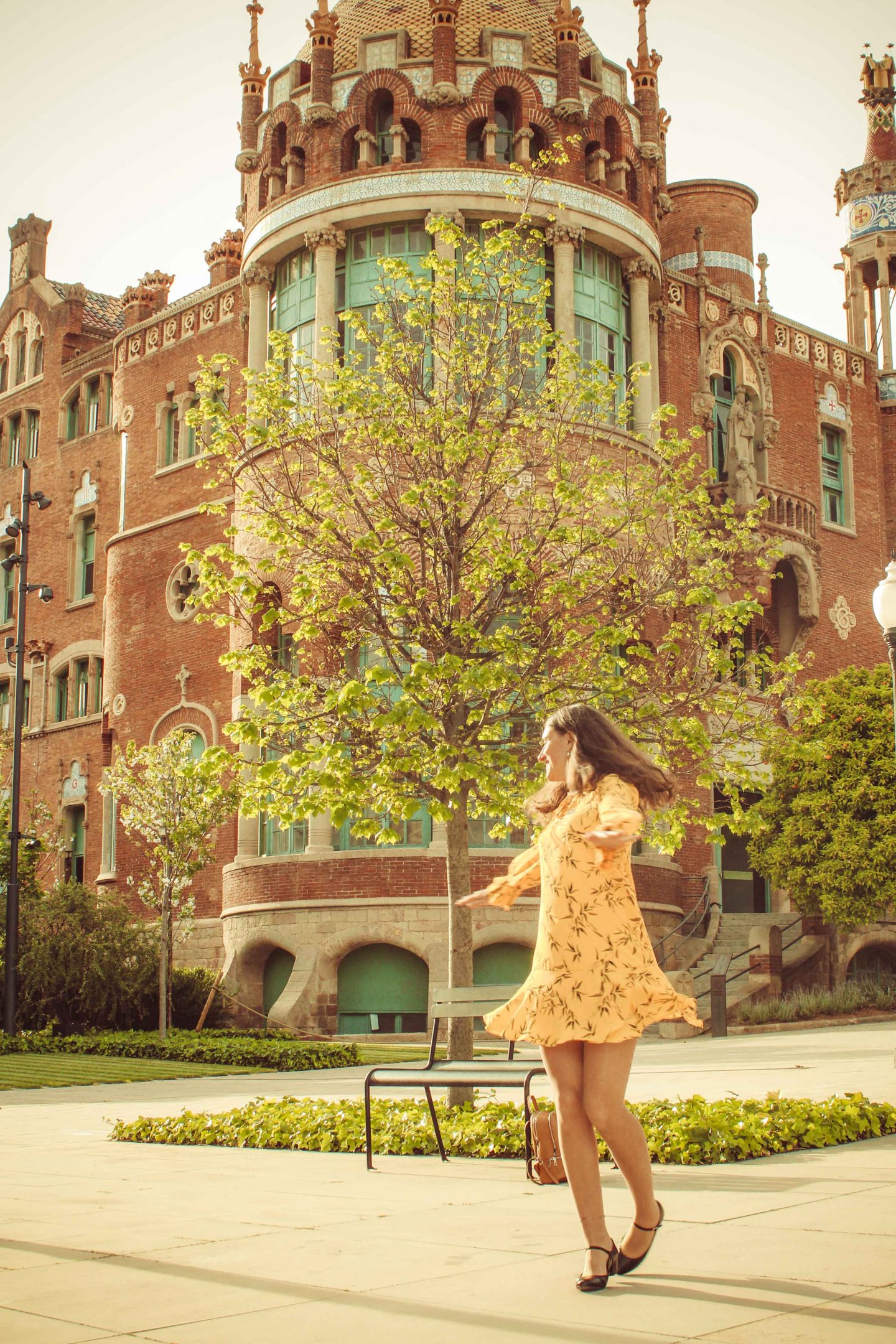
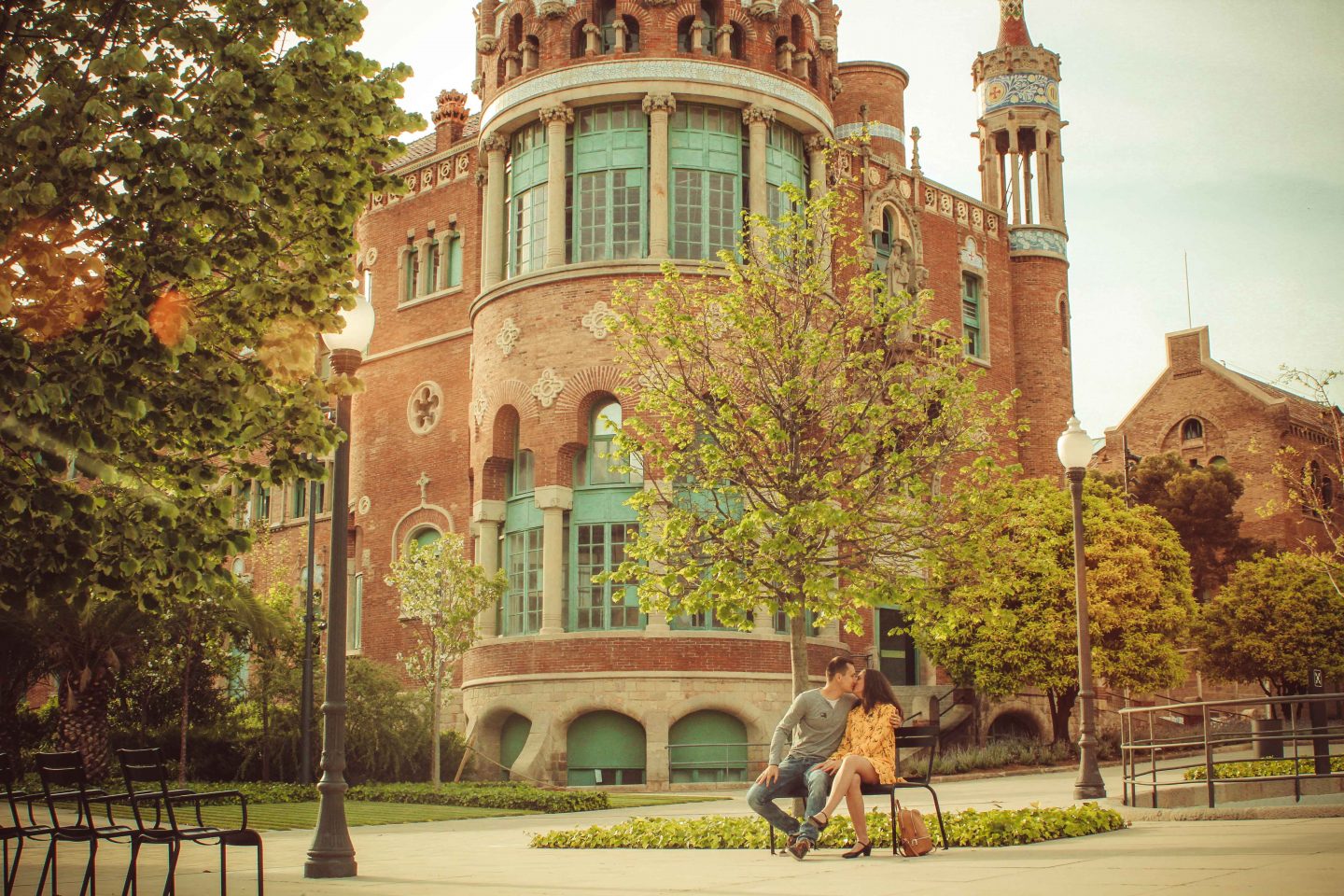
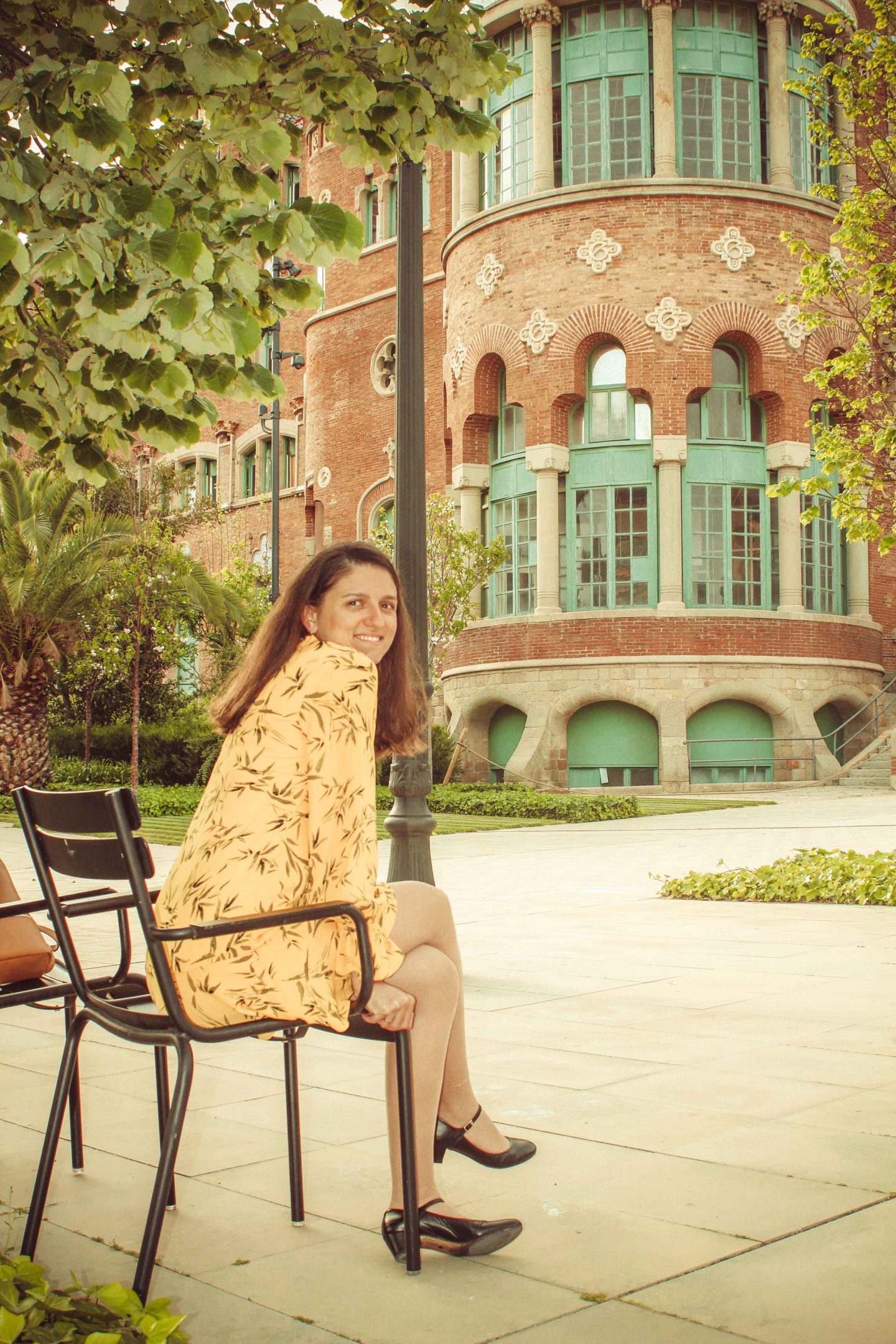
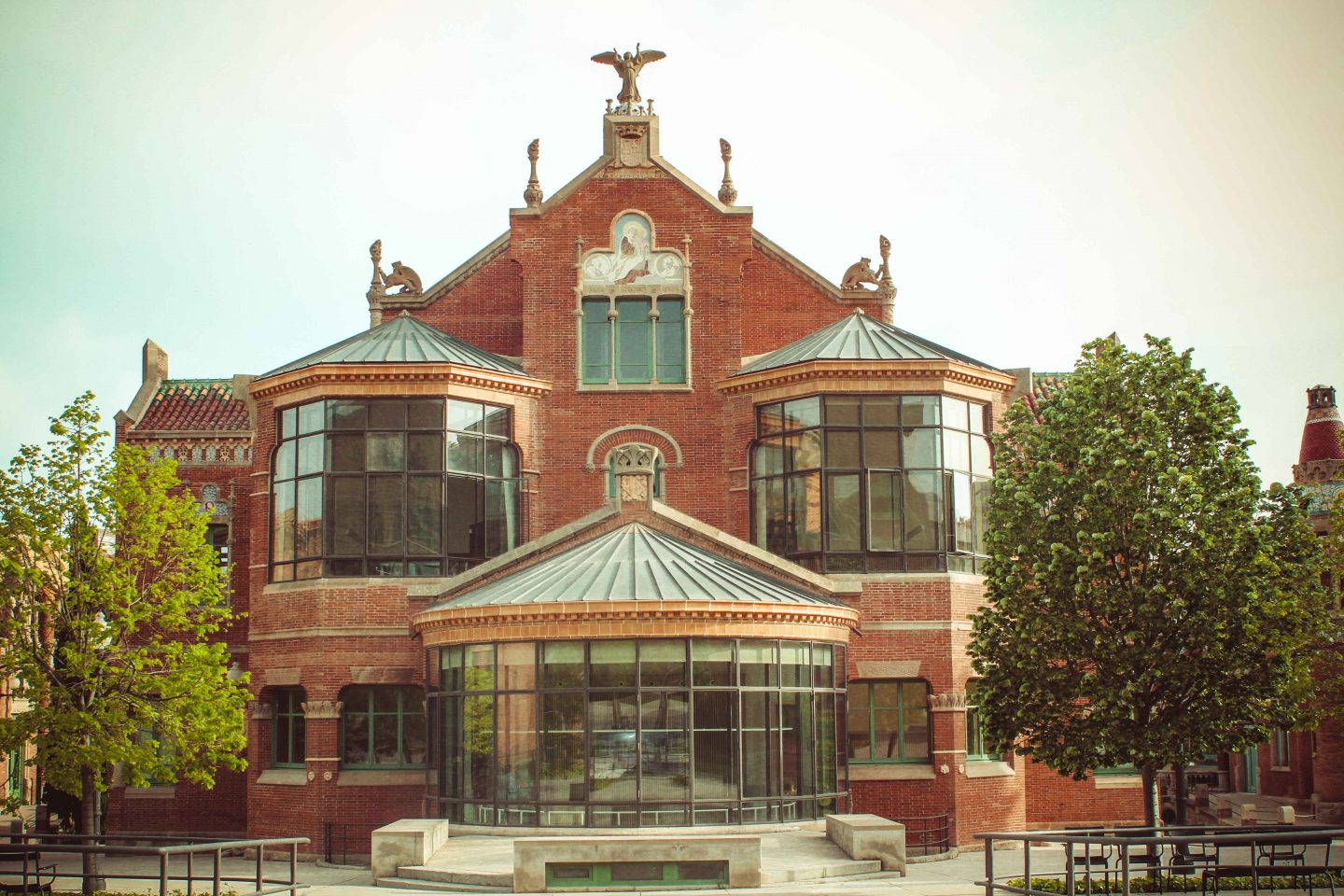
It’s by Lluís Domènech i Montaner, the architect who also built the Palau de la Música Catalana, and it was designed as a working hospital between 1902 and 1930. His idea was radical for the time and is the reason the place looks the way it does: he believed patients recovered faster surrounded by gardens, colour and sunlight than in a single dark block.
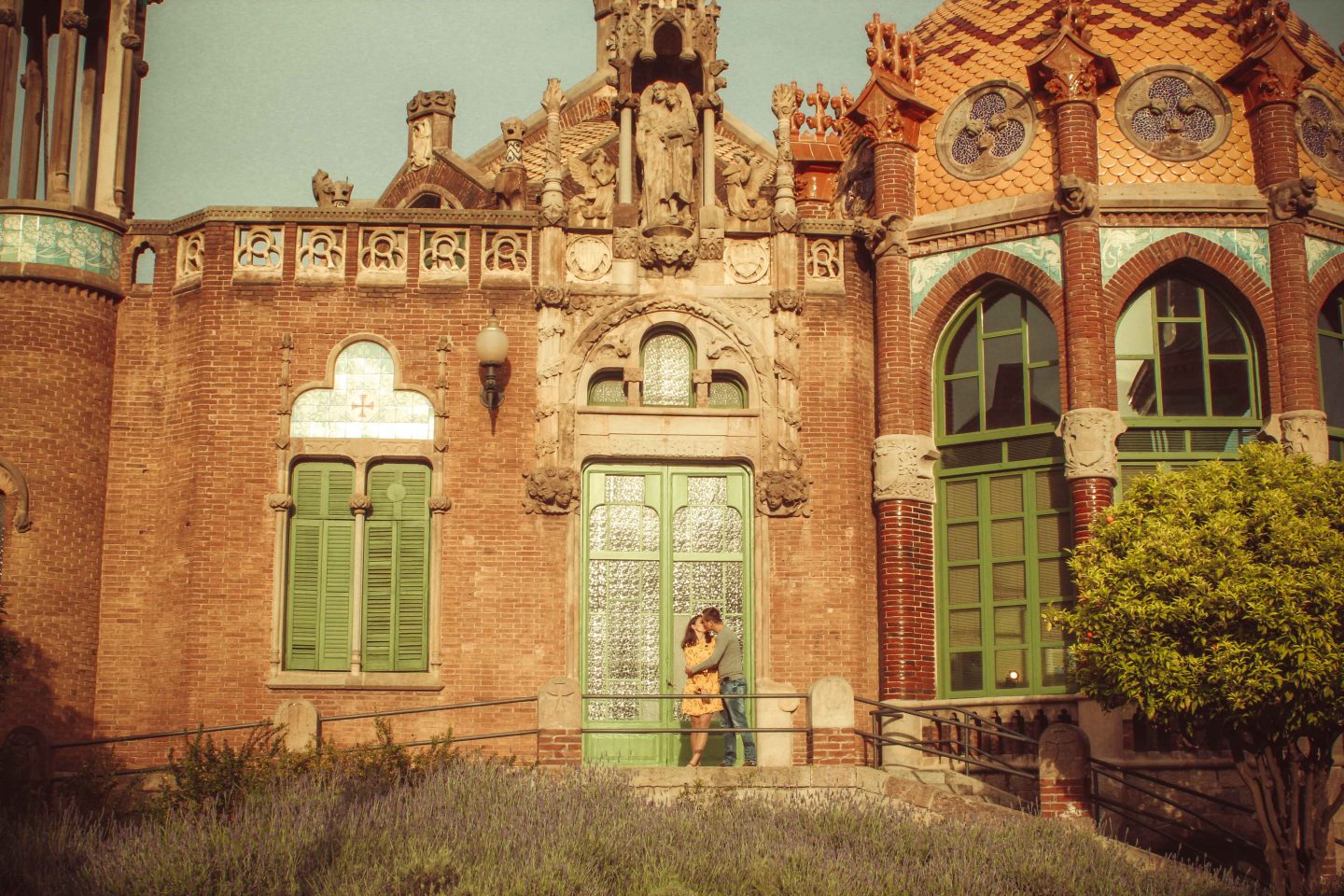
So instead of one building he built twenty-seven pavilions, spread across nine city blocks, connected by underground tunnels so that patients and staff could move between them without crossing the gardens in bad weather. Every pavilion is decorated — mosaic, stained glass, sculpture, tiled domes — because he thought beauty was part of the treatment.
It worked as a hospital until 2009. Some people reading this were born here.
Why we’d send you here before another Gaudí house
Four reasons, and they compound:
- Space. Casa Batlló is a beautiful building you shuffle through in a queue. Sant Pau is nine blocks of gardens you walk around at your own pace.
- Almost no crowd. It’s fifteen minutes from one of the busiest buildings in Europe and it’s quiet. That contrast is the single best thing about it.
- The children can move. Grass, paths, space between pavilions. Nobody has to be shushed.
- The tunnels. An underground network under a hospital is, to a nine-year-old, considerably more interesting than a wrought-iron balcony.
If you’re choosing one modernist site in Barcelona and you have children with you, I’d pick this over any of the Gaudí houses. If you’re choosing one full stop, I’d still pick this.
With children
What works:
- Under-12s are free, which changes the maths completely
- Gardens between every building, so the visit has natural breaks built into it
- The tunnels — make them the treasure hunt
- 45 to 60 minutes is about the right length before anyone complains
- Step-free access on the main routes
What to plan for:
- Under-16s must be accompanied by an adult
- Only some pavilions are open to visitors — most of the site is offices and institutions now, so don’t promise access to all twenty-seven
- Very little shade in the middle of the gardens in July; go early or late

Doing it with the Sagrada Família
This is the pairing that makes the day work, and hardly anyone does it.
Avinguda de Gaudí runs in a straight line from the Sagrada Família to Sant Pau. It’s about fifteen minutes on foot, it’s pedestrianised for most of its length, it’s lined with terraces, and it gives you the best long view of the Sagrada Família’s towers there is — from a distance, with nothing in the way.
Our order:
- Sagrada Família first, early, on a booked slot — €26 for adults, free under 11
- Walk up Avinguda de Gaudí, stopping for a drink halfway
- Sant Pau after two o’clock, for the cheaper ticket and the better light
Two UNESCO sites, one walk, one afternoon, and you finish somewhere calm instead of somewhere crowded.
How we do the Sagrada Família with two kids.
Getting there
- Metro: Sant Pau | Dos de Maig on L5, or Guinardó–Hospital de Sant Pau on L4
- On foot: 15 minutes up Avinguda de Gaudí from the Sagrada Família — the best way to arrive
Would we go back?
We do go back. That’s the honest answer, and it’s not true of most ticketed things in this city.
Barcelona’s famous modernist buildings are famous for good reasons and they are also, by now, an exercise in queue management. Sant Pau is the version of the same architecture where you can hear birds, sit on a bench, let your children walk ahead of you, and look at something extraordinary without anyone’s selfie stick in the frame.
Fifteen minutes’ walk from the busiest building in Barcelona. Go after two.

Frequently asked questions
How much are tickets for Sant Pau Recinte Modernista?
€18.00 for a self-guided visit before 2pm and €17.00 after 2pm, with a reduced rate of €11.90. Children under 12 go free, so a family of two adults and two young children pays €34. Entry is also free for people registered unemployed in Spain and for visitors with a disability rating of 65% or above.
What are the opening hours of Sant Pau?
9:30 to 18:30 from April to October, and 9:30 to 17:00 from November to March, with last entry 30 minutes before closing. Allow 45 to 60 minutes for the self-guided route, or longer if you want time in the gardens.
Is Sant Pau by Gaudí?
No — it is by Lluís Domènech i Montaner, who also built the Palau de la Música Catalana. He designed it between 1902 and 1930 as twenty-seven pavilions set in gardens rather than one building, because he believed patients recovered faster surrounded by green space, colour and sunlight. It worked as a hospital until 2009.
How far is Sant Pau from the Sagrada Família?
About fifteen minutes on foot, straight up Avinguda de Gaudí, which is pedestrianised for most of its length and gives the best long view of the Sagrada Família’s towers. It is the best pairing of two UNESCO sites in Barcelona and almost nobody does it.
Is Sant Pau worth visiting with children?
Yes, and we would choose it over any of the Gaudí houses with kids. Under-12s are free, there are gardens between every pavilion so the visit has natural breaks, and the underground tunnels that connected the hospital buildings are far more interesting to a child than another balcony. Under-16s must be accompanied by an adult.
How long do you need at Sant Pau?
Forty-five to sixty minutes for the self-guided route. Go after 2pm — the ticket is a euro cheaper and the light in the gardens is better.

Romantic place!!!!
Author
This place is such a beautiful place to be visited while in Barcelona, we advice you to come and see it.