
Key takeaways
- The Šarūnas Jasikevičius Campus is run by U3 Sport and was held **19–25 July 2026 at El Montanyà (Hotel Montanyà Resort **) in Seva, Barcelona — about 45 minutes’ drive from the city.
- Two tiers: residential at €1,000 per child (six nights, full board, all activities) and external/day at €550 per child (09:30–20:00 daily, lunch and all activities included).
- The schedule is serious: up to four court-or-pool blocks a day, an optional 8:00 technical session four mornings a week, and competitions running from 22:00 to 23:15 every single night.
- Players are split into four groups — Minis, Infantiles, Cadetes and Juniors — and the sessions are adapted to each level. Groups 1 and 2 share a timetable, as do groups 3 and 4, so siblings within the same pairing run on the same daily schedule.
- We sent both our sons (13 and 10) on the external tier and stayed at the hotel as a family. It worked, it was cheaper than it looks, and I’d do it again — full reasoning below.
- Our rating: 5/5.
Two training sessions a day, a pool block between them, and competitions that finish at quarter past eleven at night. That’s the rhythm of this camp, and if your child isn’t genuinely into basketball, they’ll feel it by Tuesday.
Ours were into it. Damian is 13 and Marc is 10, both play competitively, and they came out of this week tired in the way you want a child to be tired.
We did the week slightly unusually — the boys attended as external players while Dumitru and I stayed at the same hotel and worked remotely. That gave us an angle most reviews don’t have: we watched the camp from the outside every single evening, and we had the boys back with us at night to tell us what actually happened.
Here’s everything, including what I’d want to know before paying €550 or €1,000.
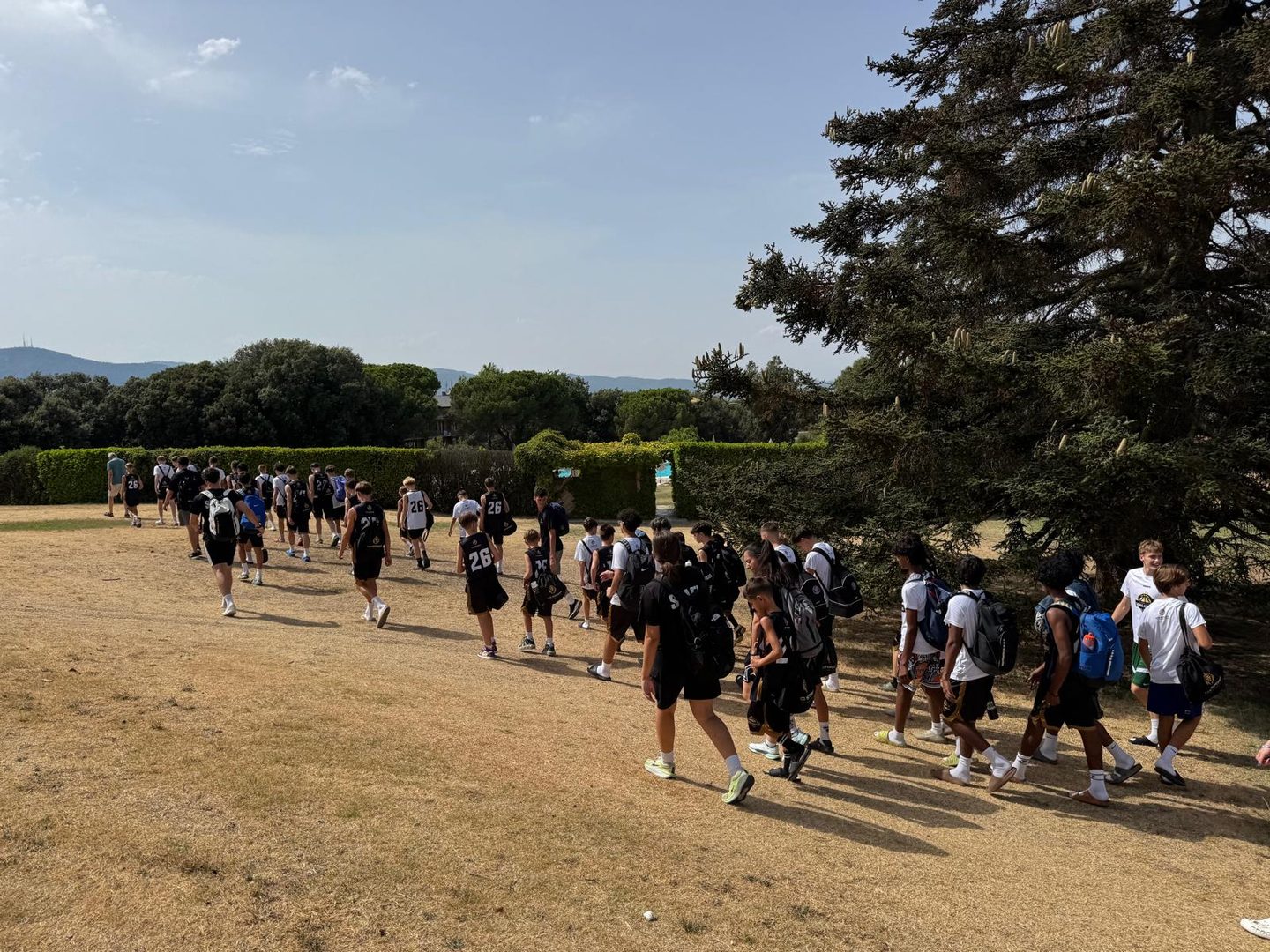
What is the Šarūnas Jasikevičius Campus?
It’s an elite youth basketball camp organised by U3 Sport (Elite Camps & Events), carrying the name of Šarūnas Jasikevičius — the Lithuanian point guard who won four EuroLeague titles as a player, was MVP of EuroBasket 2003 and of the 2004–05 EuroLeague Final Four, and has since coached at the top of European basketball.
The 2026 edition was, in the organisers’ own words, a return after several years away, which explains some of the energy around it — this wasn’t a routine annual event for them.
The camp positions itself as a full week of learning, competition and living together rather than a series of drills. In practice that means training sessions, technical and tactical work, video analysis, competitions, complementary activities and structured rest, all in one place.
One detail I’d flag for parents comparing options: the whole venue is reserved exclusively for the camp. There’s no sharing courts with hotel guests or other groups. For a week that runs from 08:00 to 23:15, that matters more than it sounds.
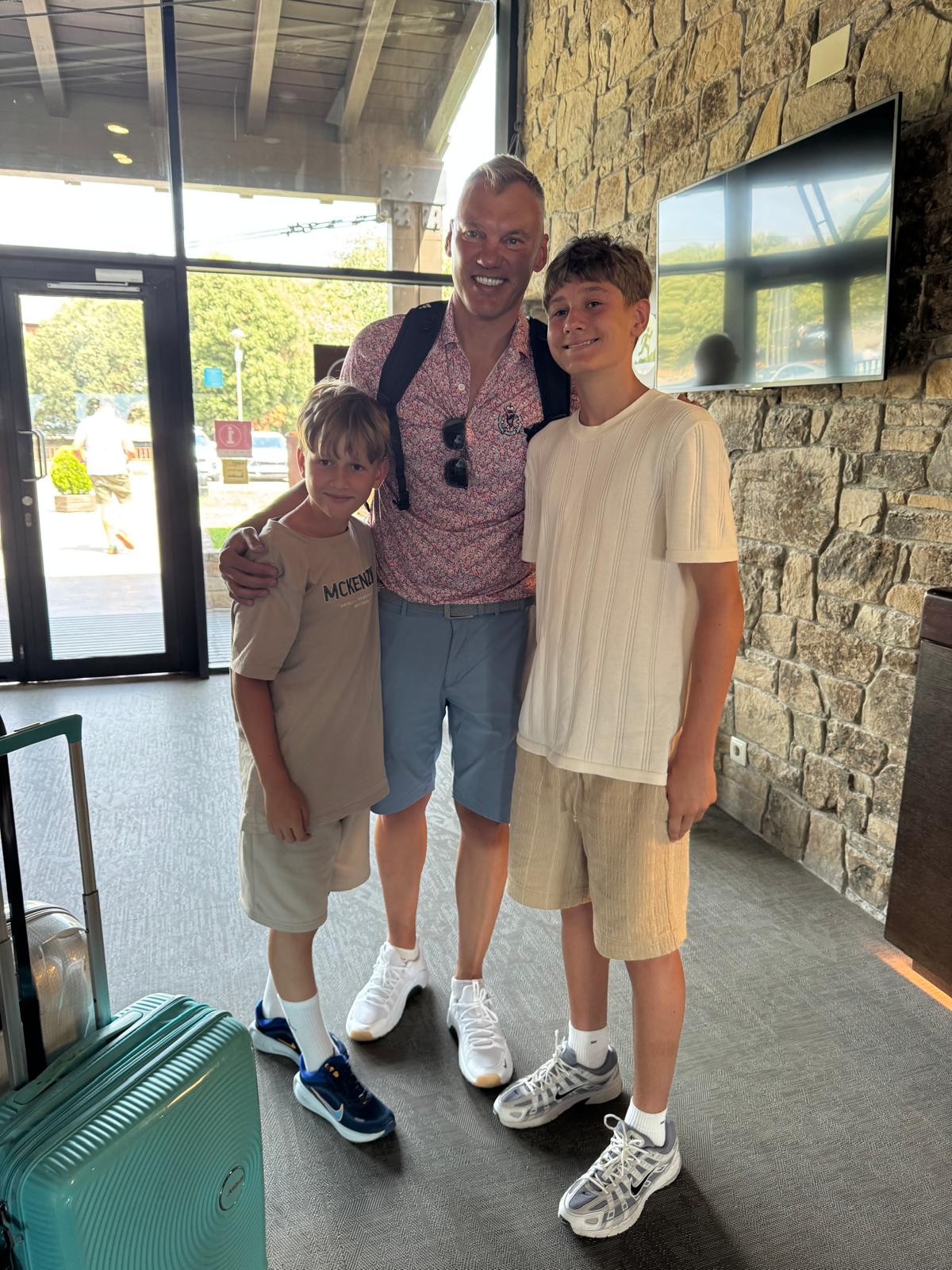
Dates, location and how the week begins and ends
| Dates (2026 edition) | 19–25 July 2026 |
| Venue | El Montanyà — Hotel Montanyà Resort ****, Avinguda del Montseny s/n, 08553 Seva, Barcelona |
| Arrival | Sunday 19 July, 16:00, at the hotel reception (staff on site from 15:00) |
| Camp ends | Saturday 25 July, 13:00 |
| Board (residential) | Full board |
| Facilities | Indoor courts, outdoor courts, gym and fitness area, changing rooms, pools |
External players are called to the same place at the same time on the Sunday, which I appreciated — the boys weren’t dropped into a group that had already bonded overnight.
The Saturday finish is worth planning around. Families are invited to watch the closing activities, and the morning runs finals of the week’s competitions plus 5-on-5 games, followed by the prize-giving. Don’t book anything for Saturday morning. Being there for it was one of the better hours of our week.
Getting there: it’s roughly 45 minutes by car from Barcelona with clear traffic, and Vic is about fifteen minutes away. There’s nothing within walking distance of the venue, so if you’re doing the day tier, you’re driving twice a day.
How much does the Šarūnas Jasikevičius camp cost?
There were two tiers for the 2026 edition:
| Tier | Price per child | What’s included |
|---|---|---|
| Interior / residential | €1,000 | Six nights’ accommodation, full board, all activities, all sessions, night competitions |
| Exterior / external (day) | €550 | 09:30–20:00 daily, lunch, all activities and sessions |
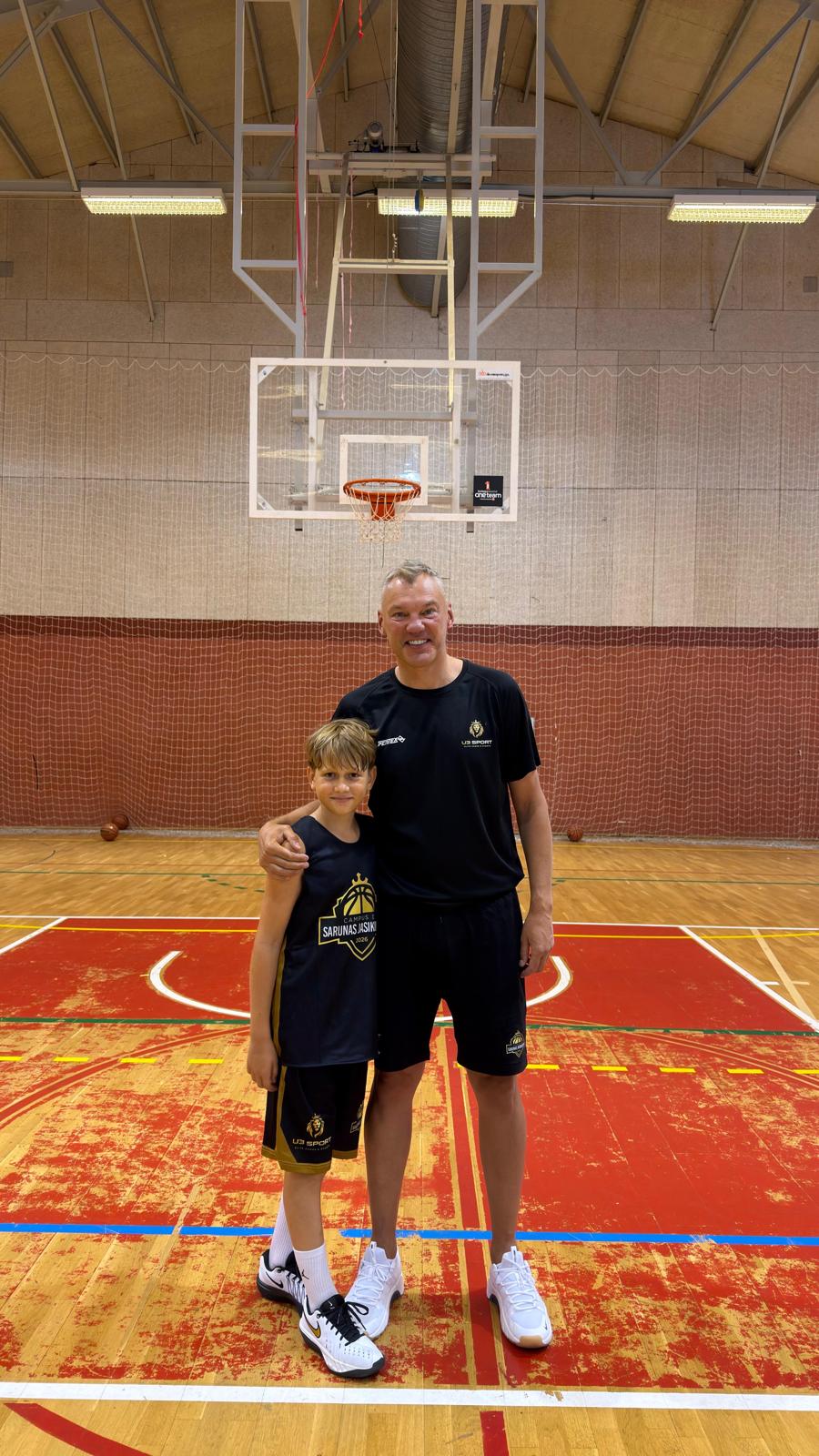
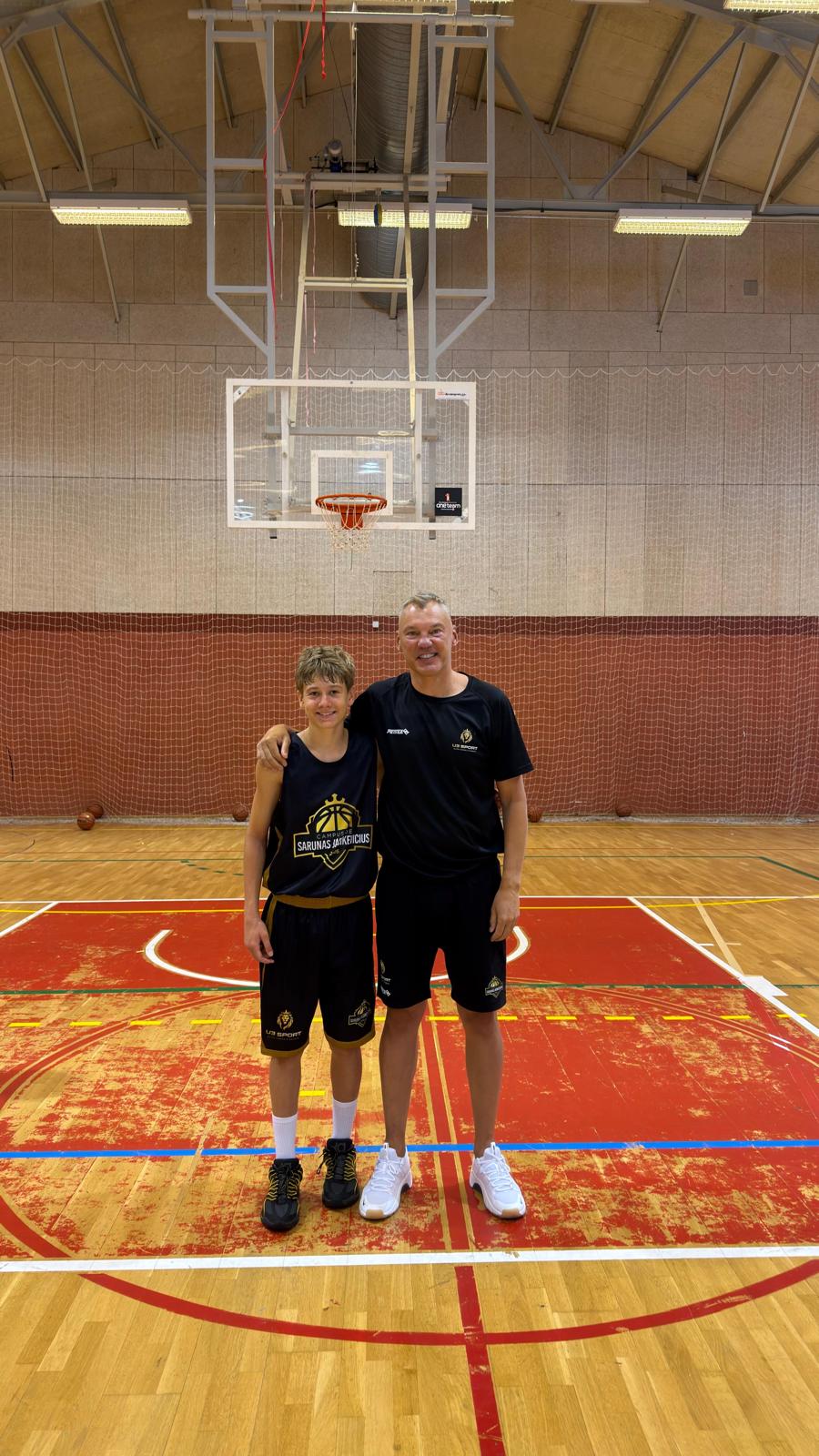
Every participant receives camp kit: two t-shirts, a pair of shorts and a commemorative backpack. Residential players share rooms in fours, and bed linen isn’t something you need to bring.
External players get a changing room to leave their things and shower after the last session of the day, plus a designated rest area after lunch — so they’re not sitting on a bench for four hours in the middle of the day.
These are 2026 prices and will change each edition. Treat them as a benchmark for budgeting, not a quote.
What does a day at the camp actually look like?
This is the part I most wanted before booking, and the part most camp websites are vague about. The official schedule for the week:
| Time | Block |
|---|---|
| 08:00–09:00 | Optional individual technique session (Mon, Tue, Thu, Fri — not Wednesday) |
| 09:15 | Breakfast |
| 10:00–11:30 | Training or pool/activity |
| 11:30–13:00 | Training or pool/activity |
| 13:00–17:00 | Lunch, rest and free time |
| 17:00–18:30 | Training or pool/activity |
| 18:30–20:00 | Training or pool/activity |
| 20:00–22:00 | Dinner and free time |
| 22:00–23:15 | Night activities and competitions |
Groups 1–2 (Minis and Infantiles) and groups 3–4 (Cadetes and Juniors) alternate between the court block and the pool/activity block each day, so nobody trains four times in a row and nobody spends the day in the water.
If you have two children going, check which pair of groups they fall into. Marc was in Group 1 (Minis) and Damian in Group 2 (Infantiles), and because groups 1 and 2 share a weekly timetable, our two were on the same agenda nearly every day. Same start, same lunch block, same finish. For a day-tier family that’s the difference between one drive each way and a logistical mess, and even for residential families it means siblings eat and rest at the same times. A 10-year-old and a 13-year-old land in different groups but the same timetable; a 13-year-old and a 15-year-old would split across the 1–2 and 3–4 schedules and run on opposite rotations.
A few things I only understood once we were living alongside it:
The optional 8:00 session is a real filter. It’s voluntary individual technique work for players who want to add to their week, four mornings out of six. Whether your child gets up for it tells you something about where they are with the sport. No pressure either way — it’s genuinely optional, and there’s none on Wednesday.
The 13:00–17:00 block is long. Four hours of lunch, rest and free time in the middle of the day. Residential kids go to their rooms; some play, some sleep. Our two came back to our room and flopped. If your child struggles with unstructured time, know this is coming.
The nights are the hook. Competitions run every evening from 22:00 to 23:15 — 3×3, 5×5, contests. Jasikevičius’s own line in the camp guide is that the days are for training and the nights are for competing, and the schedule takes that literally. We watched most evenings and it was, honestly, the best spectator part of the week.
Saturday is separate: breakfast at 08:00, then finals and 5-on-5 from 09:00 to 13:00, prize-giving, and done.
What do they actually work on?
The technical programme is organised around six pillars, and it’s more structured than I expected for a summer camp:
- Individual technique — ball handling, changes of pace, body control, footwork
- Shooting — mechanics, catch and shoot, pull-up, finishing off the dribble
- Finishing — 1v0, 1v1, off-screen, contact finishes
- Collective play — spacing, passing, creating superiorities, fast break
- Decision-making — reading the defence, pick and roll, hand-offs, live play
- Defence — close-outs, 1v1 defence, weak side, use of hands
Sunday evening’s opening session is joint across all groups and covers basic individual technique, dribbling and shooting, 1v1 from the catch, and superiorities — a level-setting session before the groups split.
What I’d tell a parent: this is not a fun-and-games basketball week with a famous name on the t-shirt. Contact finishes and weak-side defence are not filler. If your child plays club basketball and wants to come back better, the content is there.
Residential or day tier? How we decided
We took the external tier for both boys and booked a family room at the hotel, and I want to lay out the arithmetic because it surprised us.
- Two residential places: €2,000
- Two day places (€1,100) + six nights’ half board for all four of us at the hotel (€1,225.14) + tourist tax (€35.64): €2,360.78
For about €360 more, all four of us were there for the week, with breakfast and dinner included, and the boys slept in the same room as us. Dumitru and I worked remotely from the hotel while they trained.
The reasons weren’t purely financial. This camp wasn’t in our plans at the start of the year — we already had Ibiza booked, and the boys had another sleepaway camp the week after this one. Two consecutive weeks of our children being away without us was more than we wanted. We’d also already spent our holiday allowance on Ibiza, so working remotely was the only way the week happened at all.
Take the residential tier if: your child is a teenager who’d rather be with the group at night, you can’t be there yourself, or the shared-room living-together part is exactly what you want them to get out of it. Genuinely, the night competitions and the room-sharing are where the friendships form, and external kids catch the tail end of that rather than living inside it.
Take the day tier if: you can be nearby, your child is younger, or you’re doing what we did and building the week around the whole family. Be realistic that you’re committing to two drives a day and a 09:30 start.
What to pack for the camp
Straight from the official list, which is a good one:
Training
- Training clothes for several sessions a day — more than you think
- Two pairs of basketball shoes
- Towel
Pool and activities
- Swimsuit
- Flip-flops
- Sun cream
- A second towel
General stay
- Sportswear for free time
- Toiletries
- Sleepwear
- A tracksuit or warm layer — the nights in the Montseny get cool even in July
Not needed: bed linen.
Two additions from us. First, the pool water is genuinely cold — it’s a mountain resort and it doesn’t warm up the way a coastal pool does, so don’t assume the pool block is a warm-weather activity. Second, if you’re doing the day tier, keep a bag of snacks and water in the car. There’s no shop within walking distance of the venue.
Safety, medical cover and the practical details
The organisation handles this properly, and if you’re sending a child away for the first time, these are the answers you’re looking for:
- Documents: DNI or passport, plus a copy of the health card, available for the whole stay.
- Medication: bring enough for every day of the camp, plus a spare dose. Any relevant medical information should be shared with the organisation.
- Recent injuries: tell the camp physiotherapist on arrival at the hotel and hand over any medical information you have.
- Medical support: there’s a physiotherapist on site with equipment, and the organisation carries insurance cover through a mutua for injuries.
- Allergies and intolerances: communicated in advance and accommodated.
- Hydration: water and isotonic drinks are provided during training sessions.
- Rules: internal conduct rules are explained directly to the players at the start of the camp.
The physiotherapist being on site rather than on call is the detail I’d weigh most heavily. With four court blocks a day for six days, something is going to tweak.
Was it worth it? Our honest verdict
Yes. Both boys loved it, and the thing I keep coming back to is how well-run it was — the schedule held, the groups were properly separated by level, the coaching staff stayed on top of a large number of children for six long days, and the free-time blocks were supervised rather than abandoned.
What our two got out of the hotel side of it was a bonus: during free time they played table football and 8-ball pool in the bar area, and there were other games there too. Between sessions they had pool time and organised activities, all managed by the camp’s own coaches and organisers rather than left to chance.
What I’d tell a parent considering it:
- If your child plays club basketball and wants a serious week, this delivers. The technical content is real.
- If your child plays casually, the intensity may be too much. Four blocks a day plus competitions until 23:15 is a lot.
- Do the residential tier if you want them to get the full social experience, and don’t underestimate how much of the value sits in the nights.
- Do Saturday morning. Watching the finals and the prize-giving was worth rearranging our weekend for.
Šarūnas Jasikevičius camp — FAQ
Šarūnas Jasikevičius basketball camp — frequently asked questions
How much does the Šarūnas Jasikevičius basketball camp cost?
The 2026 edition had two tiers: €1,000 per child for the residential option, which included six nights’ accommodation, full board and all activities, and €550 per child for the external day option, which included all activities and lunch with attendance from 09:30 to 20:00 each day. Every participant received camp kit consisting of two t-shirts, shorts and a backpack. Prices change from edition to edition, so confirm current rates with the organiser.
Where is the Šarūnas Jasikevičius camp held?
The camp is held at El Montanyà — Hotel Montanyà Resort, Avinguda del Montseny s/n, 08553 Seva, Barcelona, on the edge of Montseny Natural Park. It is roughly a 45-minute drive from Barcelona and about fifteen minutes from Vic. The venue has indoor and outdoor courts, a gym and fitness area, changing rooms and pools, and all spaces are reserved exclusively for the camp during the week.
What is the daily schedule at the camp?
A typical day runs an optional individual technique session from 08:00 to 09:00 on Monday, Tuesday, Thursday and Friday, breakfast at 09:15, two blocks of training or pool activity from 10:00 to 13:00, lunch and free time from 13:00 to 17:00, two further blocks from 17:00 to 20:00, dinner and free time from 20:00 to 22:00, and night activities and competitions from 22:00 to 23:15. Groups alternate between court and pool blocks so no group trains four times consecutively.
What ages is the Šarūnas Jasikevičius camp for?
Participants are divided into four groups by level and age category: Group 1 Minis, Group 2 Infantiles, Group 3 Cadetes and Group 4 Juniors, which broadly correspond to the Spanish federation categories from around under-12 up to under-18. Sessions are adapted to the characteristics of each group, and Groups 1–2 and Groups 3–4 follow alternating daily timetables.
Can siblings of different ages attend the camp together?
Yes, and depending on their ages they may follow the same daily timetable. Our sons attended at ages 10 and 13 and were placed in Group 1 (Minis) and Group 2 (Infantiles) respectively. Because Groups 1 and 2 share a weekly schedule, they were on the same agenda almost every day, with the same start time, lunch block and finish. Groups 3 and 4, the Cadetes and Juniors, follow a separate rotation, so siblings split across those two pairings would be on opposite timetables.
What should my child pack for the camp?
Training clothes for several sessions a day, two pairs of basketball shoes and a towel for training; a swimsuit, flip-flops, sun cream and a second towel for the pool; sportswear for free time, toiletries, sleepwear and a tracksuit or warm layer for cool mountain nights. Bed linen is not needed. We would add snacks and bottled water if your child is attending as a day participant, as there is no shop within walking distance of the venue.
Is there medical support at the camp?
Yes. A physiotherapist is on site with the necessary equipment, and the organisation carries insurance cover through a mutua for any injuries. Families must provide a DNI or passport and a copy of the health card, bring enough medication for every day plus a spare dose, and report any recent injuries to the camp physiotherapist on arrival. Allergies and intolerances are accommodated when communicated in advance, and water and isotonic drinks are provided during training.
Can parents watch the camp?
Families are invited to attend the closing activities on the final Saturday. The morning runs the finals of the week’s competitions and 5-on-5 games from 09:00 to 13:00, followed by the prize-giving and the closing of the camp. If you are attending as a day-tier family staying nearby, you will also see the evening competitions, which run from 22:00 to 23:15 each night.
Is the day tier or the residential tier better value?
It depends on whether you want to be there too. For our family, two day places plus six nights’ half board at the hotel for all four of us came to roughly €360 more than two residential places, which meant the whole family had the week together and both parents could work remotely from the hotel. The residential tier is better if your child is a teenager who wants the full social experience, since much of the camp’s bonding happens in the shared rooms and the late-night competitions.
