
I’ll start with the thing every other article leaves out: Cadaqués is about two and a half hours from Barcelona, there is no train, and the road in ends with a mountain pass.
That’s five hours of driving for a village you can cross on foot in fifteen minutes. Add a Dalí house ticket, which comes with a fixed time slot you cannot move, and you’ve built a day where you drive for five hours to be somewhere for three.
Cadaqués is worth going to. It is not worth going to and coming back the same day. Stay a night, or come from a Costa Brava base you’re already on. That’s the whole advice, and everything below assumes you’ve taken it.
The essentials
- Distance: about 2.5 hours by car from Barcelona
- By train: none. Nothing goes there. Figueres by train then bus, or drive
- Dalí House-Museum: €15.50 online (Sept–June), €18.50 online (July–Aug), free under 9
- The beaches: pebbles, not sand. Read the beach section before you promise children anything
- How long you need: an afternoon and a morning. So, a night
Cadaqués is two and a half hours from Barcelona with no train — this is a town to stay the night in, not to day-trip. Several of its boutique hotels are adults-only, so check before booking with children. These are affiliate links — we earn a small commission at no extra cost to you.
Why Cadaqués looks the way it does
Because it was hard to get to, and it still is.
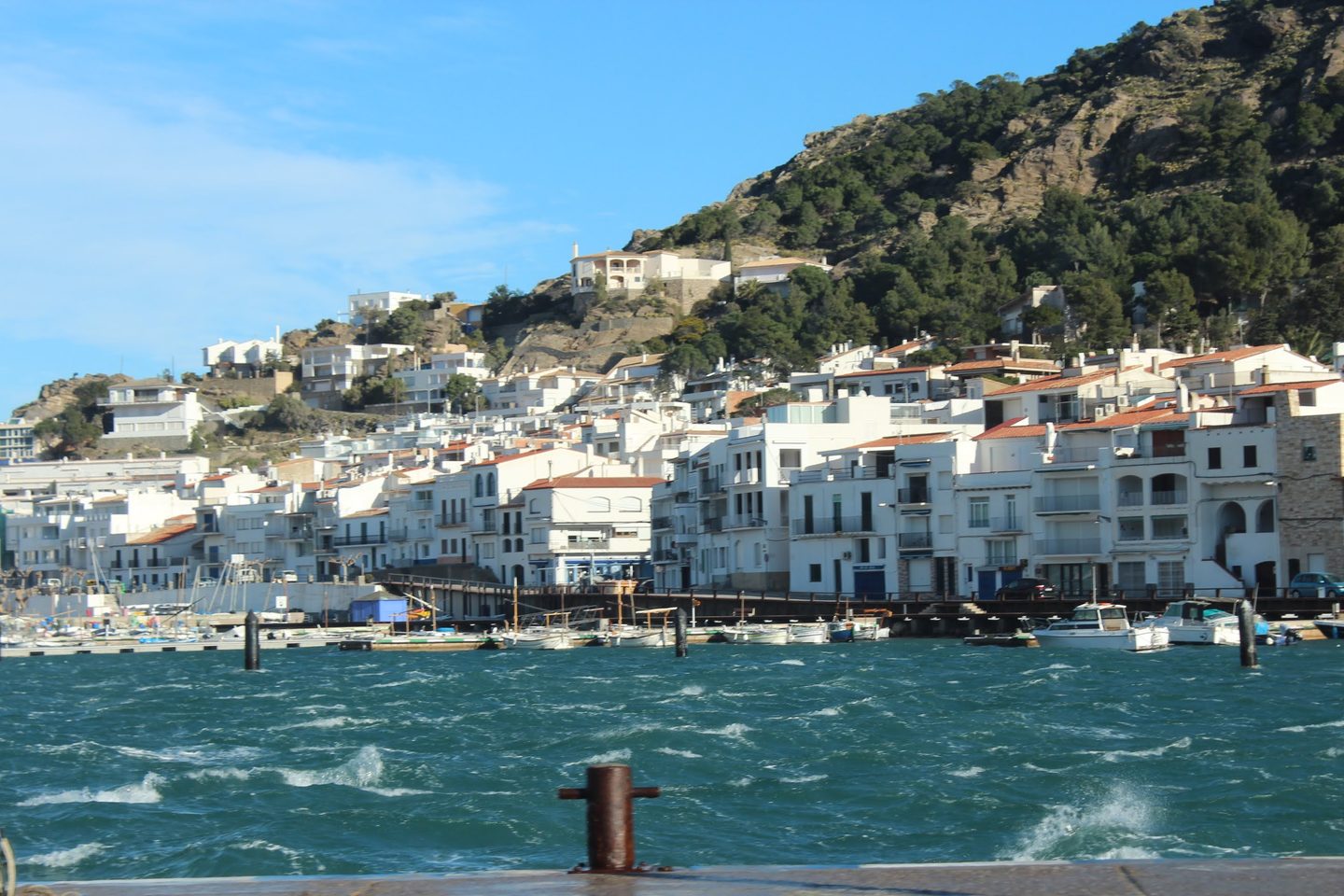
Cadaqués sits on the far side of the Cap de Creus headland, and the only road in climbs over a pass through the Serra de Rodes and drops down to the sea on the other side. For most of its history it was easier to reach by boat than by land. The mountains behind it did what motorways undid everywhere else on this coast: they kept the developers out.
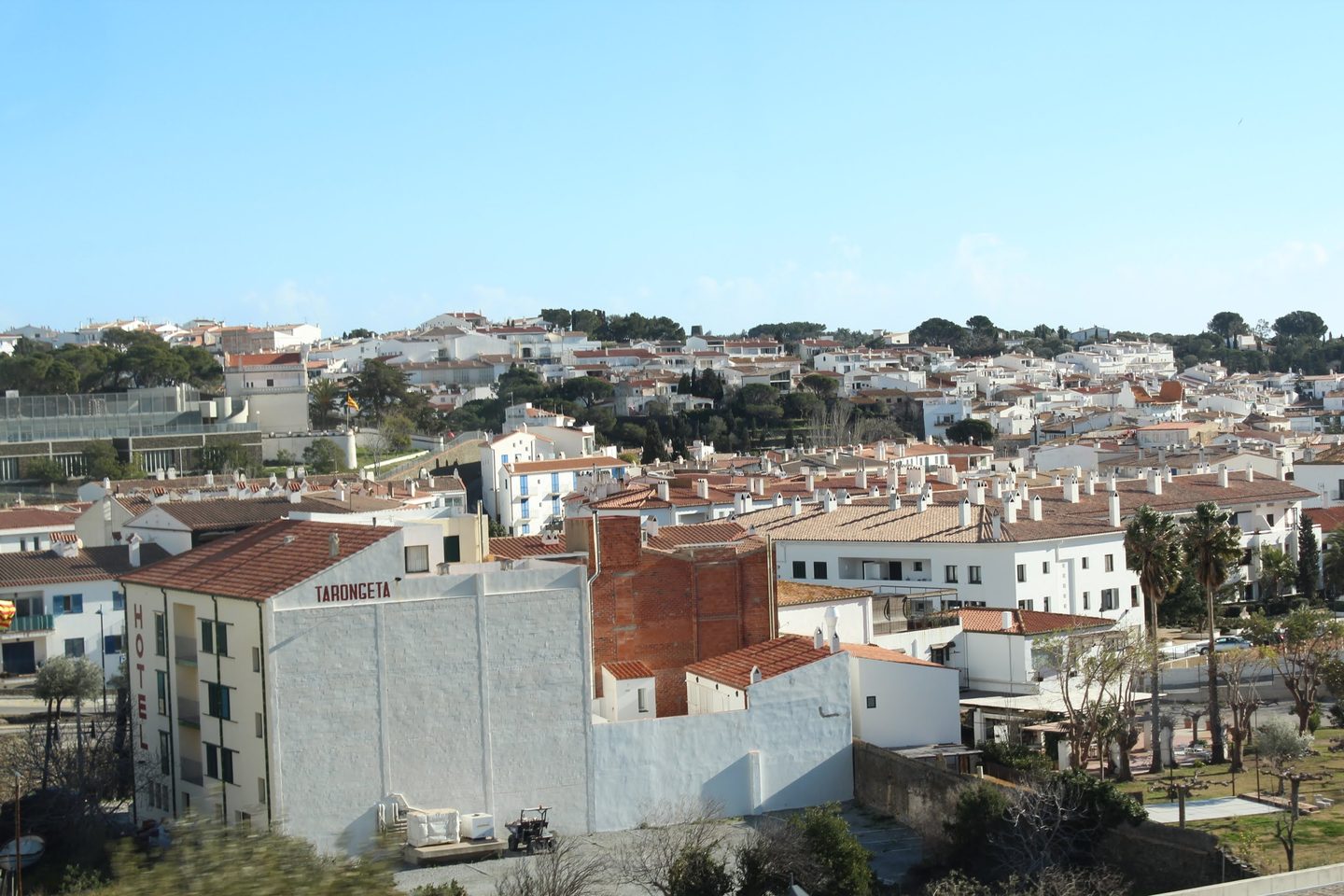
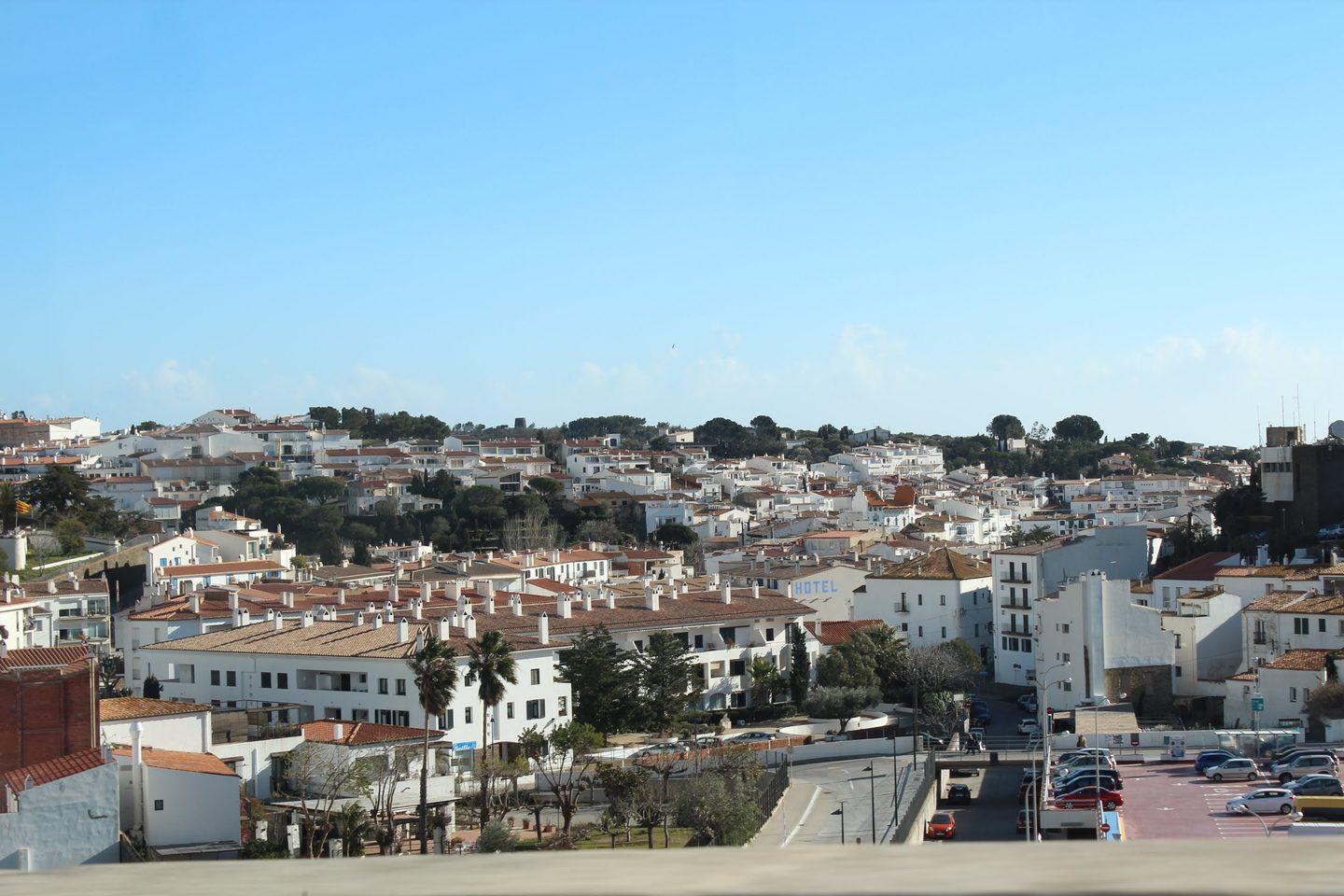
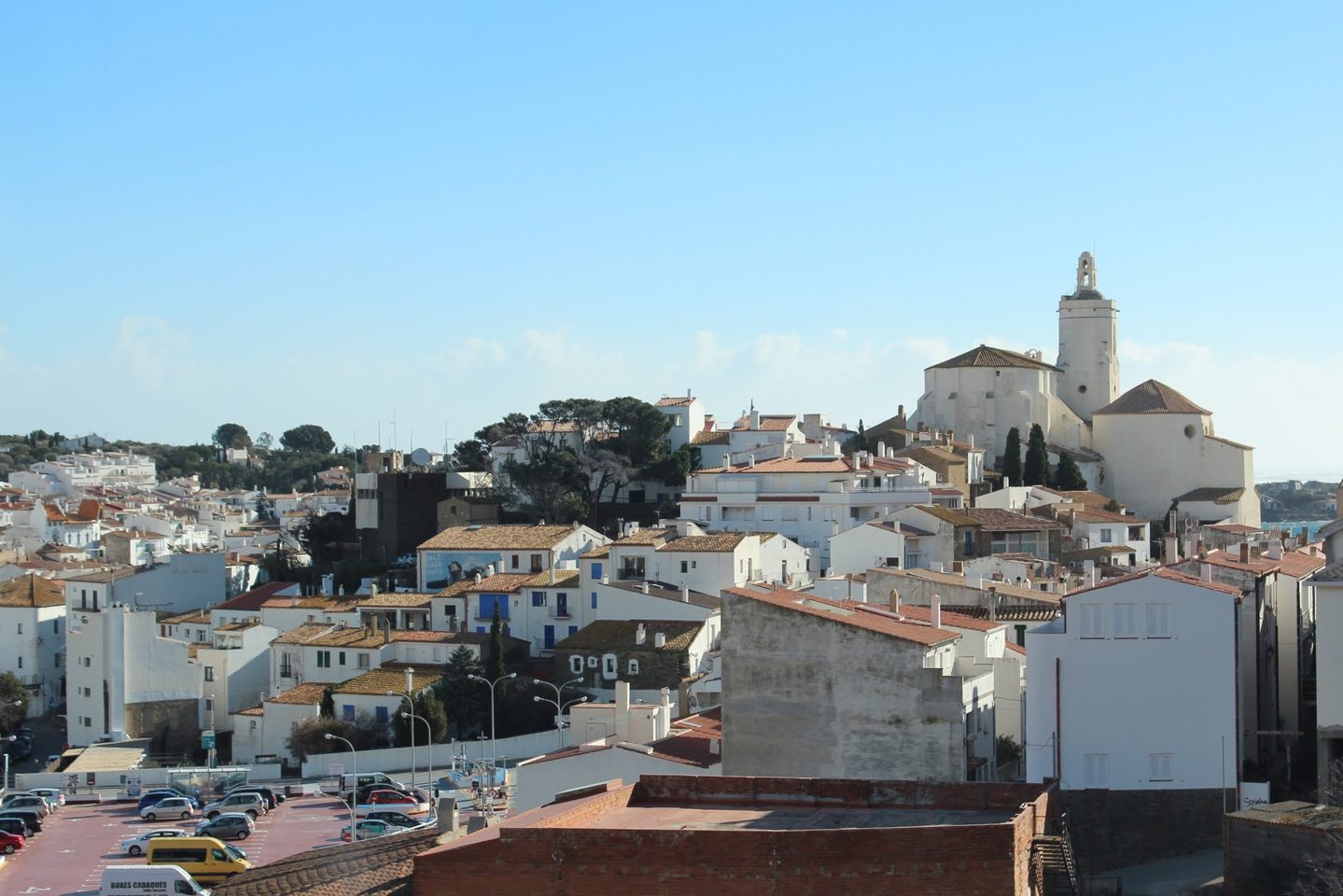
So while the rest of the Costa Brava filled with apartment blocks in the 1960s and 70s, Cadaqués stayed a whitewashed fishing village with narrow lanes running up to a church on the hill. That’s not preservation policy. That’s a bad road.
The same isolation is why the artists came. Dalí spent his life here, in the next cove along, and the people who came to see him — Picasso, Duchamp, Man Ray, Lorca and others — made a difficult village into an unlikely centre of the twentieth-century avant-garde.
When you walk the lanes, what you’re looking at is the result of being inconvenient. Which is also why you shouldn’t treat the drive as an obstacle — the drive is why there’s anything to see.
The Salvador Dalí House-Museum at Portlligat
This is the reason most people come, and it’s worth the trip.
It isn’t a gallery. It’s the house Dalí actually lived and worked in, in the cove of Portlligat just around the headland from Cadaqués, built up over decades out of a row of fishermen’s huts he bought one at a time. The result is a building with no logic to it — low doorways, corridors that turn for no reason, rooms at different levels, because each hut was joined to the last as he acquired it.
You walk through his studio with the canvas still on the easel, his bedroom, the sitting room, and out into the garden with the swimming pool. It’s small, strange and much more personal than the museum in Figueres.
The ticket rules — read this twice
More people’s plans are ruined by these than by anything else on the Costa Brava.
- Booking is compulsory. You book a date and a time. You cannot arrive and buy a ticket
- You must collect your ticket at the office at least 30 minutes before your slot. If you don’t, your booking is cancelled and there is no refund
- Groups go in every 10 minutes. The house is genuinely tiny, so numbers are controlled tightly
- It’s self-guided, with staff stationed in the indoor rooms
- Closed 7–11 January, and hours change with the season — 9:30 to 20:00 from mid-June to mid-September
The 30-minute rule is the one that catches people. If your slot is 12:00, you need to be at the ticket office by 11:30 — and you’ve just driven two and a half hours to get there. Build in an hour of slack, not thirty minutes.
What it costs
| Online | Ticket office | |
|---|---|---|
| 2 Sept – 30 June, house + olive grove | €15.50 | €17.00 |
| Reduced | €12.00 | €14.00 |
| July – August, house + olive grove | €18.50 | €20.50 |
| Reduced | €14.00 | €16.00 |
| Olive grove only | €8.00 | — |
| Children 0–8 | Free | Free |
Book online. It’s €1.50 to €2.00 cheaper and it’s the only way to be sure of a slot.
Note the direction of that discount, because it isn’t universal in Catalonia. Here online is cheaper. At the Palau de la Música in Barcelona the box office charges €2 more than online — the same direction. But don’t assume the habit: some attractions here reward walking up. Check each one.
Is it worth it with children?
Under-9s are free, which changes the maths completely. Two adults and two small children in low season is €31 online for the family.
Whether they’ll enjoy it is a different question. It’s a house — no interactive anything, quiet rooms, a staff member watching. What works is that it’s weird: the doorways are the wrong height, the corridors don’t go where you expect, and there are odd objects everywhere. Children who’d be bored by paintings on a wall tend to be fine in a house that feels wrong.
The olive grove is €8 on its own, which is a useful option if one adult wants the house and the other has a toddler who isn’t going to manage forty minutes of quiet.
The village
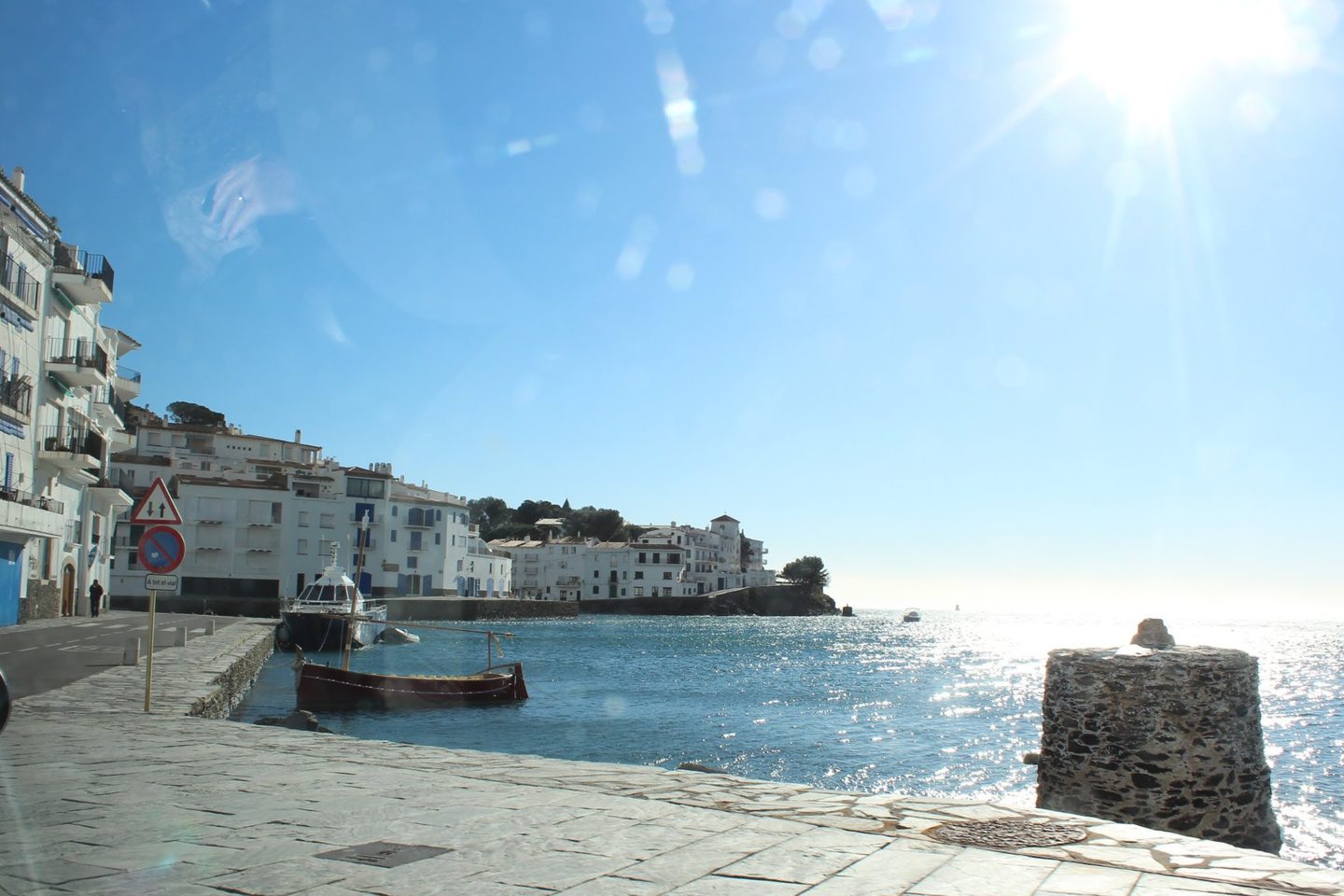
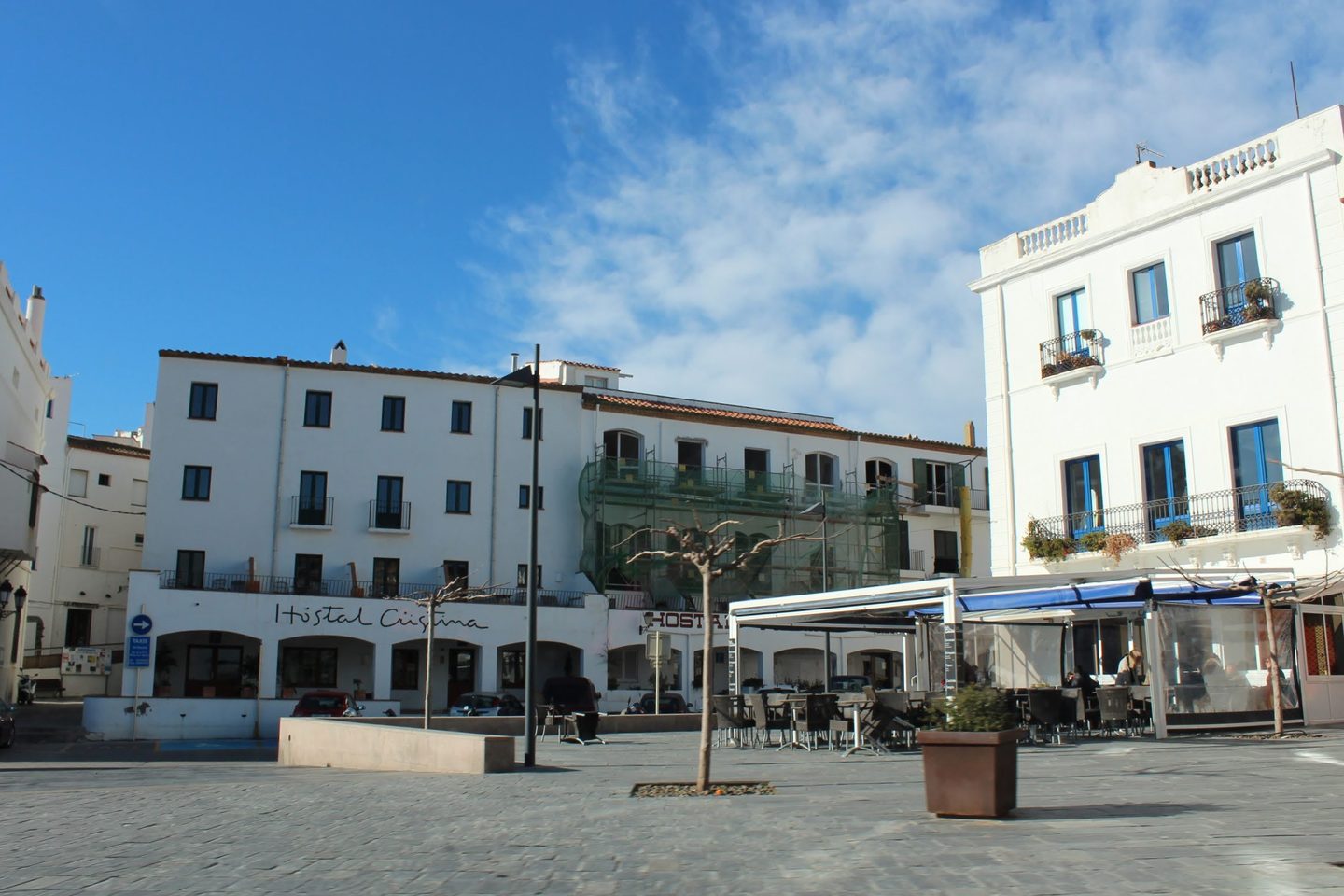
Small, white, steep and best walked without a plan.
The lanes are narrow, paved in dark stone and they all tend uphill towards the church of Santa Maria at the top, whose interior holds a large baroque altarpiece — a startling amount of gilt for a village this size, and a reminder that fishing here once paid well.
Below the church the streets drop back to a curved seafront of white houses, small boats pulled up, and a line of restaurants. That view — white village, dark water, boats — is the thing Dalí painted over and over, and you can stand where he stood to do it.
There’s a statue of him on the promenade, which everybody photographs.
The beaches: pebbles, not sand
Be straight about this, because it is the single most common disappointment in Cadaqués.
The beaches here are pebble and shingle, not the sand of Platja d’Aro or Pineda. The water is clear and cold and lovely, and the coves are beautiful. But it’s hard underfoot, a towel on stones is not a towel on sand, and small children who expect to build something will be unimpressed.
What to bring: water shoes, and a thicker mat or a sunbed rather than a towel.
If your family wants sand, go somewhere else on this coast and come to Cadaqués for the village. Don’t come here for a beach day. Our Platja d’Aro and Tossa de Mar posts are the right answer to that question.
Cap de Creus, if you have the morning
North of the village the road continues into the Cap de Creus natural park and out to the easternmost point of mainland Spain.
It’s a landscape unlike anything else on this coast: bare rock, scoured into shapes by the tramuntana wind, almost no vegetation, and the sea on three sides. It looks like the background of a Dalí painting because it is the background of Dalí paintings — he grew up looking at these rocks, and the melted, boneless shapes in his work are recognisably these formations.
Making that connection is the single best reason to go: you see the house in the morning and the rocks in the afternoon, and the paintings stop being surreal and start being something close to landscape.
There’s a lighthouse at the end with a restaurant.
How to actually get there
By car — the realistic option
About 2.5 hours from Barcelona. AP-7 north, then east towards Roses and Cadaqués, and the last stretch is the pass over the Serra de Rodes — winding, scenic, and not the place to be running late for a timed museum slot.
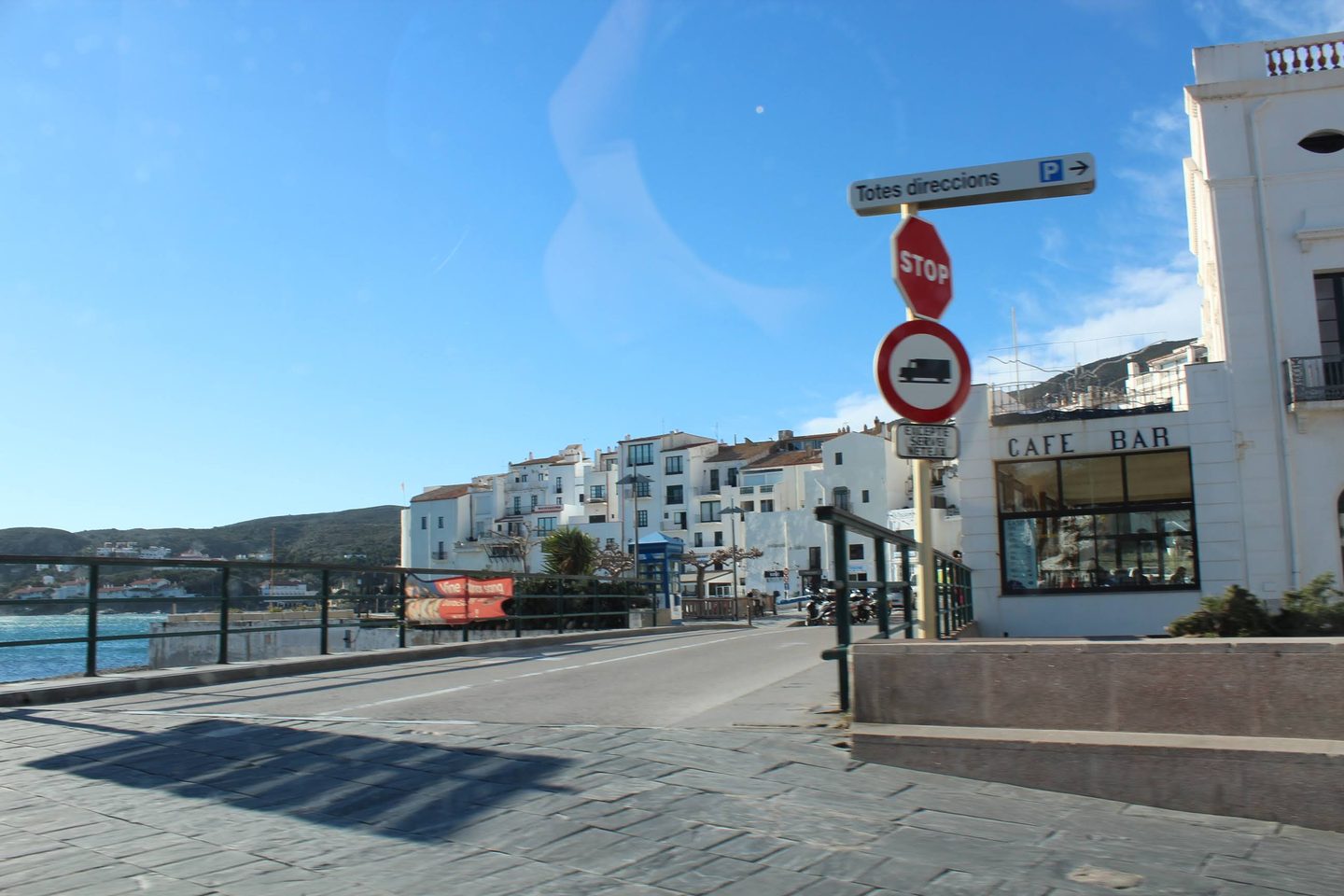
Parking is the problem. The village is small and the streets barely take a car. There are paid car parks on the edge and you walk in.
By public transport — possible, not pleasant
Train to Figueres, then a bus over the pass to Cadaqués. It works, the buses are limited, and you’re committed to their timetable in both directions.
The version of this that makes sense: combine it with the Dalí Theatre-Museum in Figueres, which is at the train station end. Figueres museum in the morning, bus over to the house at Portlligat in the afternoon, stay the night. Two Dalí sites, one trip, and no driving.
The version I’d actually book
One night in Cadaqués. Arrive mid-afternoon, walk the village in the early evening when the day visitors have gone, eat on the front, sleep. Dalí house first thing, when the light in the cove is at its best and the 10-minute groups aren’t backed up. Cap de Creus before lunch. Home in the afternoon.
That is a genuinely good two days. The same content squeezed into one day is five hours of driving and a rush.
Is Cadaqués worth visiting?
Yes — and no, not as a day trip from Barcelona.
It’s the most distinctive village on the Catalan coast, it’s beautiful in a way the developed Costa Brava isn’t, and the Dalí house is a better experience than most museums. All of that is true.
And it’s two and a half hours away with no train, so a day trip means five hours in a car to spend three hours somewhere, with a museum slot you can’t move in the middle of it.
Go if you can give it a night, or you’re already based on the Costa Brava.
Don’t go if you’ve got one free day in Barcelona — spend it on Girona or Tarragona, both under an hour by train, and save Cadaqués for a trip where it isn’t rushed.
Don’t come for the beach. Pebbles. Come for the village, the house and the rocks.
All twenty day trips from Barcelona · Maresme vs Costa Brava: which coast is which
Dalí House-Museum prices verified at the Dalí Foundation, September 2026. Book ahead — a slot and a 30-minute collection deadline are compulsory.

Frequently asked questions
How much are Dalí house Portlligat tickets?
From 2 September to 30 June, the house and olive grove cost €15.50 online or €17.00 at the ticket office, with a reduced rate of €12.00 online. In July and August it rises to €18.50 online or €20.50 at the office, reduced €14.00. The olive grove alone is €8.00, and children aged 0 to 8 go free. Book online — it is cheaper and it is the only reliable way to get the slot you want.
Do you need to book the Dalí house in advance?
Yes, booking is compulsory and you reserve a specific date and time — you cannot turn up and buy a ticket. You must also collect your ticket at the office at least 30 minutes before your slot, or the booking is cancelled with no refund. Visitors enter in groups every 10 minutes because the house is very small. If your slot is at midday you need to be at the ticket office by 11:30, so build in an hour of slack rather than half an hour.
How far is Cadaqués from Barcelona?
About two and a half hours by car, and there is no train to Cadaqués at all. The nearest railway is Figueres, from where a bus crosses the pass to the village. Because of that distance, Cadaqués works much better as an overnight stay or as a trip from a Costa Brava base than as a day trip from Barcelona.
Is Cadaqués worth visiting?
It is the most distinctive village on the Catalan coast and the Dalí house is more interesting than most museums, so yes — but not as a day trip from Barcelona. Five hours of driving to spend three hours somewhere, with a museum slot you cannot move in the middle of it, is a poor exchange. Give it a night and it becomes an excellent two days.
Does Cadaqués have a sandy beach?
No. The beaches in and around Cadaqués are pebble and shingle rather than sand. The water is clear and the coves are beautiful, but it is hard underfoot and small children who want to build sandcastles will be disappointed. Bring water shoes and a thicker mat than a towel, and if your family wants a sand day, choose somewhere else on the coast and come to Cadaqués for the village.
Why is Cadaqués so unspoiled?
Because it was difficult to reach. The only road in climbs over a pass through the Serra de Rodes, and for most of its history the village was easier to get to by boat than by land. That inconvenience kept the developers out while the rest of the Costa Brava filled with apartment blocks, and it is also why Dalí and the artists around him settled here.
Is the Dalí house good with kids?
Children under 9 go free, so a family of two adults and two small children pays €31 online in low season. Whether they enjoy it depends on the child — there is nothing interactive and the rooms are quiet — but the house is genuinely strange, with doorways at the wrong height and corridors that turn for no reason, and that tends to hold children who would be bored by paintings on a wall. The olive grove costs €8 alone if one adult needs to stay outside with a toddler.
What is Cap de Creus?
A natural park north of Cadaqués reaching the easternmost point of mainland Spain: bare rock scoured into shapes by the tramuntana wind, almost no vegetation, and the sea on three sides. It is worth the drive because it is recognisably the landscape behind Dalí’s paintings — he grew up looking at these formations, and seeing them makes the work look less surreal and more like a record of a place.
Can you combine Cadaqués with the Figueres Dalí museum?
Yes, and it is the best way to do it without a car. Take the train to Figueres for the Dalí Theatre-Museum, which sits at the station end of town, then the bus over the pass to Cadaqués for the house at Portlligat, and stay the night. Two Dalí sites in one trip and no driving.
