
Tarragona has a Roman amphitheatre cut into the cliff, and the beach is directly below it.
That’s the whole pitch. You climb through the tiers where a Roman audience sat two thousand years ago, with the Mediterranean filling the gap where the far wall should be, and then you walk down to the sand and swim. It costs €5 to go in and children under 12 are free.
It is an hour from Barcelona and most visitors to Catalonia never come.
The essentials
- Distance: about 100 km south-west of Barcelona
- By train: roughly 1 hour on the regional service to Tarragona station — the city one.
- Amphitheatre: €5, under-12s free, 12–17 and students half price
- Five-monument combined ticket: €15
- The beach: Platja del Miracle, directly below the amphitheatre
- UNESCO: the Archaeological Ensemble of Tarraco, inscribed in 2000
- How long you need: half a day for the Roman city. A full day if you’re adding the beach, which you should
If PortAventura is the real reason for the trip rather than the Roman city, stay at La Pineda or Salou instead — see below. These are affiliate links — we earn a small commission at no extra cost to you.
Get off at the right station
This is the single most useful practical thing in this article and no guide mentions it.
Tarragona has two stations, and they are not near each other.
- Tarragona — the city station, down by the port, a short walk up into the old town. This is the one you want. Served by the regional and medium-distance trains, about an hour from Barcelona
- Camp de Tarragona — the high-speed AVE station, built out in open country roughly 10 km from the city. Fast to reach and then you need a bus or a taxi to get anywhere
So for Tarragona, unlike Girona, the slow train is the right train. The AVE saves you twenty minutes and then spends them putting you in a field. Take the regional service into the city station and walk.
What Tarraco actually was
Worth two minutes, because it explains the scale of what’s left.
Tarragona was Tarraco, and it was not a provincial outpost. It was the capital of Hispania Citerior — the whole eastern half of Roman Spain — and the principal centre of the Imperial cult for every Iberian province. Emperors were worshipped here on behalf of the entire peninsula.
Its urban planning became a model that other provincial capitals across the Roman world copied, and the materials were imported to make the point. UNESCO inscribed the ensemble in 2000, and notes that Tarraco’s defensive walls are among the earliest surviving examples of Roman military engineering anywhere.
So what you’re walking through isn’t a ruin of a market town. It’s the administrative and religious capital of Roman Spain, with the sea in front of it.
The amphitheatre
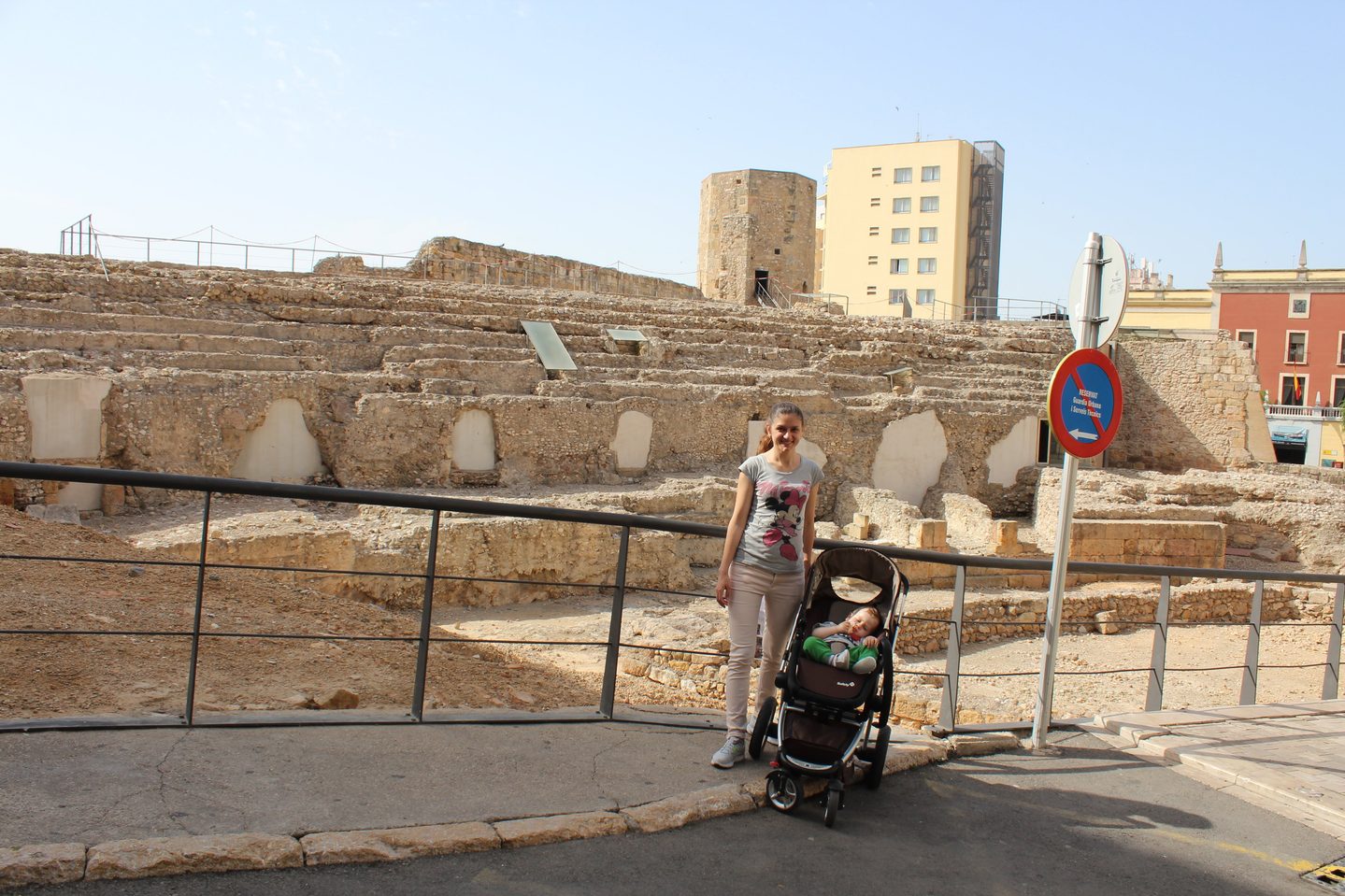
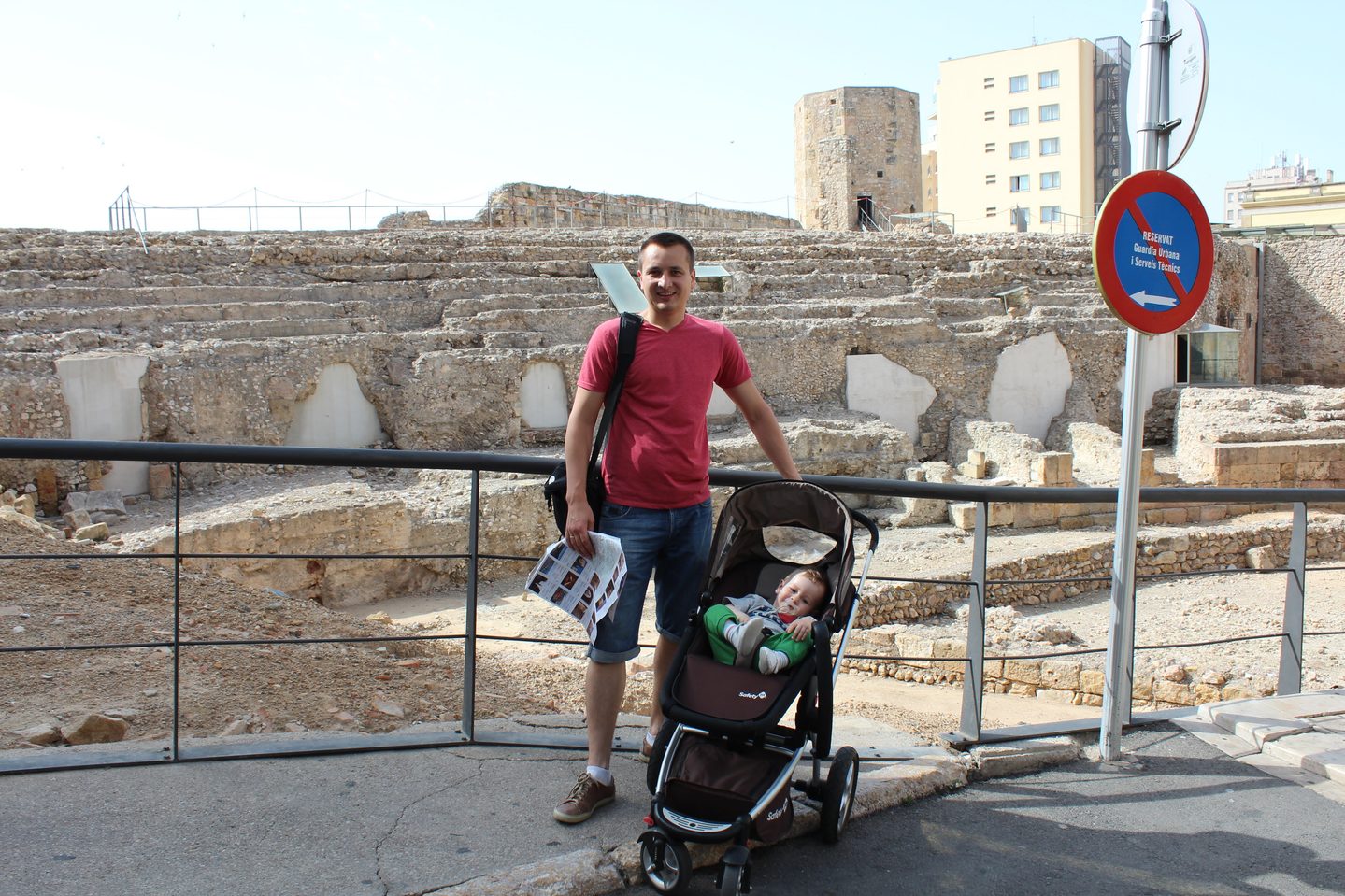
Built into the natural slope between the old town and the water, which is why it survives as well as it does — the hillside did half the structural work.
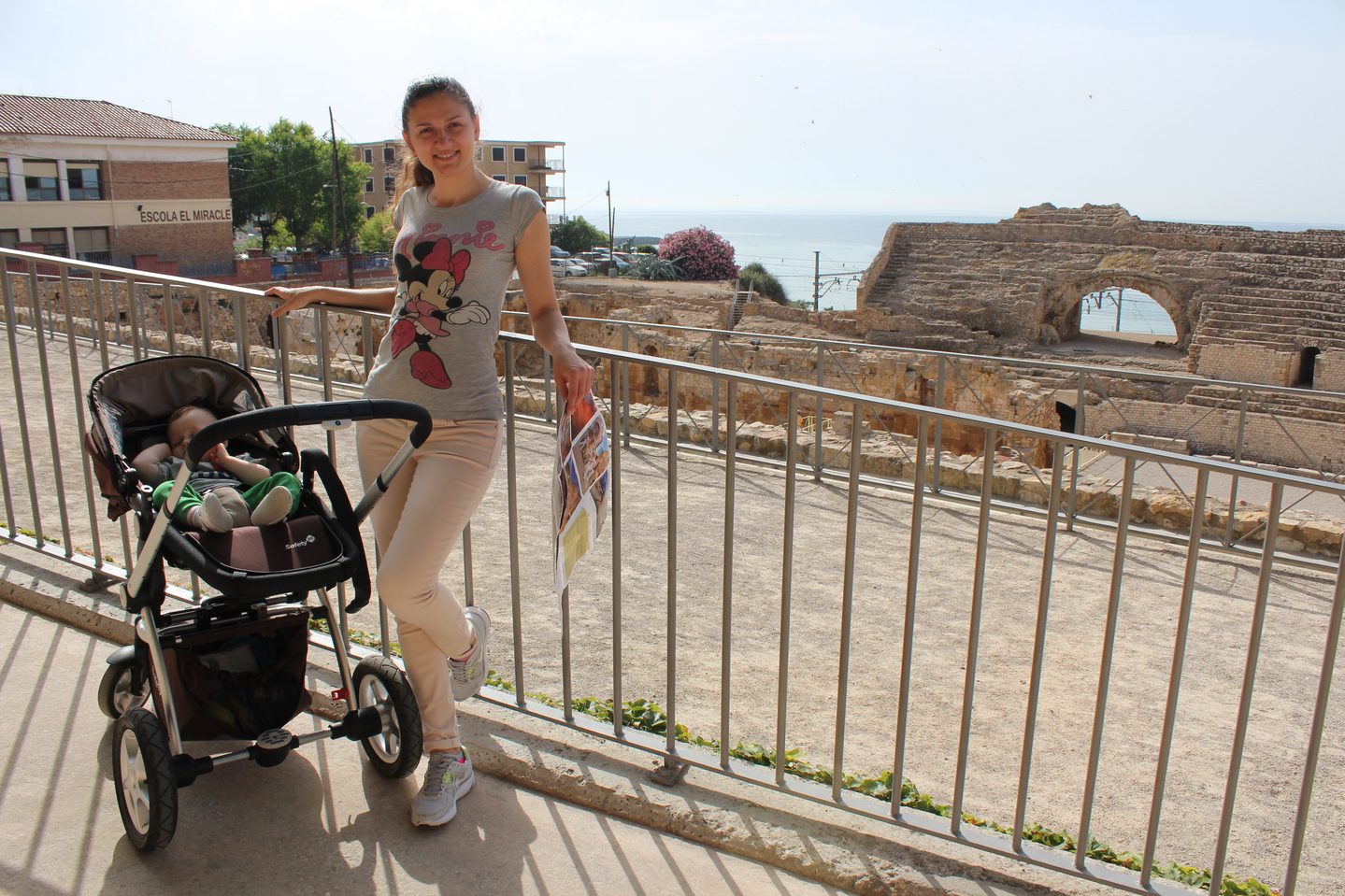
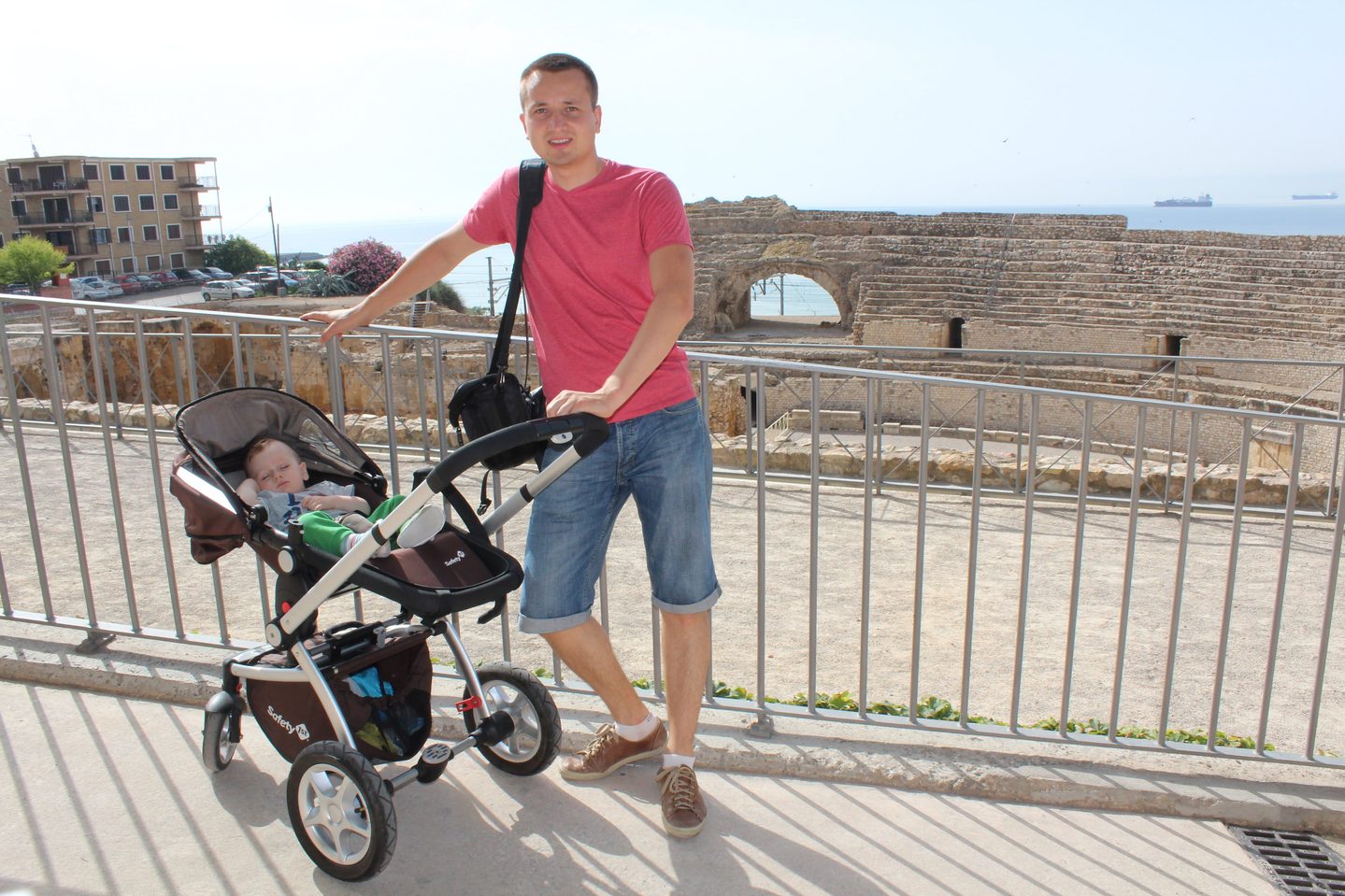
You come in at the top and the arena opens below you with the Mediterranean directly behind it. There’s no far wall blocking the view; the sea is the backdrop. Sit on the stone tiers for a minute and it is genuinely difficult not to think about what it was like to watch something violent with that view behind it.
In the middle of the arena floor there are the foundations of a later church, built on the spot where — according to tradition — the bishop Fructuosus and two deacons were burned alive in 259 AD. So the building contains its own sequel: the arena, and then the church the Christians put in the arena.
Practical:
- €5, free under 12, half price 12–17 and for students
- Uneven stone, steps, no shade. Hats in summer
With children this is the easiest Roman site to sell in Spain, because it looks like what they expect a Roman ruin to look like, and they can walk on it.
The beach below it — the reason to make a day of it
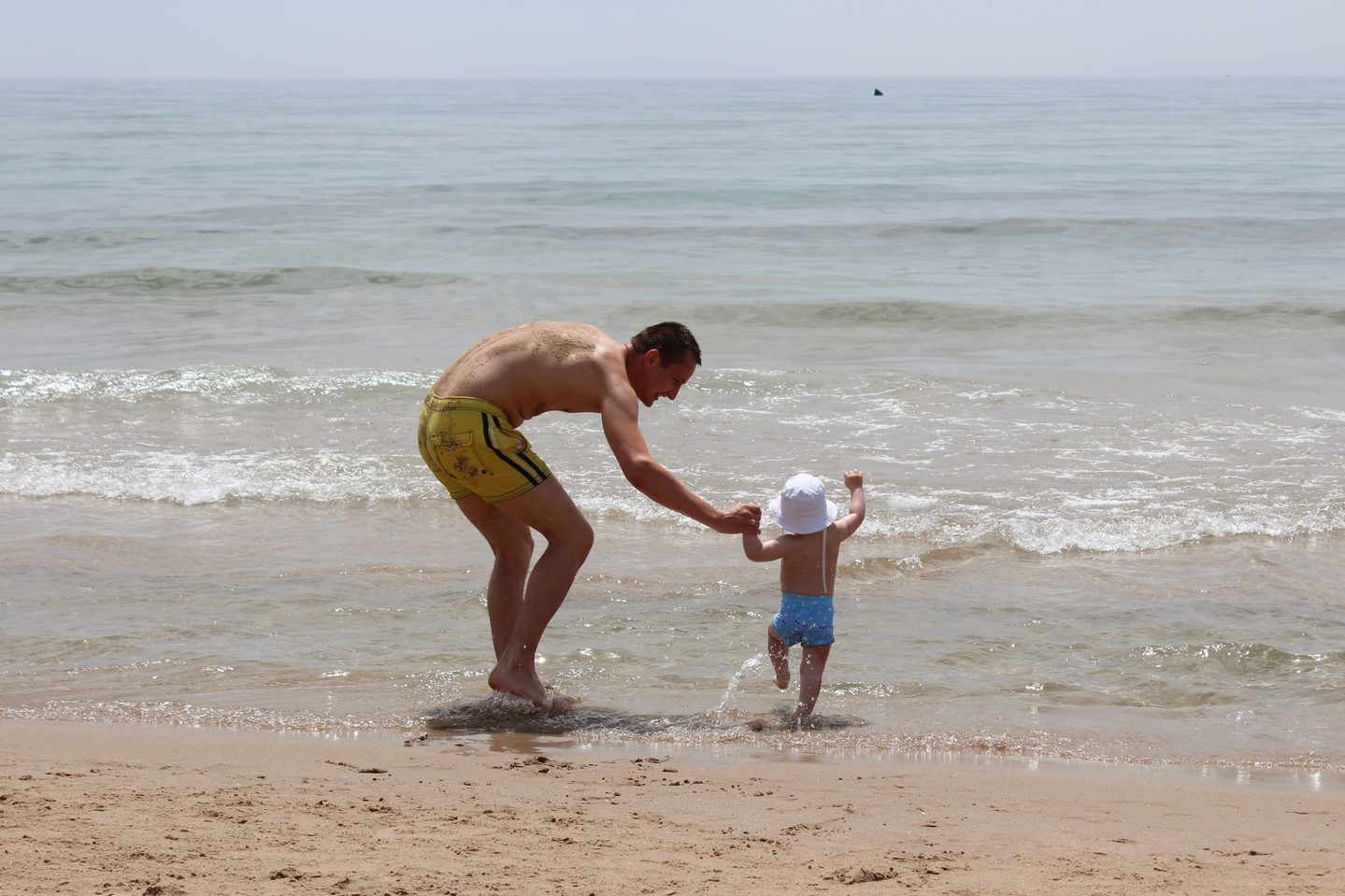
Platja del Miracle is at the bottom of the amphitheatre’s slope. City beach, sand, facilities, and a short walk from the ruins.
That combination is what makes Tarragona different from every other Roman site you could visit. **Ruins in the morning, sea in the afternoon, same postcode.** With children it solves the problem that ruins normally create — there’s a reward at the end that isn’t another monument.

The rest of the Roman city
If you buy the **€15 combined ticket**, it covers five sites. In order of what I’d prioritise:
The Circus and the Praetorium
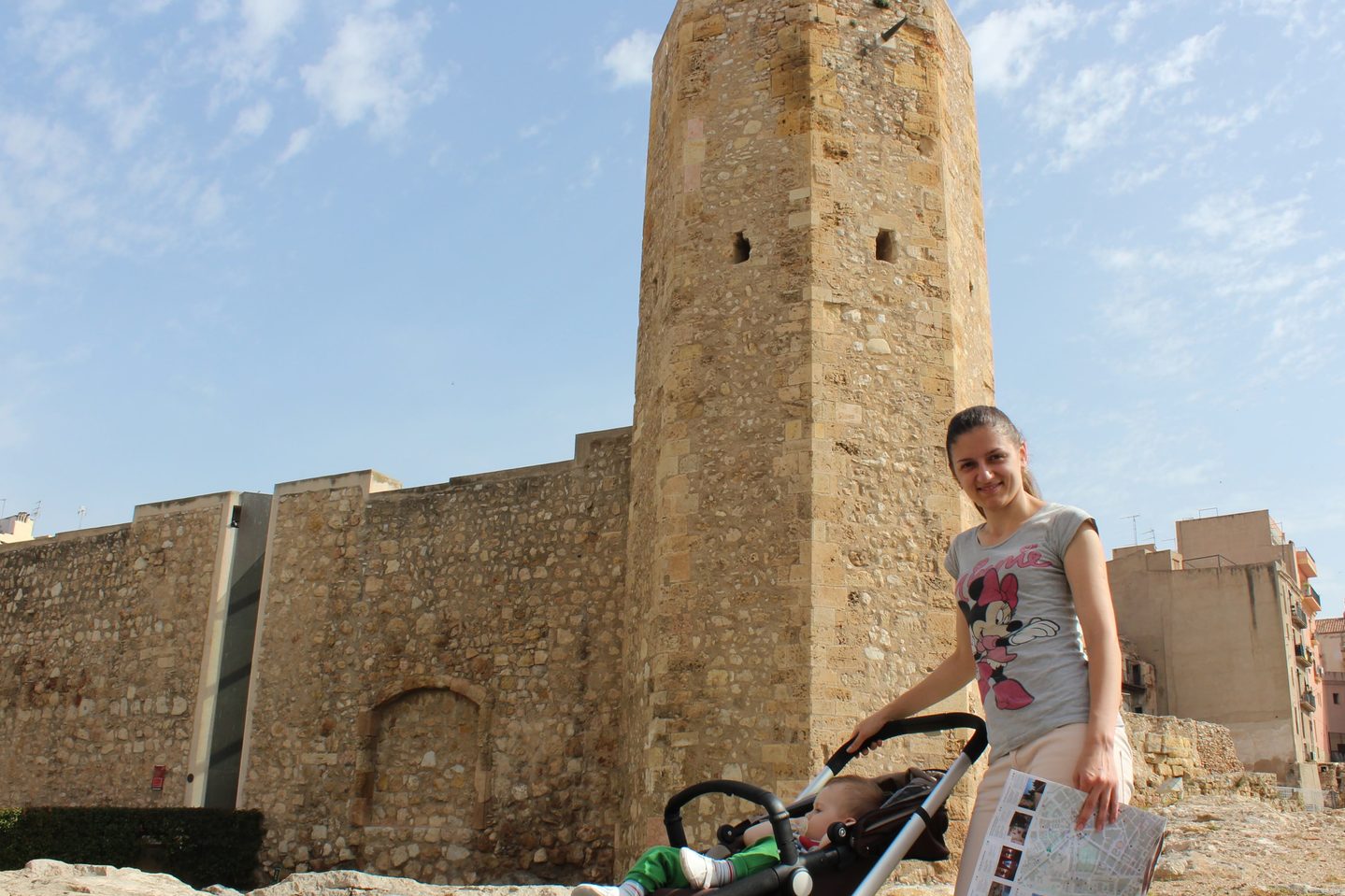
The chariot circus is the strange one, because most of it is under the modern city. You walk through vaulted Roman passages and emerge to find that apartment blocks were built on top of the track. The Praetorium tower alongside it gives you a roof view over the whole layout, and the moment the shape of the circus becomes visible under the streets is the best “oh” of the day.
The Passeig Arqueològic — the walls
A walkway running between the Roman walls and a later outer rampart, so you’re in a green corridor with two thousand years of masonry on one side. **These are the walls UNESCO calls among the earliest examples of Roman military engineering**, and you can put your hand on them.
Shaded, level, and the easiest of the sites to walk with tired children.
The Forum of the Colony
The civic forum, with standing columns. Smaller and quieter than the rest.
Casa Canals
An eighteenth-century noble house against the Roman wall — a change of register, and a cool interior on a hot afternoon.
**Casa Castellarnau is closed for renovation.** Check before you count on it.
Two things outside the combined ticket
The Balcó del Mediterrani
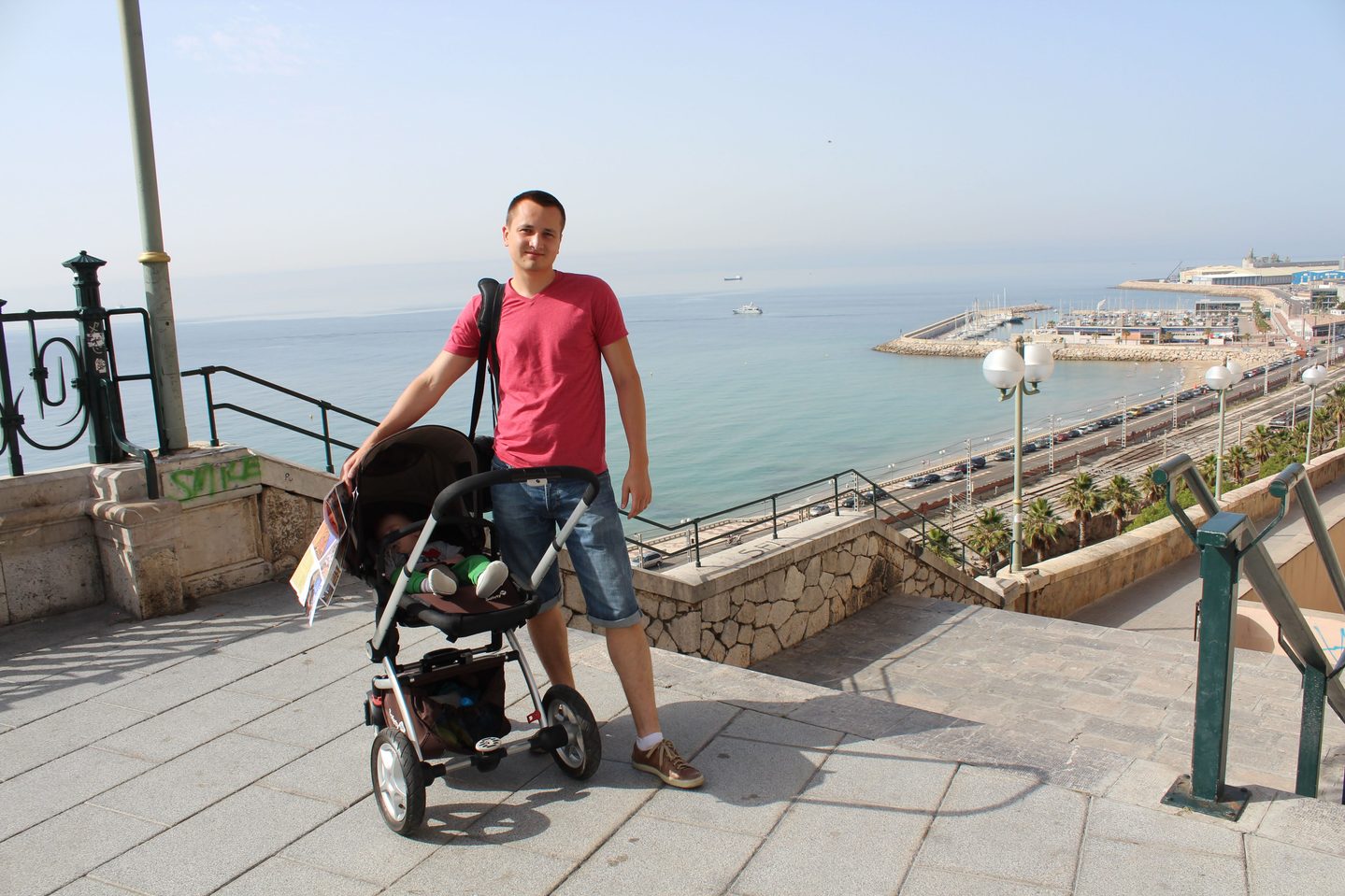
The **Mediterranean Balcony** — a railed terrace at the end of the Rambla Nova where the city stops and the sea starts, a long drop below. Free.
There’s a local tradition of **touching the iron railing for luck** — *tocar ferro*. Tell children that and they will all do it, which is a small free thing that makes the walk memorable.
Les Ferreres Aqueduct — the Devil’s Bridge
About 4 km outside the city: a **two-tiered Roman aqueduct**, standing in woodland, part of the hydraulic system that supplied Tarraco and part of the UNESCO listing. Locally it’s the **Pont del Diable**.
It is free, it is in a park, and you can walk across the top of it. That last fact is the one to lead with — a Roman aqueduct you’re allowed to walk along is not a common thing.
Tarraco Viva, if you can time it
Every **May**, Tarragona runs Tarraco Viva, a Roman history festival with reenactments, gladiator demonstrations and military displays staged in the actual Roman monuments.
If you have any choice about when to come and you’re bringing children, come then. Watching a legionary drill inside a real Roman amphitheatre is a different proposition from reading a sign.
Tarragona or PortAventura?
Worth addressing, because PortAventura is 15 minutes down the road at Salou and a lot of families come to this area for the theme park without knowing the Roman city is there.
They’re not competitors, they’re a pairing. If you’re doing PortAventura for two days, give Tarragona the morning of the third — you’re already there, it’s €10 for a family with young children, and it’s the antidote to two days of queueing.
Half a day in Tarragona, in order
- Regional train to Tarragona station (the city one)
- Walk up into the old town
- The amphitheatre — go here first, while it’s cool and quiet
- The Circus and Praetorium, and the roof view
- The Passeig Arqueològic along the walls, in the shade
- The Balcó del Mediterrani — touch the railing
- Down to Platja del Miracle and into the sea
Add for a full day: the Forum, Casa Canals, and the aqueduct if you have a car.
Is it worth the trip?
Yes, and it’s the most underrated day trip from Barcelona.
Everyone goes to Montserrat and Girona. Tarragona has the best Roman remains in Spain outside Mérida, a beach underneath them, and it costs €10 for a family with two young children. It is an hour away and it is quiet.
Come if you want ruins you can climb on and a swim afterwards, or you’re already at PortAventura.
Less good if anyone struggles with uneven stone and steps — the Roman sites are exactly as level as the Romans left them.
All twenty day trips from Barcelona, compared · PortAventura with kids · Girona, the other great day trip by train
Frequently asked questions
How much does the Tarragona Roman amphitheatre cost?
€5 for a single monument, and children under 12 go free. Ages 12 to 17, students, retirees and visitors with a documented disability pay half price. A combined ticket covering five monuments — the walls, the Circus and Praetorium, the Forum of the Colony, the amphitheatre and Casa Canals — is €15. For two adults and two children under 12, the amphitheatre alone is €10.
Which station should you use for Tarragona?
Tarragona station, the city one down by the port, which is a short walk up into the old town. Do not use Camp de Tarragona — that is the high-speed AVE station and it sits about 10 km outside the city in open country, so you would need a bus or taxi to get anywhere. For Tarragona the regional train is the right train, and it takes about an hour from Barcelona.
Is there a beach in Tarragona?
Yes, and it is directly below the Roman amphitheatre. Platja del Miracle is a city beach at the bottom of the same slope the amphitheatre is cut into, so you can spend the morning in the ruins and the afternoon in the sea without moving your car. No other Roman site in Spain offers that.
Is Tarragona good with kids?
Yes, and it is the easiest Roman site in Spain to sell to a child — the amphitheatre looks like what they expect a Roman ruin to look like and they are allowed to walk on it. Under-12s are free, the walls walk is shaded and level, and the beach at the end gives them something that isn’t another monument. The limitation is uneven stone and steps throughout.
What was Tarraco?
Tarraco was the capital of Hispania Citerior, the eastern half of Roman Spain, and the principal centre of the Imperial cult for every Iberian province. Its urban planning became a model copied by other provincial capitals across the Roman world. UNESCO inscribed the Archaeological Ensemble of Tarraco in 2000 and notes that its defensive walls are among the earliest surviving examples of Roman military engineering anywhere.
How long do you need in Tarragona?
Half a day covers the amphitheatre, the Circus and Praetorium, the walls and the Mediterranean Balcony. Make it a full day and add the beach, which is the point of coming here rather than to any other Roman site.
Can you walk on the Tarragona aqueduct?
Yes. Les Ferreres aqueduct, known locally as the Pont del Diable, stands about 4 km outside the city in woodland, it is free, and you can walk across the top of it. It formed part of the system that supplied water to Tarraco and is included in the UNESCO listing.
Can you combine Tarragona with PortAventura?
Easily — PortAventura is about fifteen minutes away at Salou. If you are doing the theme park for a couple of days, give Tarragona a morning: you are already in the area, it costs €10 for a family with two young children, and it is a good antidote to two days of queueing.
