
Our first morning in Chicago started five floors up a coffee factory on Michigan Avenue.
The Starbucks Reserve Roastery is 35,000 square feet across five floors and it is the largest Starbucks anywhere in the world. It is also, since Starbucks closed the original Seattle Roastery in September 2025, one of only five Roasteries left — Chicago, New York, Milan, Shanghai and Tokyo.
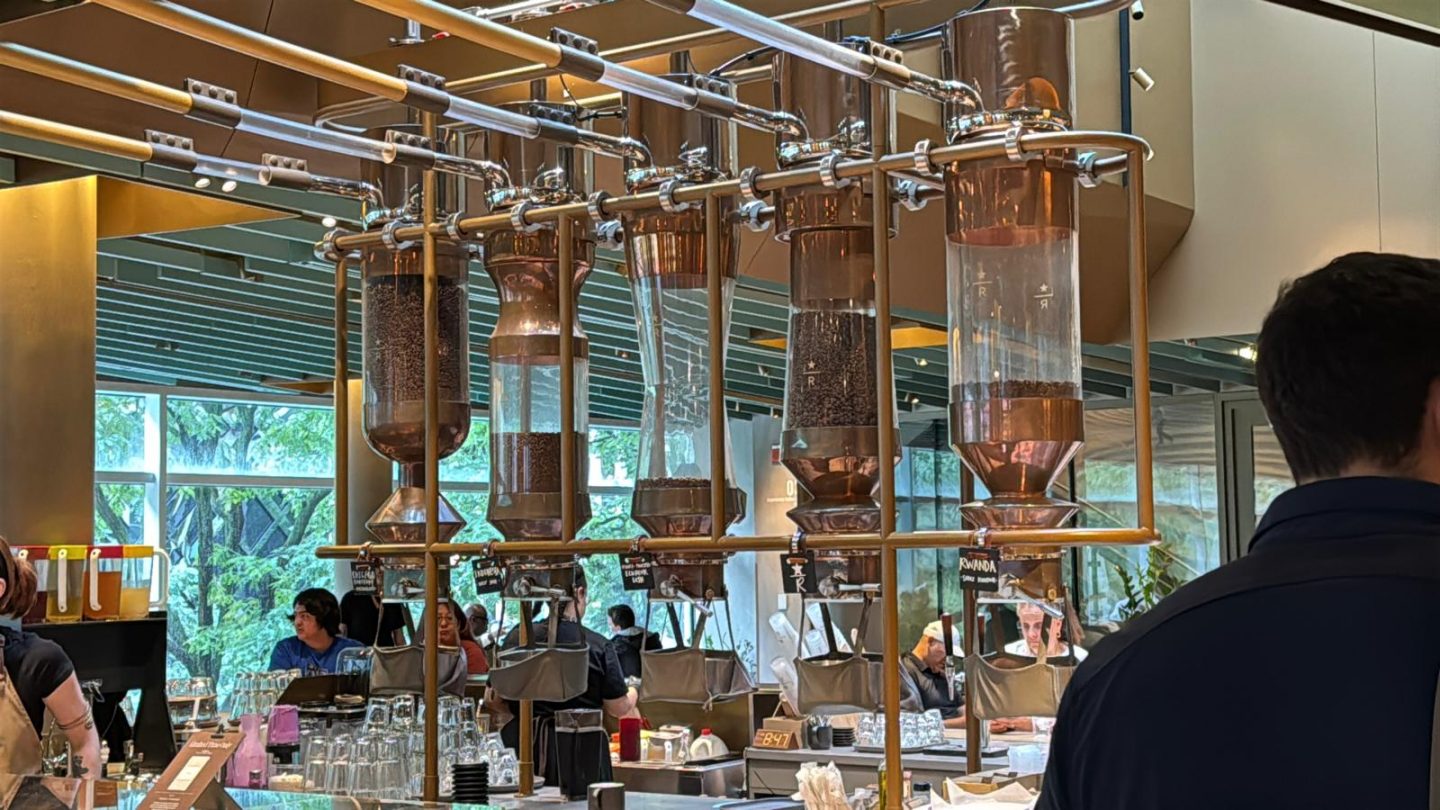
It is not really a coffee shop. It is a working roastery you can walk around, with eight copper tubes, each 56 feet tall, running up through the building carrying beans between floors. You hear them.
Here is what is on every floor, what it costs, and whether it is worth an hour of a short Chicago trip.
Where to stay in Chicago with kids — our quick picks
We haven’t stayed at these three — they’re what I’d shortlist based on where they sit and who they’re built for. Our three real Chicago stays are further down. Some links are affiliate links, which may earn us a small commission at no cost to you.
Is the Starbucks Reserve Roastery Chicago worth visiting?
The short answer
Yes, if you have an hour and you are already on the Magnificent Mile — it is free to walk into, architecturally impressive, and unlike any other Starbucks. Go for the building and the roasting floor rather than the coffee.
Be aware of two things. Reserve pricing is noticeably higher than a standard Starbucks, so this is not a cheap breakfast. And it gets very busy — mid-morning at weekends is the worst of it.
Not worth it if you are on a tight two-day first visit and have not done the Bean, the river or the Art Institute. It is a lovely hour, not a headline attraction.
The practical details
Address: 646 N Michigan Ave, Chicago, IL 60611 — the former Crate & Barrel flagship on the Magnificent Mile Cost to enter: Free Time to allow: 45 minutes to an hour to see all five floors properly; longer if you eat Best time: Early morning on a weekday. It fills up from mid-morning and weekends are busy throughout.
A floor-by-floor guide
First floor — the coffee bar and the roasting
You come in off Michigan Avenue and the scale hits immediately. The main coffee bar runs along here, with the roasting equipment itself on show, a bean scoop bar where you can look at and smell the different origins, and the merchandise.
This is the floor to stand still on for a minute before you start climbing. The copper tubes are directly overhead and you can watch the beans move.
Second floor — Princi
Princi is the Italian bakery Starbucks partnered with, and it is the reason to eat here rather than just drink. Croissants, cannoli, cheesecake, and beyond the pastries a proper savoury menu — pasta and pizza, made through the day.
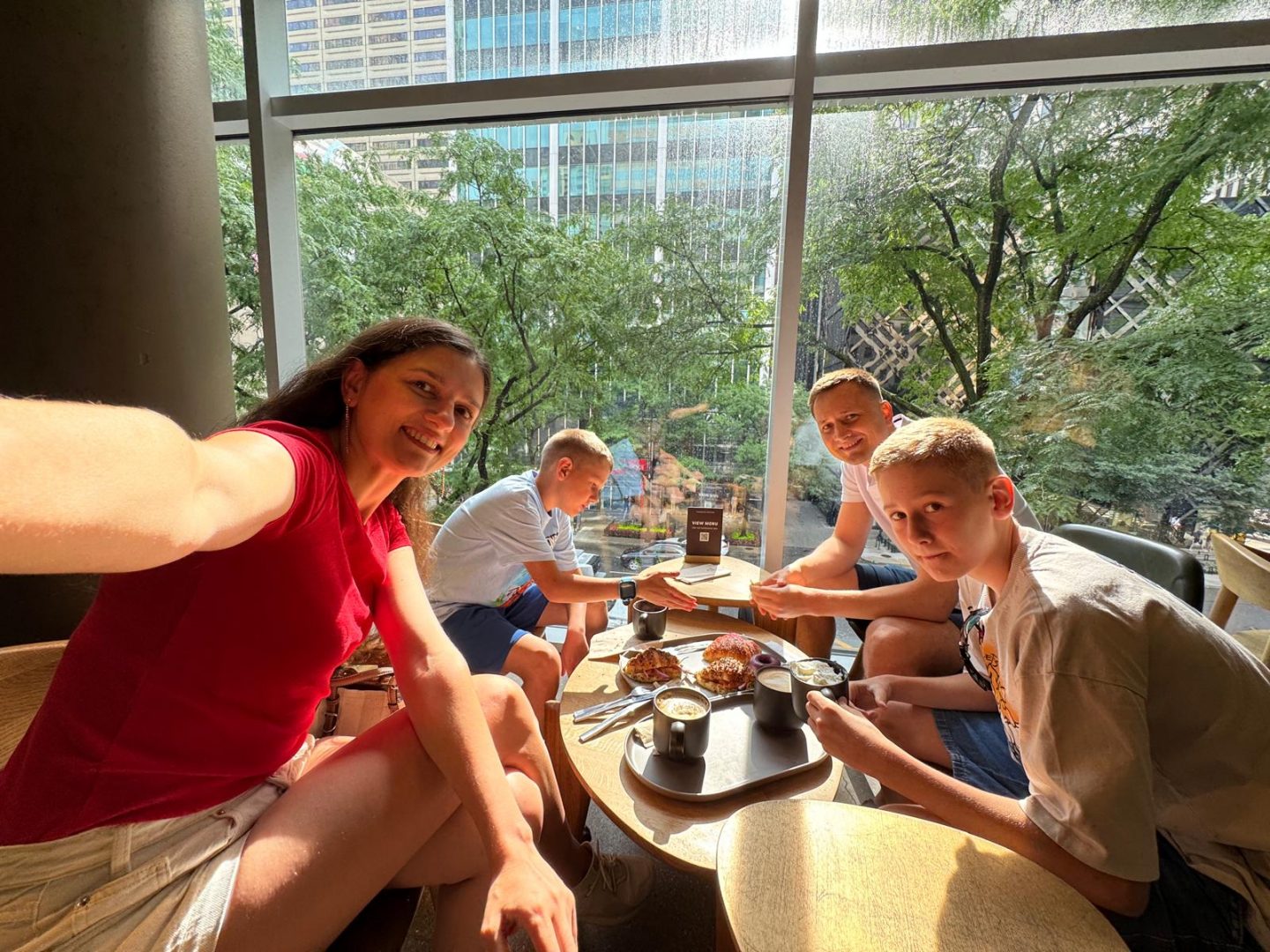
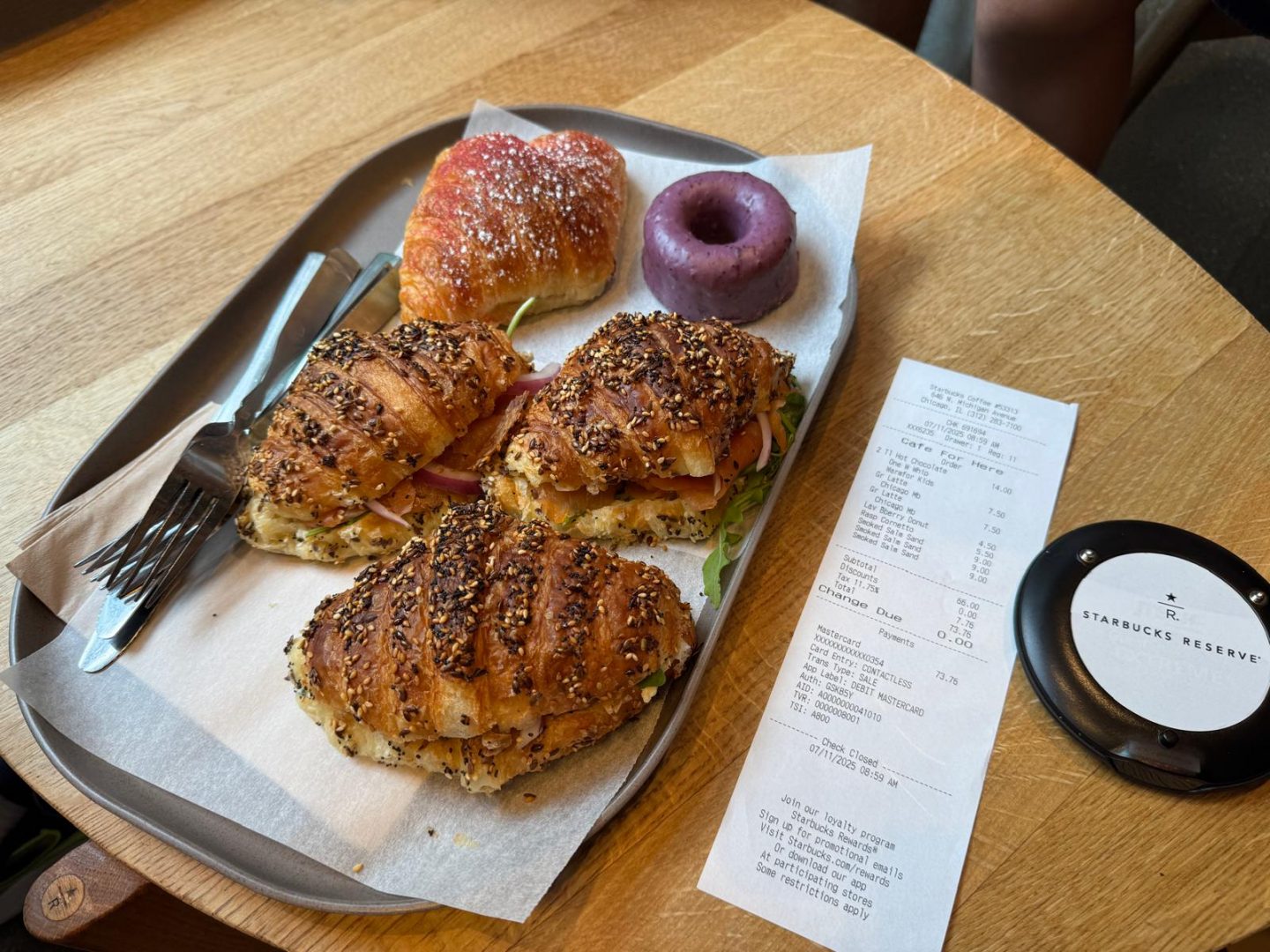
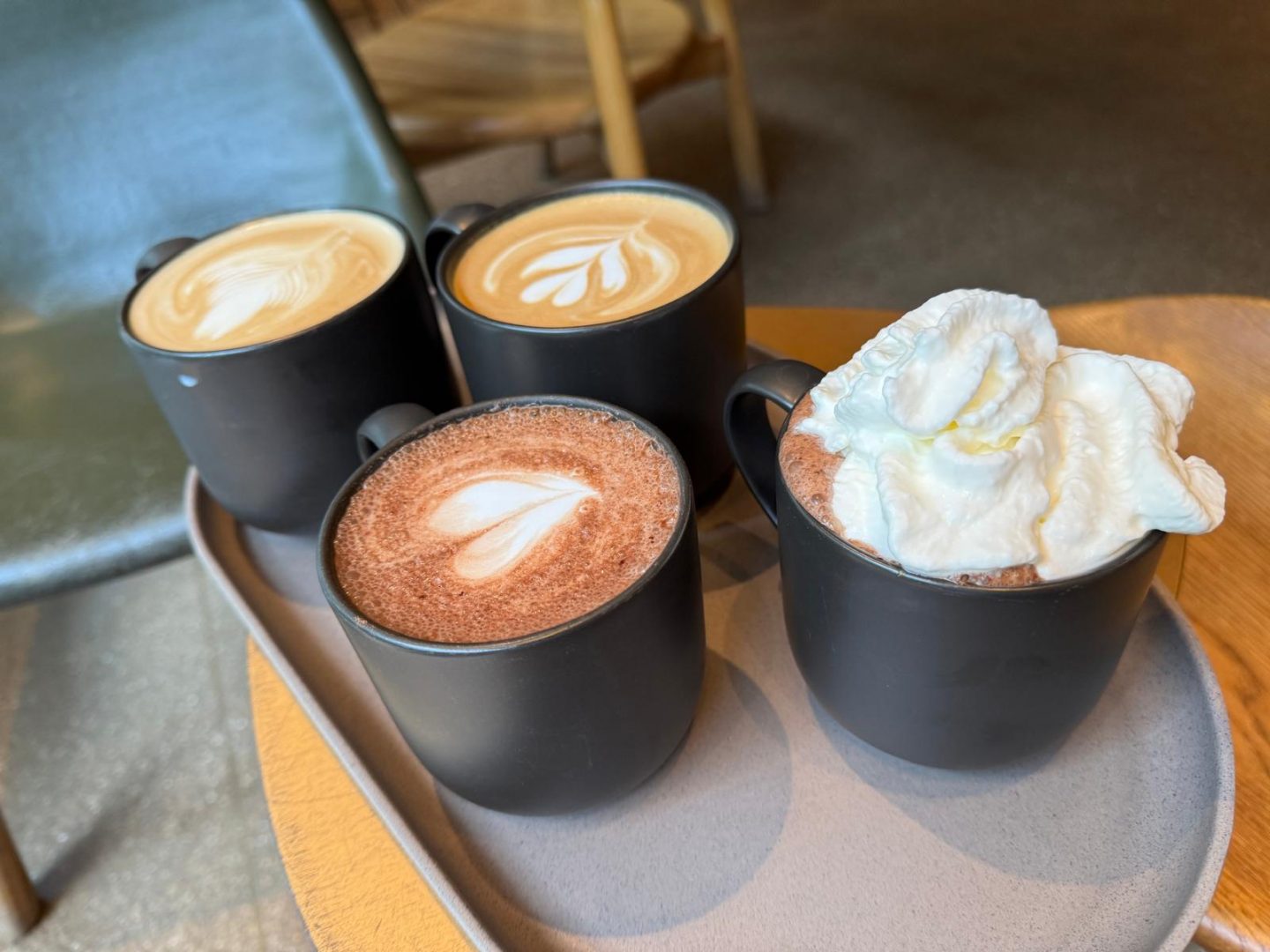
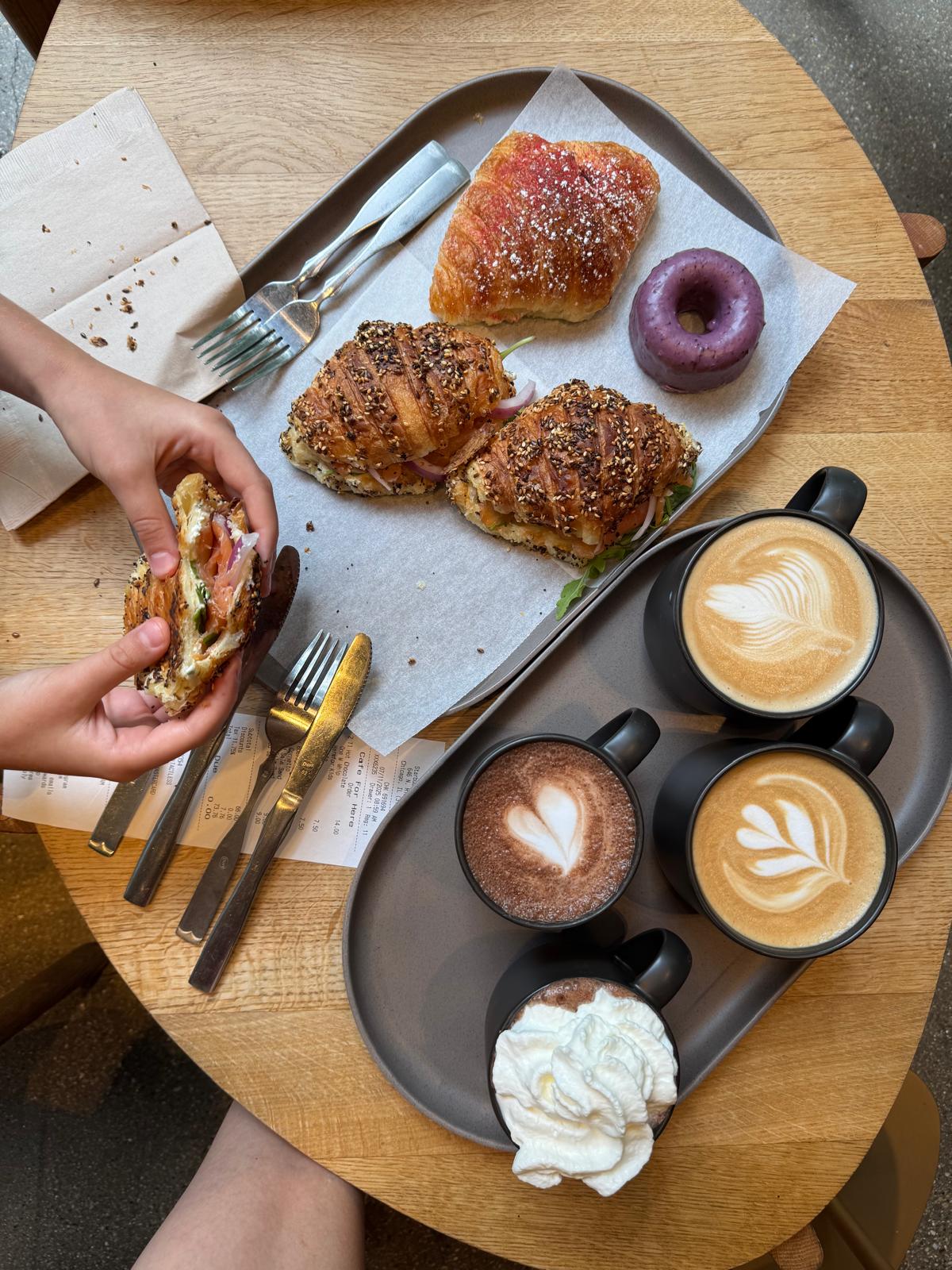
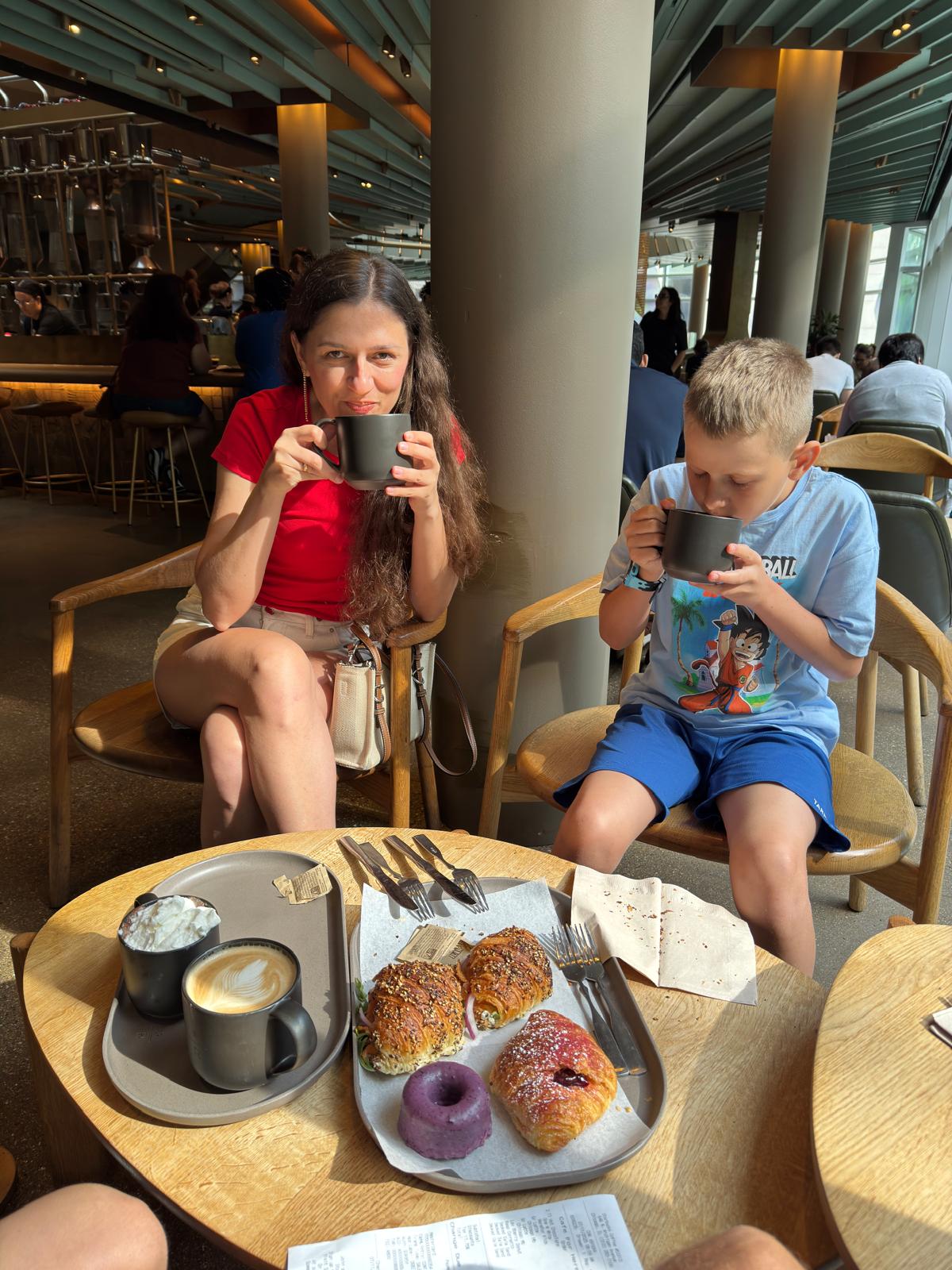
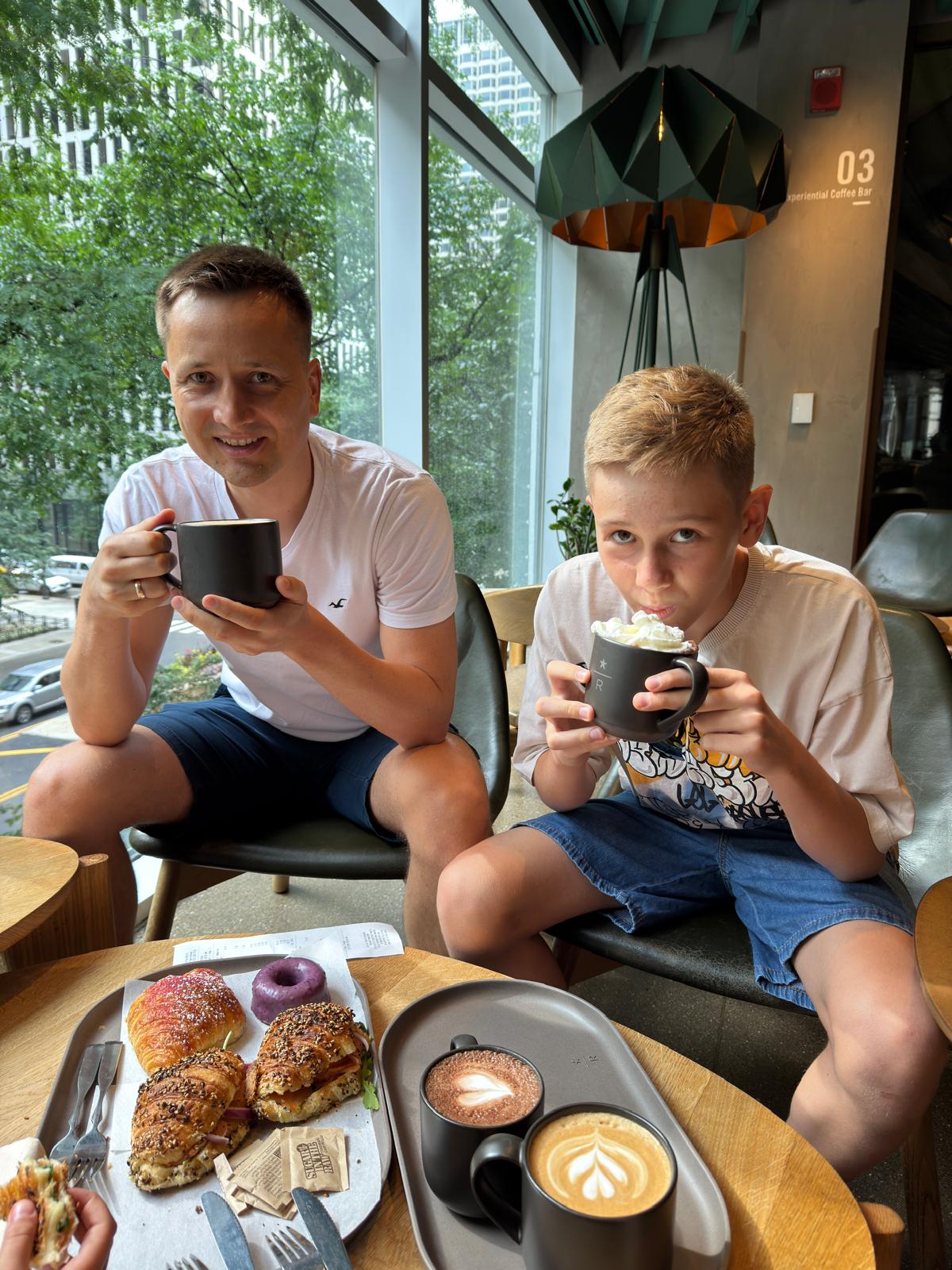
This is where we had breakfast on our first morning: buttery croissants, a breakfast sandwich, and a Reserve latte.
Third floor — the rare and experimental coffee
The most interesting floor if you actually care about coffee. Storage barrels, small-batch and rare origins, and the barrel-aged Guatemalan cold brew that is specific to this location.
If you are going to spend money on something you cannot get at a normal Starbucks, spend it here.
Fourth floor — Arriviamo cocktail bar
Coffee and spirits. Handcrafted cocktails, many built around Starbucks Reserve coffee, which is a genuinely unusual thing and makes this an evening destination as much as a morning one.
Adults only in practice, so if you are here with children this is a floor to walk through rather than sit on.
Fifth floor — the rooftop terrace
The pay-off. Open-air, looking out over Michigan Avenue, and in summer it is the best seat in the building. In a Chicago winter it is considerably less appealing — check before you climb.
With kids — what actually works
You can absolutely bring children, and ours were fine, but be realistic about which floors are for them.
- The first floor is the one they will like — the machinery, the tubes, the beans. It is a factory, and factories are interesting.
- Princi on the second floor solves breakfast. Pastries, pizza later in the day, and things that look like things they recognise.
- Non-coffee drinks exist across the menu, but this is a coffee building and the children’s options are thinner than at a standard Starbucks.
- Skip the fourth floor with kids. It is a cocktail bar.
- The rooftop is a good finish in warm weather.
Realistic timing with children: 30 to 45 minutes. The building is the attraction and they will have seen it.

What it costs
What did your family breakfast actually cost? breakfast for four came to about $75 in July 2025
The building, and why it looks like that
It was the Crate & Barrel flagship, built in 1990 and one of the recognisable buildings on the Magnificent Mile.
The detail I like: when Starbucks converted it, they brought in Gordon Segal, Crate & Barrel’s founder, and Solomon Cordwell Buenz, the practice that designed the original building. The Roastery opened on 15 November 2019.
That is why it does not feel like a chain fit-out. The bones of the building were kept and worked with rather than covered over.
How it compares to the Tokyo Roastery
We have been to two of the five: this one and Tokyo.
the Starbucks Reserve Roastery in Tokyo
What else is nearby
The Roastery sits in the middle of the Magnificent Mile, which makes it a good first stop on a Chicago day.
Millennium Park and Cloud Gate
the Shoreline architecture boat tour
Nutella Cafe on Michigan Avenue
Would we go back?
Yes, and we would do it the same way: early, breakfast at Princi, then work upwards.
The thing I did not expect was how much of the appeal is architectural rather than culinary. The coffee is good and expensive. The building is genuinely remarkable, it is free to walk into, and with Seattle now closed there are only five of these left anywhere.
Go for the tubes.
Frequently asked questions
Where is the Starbucks Reserve Roastery Chicago?
It is at 646 N Michigan Ave, Chicago, IL 60611, on the Magnificent Mile, in the building that was previously the Crate & Barrel flagship store. It opened on 15 November 2019.
Is this really the largest Starbucks in the world?
Yes. The Chicago Reserve Roastery covers 35,000 square feet across five floors, making it the largest Starbucks location anywhere. Since Starbucks permanently closed the original Seattle Roastery in September 2025, it is also one of only five Reserve Roasteries left worldwide, alongside New York, Milan, Shanghai and Tokyo.
What is on each floor of the Chicago Roastery?
The ground floor has the main coffee bar, the roasting equipment and the bean scoop bar. The second floor is Princi, the Italian bakery, serving pastries as well as pasta and pizza. The third floor holds rare and experimental coffees including a barrel-aged cold brew. The fourth floor is the Arriviamo cocktail bar, and the fifth is a rooftop terrace. Layouts are occasionally reconfigured, so check on arrival.
How long should you spend at the Starbucks Roastery?
Allow 45 minutes to an hour to walk all five floors properly, or longer if you are eating. With children, 30 to 45 minutes is realistic. Entry is free and you are not obliged to buy anything to look around.
Is the Starbucks Reserve Roastery expensive?
Reserve pricing is higher than at a standard Starbucks, and the rare and experimental coffees on the third floor cost considerably more again. Walking in and looking around costs nothing, so you can see the building without committing to the menu.
Is the Roastery suitable for kids?
Yes, with realistic expectations. Children tend to like the ground floor, where the roasting machinery and the copper bean tubes are, and Princi on the second floor covers breakfast. The fourth floor is a cocktail bar and is not a floor to linger on with children.
Does the Starbucks Roastery serve alcohol?
Yes. The Arriviamo bar on the fourth floor serves cocktails, many of them built around Starbucks Reserve coffee, which makes the Roastery an evening destination as well as a morning one.

3 Comments