
Besalú: A Medieval Town That Earns the Detour
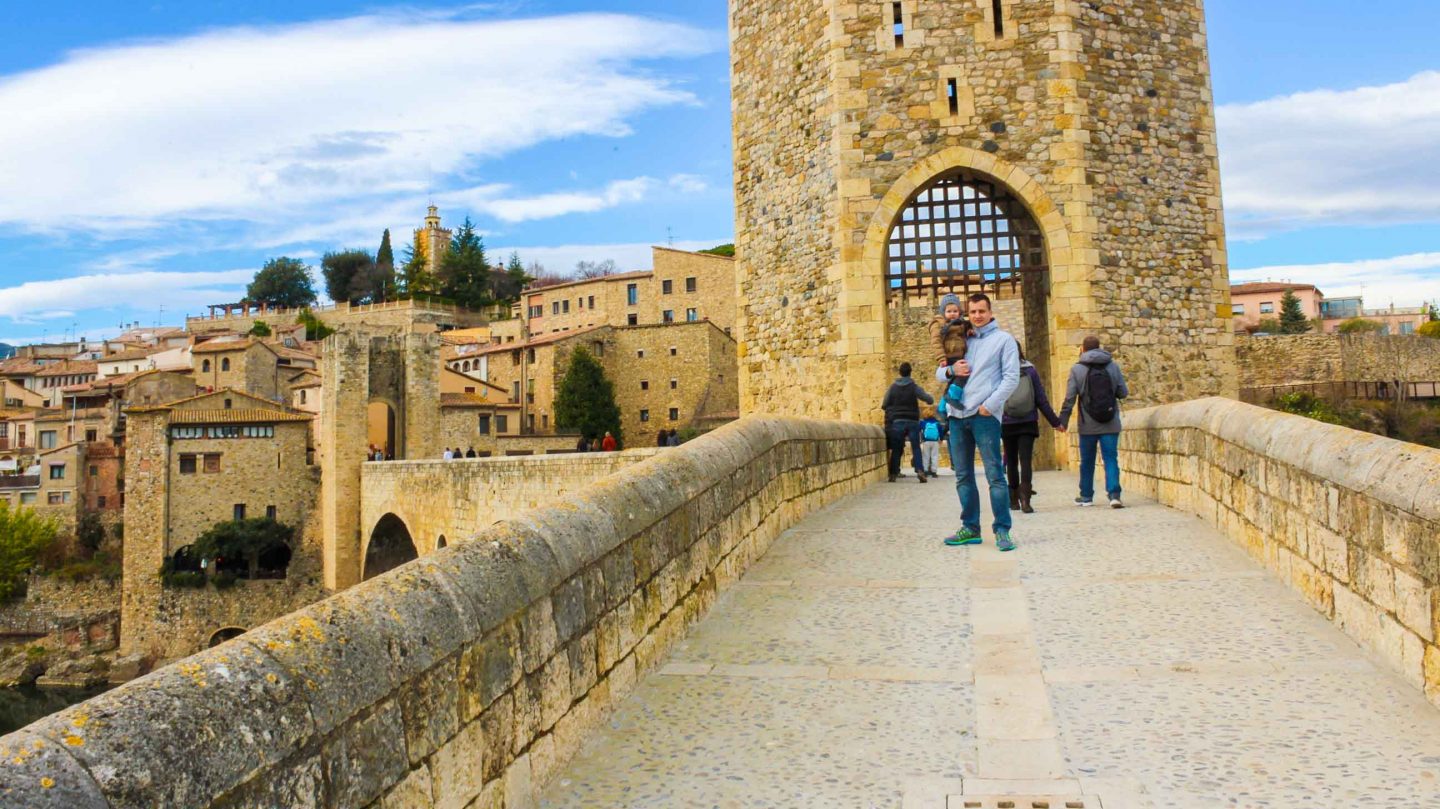
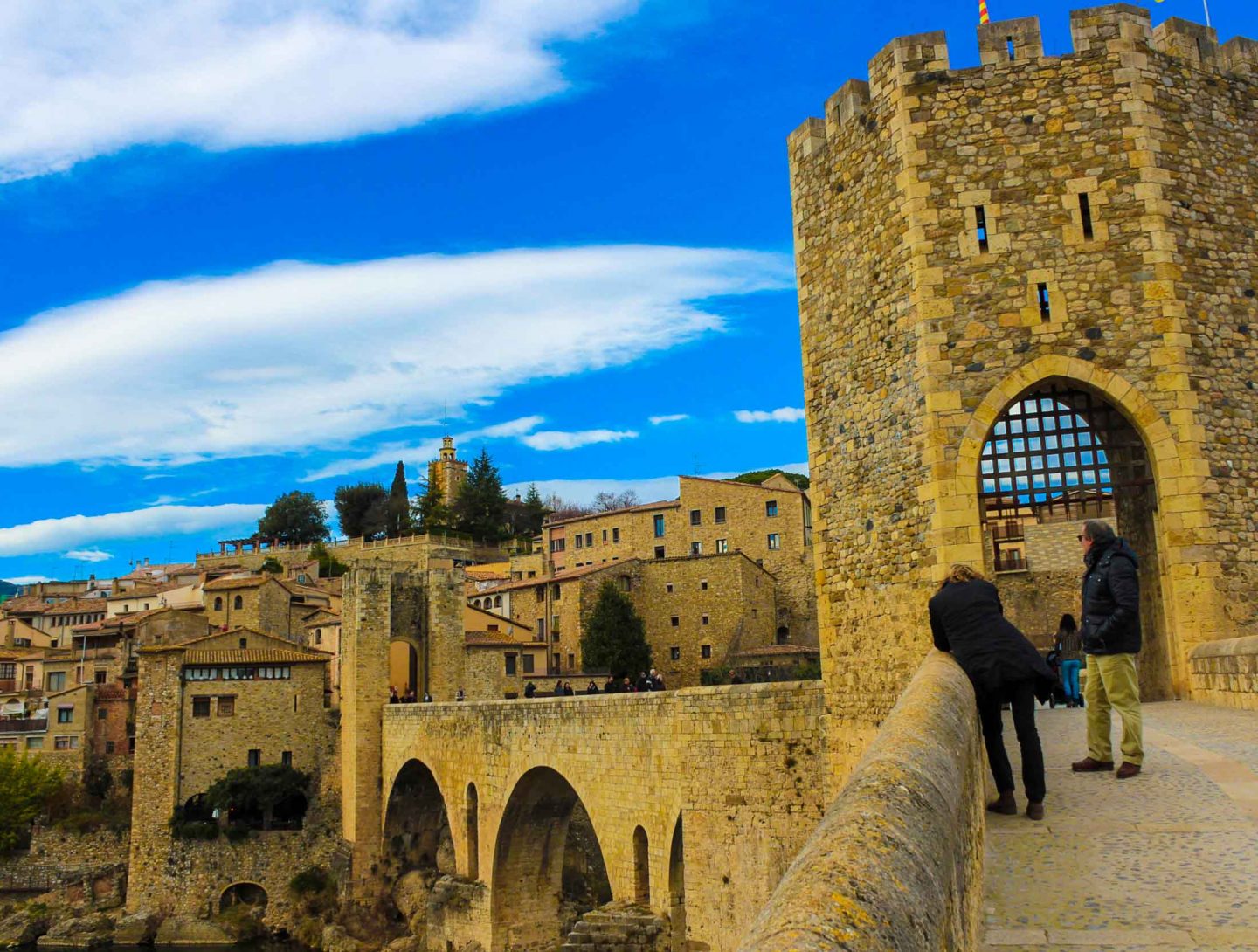
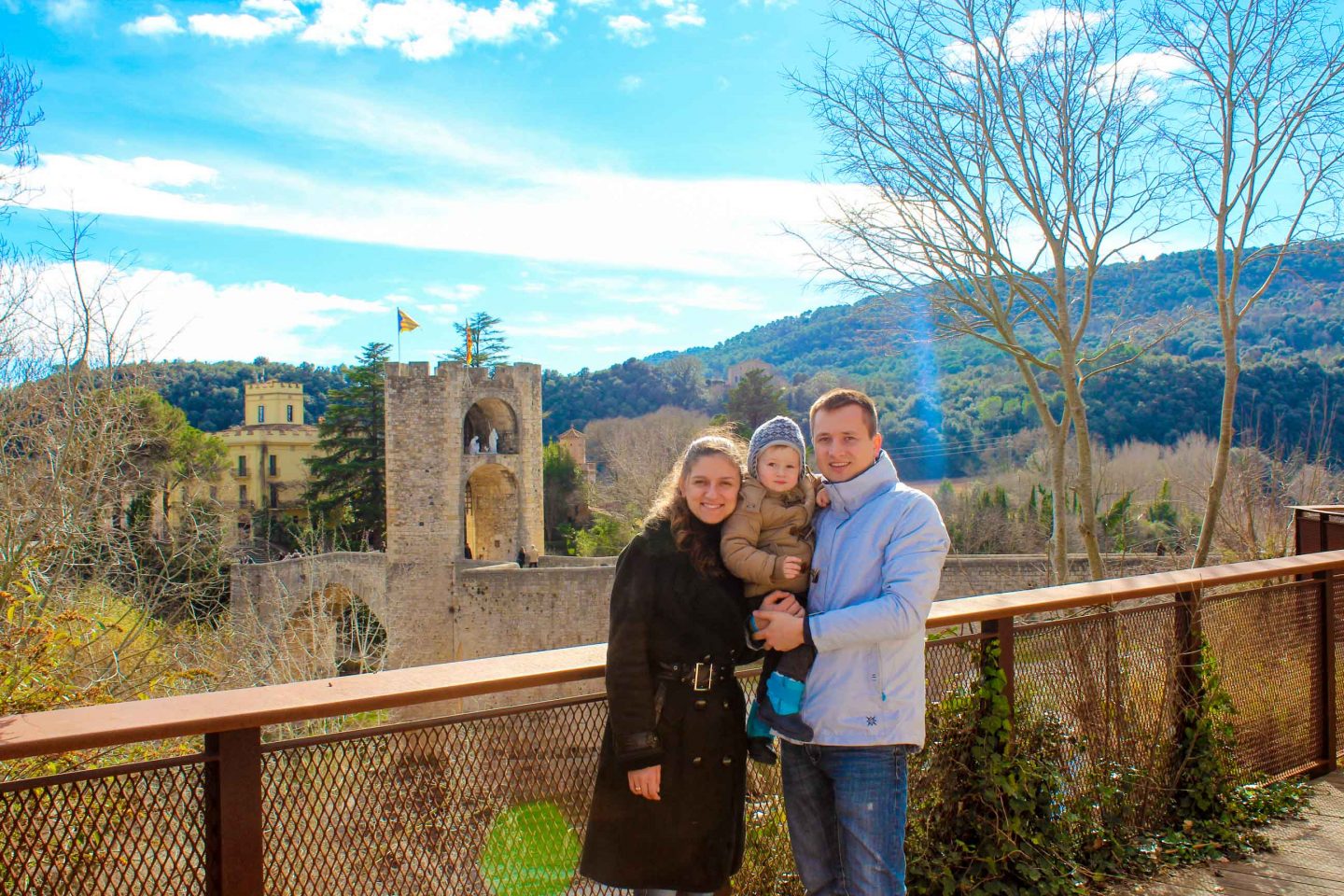
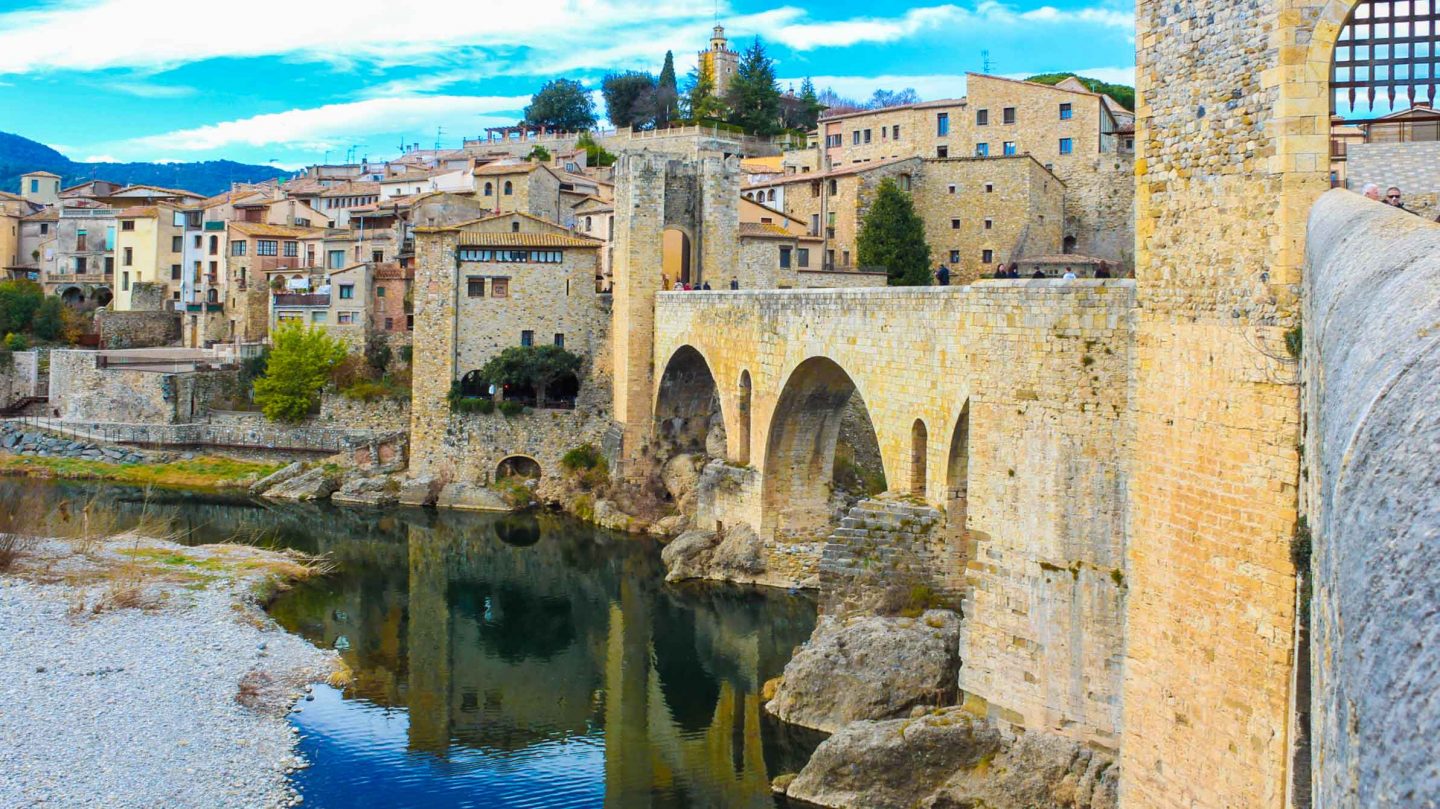
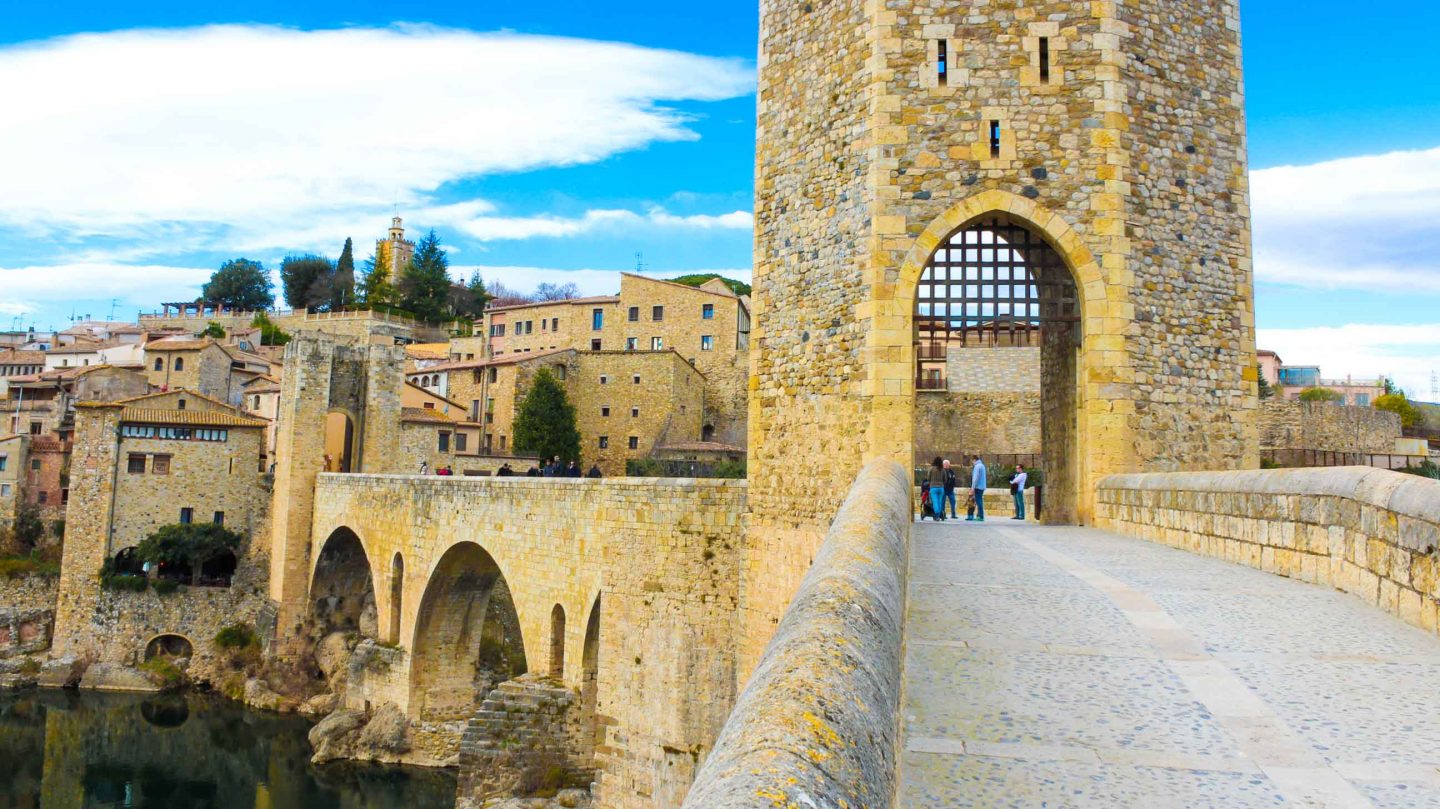
You arrive at Besalú and the first thing you see is the bridge: an angular Romanesque crossing over the Fluvià with a fortified gate tower standing in the middle of it, built to control who came in and out.
You can walk the whole town in under an hour. We spent almost three, and the difference between those two numbers is the point of this post.
The essentials
- Where: La Garrotxa, in the interior of Girona province — inland, not on the Costa Brava, about 40 km from the sea
- From Barcelona: roughly 90 minutes to two hours by car
- Cost: the town, the bridge and the streets are free; the mikveh and the museums are ticketed
- How long: an hour to walk it, three to enjoy it, a full day with lunch
- Best with: anyone who likes old places — and it works better with children than you’d expect

The Pont Vell — the bridge
Eleventh and twelfth century, angular rather than curved, with a fortified tower gate halfway across that once controlled access to the town. It has been damaged and rebuilt more than once, including after the Civil War, and it is the most photographed structure in inland Catalonia for good reason.
Go early. By late morning in season there is a queue of people waiting for the same shot from the same spot on the riverbank. At nine in the morning you have it to yourself and the light is better.
Crossing it is free. Walk it both ways — the view back towards the town from the far bank is the one worth having, and almost everyone photographs it from the town side only.
The mikveh — the reason Besalú is different
This is what the town has that no other medieval village in Catalonia does, and it’s the thing most write-ups leave out.
Besalú had a significant Jewish community in the Middle Ages, and beneath the old Jewish quarter, reached by a flight of stone steps down towards the river, is a **mikveh** — a ritual purification bath. It is a plain rectangular stone chamber with no ornament of any kind, fed by groundwater, and it is one of only a handful of surviving medieval mikvehs in Europe.
Standing in it is a strange experience precisely because there is nothing to look at. It is a room for a purpose, built by people who were later expelled, and the plainness is the whole effect.
Practical: the mikveh is visited with a guide rather than walked into. Ask at the tourist office in the main square for times and tickets before you plan your day round it — access is by guided visit and the schedule varies by season. This is the one thing in Besalú worth organising in advance.
Walk the Jewish quarter around it too. The medieval street layout survives.
The monastery of Sant Pere
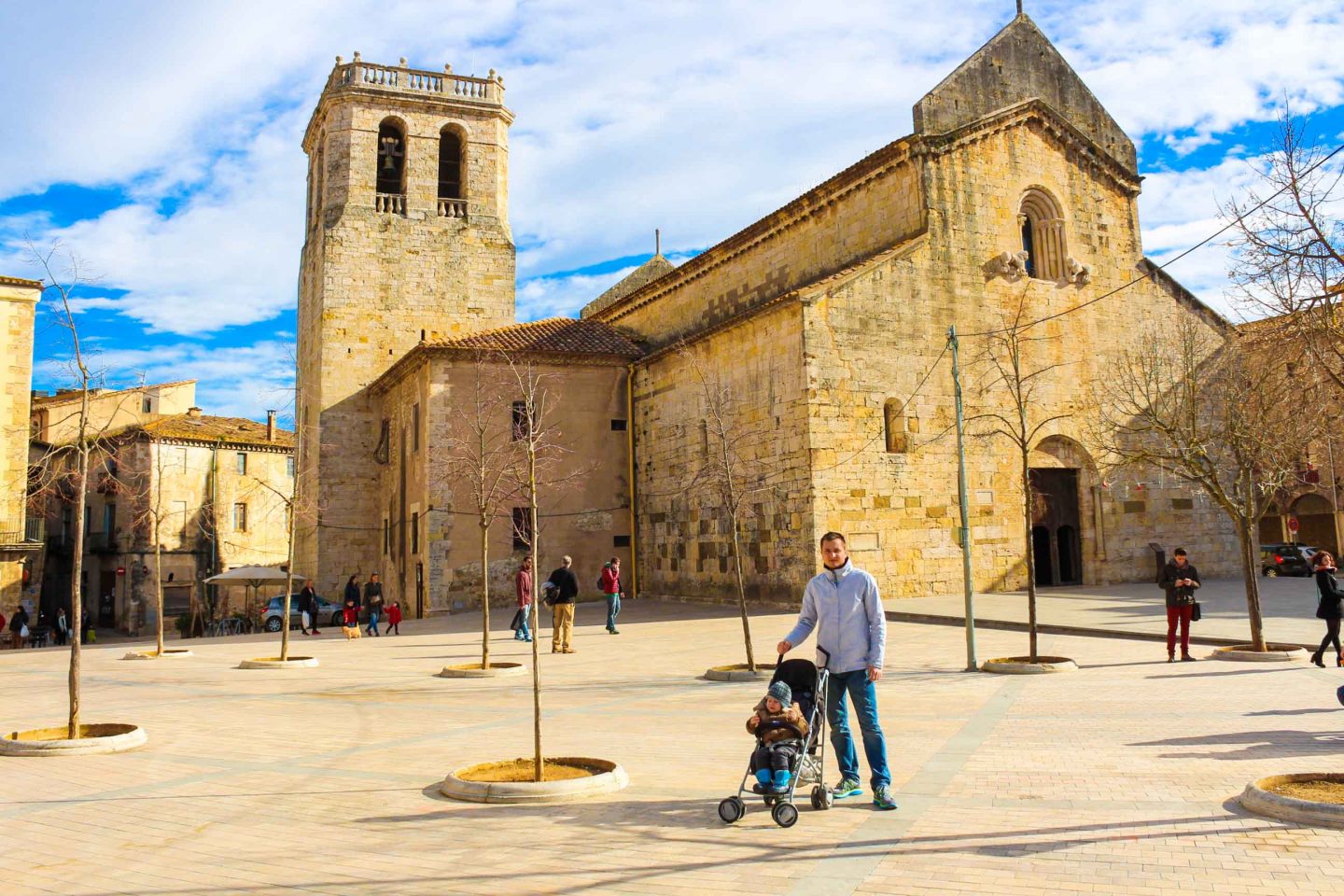
Founded in 977. A Romanesque Benedictine church on Plaça Prat de Sant Pere, with carved lions on the façade and an unusual ambulatory behind the altar.
The square it sits on is the quietest corner of the town and the best place to sit down. Most visitors do the bridge, the main square and leave.
Plaça de la Llibertat
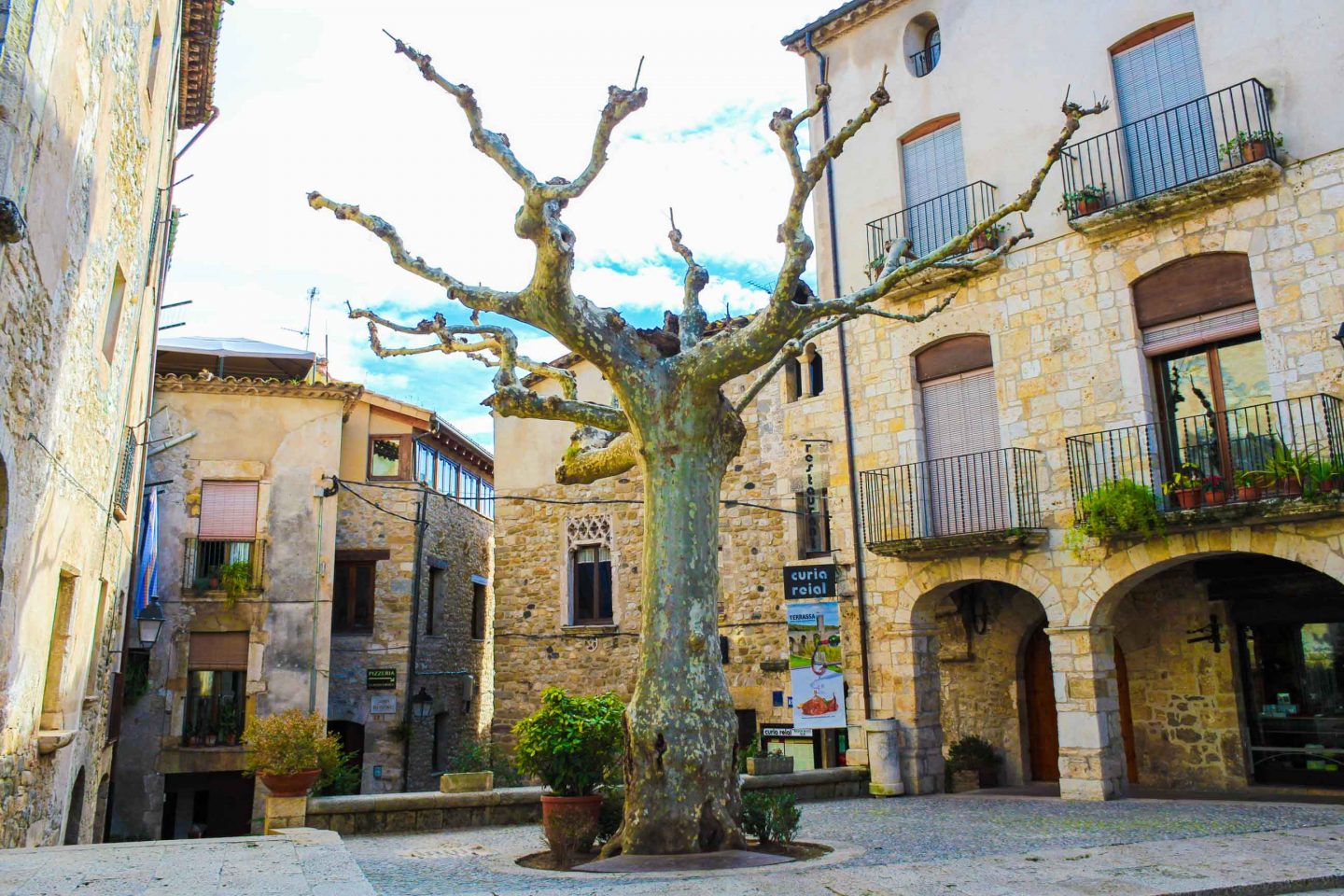
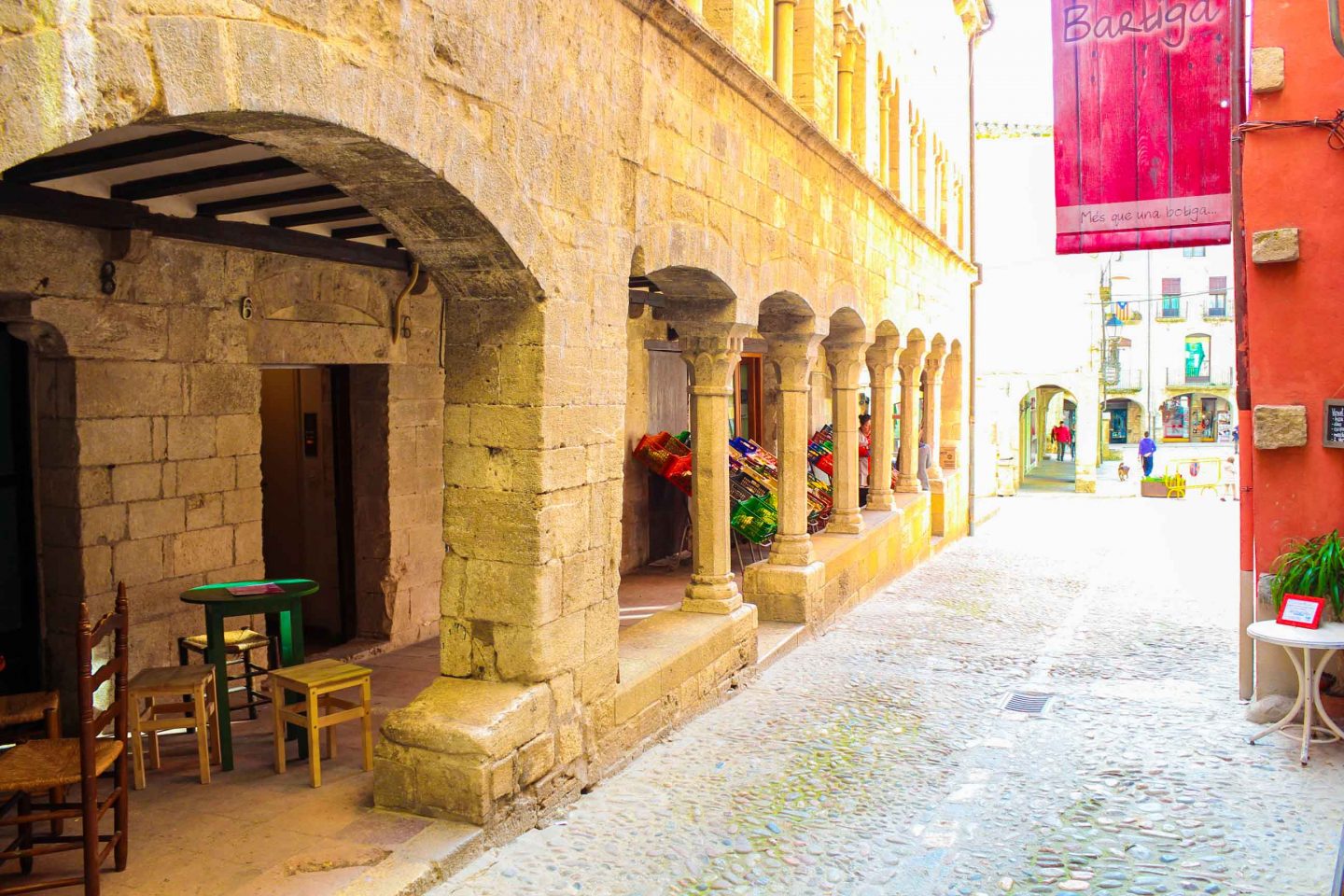
The arcaded main square, and the centre of the medieval town. Terraces, the tourist office, and the point from which the small streets run off in every direction.
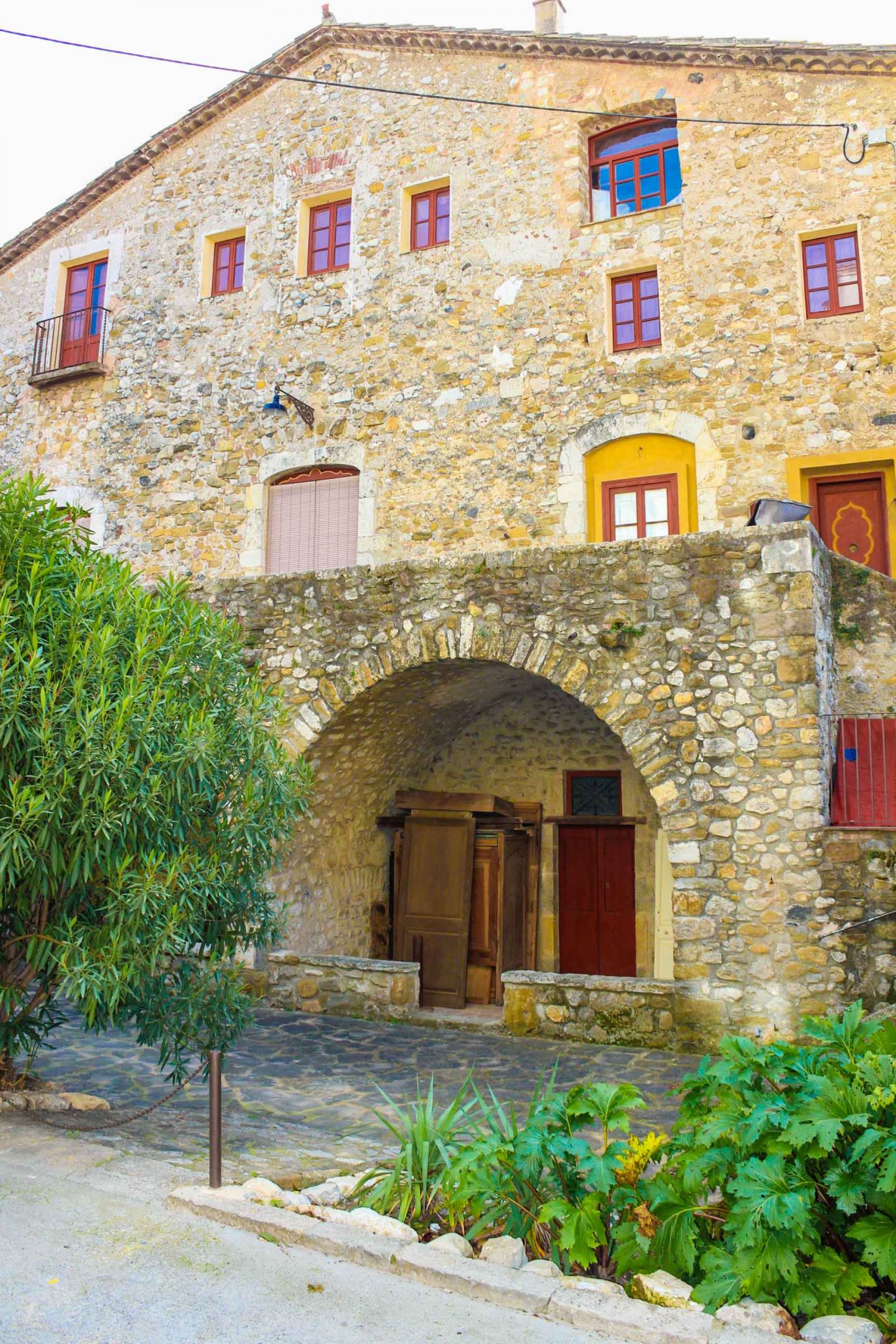
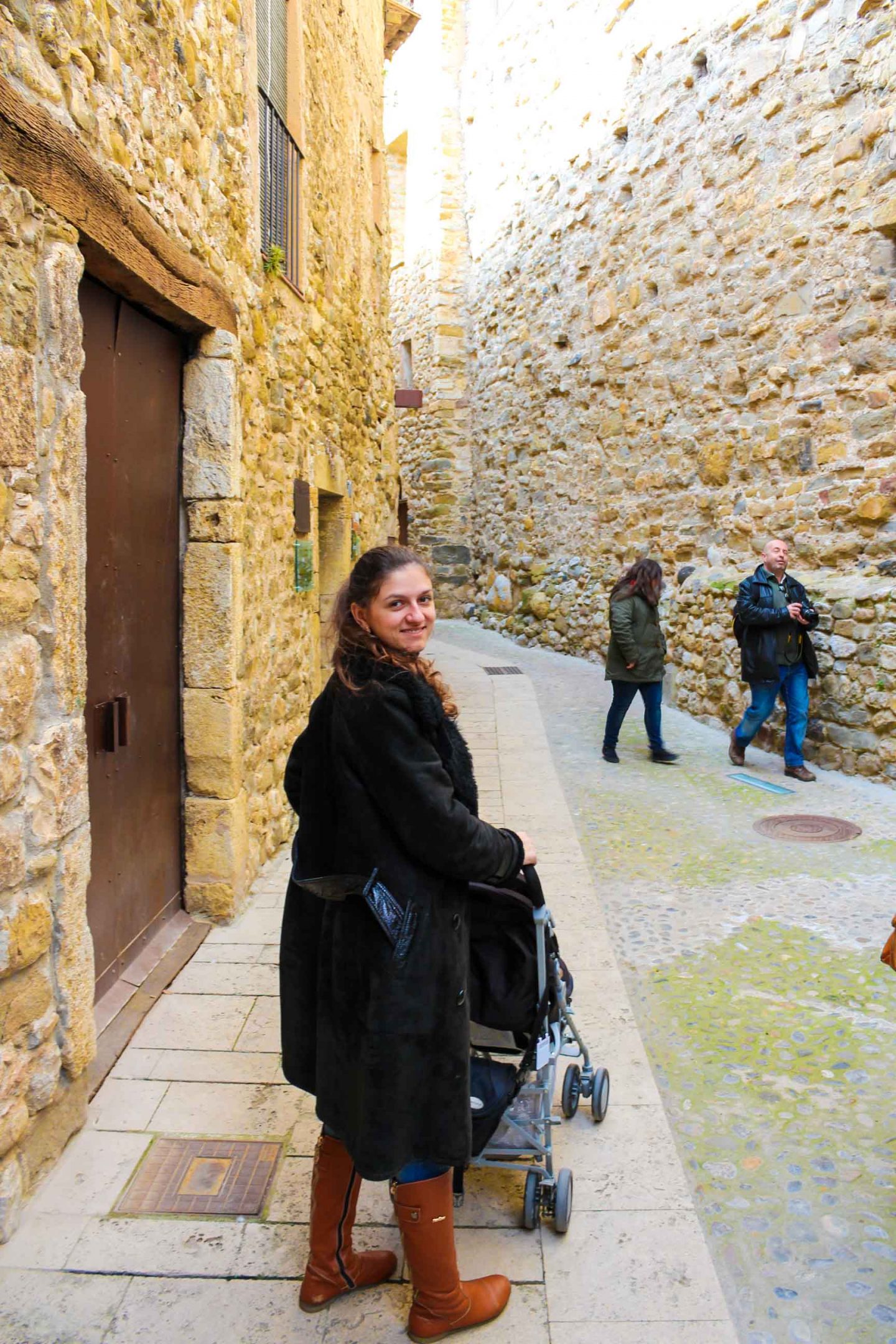
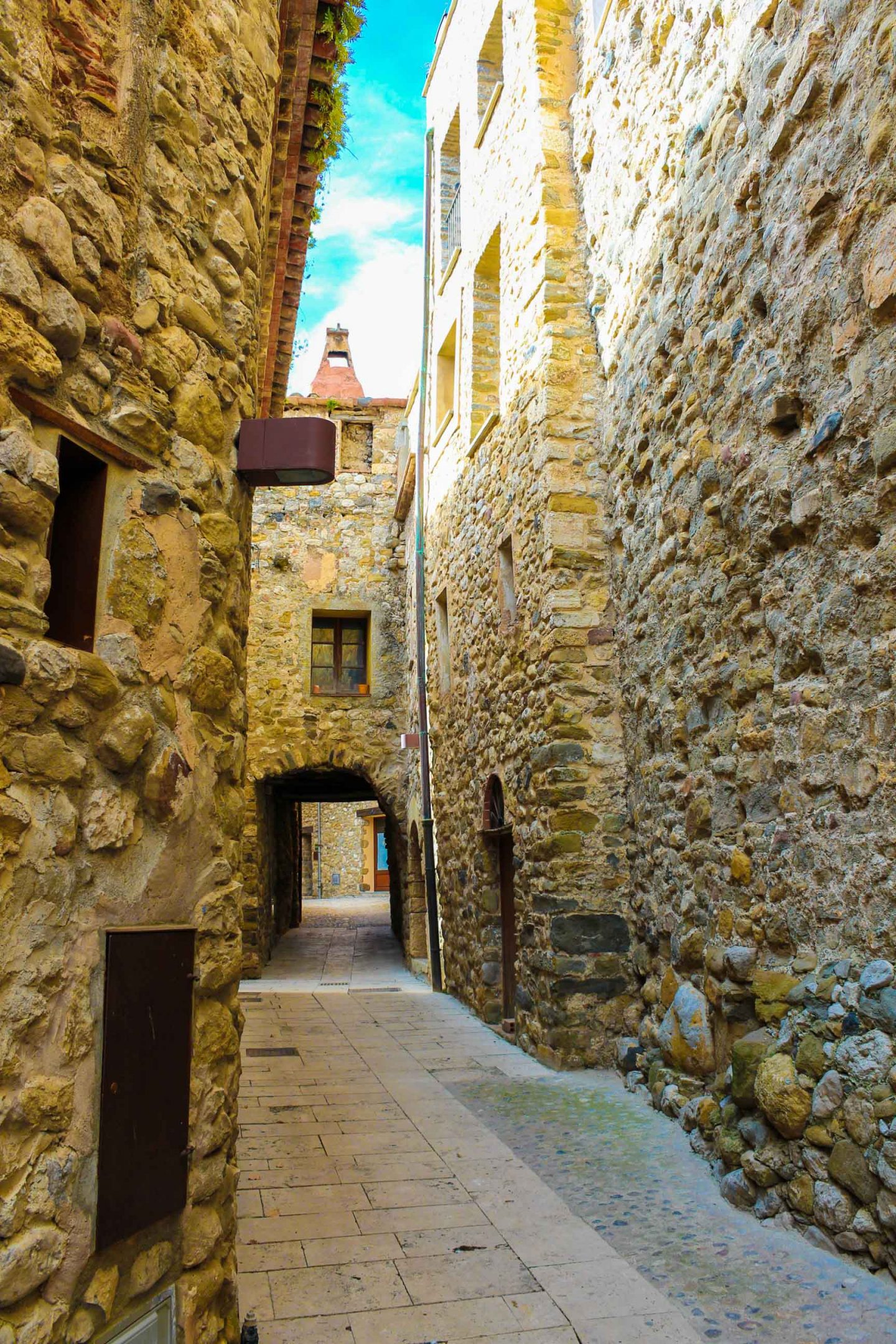
The best thing to do in Besalú is get lost in those streets for half an hour. It’s a small enough town that you can’t get properly lost and old enough that every corner looks like something.
What to eat — and I need to correct something
An earlier version of this post recommended Besalú for seafood. That was wrong, and it’s worth being straight about: Besalú is forty kilometres inland, in a volcanic farming region. The sea has nothing to do with it.
What Garrotxa does is meat and mountain food: botifarra sausage, duck, game, slow stews, and the vegetables that grow in volcanic soil — which locally is a genuine speciality, particularly the beans of the region.
Book lunch in advance in season. Besalú is small, the good places are small, and a Saturday in spring will see them full by two o’clock.
With children
What works better than expected:
- It’s a castle town without a castle ticket. A fortified bridge with a gate tower does the same job for a seven-year-old and costs nothing
- The streets are traffic-light and small, so children can go ahead of you
- The mikveh, oddly. A secret stone room under the town, down steps, used for something mysterious — that’s a better story than most museums manage
- Under an hour of actual walking, so nobody gets tired
What to plan for:
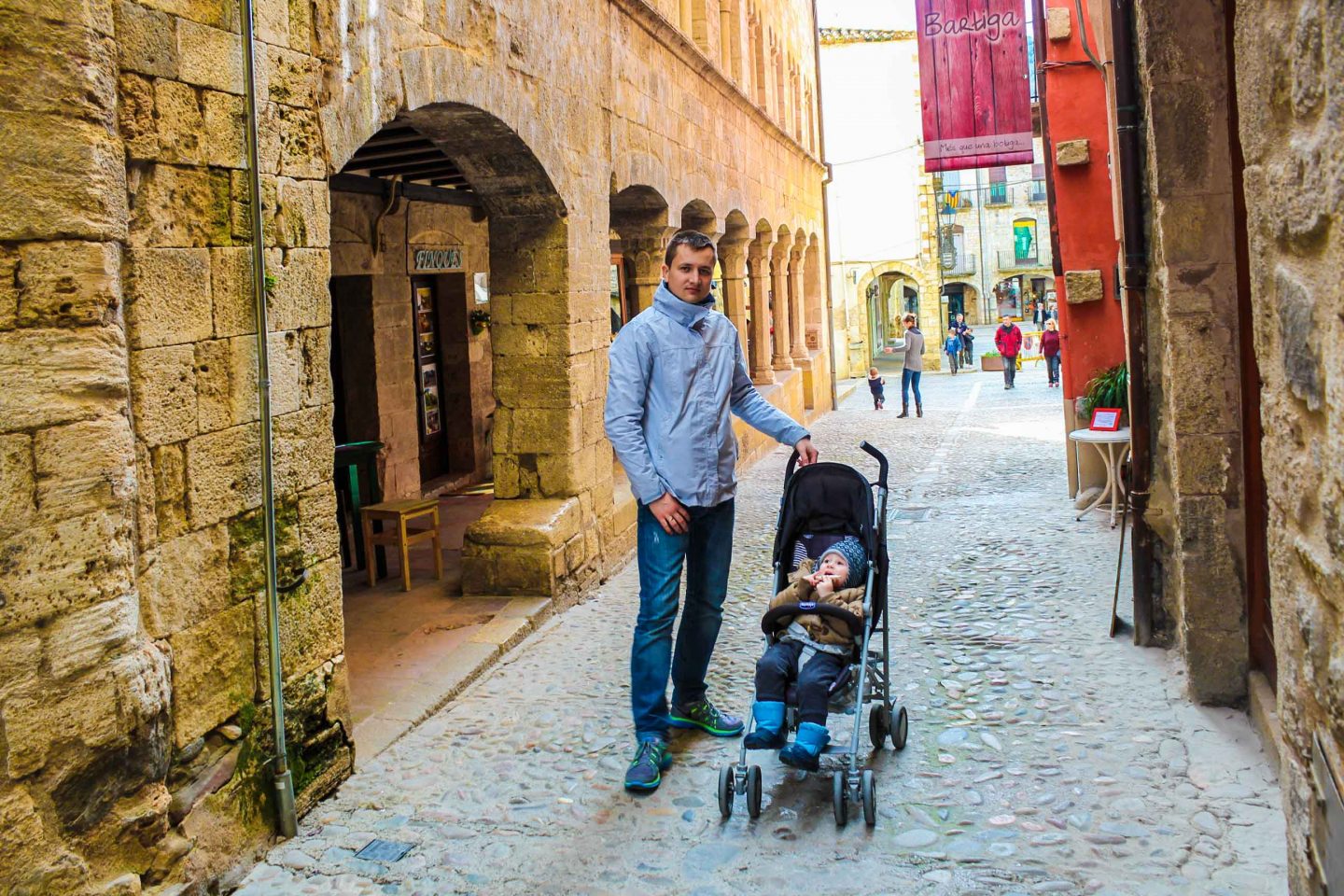
- Cobbles and steps. Not pushchair country
- Nothing is signposted in English in much detail — the tourist office is worth five minutes
- It’s a village. Two hours of medieval streets is enjoyable; four is a lot to ask of a child
Combining it — the medieval villages day
Besalú on its own is a half-day, and the drive out is 90 minutes to two hours. So the way to do it is as part of a loop through the Garrotxa, which is one of the best drives in Catalonia:
- Castellfollit de la Roca — a village built on top of a 50-metre basalt cliff, twenty minutes away, and genuinely startling from the road below
- Rupit — another medieval village, with a suspension bridge children love
- Banyoles — a lake, for swimming and boats, and the antidote to a day of old stone
- Olot — the main town of the volcanic zone, with the Garrotxa volcanoes around it
With children I’d do Besalú in the morning and a lake or a volcano in the afternoon. Two medieval villages in one day is one too many.
Or pair it with Girona, which is 35 minutes away and has its own — much larger — Jewish quarter.
Getting there
By car is much the easiest, and it’s what makes the Garrotxa loop possible.
Without a car: buses run from Barcelona towards Olot and stop at Besalú. This is a long-distance coach rather than a commuter service, so check the timetable and, more importantly, the return times before you commit to a day. Doing Besalú by bus is possible; doing Besalú and anything else by bus is not.
All our day trips from Barcelona, compared.
Is it worth the drive?
Not as your only day trip from Barcelona — Montserrat and Girona are closer and bigger.
But as part of a Garrotxa day, or if you have a week and a car, yes. Besalú is one of the best-preserved medieval towns in Catalonia and the mikveh is genuinely rare — a room that survived the expulsion of the people who built it, under a town most visitors drive past on the way somewhere else.
Go early, cross the bridge both ways, ask about the mikveh, and eat inland food.
Frequently asked questions
Where is Besalú?
In La Garrotxa, the volcanic interior of Girona province in Catalonia — about 40 km inland from the coast, not on the Costa Brava as it is often described. It is roughly 90 minutes to two hours from Barcelona by car.
How long do you need in Besalú?
You can walk the whole town in under an hour. We spent almost three, which is closer to right — and a full day with lunch and the surrounding villages. It is a half-day destination rather than a full one on its own.
What is the mikveh in Besalú?
A medieval Jewish ritual purification bath beneath the old Jewish quarter, reached by stone steps — a plain stone chamber fed by groundwater, and one of only a handful surviving in Europe. It is visited with a guide rather than walked into, so ask at the tourist office in the main square for times and tickets.
Is the Besalú bridge free to cross?
Yes. The Pont Vell is free and open, and worth crossing in both directions — the view back towards the town from the far bank is the better one and almost nobody photographs it. Go early, before the queue for the riverbank shot builds.
What food is Besalú known for?
Meat and mountain food, not seafood — the town is forty kilometres inland in a volcanic farming region. Botifarra sausage, duck, game, slow stews and the vegetables grown in volcanic soil, particularly the local beans. Book lunch in advance in season, as the good places are small.
What can you combine with Besalú?
Castellfollit de la Roca, a village built on a 50-metre basalt cliff twenty minutes away; Rupit, another medieval village with a suspension bridge; Banyoles and its lake for swimming; or Olot and the Garrotxa volcanoes. Girona is 35 minutes away. With children, do Besalú in the morning and a lake or volcano in the afternoon rather than two medieval villages in one day.
