
Quick verdict
- Llafranc is the calm one. Same coast as Calella de Palafrugell, ten minutes’ walk away, and noticeably quieter — a long straight beach with a promenade instead of a cluster of small coves.
- The beach is 347 m long and about 32 m wide, coarse sand, Blue Flag, with lifeguards, showers and adapted access for reduced mobility.
- The walk from Calella takes about 25–30 minutes on the Camí de Ronda and is genuinely fine with walking children. The next section, Llafranc to Tamariu, is not — see below.
- Sant Sebastià lighthouse sits 169 m above the sea on the headland, with the best panoramic view on this stretch of coast and a restaurant at the top.
- Parking is the hard part. Arrive before 10:00 in July and August or plan to walk in.
Llafranc, on the Costa Brava, is the village most people find by accident — they come for Calella de Palafrugell, walk round the headland because somebody told them to, and end up staying the afternoon.
That is roughly what happened to us.
It sits in the next bay north, part of the same municipality of Palafrugell, and it is a completely different shape of place. Calella is a handful of small coves stitched together by steps and alleys. Llafranc is one long beach with a promenade behind it, a marina at one end, and a headland with a lighthouse on it at the other. If Calella is the postcard, Llafranc is the one you would actually book for a week.
our full guide to Calella de Palafrugell
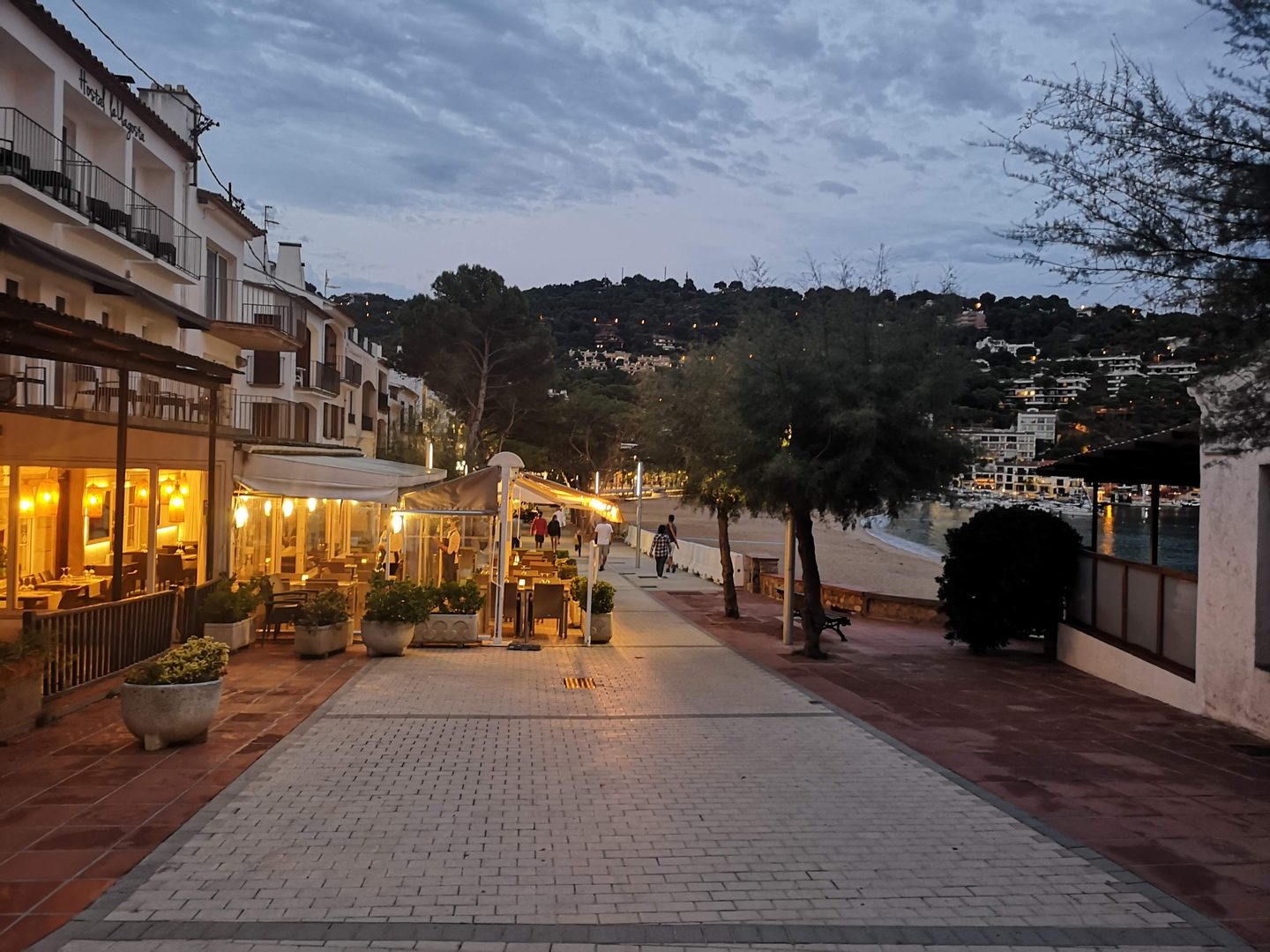
Where is Llafranc?
Llafranc is on the Costa Brava in Catalonia, about 130 km from Barcelona and roughly 1 hour 45 minutes by car via the AP-7 and C-31. It belongs to the municipality of Palafrugell, along with Calella de Palafrugell and Tamariu — three separate coastal villages sharing one inland town.
There is no train. The nearest stations are Girona and Flaçà, and from either you need a bus or a taxi, which is doable but awkward with children and luggage.
In practice: you drive, or you stay in one of the three villages and walk between them. That second option is better than it sounds, and it is what I would do again.
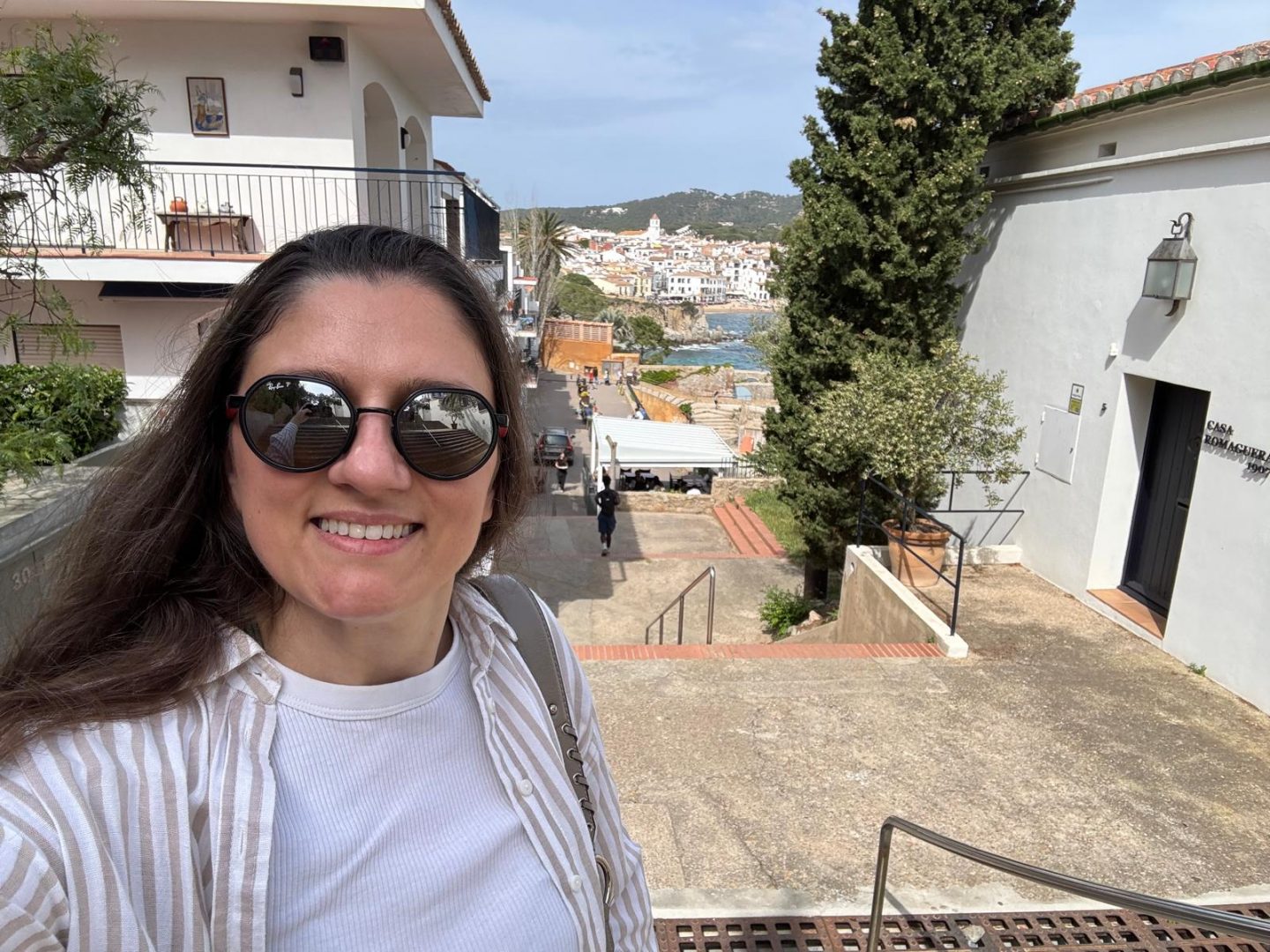
Llafranc beach — what it is actually like
Platja de Llafranc is 347 metres long and about 32 metres wide, which makes it considerably bigger than anything in Calella and the reason it works better on a busy day. The sand is coarse rather than fine — normal for this coast — and the beach sits directly in front of the village, so everything is a two-minute walk.
What is there:
- Lifeguards in season
- Showers and footbaths
- Boat hire
- Adapted toilets and shower access for reduced mobility
- Restaurants along the promenade, directly behind the sand
- Blue Flag, plus EMAS and ISO 14001 environmental certification
There is also a marked open-water swimming route, which is unusual and worth knowing if anyone in the family actually swims rather than paddles.
For families, the combination that matters is: a wide promenade you can walk a buggy along, shallow entry, lifeguards, and toilets that exist. Calella has the better photographs. Llafranc has the better logistics.
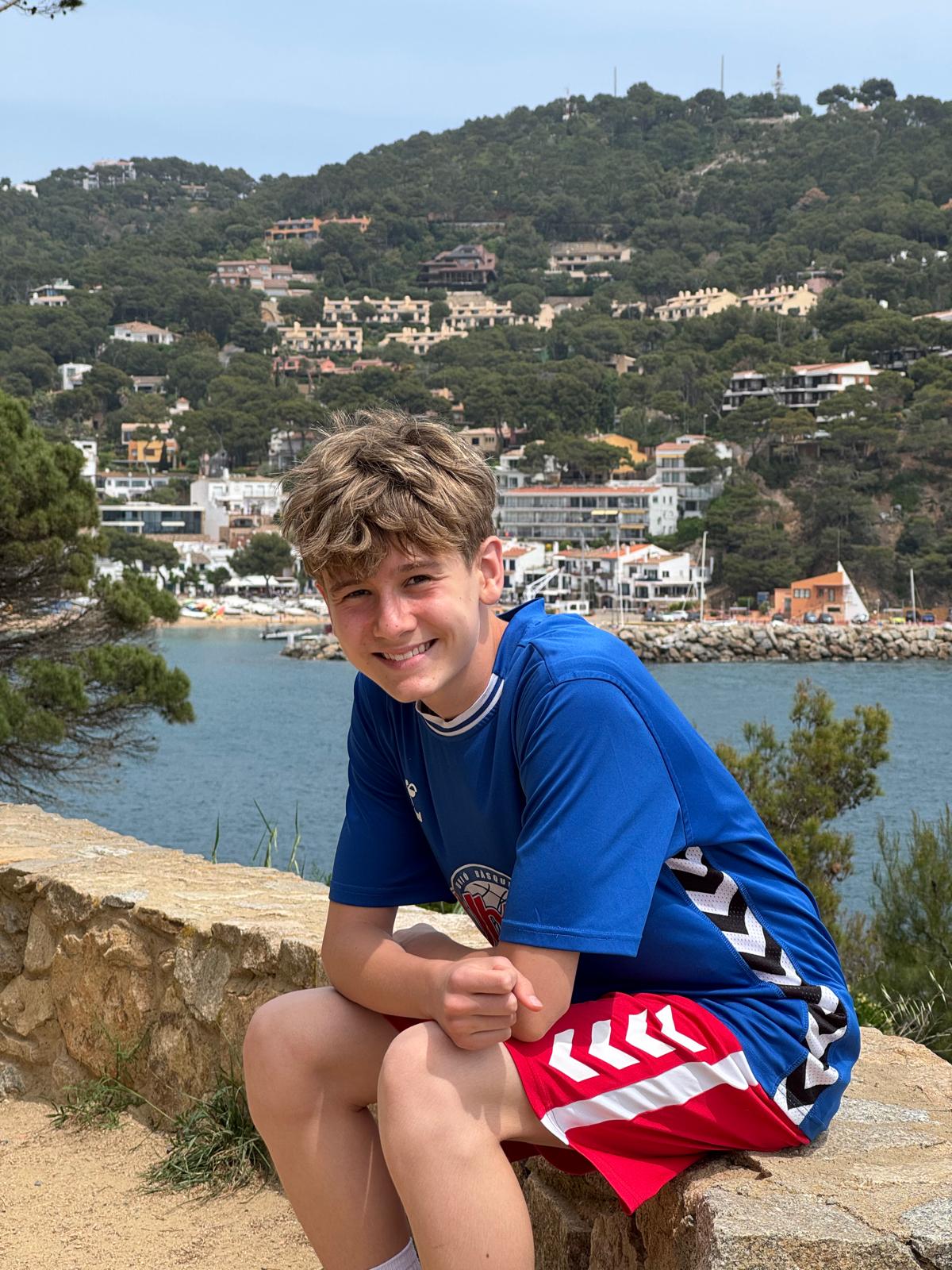
The walk from Calella de Palafrugell to Llafranc
This is the reason to do both villages in one day, and it is the best half-hour on this coast.
The Camí de Ronda from Calella to Llafranc takes about 25–30 minutes each way. It runs round the Sant Roc headland, partly on a proper paved promenade, partly on stone path cut into the cliff, with the sea below you the whole way.
It is genuinely fine with children who walk. There are steps and uneven sections and a few places where you want a hand held, but nothing exposed or frightening, and the official Costa Brava route notes describe this specific section as ideal to walk with children.
It is not fine with a pushchair. Steps, repeatedly. Leave it, or take the road.
Important, because most guides get this wrong. People talk about “the Camí de Ronda” as if it is one path with one difficulty. The Calella–Llafranc section is easy. The next section, Llafranc to Tamariu, is a completely different walk — it climbs over the lighthouse headland and then, in the official description, the road becomes savage, with narrow paths along the sea rocks. The full Calella–to–Tamariu route is 9 km and about two hours each way, graded moderate, and it is not a family stroll.
If you have read somewhere that you can walk all three villages with small children in an afternoon, you have read something written by somebody who did not do it.
Sant Sebastià lighthouse — is it worth the climb?
Yes, and it is the thing that makes Llafranc more than a beach.
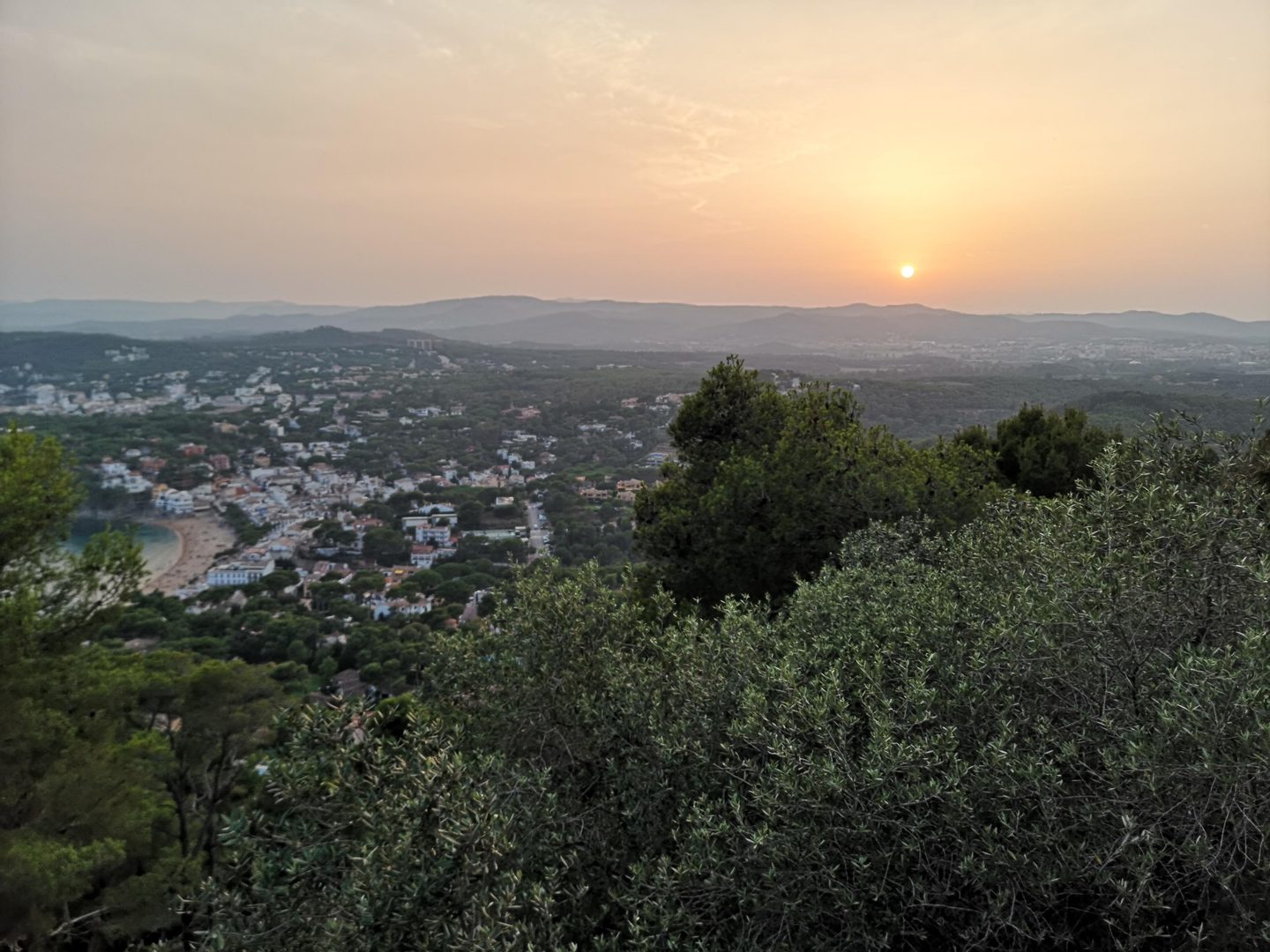
Far de Sant Sebastià stands 169 metres above the sea on the headland south of the village, built in the mid-19th century. The path up starts from the marina at the end of Llafranc beach and climbs steadily.
What surprises people is that the lighthouse is not the only thing up there. The Monumental Site of Sant Sebastià de la Guarda includes:
- An Iberian settlement dating from the 5th to the 1st century BC, with an on-site museum
- A 15th-century watchtower, built to warn the coast of pirates
- A hermitage
- An old inn
- El Far, a hotel-restaurant on the cliff edge
The view from the top is described by the Costa Brava tourism board as one of the best panoramas on the entire coast, and having stood there, that is not marketing.
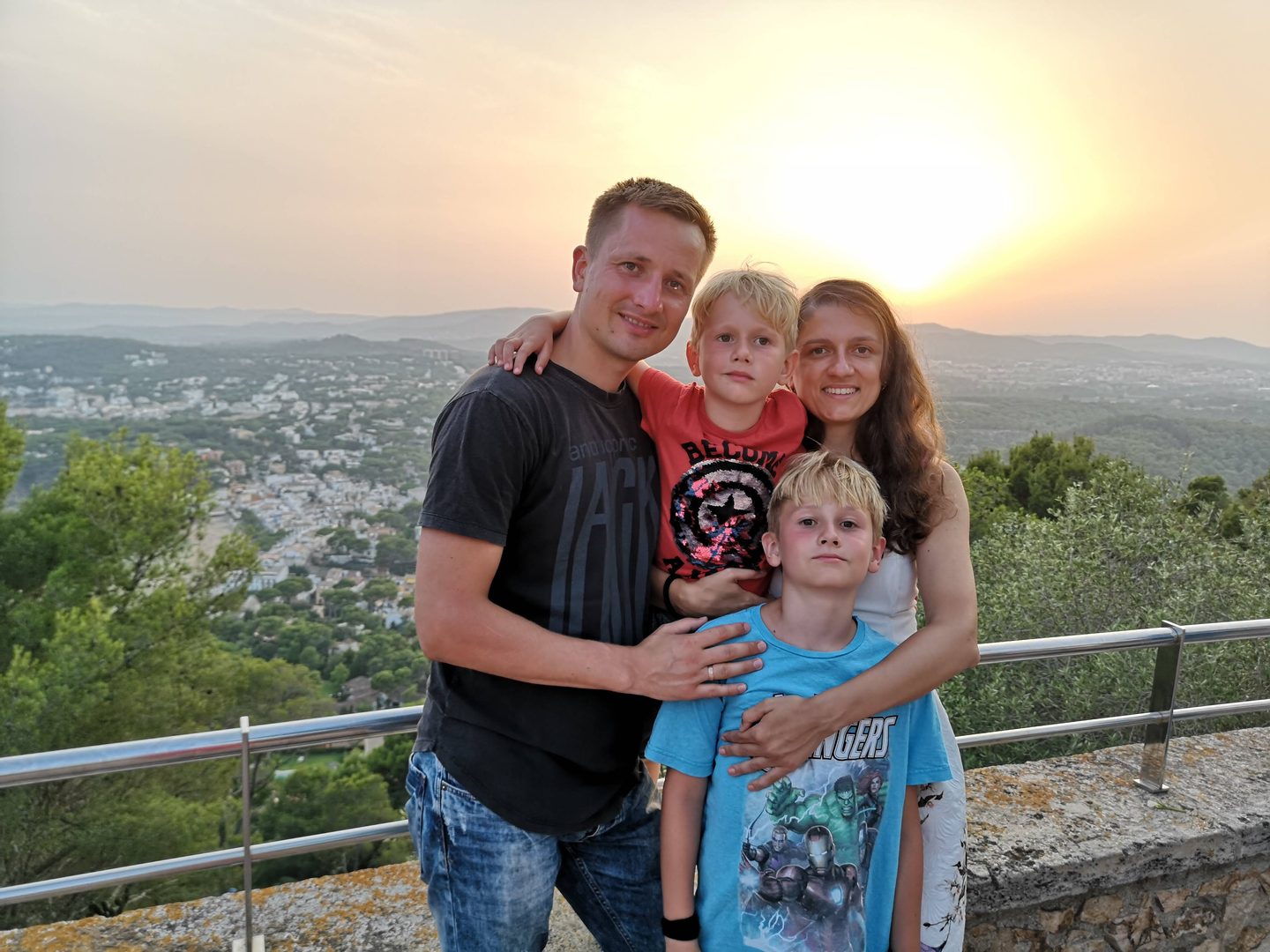
With children: it is a real climb, not a stroll. Older kids will manage it and enjoy the pirate tower. With a five-year-old at the end of a beach day, you will be carrying someone. You can also drive up, which is the sensible option if the walk is going to end the day badly.
Parking in Llafranc
The honest answer: it is the worst part of the day, and it is worse than Calella.
Llafranc is a small village at the bottom of a hill with a finite number of spaces and no way to make more.
What works:
- Arrive before 10:00 in July and August. Not “early” — before ten
- Expect to pay in the marked zones in season
- Park once and stay put. Everything in the village is walkable, and the Calella walk means you do not need the car for the second village either
- If you are staying overnight, book a hotel with parking. In August this is not a luxury, it is the difference between a good day and a bad one
A strategy that works better than most people realise: park in Calella, walk the Camí de Ronda to Llafranc, spend the afternoon, walk back. Calella has more parking, the walk is the best part of the day anyway, and you have solved the problem by not having it.
Where to eat in Llafranc
The promenade behind the beach is a row of restaurants with terraces facing the water. They are not cheap, and you are paying partly for the view, which is a fair trade once.
Two that come up consistently:
- Restaurant León — unpretentious, traditional, known for suquet, the local fish and potato stew. This is the one to order properly at.
- Casamar — the restaurant at Hotel Casamar, up the hill, and the serious dining option in the village. It is listed in the Michelin Guide.
Where to stay in Llafranc
Straight answer: we did not stay here — we came for the day. So this is not “the hotel we loved”, it is how I would choose, and I have spent fourteen years working in hotels, which is a different kind of useful.
Three things matter more than star ratings in a village this size:
- Parking. Say it three times. In August it is worth more than a sea view.
- How far up the hill you are. Llafranc climbs steeply behind the beach. A room 300 m away on the map can be 300 m upwards, which is a different proposition at the end of a beach day with tired kids.
- Room size. Small coastal hotels often mean a “family room” is a double with a sofa bed.
Worth looking at: Hotel Casamar (boutique, up the hill, the restaurant is the draw), Hotel Llafranch and Hotel Terramar (both on the seafront), and El Far, up at the lighthouse — which is a completely different holiday, with the best view and no ability to walk to the beach.
what hotel meal plans actually include
One thing that will not be in the price you booked: Catalonia charges a tourist tax per person, per night, collected at the hotel, and Barcelona is not the only place it applies. It is small but it appears at check-out and annoys people.
tourist tax in Europe — what you actually pay
Llafranc or Calella de Palafrugell — which should you choose?
This is the question people are really asking, so answer it directly.
| Calella de Palafrugell | Llafranc | |
|---|---|---|
| Shape | Nine small coves, alleys, steps | One long beach with a promenade |
| The photograph | Les Voltes arches, boats on the sand | The bay and the lighthouse above it |
| Sand | Less of it, in pieces | 347 m in one stretch |
| Buggy | Awkward | Fine along the promenade |
| Crowds | Busier — it is the famous one | Noticeably calmer |
| Parking | Hard | Harder |
| Eating | More choice | Fewer, more seafront |
If you only have one afternoon: Calella. It is the more beautiful of the two and it is what you came to the Costa Brava to see.
If you have a whole day: both. Park in Calella, walk over, come back for sunset.
If you are booking a week: Llafranc. More beach, more space, easier with a buggy, and you can walk to Calella whenever you want the postcard.
When to go
- June and September are the answer. Warm sea, everything open, and you can park.
- July and August: go, but be there before ten and accept the crowds.
- May and October: quiet and lovely, but some restaurants close and the sea is cold for children.
- Winter: the village mostly shuts. The walk is still beautiful.
More Costa Brava with kids
Internal links:
- Calella de Palafrugell, the full guide → https://travelfamilyblog.com/calella-de-palafrugell-one-of-costa-brava-treasures/
- the best calas and hotels on the Costa Brava → https://travelfamilyblog.com/costa-brava-best-calas-hotels-guide/
- Tossa de Mar with kids → https://travelfamilyblog.com/tossa-de-mar-the-ultimate-guide-for-families-with-kids/
- Pineda de Mar beach guide → https://travelfamilyblog.com/pineda-de-mar-beach-guide/
- 20 day trips from Barcelona → https://travelfamilyblog.com/20-coolest-day-trips-from-barcelona/
Llafranc, Costa Brava: FAQ
Where is Llafranc?
Llafranc is a coastal village on the Costa Brava in Catalonia, Spain, about 130 kilometres from Barcelona and around an hour and three quarters by car. It belongs to the municipality of Palafrugell, together with Calella de Palafrugell and Tamariu.
How long is the walk from Calella de Palafrugell to Llafranc?
The Camí de Ronda coastal path between the two villages takes about 25 to 30 minutes each way. It is partly paved promenade and partly stone path with steps, and it works well with children who walk, but not with a pushchair.
Is Llafranc beach good for families?
Yes. Platja de Llafranc is 347 metres long and about 32 metres wide with coarse sand, lifeguards in season, showers, boat hire and adapted access for reduced mobility. It holds a Blue Flag, and the promenade behind it means you can walk a pushchair even though the coastal path cannot.
Can you visit the Sant Sebastià lighthouse in Llafranc?
Yes. The lighthouse stands 169 metres above the sea on the headland south of the village and was built in the mid-19th century. The site also holds an Iberian settlement with a museum, a 15th-century watchtower, a hermitage and a hotel restaurant. You can walk up from the marina or drive.
Where can you park in Llafranc?
Parking in Llafranc is limited and fills early. In July and August you should arrive before 10:00 or expect to walk in, and paid zones apply in season. A good alternative is to park in Calella de Palafrugell and walk over on the coastal path.
Is Llafranc better than Calella de Palafrugell?
They suit different trips. Calella de Palafrugell is prettier and more famous, with nine small coves and the arched fishermen’s houses. Llafranc is calmer, with one long beach and a promenade, which makes it easier with a pushchair and better for a longer stay.
Can you walk from Llafranc to Tamariu?
Yes, but it is much harder than the walk to Calella. The path climbs over the lighthouse headland and then follows narrow tracks along the sea rocks. The full route from Calella de Palafrugell to Tamariu is about 9 kilometres and takes roughly two hours each way, graded moderate, so it is not suitable for small children.
