
Twenty minutes on a train from Plaça Espanya, there is a UNESCO-listed Gaudí building with no queue.
That sentence does most of the work of this article. While several thousand people a day file through the Sagrada Família, the church where Gaudí actually worked out how to build it sits in a quiet industrial village with a handful of visitors and a car park.
Adults pay €10. Children up to nine go free. Here’s how to do it.
What it costs
| Ticket | Adult (10–64) | Student / 65+ | Up to age 9 |
|---|---|---|---|
| Entry with audio guide | €10.00 | €8.00 | Free |
| Guided tour | €13.00 | €10.00 | Free |
| Entry + return train from Barcelona | €14.00 | €11.00 (65+) | €5.00 |
A family of two adults and two children under 10 pays €20 with the audio guide, or €28 with the train included — which covers everything, door to door, for the whole day.
The combined ticket is the one to buy if you’re coming from Barcelona. €14 against €10 entry plus the return fare works out at or below the cost of doing it separately, and it means one transaction instead of three.
Book at least 15 days ahead for a weekend. The site is small and the guided tours cap out.
Where to stay in Barcelona — our three picks
Generator Barcelona – private family rooms at hostel prices, five minutes from Passeig de Gràcia and metro Diagonal (L3/L5). Rooms are small and the bar downstairs is lively, so ask for a higher floor.
H10 Cubik – on the edge of the Gothic Quarter, with the Atic rooftop terrace and pool. You can walk to the cathedral, the beach and the Born from the door, which saves you metro tickets all week.
The Cotton House Hotel, Autograph Collection – the old cotton guild building on Gran Via, a ten-minute walk from Casa Batlló and the Sagrada Família side of Eixample. Quiet, grown-up, and the rooftop is the reason to book it.
Affiliate links: if you book through them we may earn a small commission, at no extra cost to you.

What it actually is, and why it matters
Eusebi Güell — the same industrialist who paid for Park Güell and Palau Güell — built a textile factory outside Barcelona in 1890 and a whole village around it for the workers: houses, a school, a co-operative, a doctor, a theatre. That was the colònia, and it was a genuinely radical piece of nineteenth-century social planning.
He asked Gaudí to build the church.
Gaudí spent ten years on it and never finished it. Only the crypt — the lower level — was ever built. And that unfinished crypt is the single most important building in understanding everything else he did, because it’s where he tested the idea.
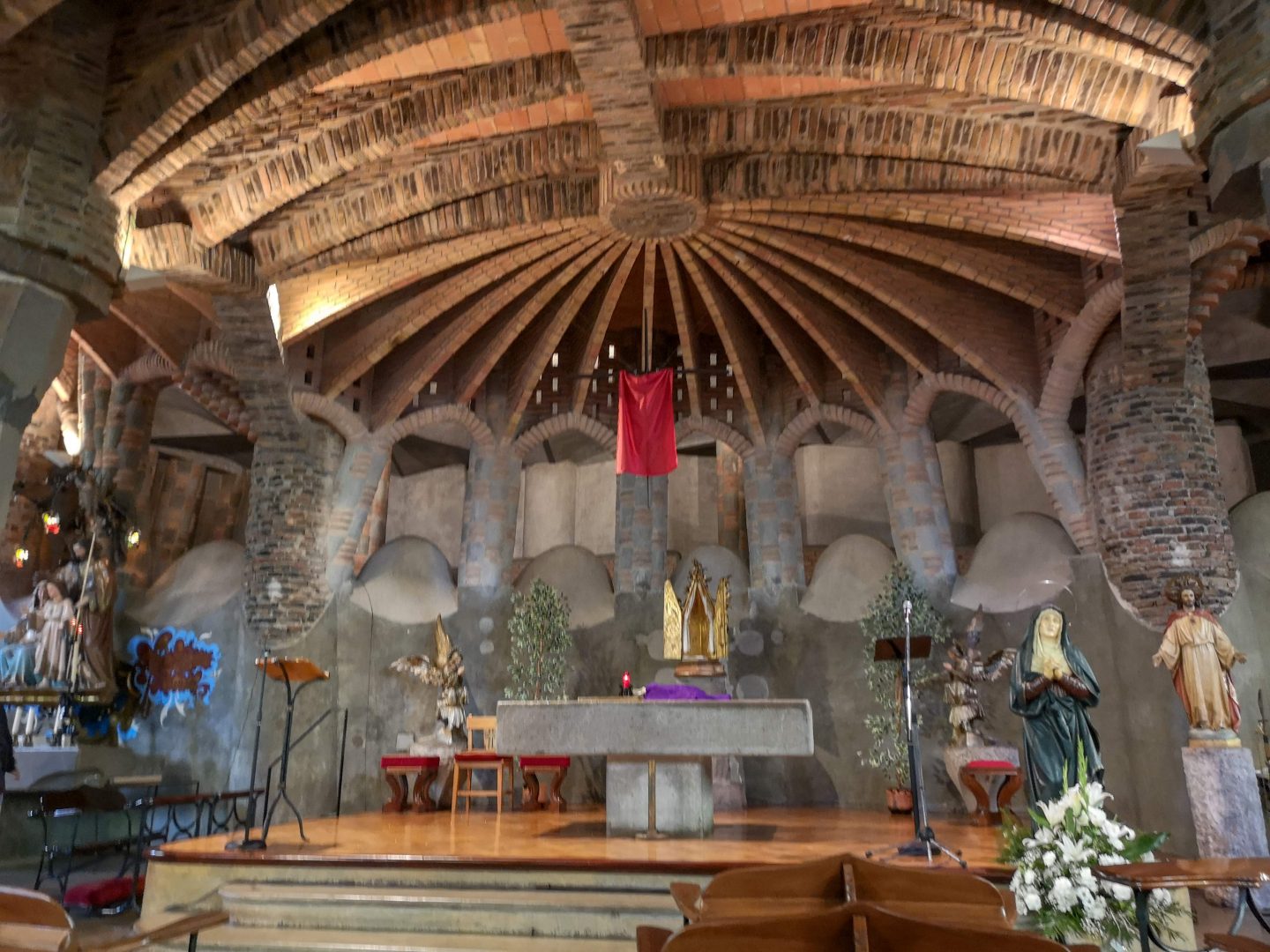
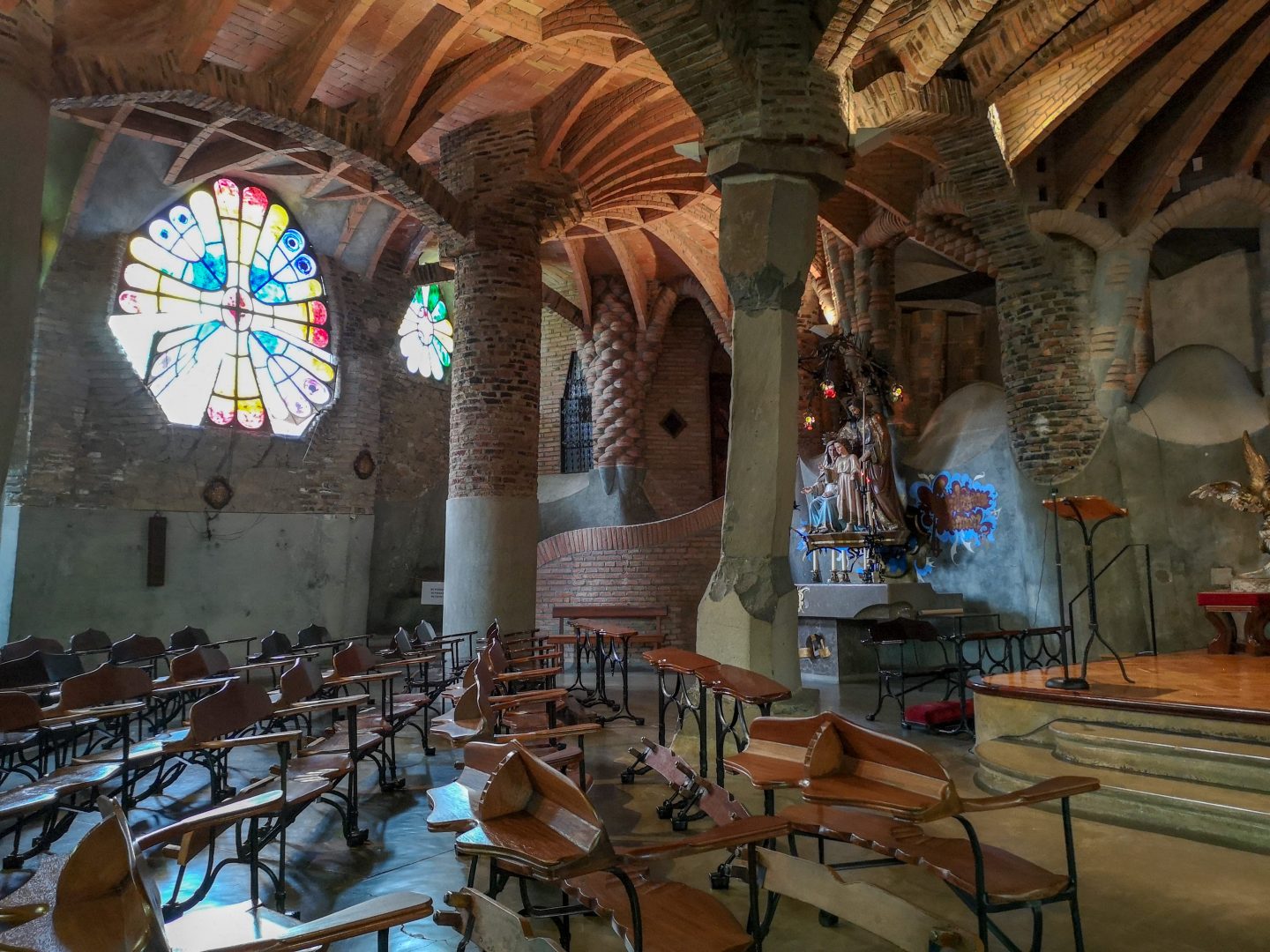
The technique: he built an upside-down model out of string, hung weights from it, and let gravity find the shape that carries load most efficiently. Then he photographed it, turned the photograph the right way up, and built that. Leaning columns, parabolic arches, no flying buttresses — the structural system that made the Sagrada Família possible was worked out here, at full scale, in a village.
So if you’ve been to the Sagrada Família and found the columns strange, this is the building that explains them.
What you see
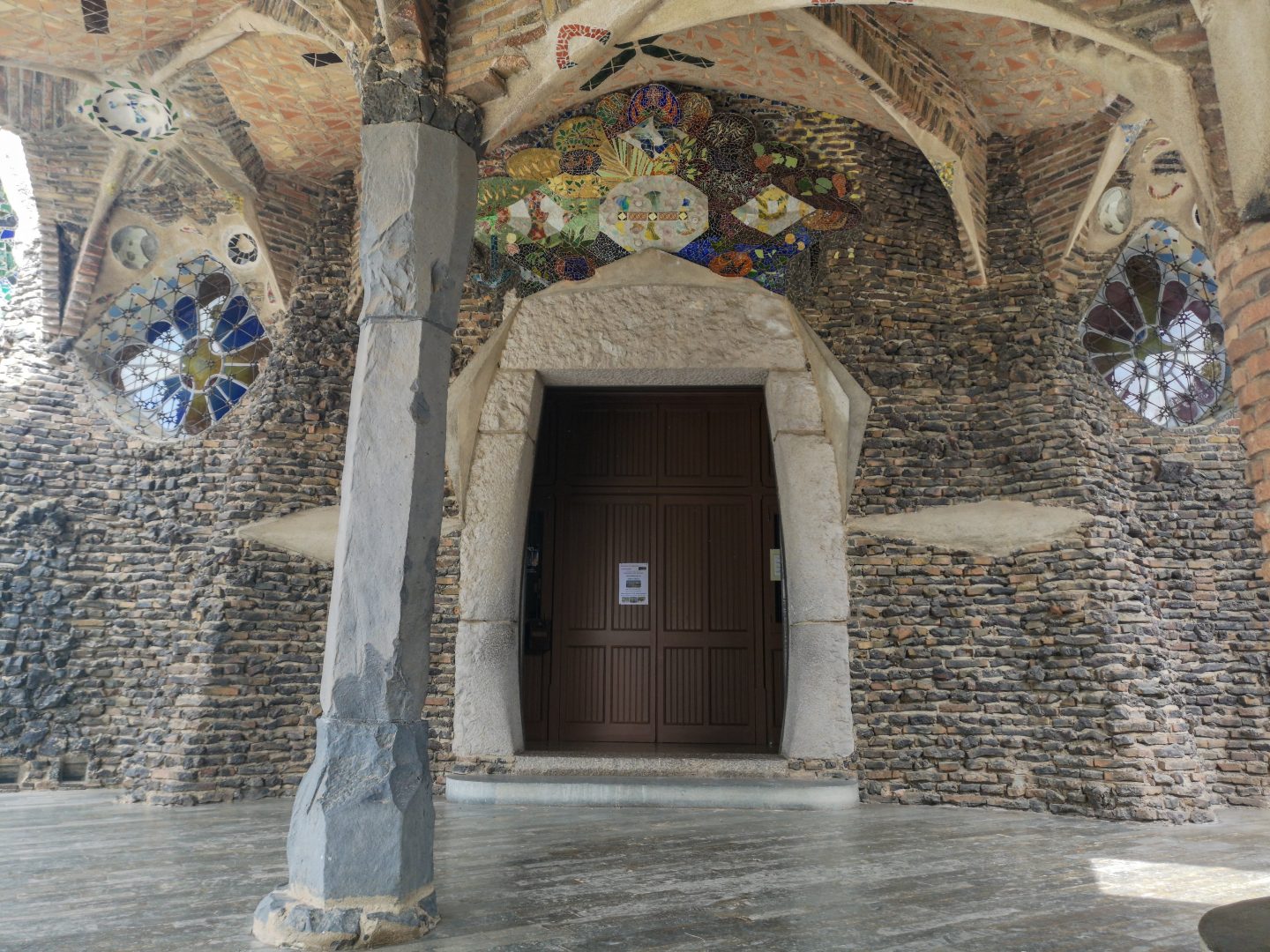
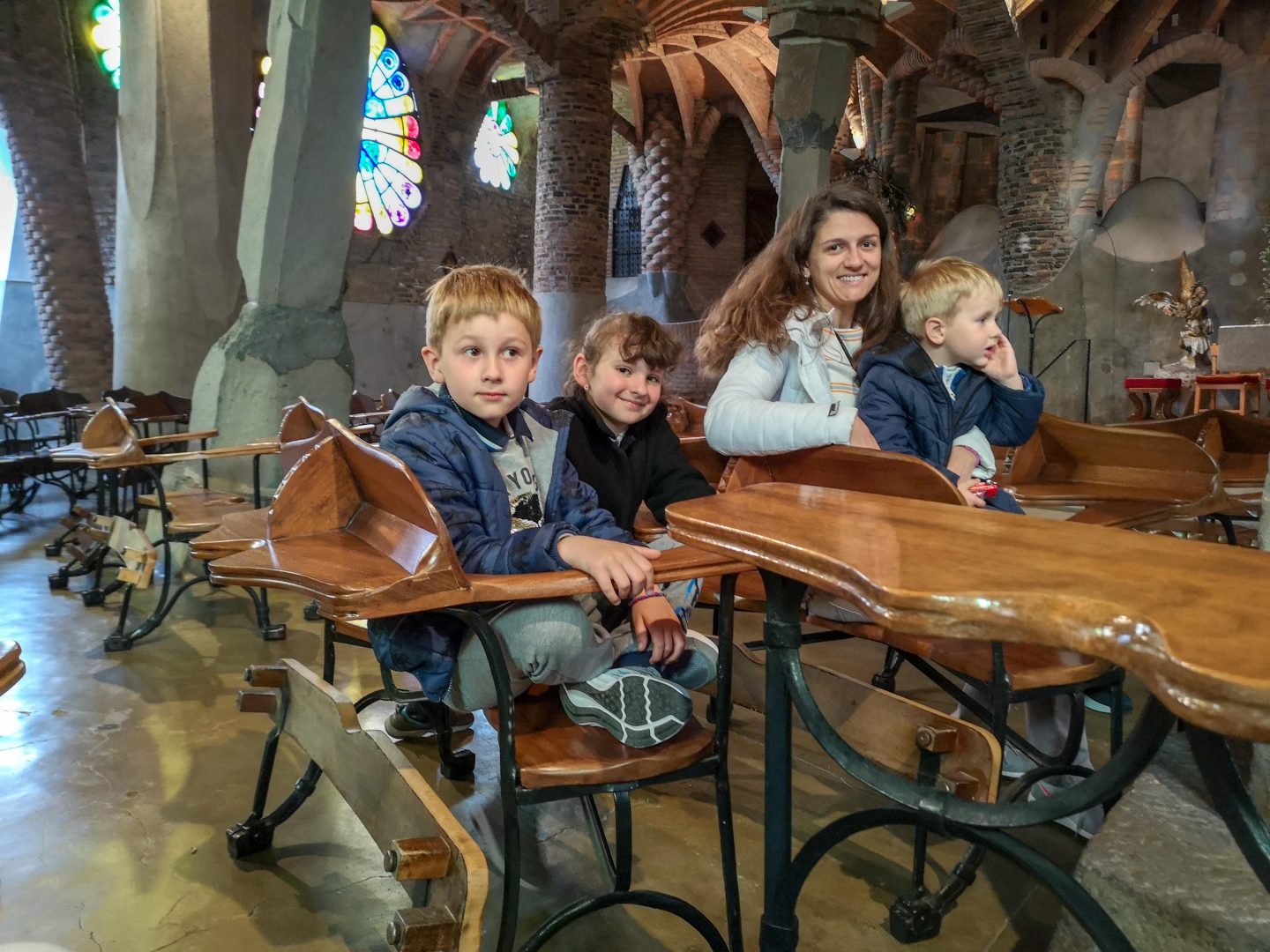
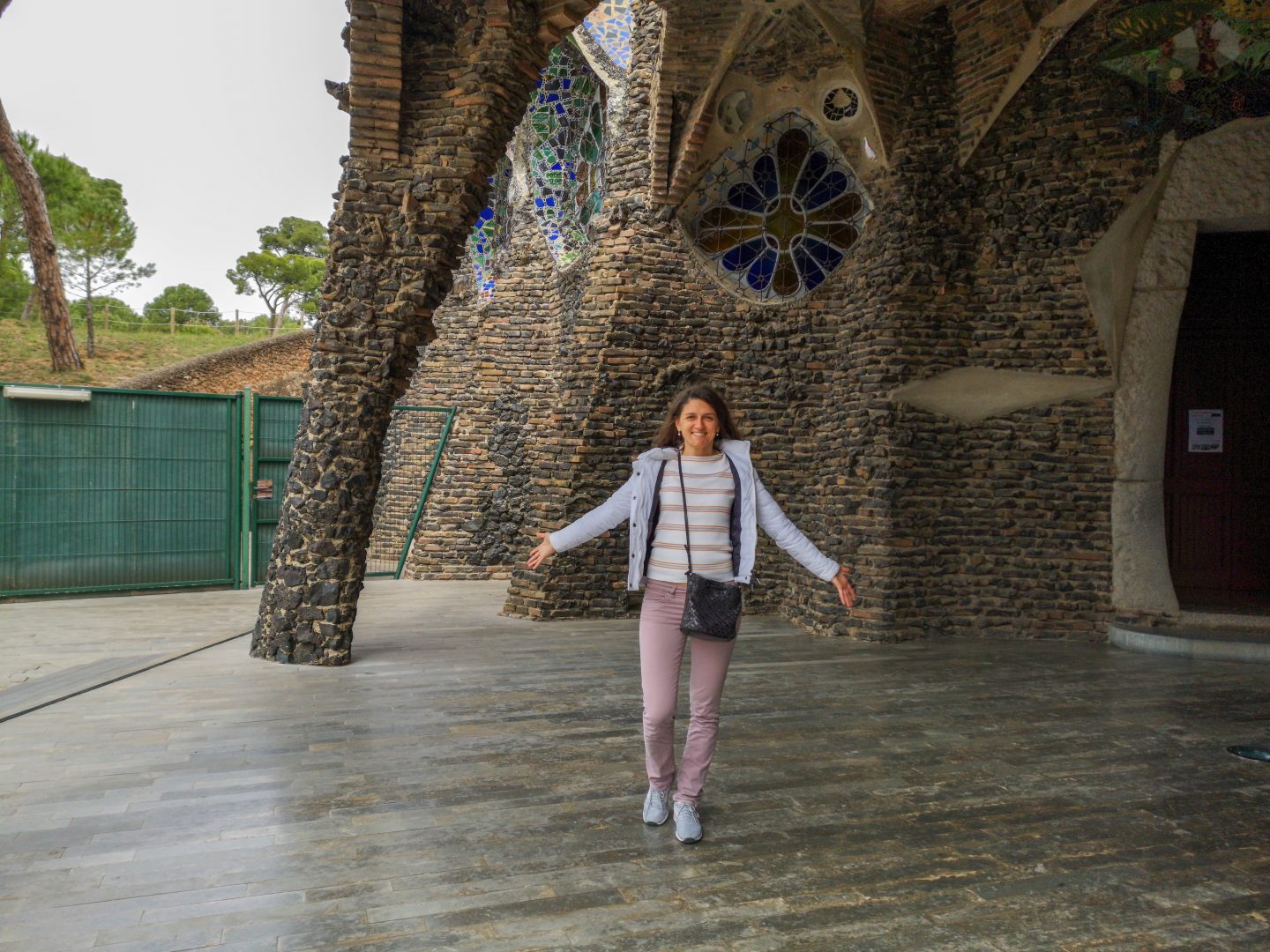
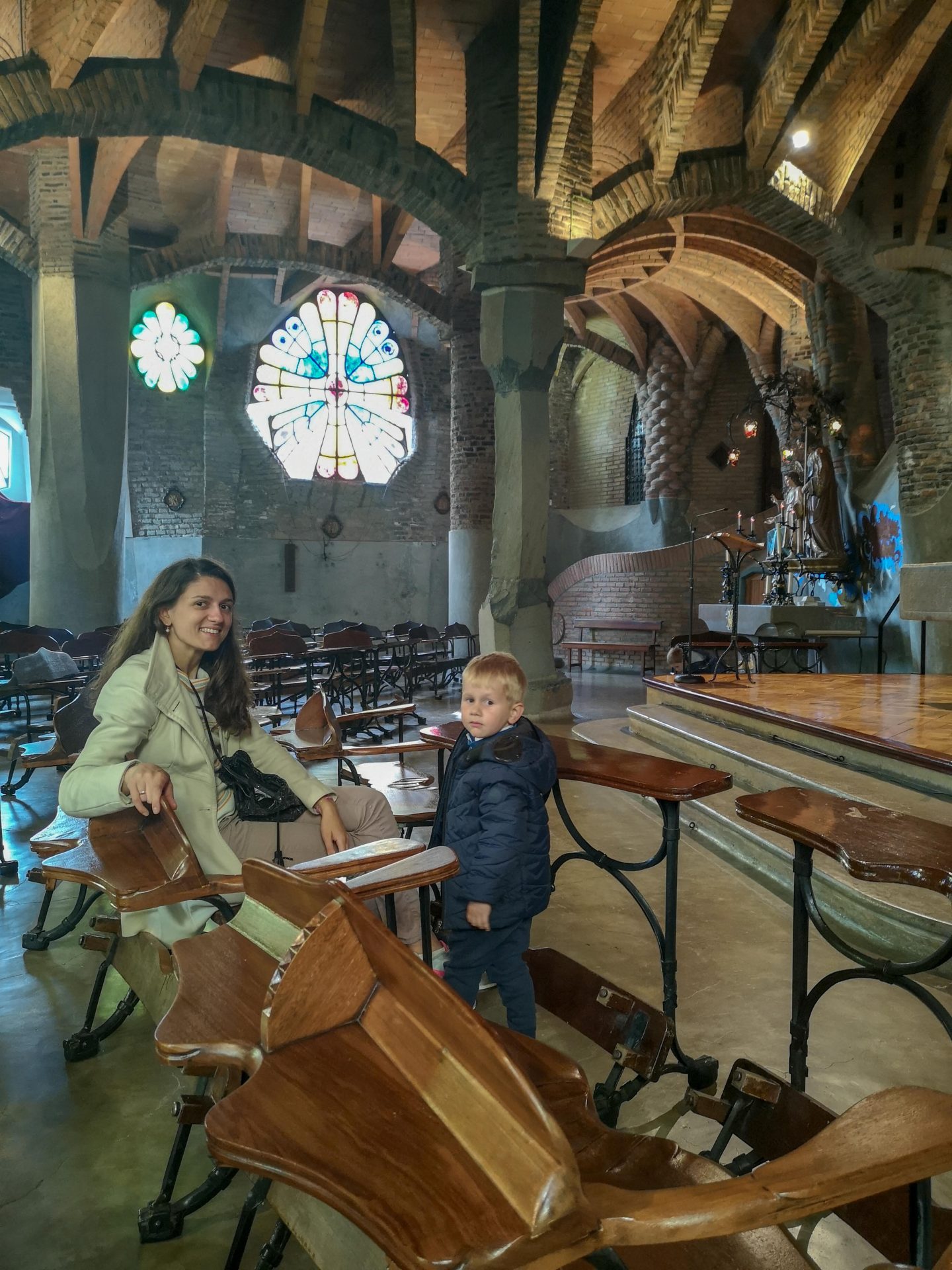
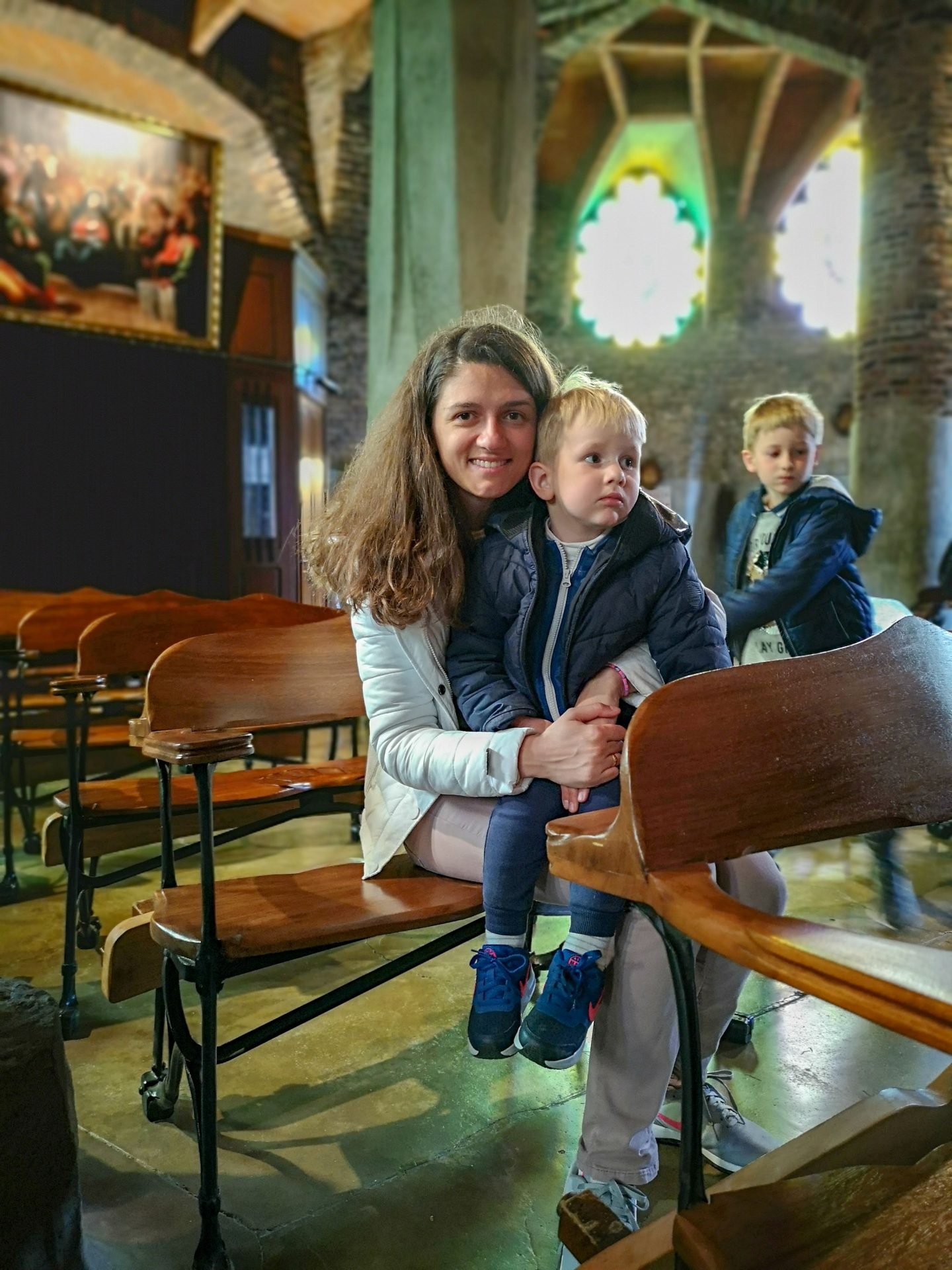
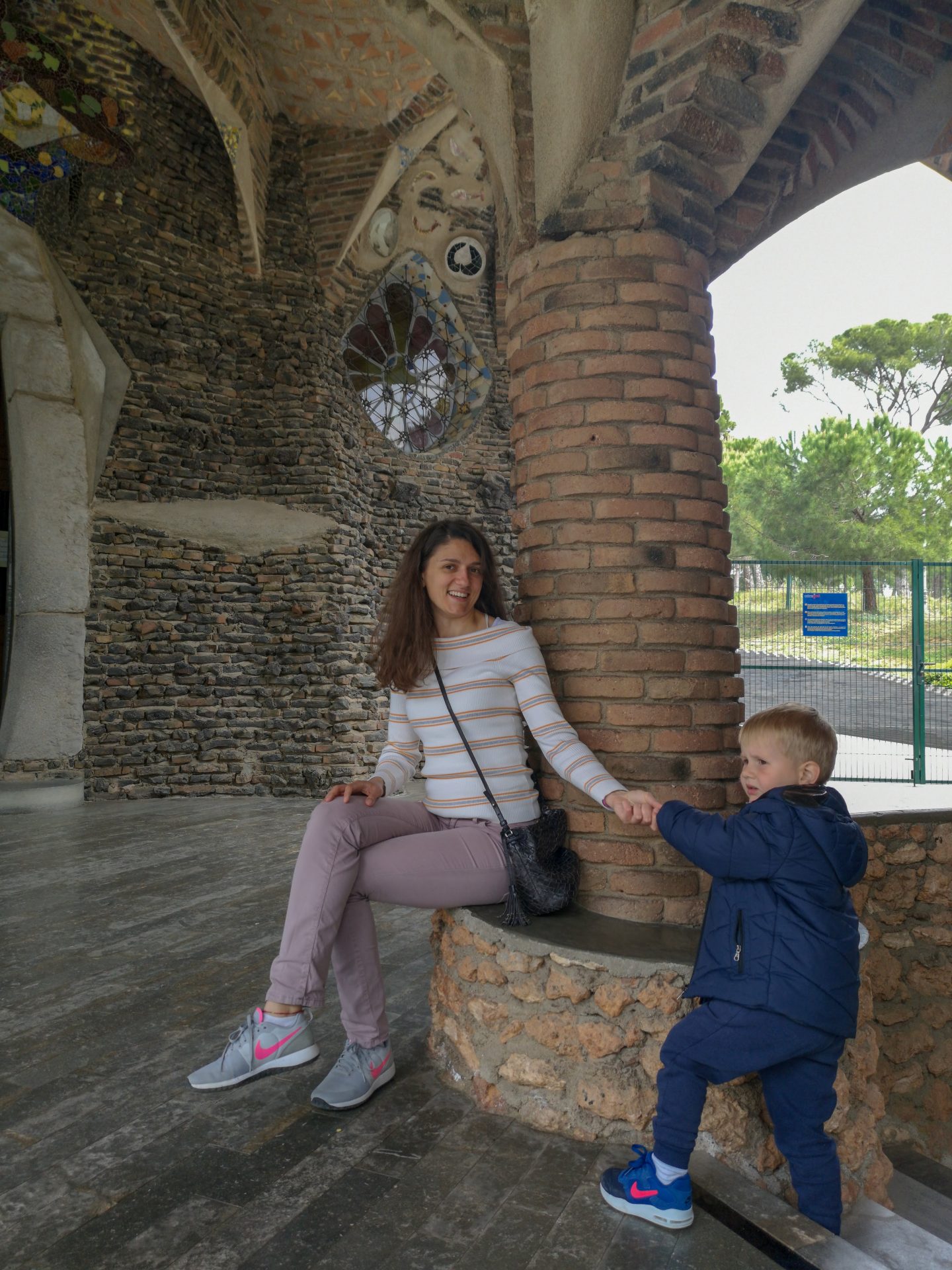
- The crypt itself — leaning basalt columns, ribbed brick vaults, and stained glass in the shape of flower petals that opens and closes. Small, dark, and completely unlike anywhere else.
- The interpretation centre — five exhibitions covering the colony, the factory and how the crypt was built. The upside-down model is here; it’s what makes the crypt make sense.
- The village — the workers’ houses, the co-operative building, the school, the factory buildings. A complete modernist industrial village you can walk round for nothing.
Allow two to three hours including the walking about. It is a half-day, not a full one.
Getting there
Genuinely easy, which is the other reason more people should go.
- FGC from Plaça Espanya — lines S3, S4, S8 or S9
- About 20 minutes to Colònia Güell station
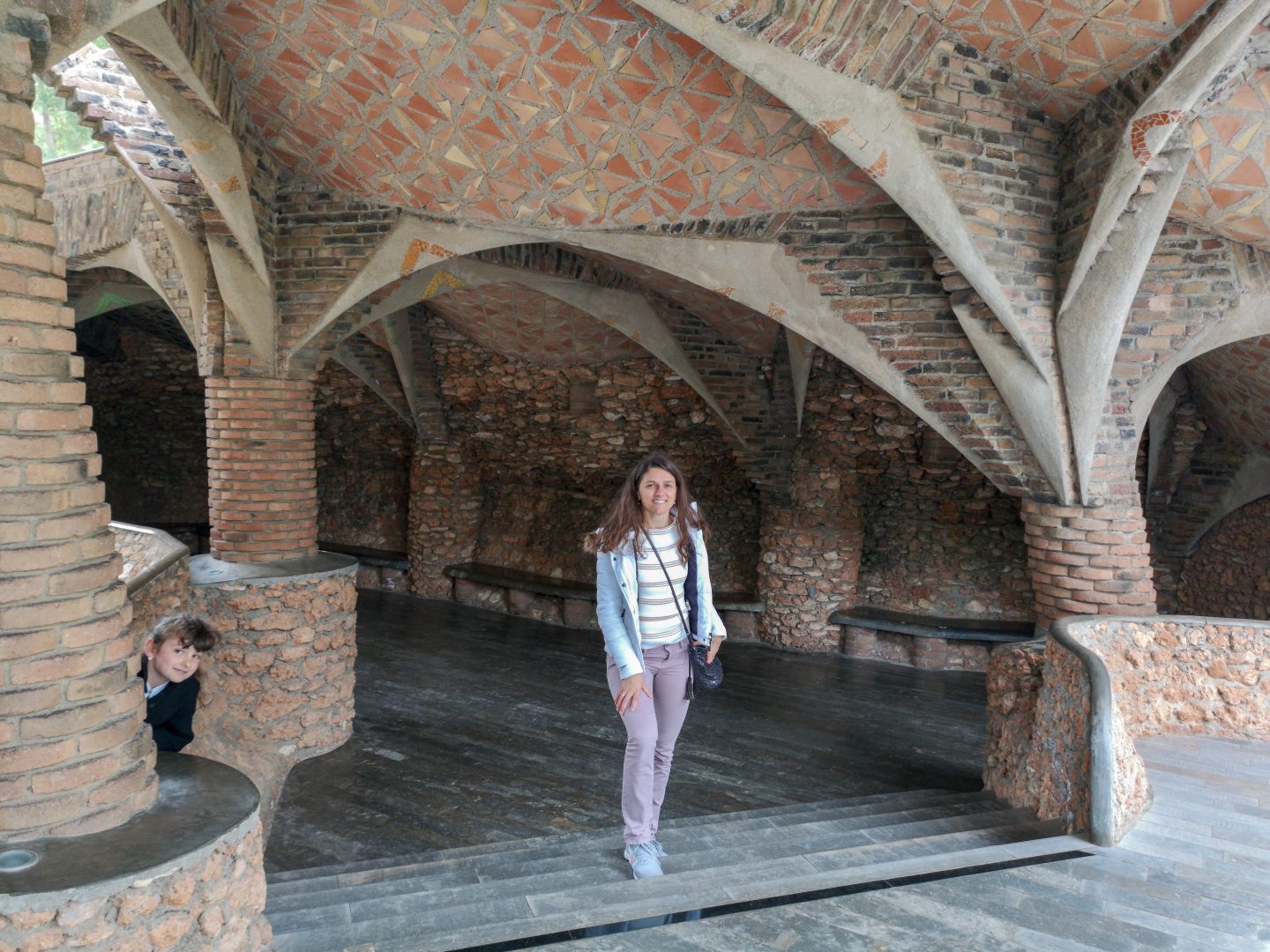
- Cross the road and follow the blue footprints painted on the pavement — about 6 minutes on foot to the visitor centre
The blue footprints are a nice touch and they solve the one thing that usually goes wrong on a small-town day trip. Children like following them.
Which travel ticket you need — though if you buy the combined €14 ticket, the train is included.
Opening hours
| Season | Tue–Fri | Sat–Sun |
|---|---|---|
| May – October | 10:00 – 19:00 | 10:00 – 15:00 |
| November – April | 10:00 – 17:00 | 10:00 – 15:00 |
Closed Mondays, all year.
Note the weekend hours — it shuts at three on Saturdays and Sundays, which is earlier than people expect and the most common way to get this trip wrong. Go in the morning at a weekend, or go on a weekday and have the afternoon.
With children
What works:
- Free up to age 9, which makes it one of the cheapest day trips from Barcelona
- The blue footprints from the station
- The upside-down string model in the interpretation centre — this is the bit that lands. A building designed by hanging weights on string is a genuinely good story and it’s right there to look at
- There’s a village to walk around afterwards, so it isn’t only twenty minutes in a crypt
- Almost nobody there, so nobody is shushing anyone
What to plan for:
- The crypt is small and dark. It’s fifteen minutes of looking, not an hour
- It closes at 15:00 at weekends
- Limited food in the village — eat before, or bring something
- Book ahead, especially for a guided tour
Is it worth the trip?
If it’s your first visit to Barcelona and you have three days: no. Do the Sagrada Família, do Park Güell, don’t spend half a day on a train.
If you’ve already seen the famous Gaudí buildings, or you’re here for a week, or you have a child who liked the Sagrada Família and asked how it stands up: absolutely yes. It is the most interesting Gaudí site in Catalonia per euro spent and per person queueing, and it’s twenty minutes away.
And there’s something worth saying about the contrast. The Sagrada Família is the finished, famous, crowded version. This is the workshop — unfinished, half-built, still showing its working. Of the two, the workshop is the one that tells you how he thought.
Other day trips from Barcelona, compared.
And if you want to add Masia Freixa
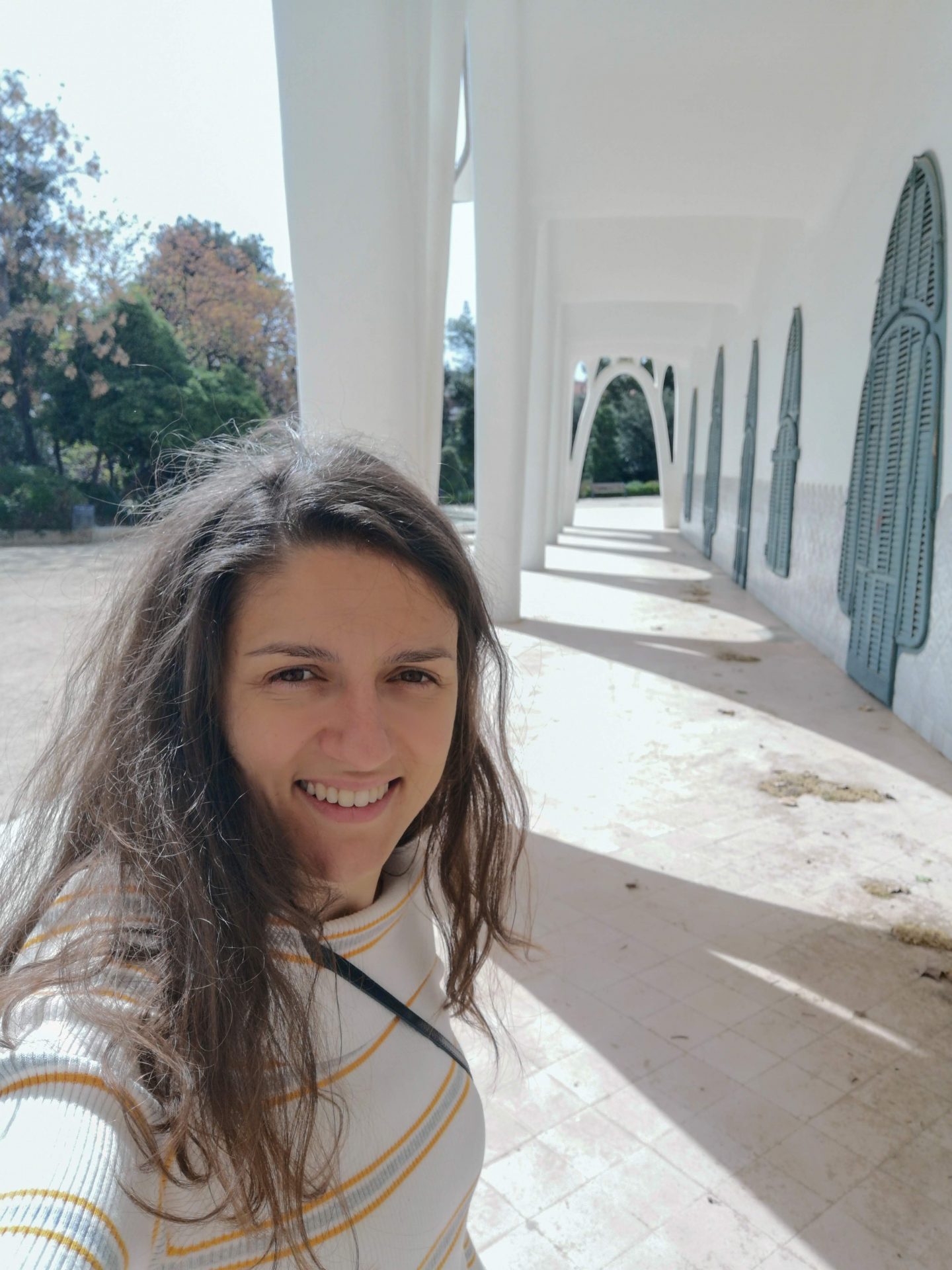
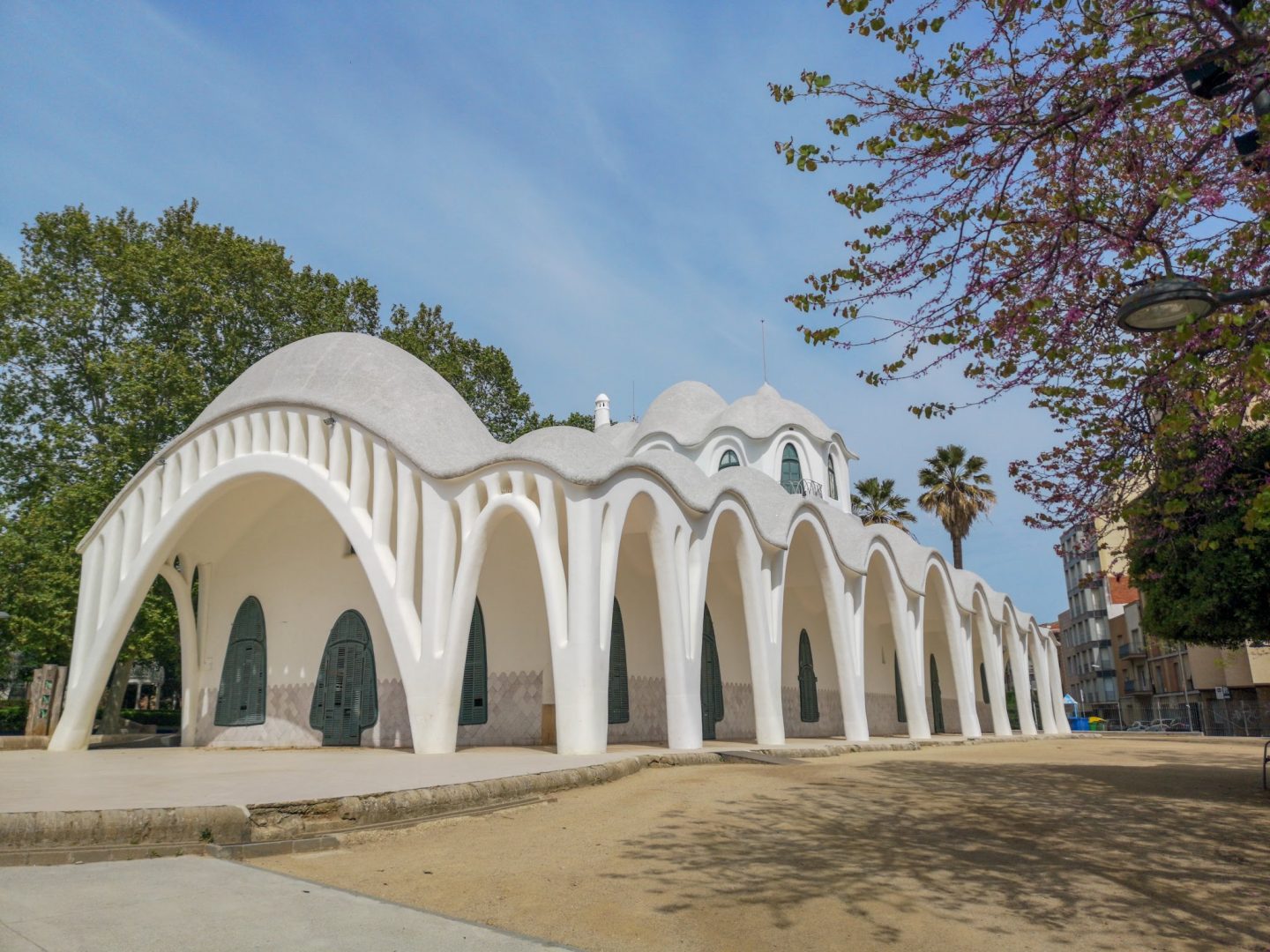
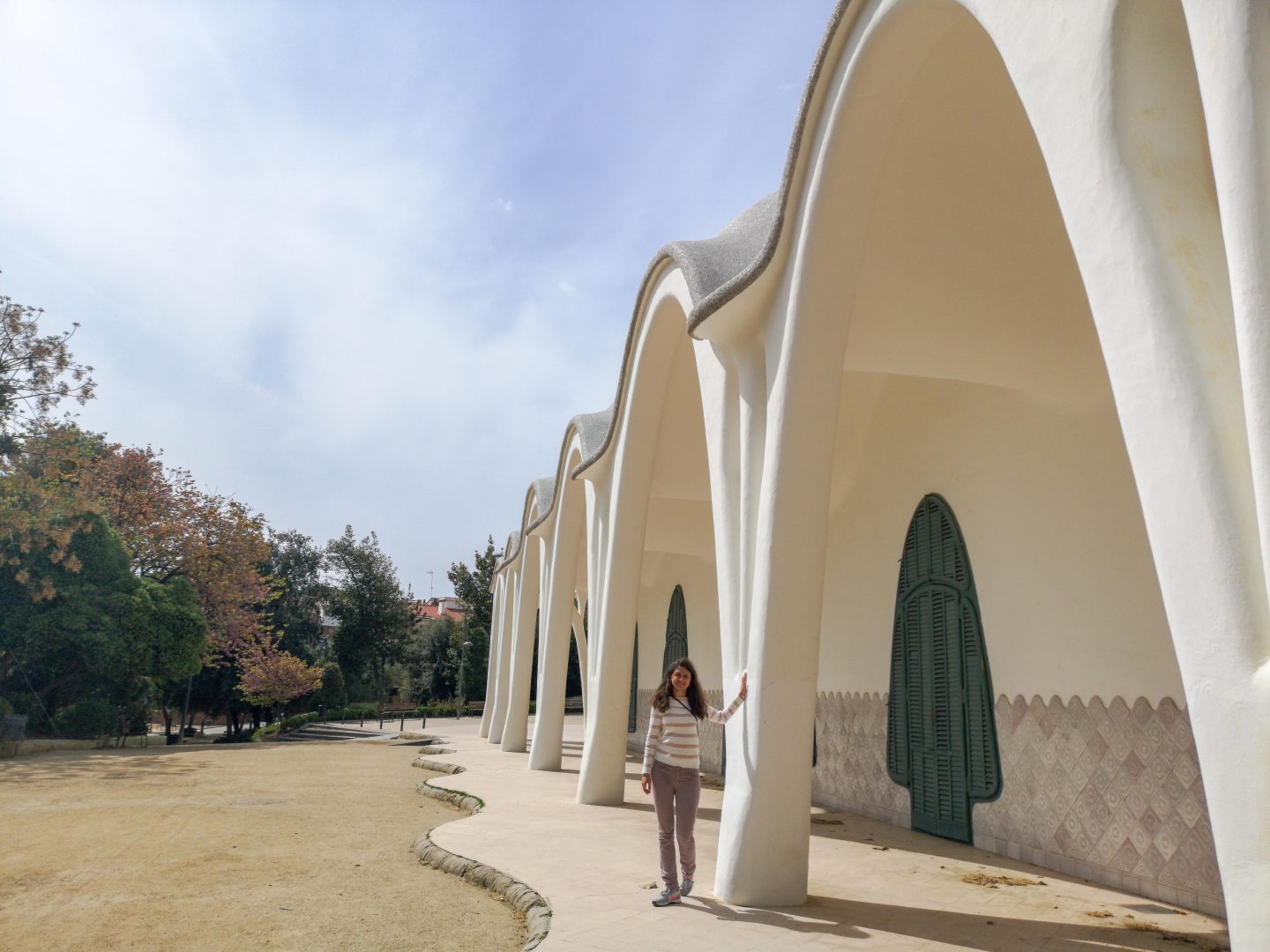
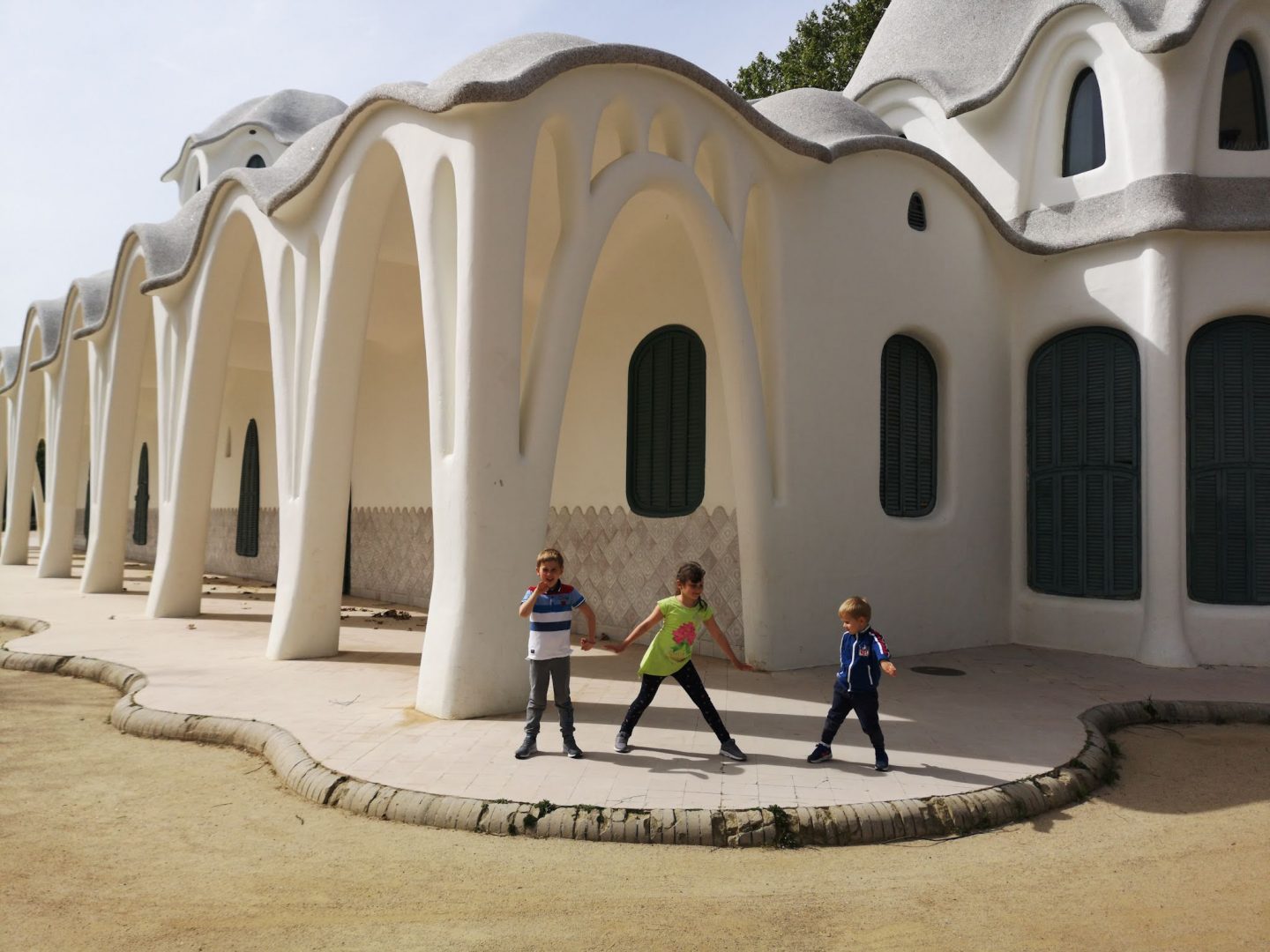
We combined this with Masia Freixa in Terrassa, a modernist house by Lluís Muncunill with a run of white parabolic arches that look like something Gaudí would have drawn.
Be honest with yourself about the geography before you try it: Terrassa is a different town in a different direction, on a different line, and doing both in one day means a lot of the day on trains. It works if you’re set on it and you start early. If you’d rather do one thing properly, do Colònia Güell.
Frequently asked questions
How much does Colònia Güell cost?
€10.00 for adults aged 10 to 64 with an audio guide, €8.00 for students and over-65s, and free for children up to nine. A guided tour is €13.00. The combined ticket including the return train from Barcelona is €14.00 for adults, €11.00 for over-65s and €5.00 for children.
How do you get to Colònia Güell from Barcelona?
Take the FGC from Plaça Espanya on line S3, S4, S8 or S9 — about 20 minutes to Colònia Güell station. Cross the road and follow the blue footprints painted on the pavement, roughly six minutes on foot to the visitor centre.
What is Gaudí’s crypt at Colònia Güell?
The only completed part of a church Gaudí worked on for ten years and never finished. He designed it using an upside-down string model hung with weights, letting gravity find the most efficient shape — the structural system he then used on the Sagrada Família. It is UNESCO-listed.
What are the opening hours of Colònia Güell?
May to October, Tuesday to Friday 10:00–19:00 and weekends 10:00–15:00. November to April, Tuesday to Friday 10:00–17:00 and weekends 10:00–15:00. Closed Mondays all year. The 15:00 weekend closing catches people out.
Is Colònia Güell worth visiting?
Not on a first three-day trip, when the Sagrada Família and Park Güell earn their place. But if you have a week, or you have already seen the famous Gaudí buildings, or you have a child who asked how the Sagrada Família stands up, it is the most interesting Gaudí site in Catalonia per euro and there is no queue.
How long do you need at Colònia Güell?
Two to three hours including the walk from the station and time in the village. The crypt itself is about fifteen minutes of looking — it is small and dark — and the interpretation centre with the upside-down model is what makes it make sense.
