
For one week every August, the residents of Gràcia turn their own streets into cathedrals, jungles, underwater worlds and outer space — built by hand, out of recycled plastic, cardboard and bottle tops, over months of evenings in garages and community halls.
Then they compete. And the whole city comes to look.
It’s free, it runs 15–21 August, and it’s the best week of the year here. This is how to do it properly.
The essentials
- When: 15–21 August, every year — the dates don’t move
- Where: the Gràcia neighbourhood, above Eixample
- Cost: completely free, all of it
- Metro: Fontana (L3) or Joanic (L4) — Fontana puts you in the middle of it
- With children: go in the morning or early evening, not at night
- Best day: the first two or three, before the decorations start to suffer
Where to stay in Barcelona — our three picks
Generator Barcelona – private family rooms at hostel prices, five minutes from Passeig de Gràcia and metro Diagonal (L3/L5). Rooms are small and the bar downstairs is lively, so ask for a higher floor.
H10 Cubik – on the edge of the Gothic Quarter, with the Atic rooftop terrace and pool. You can walk to the cathedral, the beach and the Born from the door, which saves you metro tickets all week.
The Cotton House Hotel, Autograph Collection – the old cotton guild building on Gran Via, a ten-minute walk from Casa Batlló and the Sagrada Família side of Eixample. Quiet, grown-up, and the rooftop is the reason to book it.
Affiliate links: if you book through them we may earn a small commission, at no extra cost to you.

What actually happens
The decorated streets — the point of it
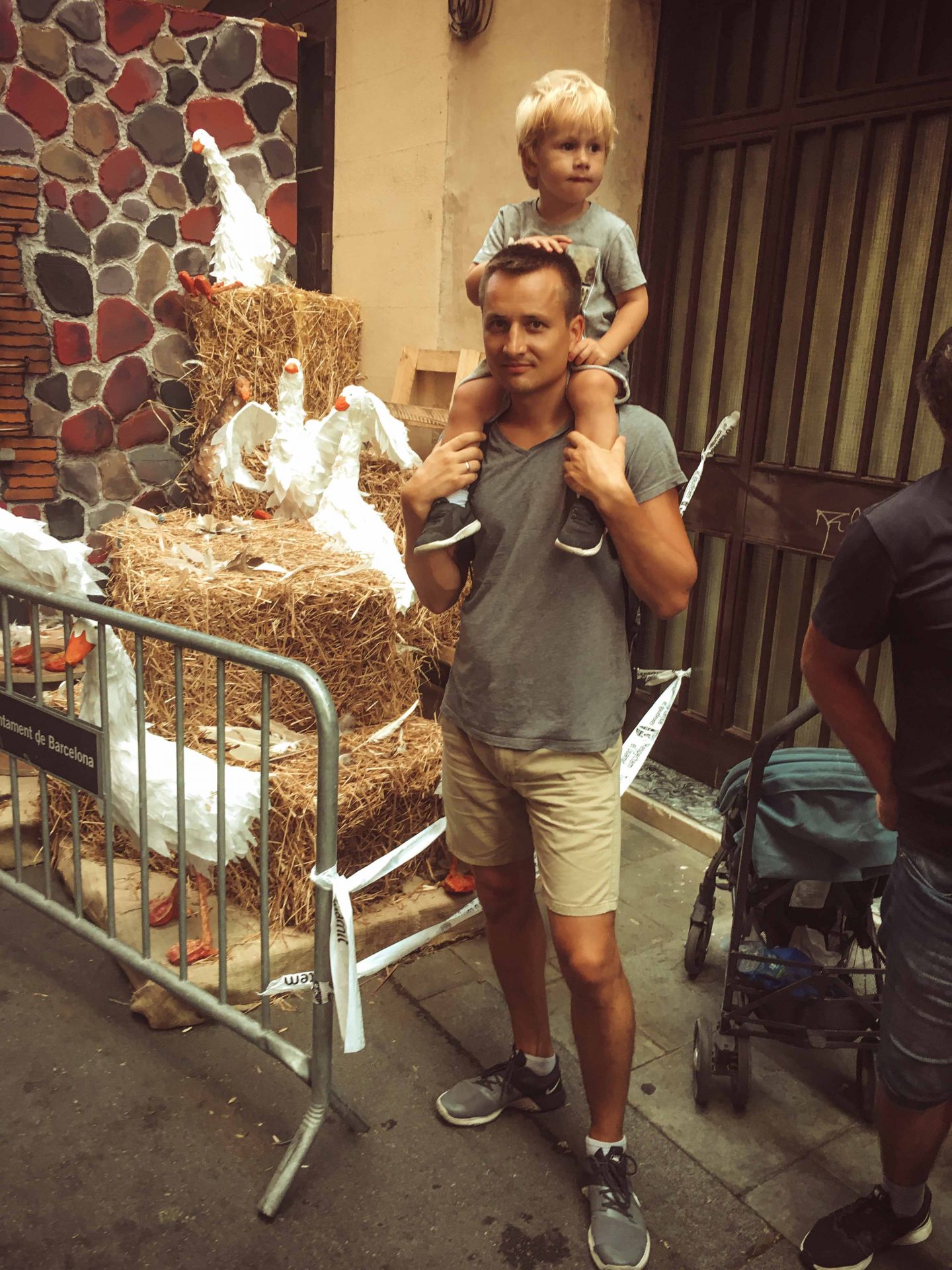
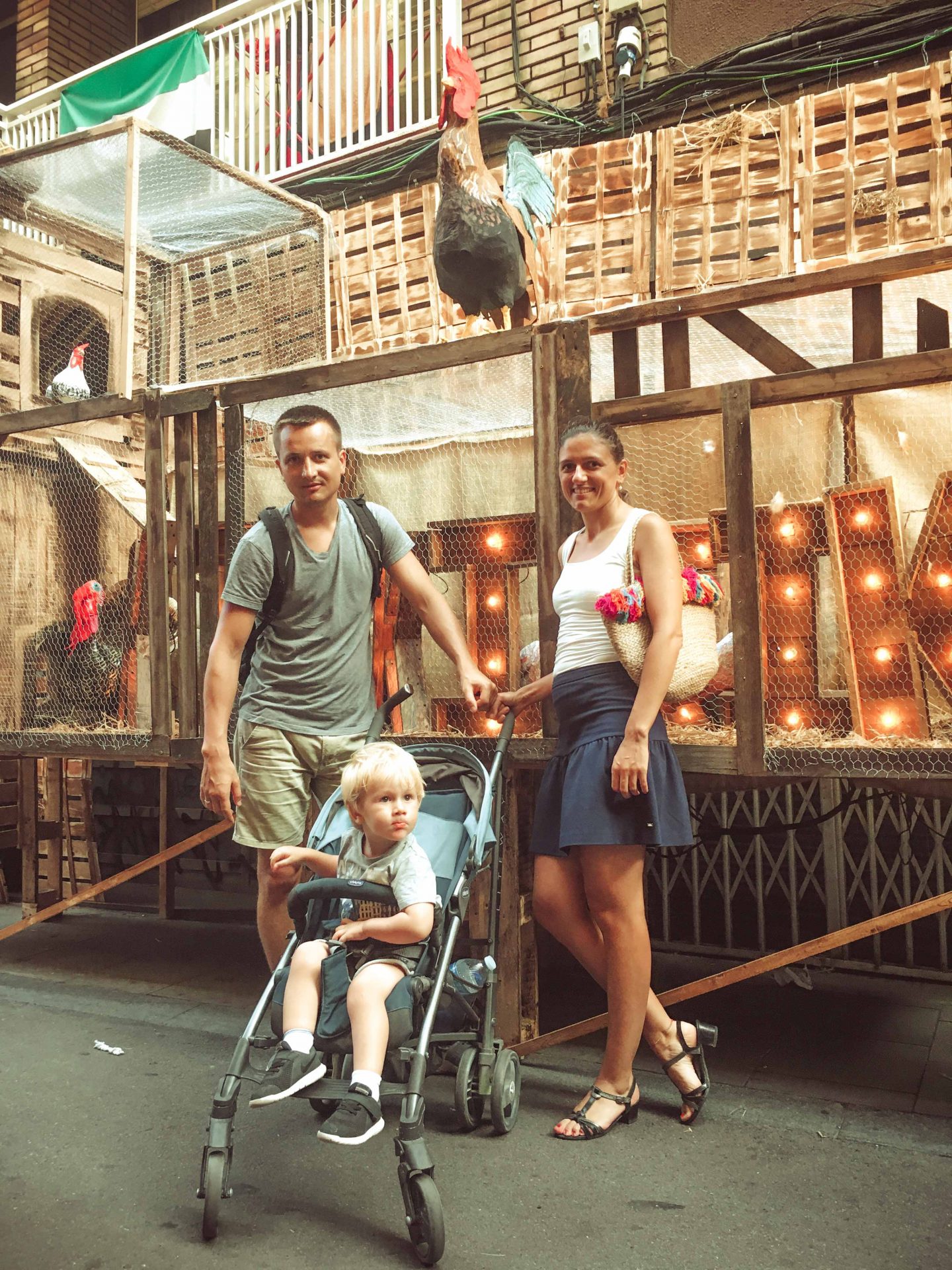
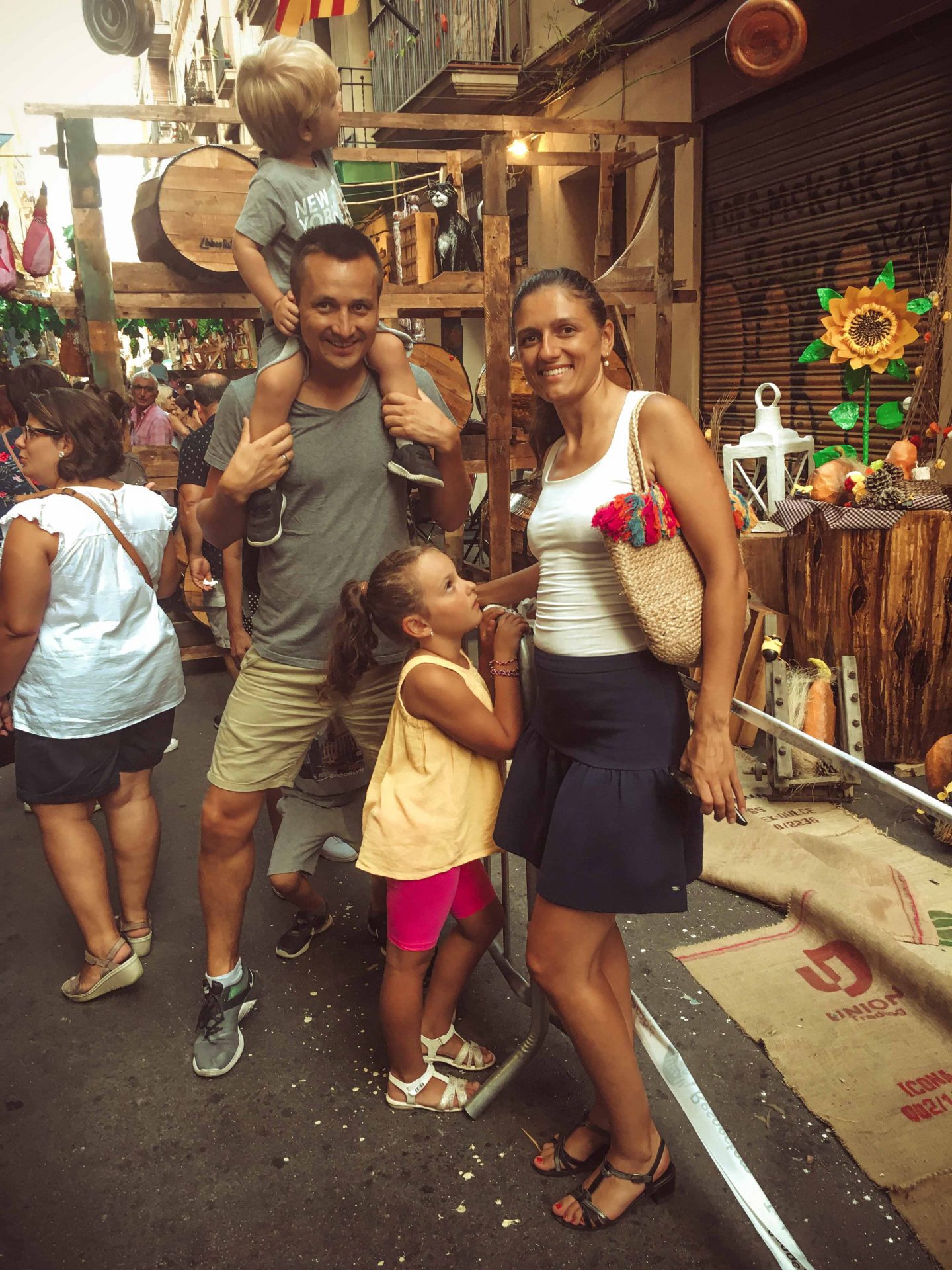
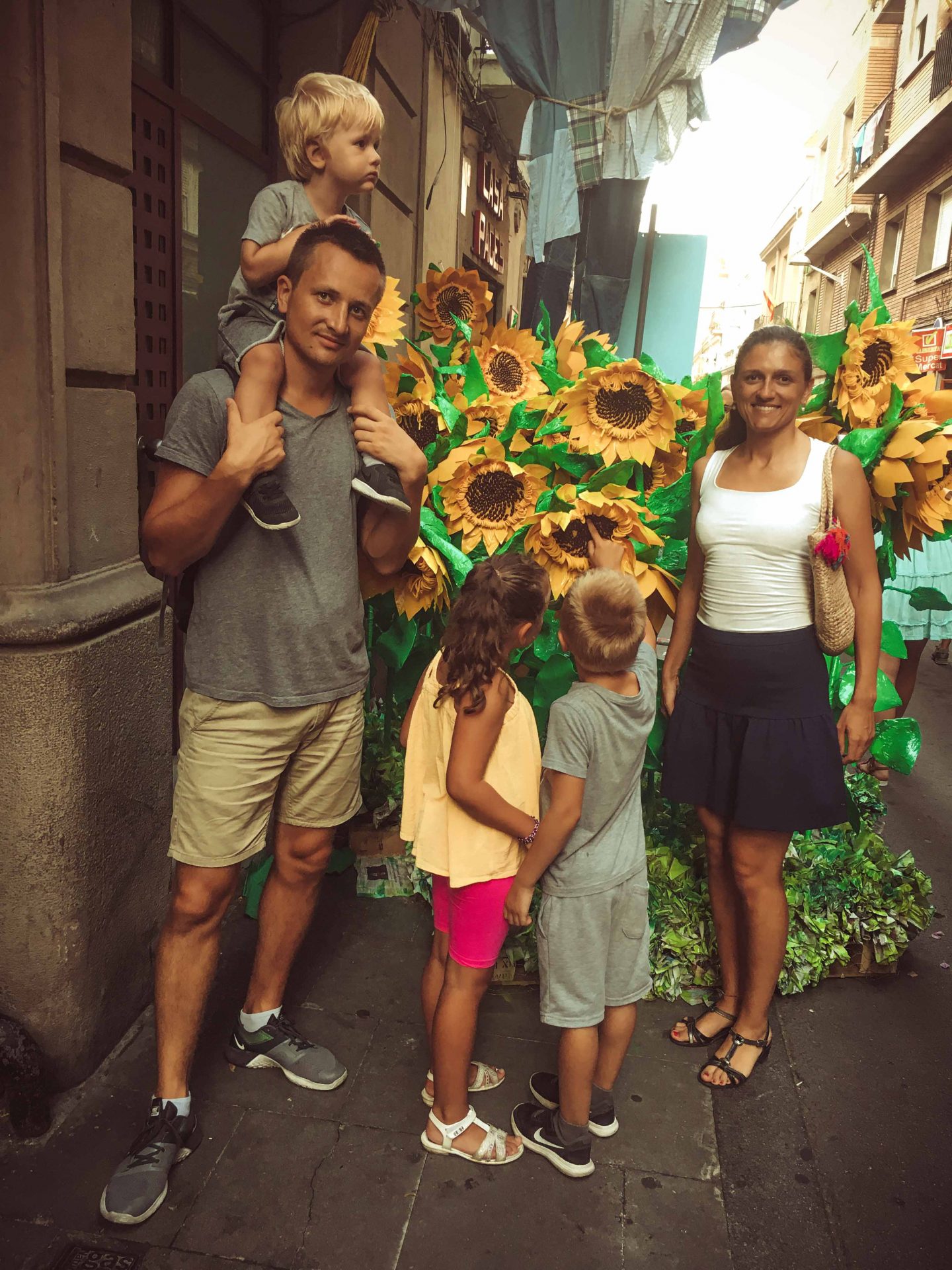
Each participating street or square picks a theme months in advance and keeps it secret until days before the 15th. Then they build it: a full ceiling of handmade material stretched over the street, walls, hanging figures, lighting, sound. Some of them are extraordinary — genuinely the work of hundreds of unpaid hours.
Then the streets are judged, and you can vote for your favourite. That’s the part children love — they’re not looking at decorations, they’re picking a winner.
How to do it with children: give each child the job of choosing the best street, make them justify it, and vote. An hour of walking round Gràcia becomes a competition they’re running.
Correfoc — the fire run
Devils and dragons run through the streets throwing fireworks, and the crowd runs with them. It is spectacular, it is genuinely loud, and sparks land on people — which is the point, and why people wear old clothes, long sleeves, hats and closed shoes.
With children: there is usually a **correfoc infantil**, a children’s version, earlier and much tamer. Do that one. The adult correfoc at night is not for small children, and I say that as someone who loves it.
Everything else
- Open-air concerts in the squares, every night, free
- Foam parties — a fire hose of foam, children losing their minds, bring a change of clothes
- Traditional song performances and Catalan cultural events
- Children’s games organised in the squares during the day
- Food and drink stalls run by the street committees, which is where the money for next year’s decorations comes from — buy something
When to go — the timing that decides everything
| Time | What it’s like |
|---|---|
| Morning, 10:00–13:00 | The best time with children. Streets empty, decorations fully visible, you can photograph and actually look |
| Afternoon | Hot and quiet. Everything is shut and so is everyone |
| Early evening, 18:00–21:00 | Decorations lit, children’s activities on, busy but manageable |
| After 22:00 | Packed, loud, drinking, and not a family event |
The single best piece of advice about Festa Major: go in the morning to see it, and come back one evening to feel it. Trying to do both at once, at night, with children, is how people end up saying it was too crowded.
And go in the first few days. By the 20th, a week of August heat and thousands of hands have taken a toll on decorations made of cardboard and plastic. The 15th and 16th are when they look the way the builders intended.
The crowds — honestly
This is a neighbourhood festival that has become a city-wide event, and in the evenings the narrow Gràcia streets get genuinely full. Not dangerous, but slow, hot and shoulder to shoulder.
What works:
- Mornings. Said three times because it’s the whole answer
- Start at the edges and walk inwards. Everyone else starts at Fontana
- Don’t bring a pushchair in the evening. Carrier or walking
- Agree a meeting point before you go in. Phone signal struggles when that many people are in one place
- Bring water. It’s August in a crowd
And a word about the people who live there: this is their street, their house, their week, and they built it themselves. It’s a party you’re welcome at, not an attraction. Buy a drink from the committee stall, put something in the tin, and don’t sit on anyone’s doorstep.
Which streets to look for
The themes change every year and the winners change with them, so any list of “best streets” from a previous year is out of date the moment it’s published.
What doesn’t change: a core group of streets and squares enter every year and go all in. The reliable ones to head for are the ones between Carrer Verdi and Carrer Torrijos, and the streets around Plaça de la Vila de Gràcia and Plaça del Sol.
The practical answer: the official programme is published a few days before the 15th with the full list of participating streets and their themes, plus the timetable for the correfoc, the concerts and the children’s events. Pick it up or find it online the week before. Don’t plan from last year’s winners.
Where else to be in Gràcia that week
Gràcia is worth knowing outside the festival too — it was a separate town until 1897 and still behaves like one, with small squares, terraces and almost no tourists after dark.
- Casa Vicens — Gaudí’s first house, in Gràcia, and far quieter than the famous ones
- Park Güell — up the hill above the neighbourhood
- Where Gràcia sits in the rest of the city
If you can’t make August
Barcelona’s festival calendar is full, and two others are worth planning around:
- La Mercè, late September — the city’s own festival, bigger than Gràcia’s, with castellers, giants and the main correfoc
- Sant Jordi, 23 April — books and roses in the street across the whole city, and the loveliest day of the Barcelona year
- Three Kings, 5 January — the biggest family event of the winter
When to come to Barcelona, month by month.
Is it worth planning a trip around?
If you were coming to Barcelona in August anyway — absolutely, and it’s the one thing that makes August here worth it, because otherwise August is the month I’d steer a family away from.
If you’re choosing when to come and you want the city at its best, I’d still say September or May. But Festa Major is the one week when the least pleasant month becomes the most interesting one, and nothing else in the city calendar shows you as clearly how Barcelona works: people who live on the same street, spending a year of evenings building something enormous out of rubbish, to win a competition against the street next door.
Frequently asked questions
When is Festa Major de Gràcia?
15 to 21 August every year — the dates do not move. It takes place across the Gràcia neighbourhood in Barcelona and it is completely free.
Is Festa Major de Gràcia free?
Yes, all of it — the decorated streets, the concerts, the correfoc and the children’s activities. The food and drink stalls are run by the street committees and the money funds next year’s decorations, so buying something is how you support it.
What is the best time of day to see the decorated streets?
Morning, between about 10:00 and 13:00. The streets are empty, the decorations are fully visible and you can actually look at them and photograph them. Early evening from 18:00 is good too, with the decorations lit and children’s activities on. After 22:00 it is packed and not a family event.
Is Festa Major de Gràcia good with children?
Very, at the right time. Go in the morning, give each child the job of picking the best street and vote, and look for the correfoc infantil, the children’s version of the fire run, which is earlier and far tamer than the adult one. Avoid the late evening and leave the pushchair at home.
What is a correfoc?
A fire run — devils and dragons move through the streets throwing fireworks while the crowd runs with them. Sparks land on people, which is the point, so wear old clothes with long sleeves, a hat and closed shoes. There is usually a tamer children’s version earlier in the day.
Which are the best streets at Festa Major de Gràcia?
The themes and winners change every year, so any list from a previous year is out of date. The streets between Carrer Verdi and Carrer Torrijos and those around Plaça de la Vila de Gràcia and Plaça del Sol are the reliable ones. The official programme comes out a few days before the 15th with every participating street and the full timetable.
How do you get to Festa Major de Gràcia?
Metro Fontana on line L3 puts you in the middle of it, or Joanic on L4 at the other edge. Starting at the edges and walking inwards works better than starting at Fontana with everyone else.
