
We moved to Barcelona in 2010 and have raised two boys here. This is the guide I send people when they ask what to do, written from living here rather than visiting.
It covers the decisions that actually matter on a family trip: where to stay, how to get around, what has to be booked in advance, what things cost, and — the part most guides skip — what I’d tell you not to bother with.
Quick answers
- Is Barcelona good for families? Yes, and mostly because of the metro. Almost everything a family wants is on a line, the city is flat where it counts, and you don’t need a car.
- How many days? Three full days for the main sights. Four or five before a day trip makes sense.
- Book these in advance: Sagrada Família, Park Güell’s Monumental Zone, Casa Batlló, Camp Nou. All four sell out in summer.
- Best areas to stay with kids: Eixample and Gràcia.
- Cheapest travel card for a family: the T-familiar, at €11.50, which almost nobody mentions.
- Children under 4 travel free on public transport.
What’s in this guide
Is Barcelona good for families?
Yes — and the reason is duller than most guides make it sound. It’s the metro.
Almost everything you’ll want to see is a short ride from almost everywhere you might stay. You don’t need a car, you don’t need taxis, and the network is safe, frequent and stroller-friendly in most stations. That single fact removes the logistics problem that makes city breaks hard with small children.
The city is also small enough to walk in the parts where walking is pleasant — the Gothic Quarter, El Born, Barceloneta and Passeig de Gràcia all connect on foot — and it has beaches inside the city limits, which very few European capitals can say.
The honest counterweight: the centre is busier than it has ever been, and August is hot in a way that shortens everyone’s patience. Both are manageable, and both are the reason the rest of this guide leans on booking ahead and starting early.

How many days do you need?
Three full days covers the main sights without rushing — Sagrada Família, Park Güell, the Gothic Quarter, a beach afternoon and one museum.
One day is enough for Sagrada Família, the Gothic Quarter and Park Güell, but only if the tickets are booked before you arrive.
Four or five days is when a day trip starts making sense. On a shorter trip, leaving the city usually costs you more than it gains.
A week lets you add the Costa Brava, Montserrat or Sitges and still not feel you’ve rushed Barcelona.
Getting around
Tickets, and the one families should buy
This is where most visitors overpay, and where a lot of published advice is simply out of date.
| Ticket | Price | What it is |
|---|---|---|
| Single journey | €2.90 | One trip, one zone |
| T-familiar | €11.50 | 8 journeys, shareable between people |
| T-casual | €13.00 | 10 journeys, one person only |
| T-usual | €22.80 | Unlimited for 30 days, one person |
| Airport ticket | €5.90 | Airport metro, single |
Fares from 15 January 2026. Note that current prices on the 30-day passes reflect a temporary government discount, so they may rise.
The T-familiar is the one nobody tells you about. It’s cheaper than the T-casual and — the important part — it can be shared between several people. The T-casual cannot; one person, one card. For a family of four making a few trips a day, the T-familiar is the obvious choice and the saving is real.
Children under 4 travel free.
Or the Hola Barcelona card
If you’re going to be on the metro constantly, the tourist travel card may work out better:
| Card | Price |
|---|---|
| 48 hours | €11.25 |
| 72 hours | €16.20 |
| 96 hours | €24.35 |
It covers metro and bus (TMB), NitBus, the Montjuïc funicular, FGC zone 1, the tram and Rodalies zone 1, and it includes one outbound and one return metro journey to the airport — which is where it earns its money. It does not include the Montjuïc cable car.
Under-4s travel free on this too.
Which to buy: if your trip is short and metro-heavy, the Hola Barcelona wins on the airport journeys alone. If you’re walking a lot and only riding a few times a day — which is how most families actually move around Barcelona — the T-familiar is cheaper.
Getting from the airport
The metro L9 Sud runs to both terminals and needs the €5.90 airport ticket, or is covered by the Hola Barcelona card. The Aerobús and the Renfe R2 Nord are the other options.
Taxis
Cheaper than most European capitals, and worth it with a tired child at the end of a day. Not worth it as a default.
What about a car?
Don’t. Parking in the centre is expensive and scarce, and the metro reaches everything. A car is only worth it for day trips outside the city, and several of those are reachable by train anyway.
More: Barcelona City Tour bus map — every stop on both routes · how to move around Barcelona · Festa Major de Gràcia

Where to stay in Barcelona with kids
The neighbourhoods
Eixample — the grid. Wide pavements, quieter streets than the old town, good metro coverage, and you’re walking distance from Sagrada Família, Casa Batlló and La Pedrera. This is where I’d put most families.
Gràcia — small squares, a village feel, genuinely local. Better for a longer stay than a three-day trip, because you’re further from the main sights.
Both give you quieter streets, parks nearby and easy transport — which is the actual checklist for a family, rather than being closest to La Rambla.
Where we’d stay, by budget
Budget
- Generator Hostel Barcelona
- Amistat Beach Hostel
- NH Barcelona Sant Just (4★)
- NH Collection Barcelona Tower
Mid-range and above
- Vincci Mae (4★ superior)
- H10 Cubik (4★ superior) — we’ve reviewed the rooftop terrace
- The Cotton House Hotel — reviewed
- The One Barcelona
- W Barcelona — the only hotel in the city with direct beach access
What to book in advance
Four things sell out between June and September, and turning up without a ticket means not getting in:
- Sagrada Família — book at least two weeks ahead in summer
- Park Güell (Monumental Zone) — timed entry, 30-minute window, no re-entry
- Casa Batlló
- Camp Nou and the FC Barcelona Museum
Everything else in this guide can be done on the day.
What to do in Barcelona with kids
Gaudí
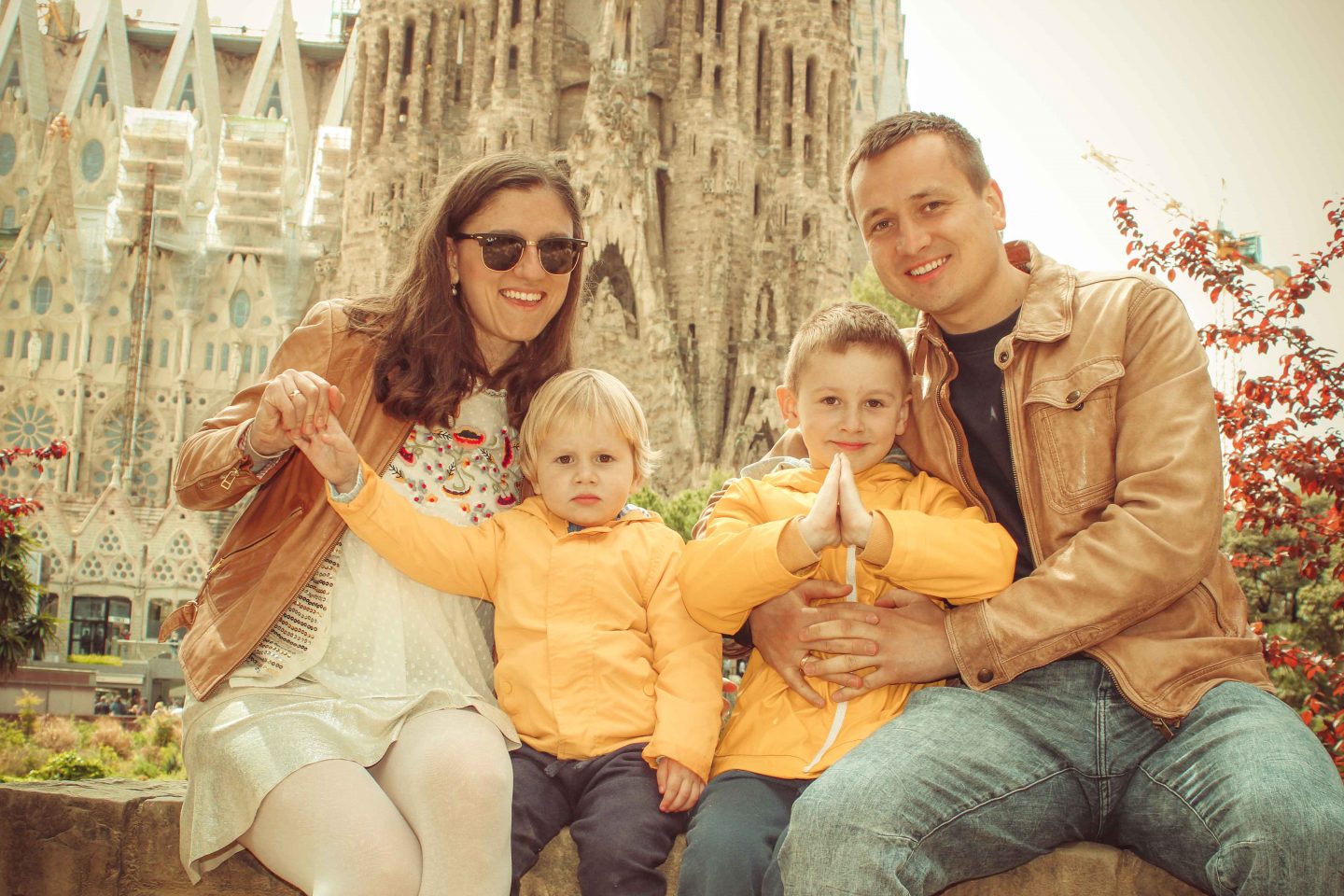
- Sagrada Família — €26, and under-11s go free. The stained glass is the reason to go, not the exterior.
- Park Güell — the Monumental Zone is ticketed; the forest, the viaducts and the Turó de les Tres Creus viewpoint are free.
- Casa Batlló — the most expensive hour in Barcelona and the best of the houses inside.
- La Pedrera / Casa Milà — cheaper, and the rooftop is the draw.
- Casa Vicens — Gaudí’s first house, in Gràcia, and the one without the queue.
- Palau Güell — off La Rambla, consistently overlooked.
Parks, animals and outdoors
- Parc de la Ciutadella — free, central, and the best green space in the city
- Barcelona Zoo — inside Ciutadella, €21.40 adult and €12.95 for 3–12s
- Aquarium de Barcelona — at Port Vell
- Tibidabo — the hundred-year-old funfair on the mountain
- The beaches — Barceloneta is the famous one; Bogatell and Nova Icària are calmer
- Sailing and kayaking at the Centre Municipal de Vela
Museums that work with children
- CosmoCaixa — the science museum, and the answer to a rainy day
- Museu Blau — natural history, free on Sunday afternoons
- Picasso Museum — under-18s free every day, no booking
- MNAC — and the €2 ticket that gets you the rooftop view
- Chocolate Museum — your ticket is a bar of chocolate
- Big Fun Museum
The rest of the city
- El Poble Espanyol on Montjuïc
- Montjuïc generally — the cable car, the castle, the Magic Fountain
- Gothic Quarter — the cathedral, Plaça Reial, the medieval streets
- La Boqueria market, off La Rambla
- Bunkers del Carmel — the best free view in Barcelona
- Palau de la Música Catalana
- FC Barcelona basketball at the Palau Blaugrana — cheaper than football, easier to get into, and a genuinely good night with kids
- Colònia Güell
- Catalunya in Miniatura
More: Top places to visit in Barcelona · 50 free things to do in Barcelona · the most instagrammable places · Barcelona Tourist Map · Barcelona Family Trip Cost · The Bunkers del Carmel · Where to stay in Barcelona with kids · Best Time to visit Barcelona
What to eat
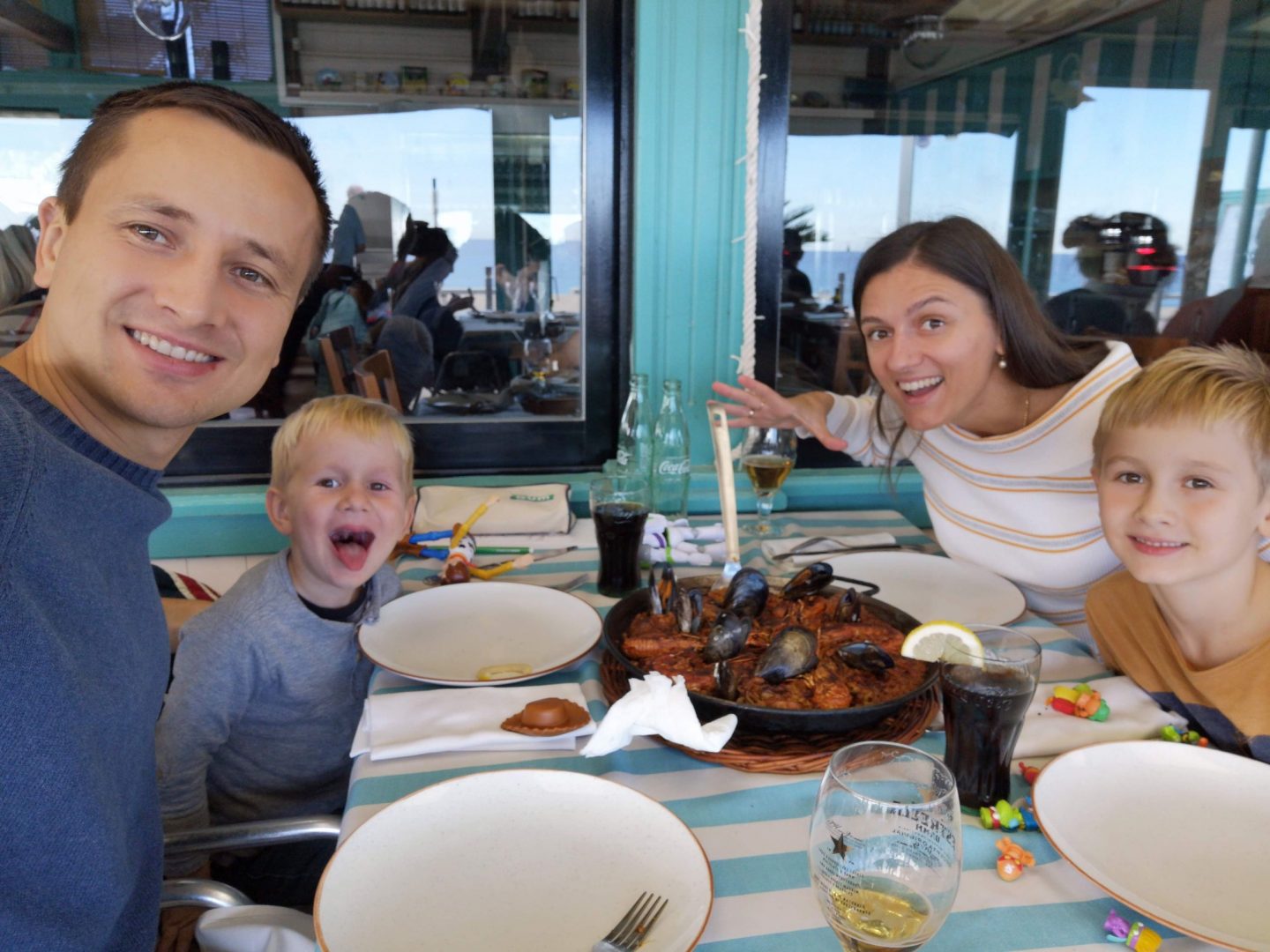
First, a correction to something most visitors arrive believing: paella is Valencian, not Catalan, and the version sold on La Rambla is generally not worth your money. If you want rice, order fideuà — the same idea made with short noodles instead of rice, and genuinely local.
What’s actually Catalan:
- Pa amb tomàquet — bread rubbed with tomato, olive oil and salt. It comes with everything and it’s the most everyday thing on any table here.
- Crema catalana — the burnt-sugar custard. The dessert children will actually eat.
- Cacaolat — cold chocolate milk, a Barcelona institution, and the single easiest way to make a tired child cooperate.
- Escalivada, botifarra, suquet de peix — the everyday cooking.
- Calçots — if you’re here between February and March.
Meal times will catch you out. Lunch runs roughly 1:30 to 4pm and dinner 8:30 to 11pm. Kitchens genuinely close in between. With small children this is the single hardest thing to adjust to, and the fix is either an early dinner at a place used to tourists, or lunch as the main meal.
More: traditional Catalan food and where to eat it
What a family day in Barcelona costs
What’s worth knowing either way: the tickets are expensive and the city isn’t. Sagrada Família is €26 a head and Casa Batlló around €35, but under-11s are free at the Sagrada Família, under-18s are free at the Picasso Museum, the Gothic Quarter and the beaches cost nothing, and every municipal museum is free on the first Sunday of the month.
More: 50 free things to do in Barcelona, Aquarium Barcelona, Parc del Laberint d’Horta, Monestir de Pedralbes, Portaventura with kids.
What I’d skip
La Rambla itself
Paella on La Rambla, or any very touristic place
The Sagrada Familia towers with small kids
Andorra as a day trip
More: 8 common mistakes tourists make in Barcelona
Day trips
If you have four days or more, it’s worth leaving the city for one of them. Montserrat is about an hour on the FGC R5 plus the rack railway up; Sitges is 30 to 40 minutes on the R2 Sud and has more than twenty beaches; Girona is 40 minutes on the high-speed train.
The full list: 20 day trips from Barcelona, with journey times, El Masnou Beach, Besalu, Adventure activities near Barcelona, Rupit

FAQ
Barcelona with kids: FAQ
Is Barcelona good for families?
Yes, and mainly because of the metro. Almost everything a family wants to see is on a line, the network is frequent and stroller-friendly, and you never need a car. Barcelona also has beaches inside the city limits, which few European capitals can offer. The trade-offs are that the centre is very busy and August is genuinely hot.
How many days do you need in Barcelona with kids?
Three full days covers the main sights without rushing. One day is enough for the Sagrada Família, the Gothic Quarter and Park Güell if the tickets are booked in advance. From four or five days, a day trip outside the city starts to make sense.
What should you book in advance in Barcelona?
Sagrada Família, the Monumental Zone of Park Güell, Casa Batlló and Camp Nou. All four sell out days or weeks ahead between June and September. Everything else can be done on the day.
What is the best area to stay in Barcelona with kids?
Eixample or Gràcia. Eixample has wide pavements, quieter streets than the old town, strong metro coverage and puts you within walking distance of the Sagrada Família, Casa Batlló and La Pedrera. Gràcia is more local and suits a longer stay, though it is further from the main sights.
What is the cheapest travel card for a family in Barcelona?
The T-familiar at €11.50. It carries 8 journeys and, unlike the T-casual, it can be shared between several people, which makes it the right choice for a family. Children under 4 travel free. If you are using the metro constantly and flying in and out, the Hola Barcelona card from €11.25 for 48 hours may work out better because it includes airport journeys.
Do you need a car in Barcelona?
No. The metro reaches almost everything a family visit involves and parking in the centre is expensive and scarce. A car is only worth it for day trips outside the city, and several of those — Sitges, Montserrat, Girona, Tarragona — are easy by train.
What are meal times in Barcelona?
Lunch runs from about 1:30pm to 4pm and dinner from about 8:30pm to 11pm, and kitchens genuinely close in between. With young children the simplest fix is to make lunch the main meal, or eat dinner early at a restaurant used to visitors.
