
We’ve taken our two boys out in kayaks on flat water, on the sea and on a reservoir, over several years, working towards one thing: a full day in a kayak.
This is what we learned doing it — including the age we decided was old enough, which is our judgement and not a rule, and two legal things that genuinely surprised us.
Where to stay in Barcelona — our three picks
Generator Barcelona – private family rooms at hostel prices, five minutes from Passeig de Gràcia and metro Diagonal (L3/L5). Rooms are small and the bar downstairs is lively, so ask for a higher floor.
H10 Cubik – on the edge of the Gothic Quarter, with the Atic rooftop terrace and pool. You can walk to the cathedral, the beach and the Born from the door, which saves you metro tickets all week.
The Cotton House Hotel, Autograph Collection – the old cotton guild building on Gran Via, a ten-minute walk from Casa Batlló and the Sagrada Família side of Eixample. Quiet, grown-up, and the rooftop is the reason to book it.
Affiliate links: if you book through them we may earn a small commission, at no extra cost to you.

The age we settled on, and why it’s our call and not a rule
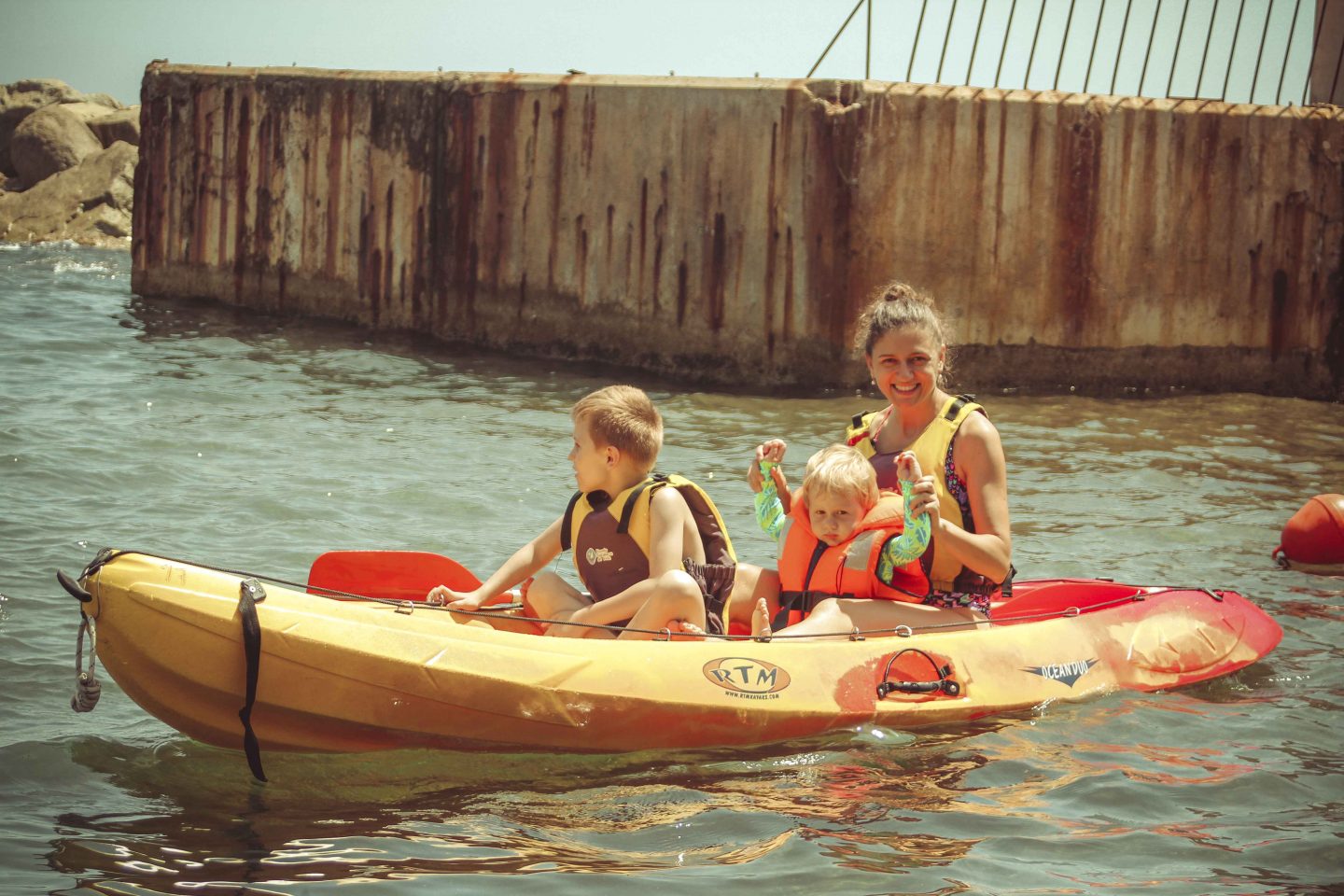
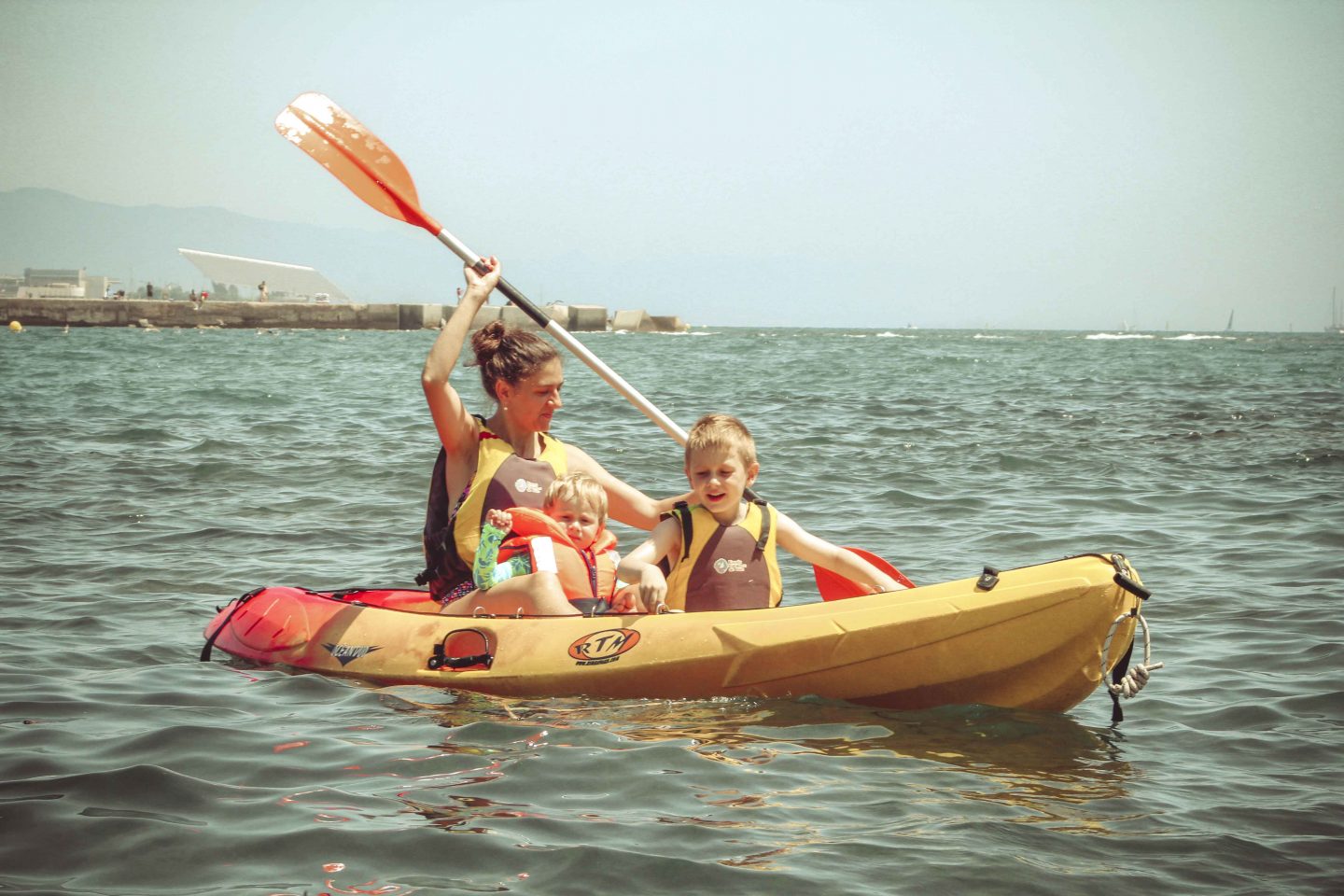
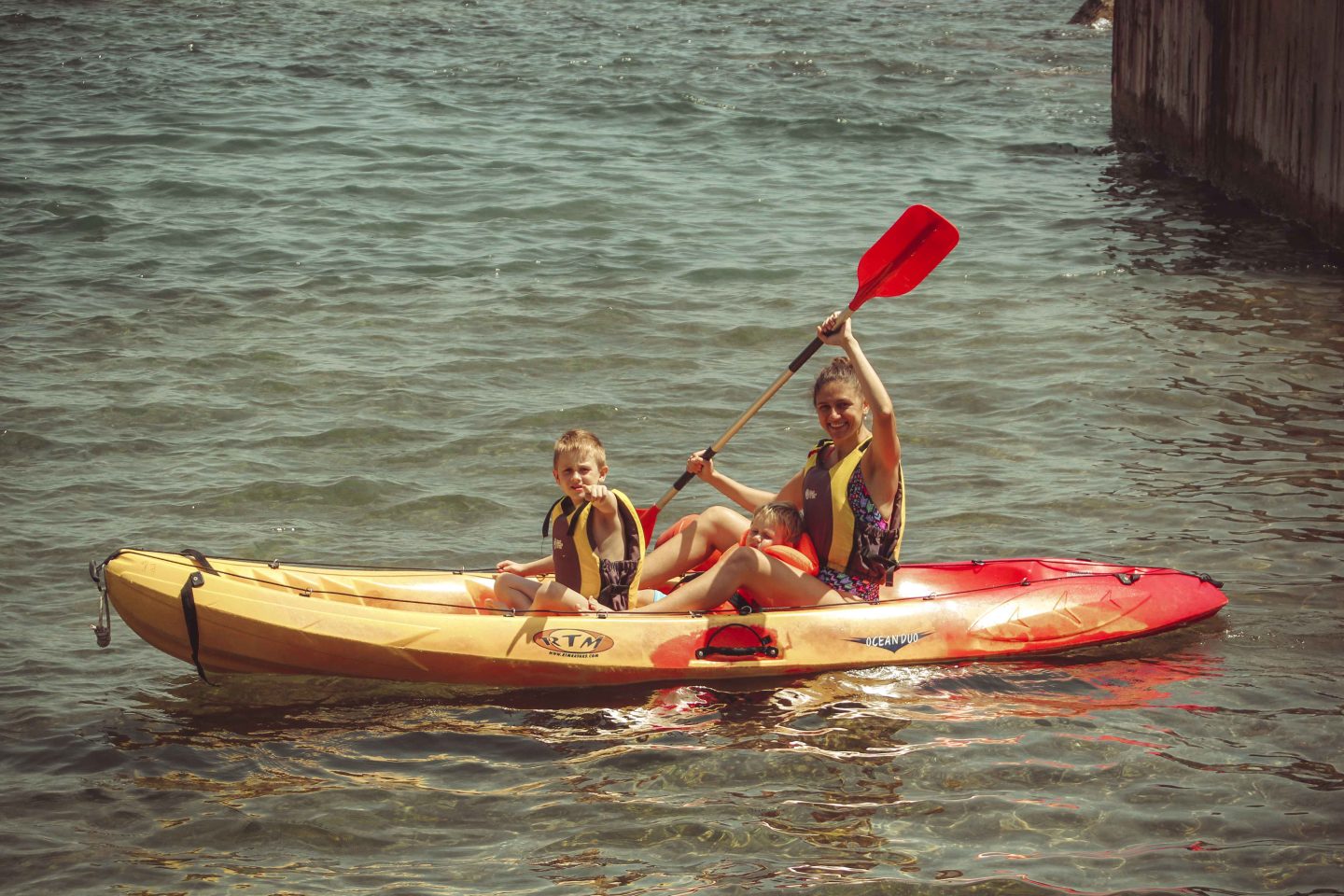
Our own line is that under about ten, a child is better sharing a tandem kayak with an adult than paddling their own. Child in the front seat, adult in the back doing the steering.
The reasoning is simple: the person in the back controls where the boat goes. A child in the front can paddle as much or as little as they like, stop when they’re tired, and nothing happens to the boat’s direction. In a single kayak, a tired child is a boat going nowhere, a long way from where you started.

Two rules that do exist, and nobody mentions them
1. An adult has to be the one in charge, and you can’t go far
Spanish law — Real Decreto 875/2014 — says you need no licence for the sporting use of a sailing craft up to 6 metres, or for “artefactos flotantes o de playa”, which is where kayaks and paddleboards sit. But it attaches two conditions:
- You may not go more than 2 nautical miles from the port, marina or beach you launched from
- Daylight only
And the person responsible must be 18. The law is explicit that the usual route allowing 16-year-olds with written parental consent does not apply to this exemption.
So: an adult, in daylight, within two miles. That’s the frame, and it’s more generous than most people assume — two nautical miles is a long way in a kayak with children — but it is a limit.
2. On inland water, a kayak may need paperwork. A paddleboard doesn’t
This one caught us out at the reservoir in Lleida.
Reservoirs on rivers draining into the Ebro are regulated by the Confederación Hidrográfica del Ebro, which requires a declaración responsable de navegación for paddling craft — and kayaks need one while paddle surf boards are specifically exempt, listed alongside windsurf and kitesurf boards as bathing accessories.
Some reservoirs also require a zebra-mussel disinfection on first entry, with the ticket kept as proof.
The practical upshot: renting solves it, because a commercial operator normally covers its clients under its own declaration. Turning up with your own kayak on the roof rack does not.
 Very important information to consider before doing kayak. Make sure you and your child wear a properly fitted life jacket at all times while on the water. And not to forget about sunscreen, specially on summer warm days.
What we actually do, every time
- A properly fitted life jacket, worn the whole time. Not carried, not clipped to the deck. Fitted means it doesn’t ride up over the ears when you lift it by the shoulders — test it on dry land before you get in
- Tandem for the younger one, child in front, adult steering from the back
- Sunscreen, reapplied. Water reflects, there’s no shade, and the breeze hides how much sun you’re getting
- Hats, and something dry to change into
- Water to drink. Obvious, and the thing we forgot most often
Flat water first, sea second
This is the progression that worked for us, and it’s the actual answer to how you build a child up to a full day.
Start on flat water. A reservoir or a sheltered bay has no swell, no waves and no tide, which removes almost everything that makes a kayak frightening. The reservoir at Sant Llorenç de Montgai was where we did this — and a rental place that lets you pay on return rather than booking a fixed slot is worth seeking out, because you can come back in after forty minutes if it isn’t working.
Then short sea trips. Out and back along a beach, staying close in, on a calm day.
Then longer. The thing that limits a child isn’t strength, it’s patience — so what you’re actually building is tolerance for being in a boat for hours, not arm muscles.
Paddle surf: easier to start, harder to keep going
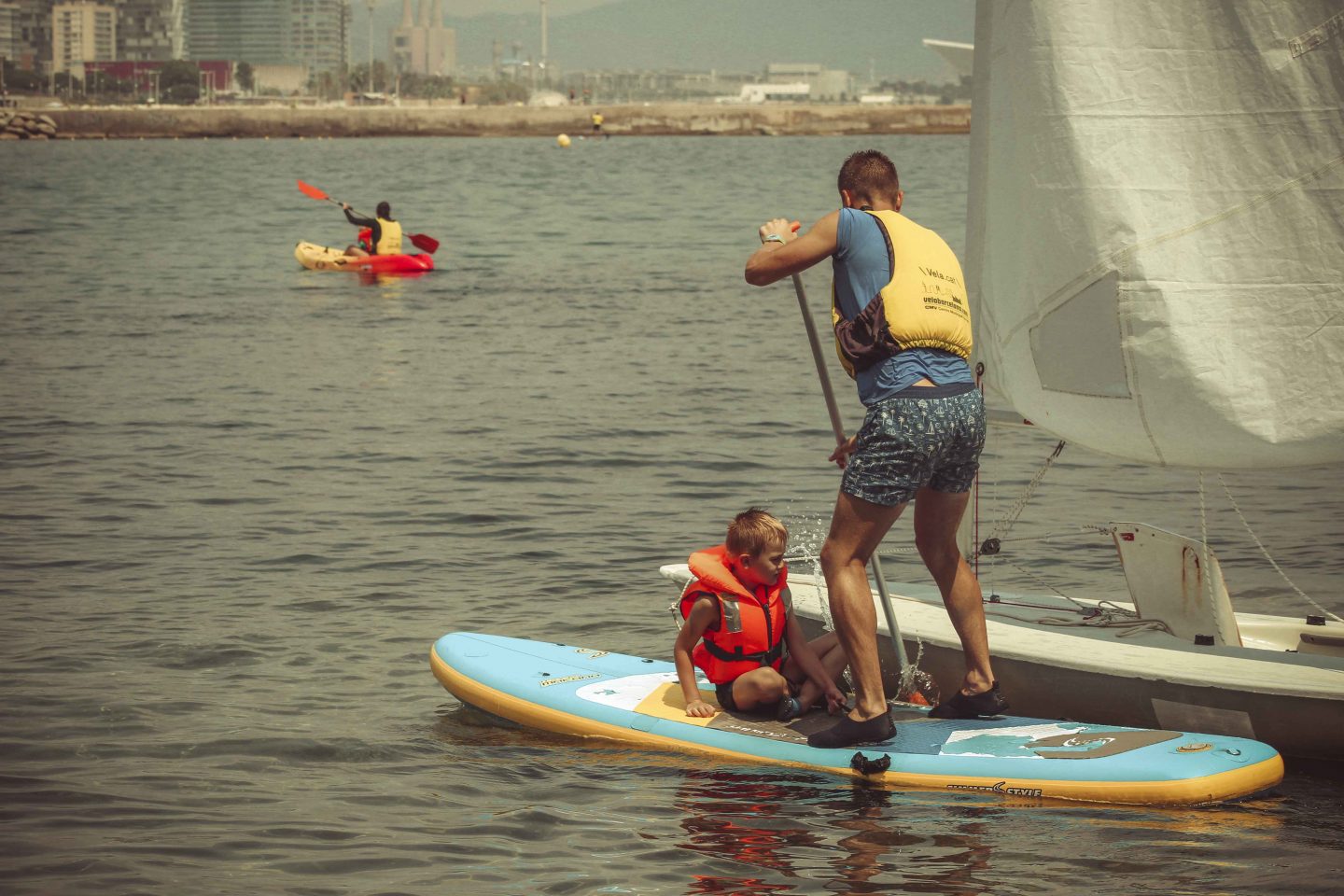
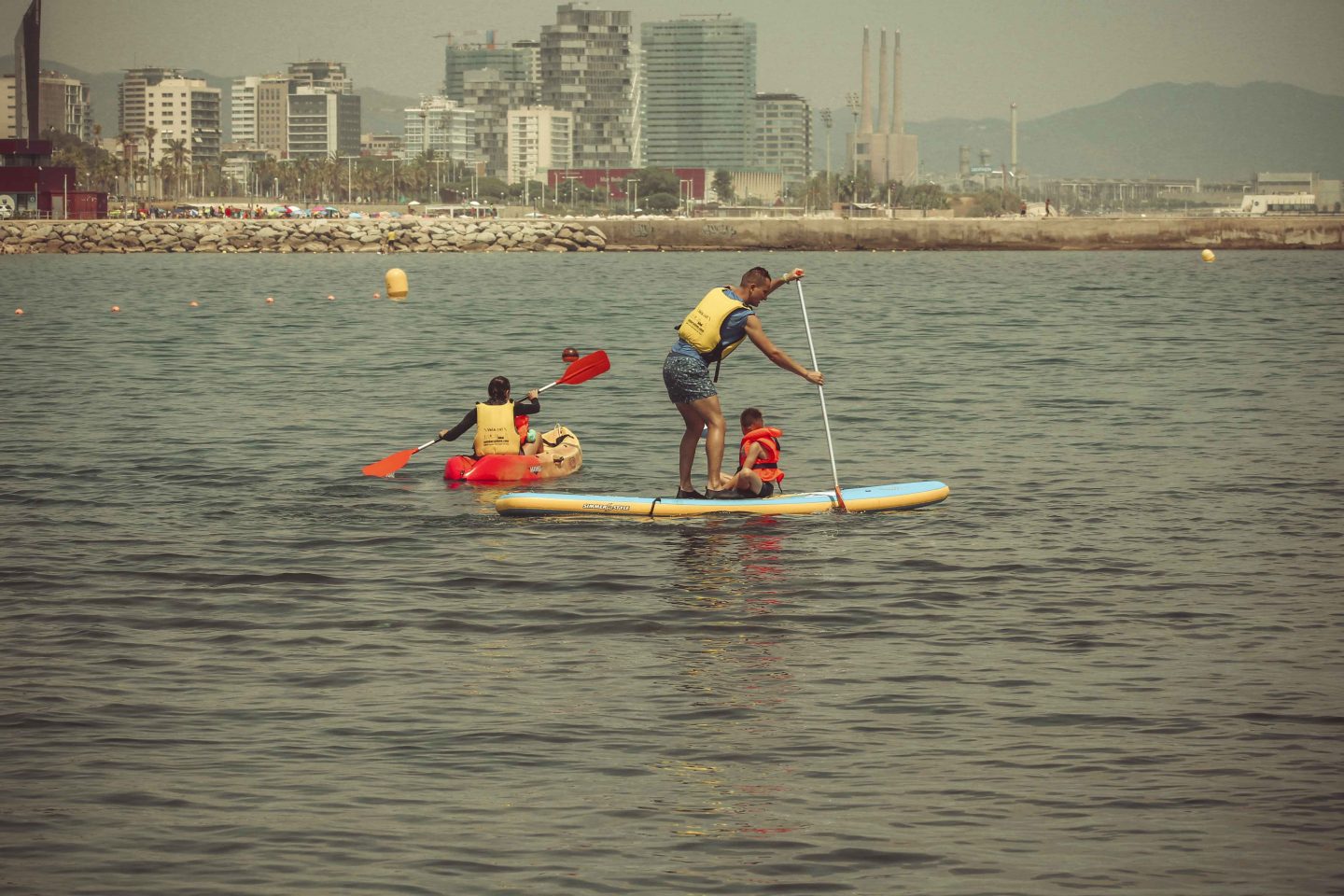
Paddle surf looks like the gentler option and in some ways it is — you can kneel instead of standing, falling off is part of it, and a board is much easier to get in and out of than a kayak.
The catch is that it’s tiring in a way a kayak isn’t, because a child is balancing the whole time rather than sitting. So it’s better for a shorter session, and it’s the better choice for a hot day when falling in is the point.
And as above: on inland water a paddleboard is exempt from the navigation paperwork a kayak needs, which is a small practical advantage nobody mentions.

Verdict: when is a child ready?
Our answer: when they can sit still for two hours without needing to get out. Not when they’re strong enough — strength isn’t the limit.
Kayaking at Sant Llorenç de Montgai, where we started · Sailing a J24 from Port Olímpic · Every adventure activity we’ve tried near Barcelona
Legal information from Real Decreto 875/2014 and the Confederación Hidrográfica del Ebro, checked September 2026. Minimum ages and life-jacket rules come from operators and local by-laws, not from national law — always ask.
Frequently asked questions
What age can a child go kayaking?
There is no Spanish or Catalan law setting a minimum age for a child as a passenger in a kayak, so the answer comes from whoever you rent from and from local beach by-laws. Our own rule is that under about ten, a child is better sharing a tandem kayak with an adult than paddling their own — child in the front, adult steering from the back, so a tired child does not become a boat going nowhere. That is our judgement, not a regulation.
Do children legally have to wear a life jacket in a kayak?
There is no national Spanish rule requiring it for a child in a kayak or on a paddleboard. In practice, rental operators require it as a condition of hire, and some local beach by-laws impose their own rules. We put properly fitted life jackets on both boys every single time regardless — fitted meaning it does not ride up over the ears when you lift it by the shoulders, which is worth testing on dry land.
Do you need a licence to kayak in Spain?
No. Real Decreto 875/2014 requires no title for the sporting use of sailing craft up to 6 metres or for beach and floating craft, which covers kayaks and paddleboards. But it attaches conditions: you may not go more than 2 nautical miles from the beach, port or marina you launched from, you must be in daylight, and the person responsible must be 18 — the law explicitly excludes the usual route that lets 16-year-olds act with written parental consent.
Do you need a permit to kayak on a Spanish reservoir?
Often, yes, and this surprises people. Reservoirs on rivers draining into the Ebro fall under the Confederación Hidrográfica del Ebro, which requires a declaración responsable de navegación for paddling craft — kayaks included. Paddle surf boards are specifically exempt as bathing accessories. Some reservoirs also require a zebra-mussel disinfection on first entry. Renting from a commercial operator normally avoids the paperwork because operators cover their clients under their own declaration.
Is kayaking or paddle surf better for children?
Kayaking for longer sessions, paddle surf for shorter ones. A child sits in a kayak and can stop paddling whenever they like, so a tandem kayak can keep going for hours. A paddleboard means balancing the whole time, which is more tiring, though it is easier to get on and off and falling in is half the fun. Paddle surf also avoids the navigation paperwork a kayak needs on inland water.
How do you build a child up to a full day of kayaking?
Flat water first, then short sea trips, then longer ones. A reservoir or sheltered bay removes swell, waves and tide, which is almost everything that makes a kayak frightening. Then go out and back along a beach on a calm day, staying close in. The limit on a child is patience rather than strength, so what you are building is tolerance for hours in a boat — not arm muscle.
What should you take kayaking with kids?
Properly fitted life jackets worn the whole time, a tandem kayak for the younger child, sunscreen reapplied during the session, hats, drinking water, and dry clothes to change into. There is no shade on open water and the breeze hides how much sun everyone is getting, which is the mistake most people make once.

I used to kayak before I had kids!
Author
I am sure you will enjoy it with kids as well. Give it a try 🙂