
Girona is thirty-eight minutes from Barcelona on the fast train, which means you can leave after breakfast, climb a medieval wall, stand inside the widest Gothic nave in the world, and be back in the city for a late lunch.
That is a strange and slightly wonderful fact about living here, and it changes what Girona is. Most guides treat it as a full day out. It doesn’t have to be — and knowing that is the difference between a trip you keep putting off and one you actually make.
The essentials
- Distance: about 100 km north of Barcelona
- Fast train (AVE / Avant): 38–45 minutes, roughly €18–35 depending on how far ahead you book
- Regional train (R11): about 1 hour 25, roughly €8–12
- From: Barcelona Sants. Girona’s station is a 10–15 minute walk from the old town — across the river and you’re there
- How long you need: half a day for the cathedral, the walls and the Jewish quarter. A full day if you’re eating properly or going into the museums
- The free thing: the city walls — about 2 km of them, with towers you can climb
- Best for: anyone who wants a real medieval city rather than a pretty village, and has half a day
Girona works as a day trip from Barcelona, but Girona Airport makes it a sensible first or last night too. These are affiliate links — we earn a small commission at no extra cost to you.
Take the fast train. Here’s why it matters more than it sounds.
The regional R11 costs about a third of the AVE and takes nearly three times as long. On paper that’s a reasonable trade. In practice it isn’t, and the reason is what it does to the shape of your day.
At 38 minutes, Girona is a morning. You are there before the coach tours, you have the cathedral steps to yourself, and you are home before anyone is tired. At an hour and twenty-five each way you have spent nearly three hours travelling, which turns a half-day into a full one and puts you in the old town at exactly the time everyone else arrives.
The saving is real but the cost is your morning. If you’re two adults, take the fast train and book it early when the fares are low. If you’re four and the AVE is expensive that week, the R11 is fine — just leave earlier than you think you need to.
Either way, book ahead. Renfe fares work like airline fares: the cheap AVE seats exist, they just aren’t there on the morning of.
The cathedral, and the staircase
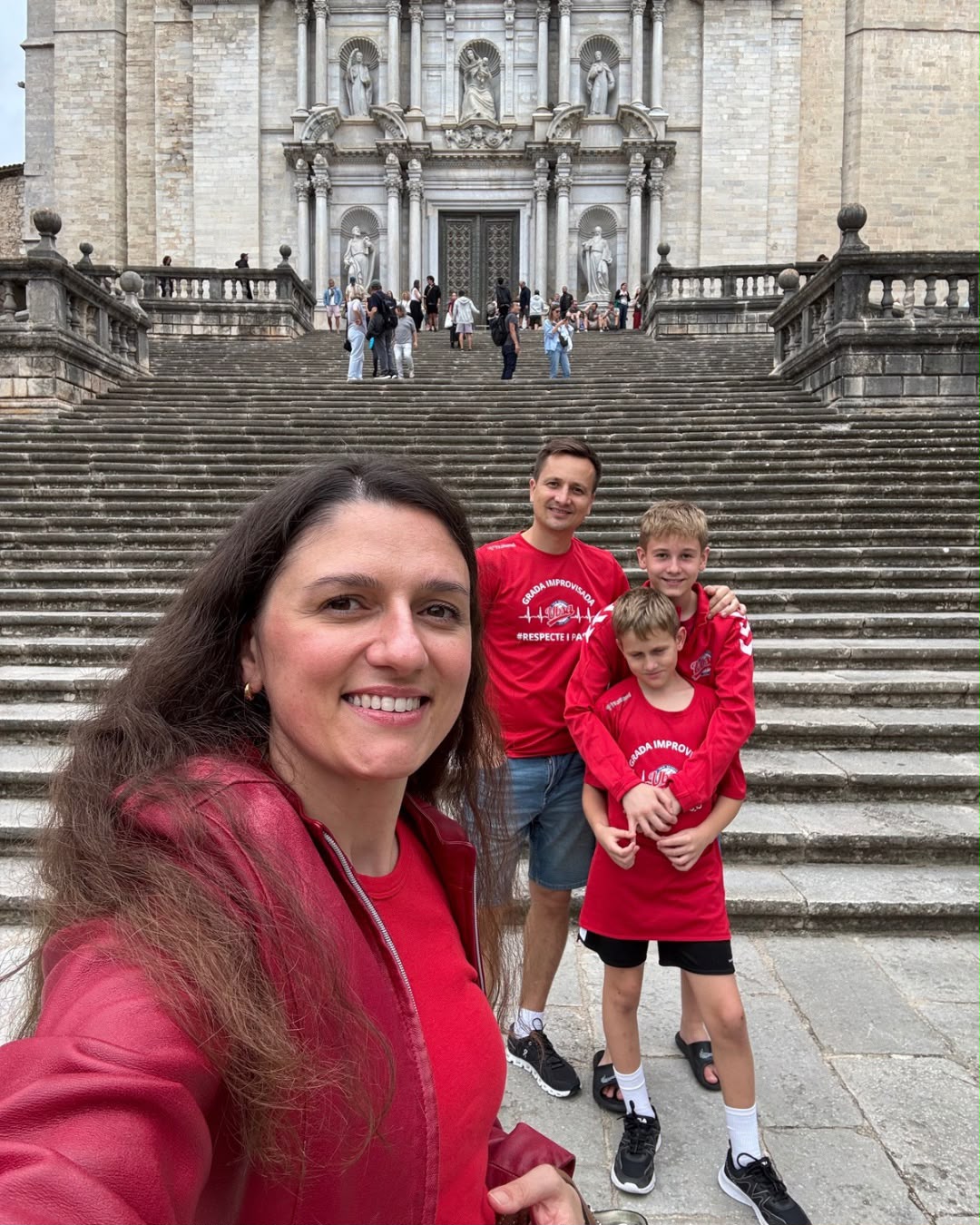
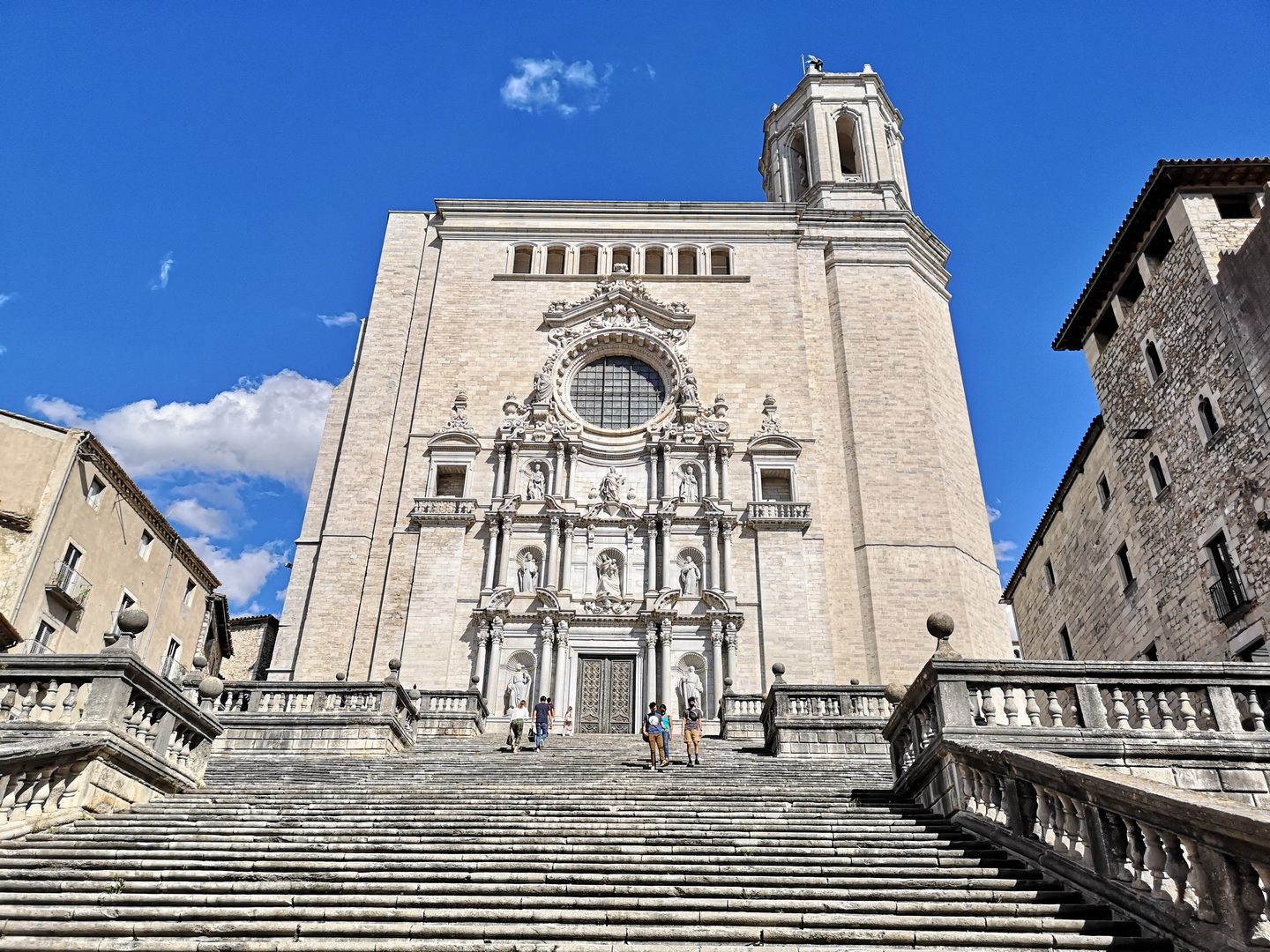
You approach Girona Cathedral from below, up a wide baroque staircase that rises from the square in a single theatrical sweep. It is the most photographed thing in the city and it deserves to be — but the staircase is not the point. The point is what happens when you get inside.
The widest Gothic nave in the world
Girona’s nave is 22.98 metres across. For comparison, Reims — one of the great French Gothic cathedrals — is 14.65 metres. Girona is more than half again as wide.
That number doesn’t mean much written down. What it means in the building is that there is nothing in the way. Gothic cathedrals are normally forests: two rows of columns marching down the middle, aisles either side, the view broken up wherever you stand. Girona has a single enormous vault and no interruptions at all, and the effect when you walk in from the door is that the space simply opens. People stop. You can watch them do it.
The reason it exists is a good story too. When the fourteenth-century builders proposed a single span this wide, it was so far beyond anything attempted that the chapter convened a panel of master masons to argue about whether it would stand up. It stood up. It has been standing up for six hundred years.
The Tapestry of Creation
In the cathedral museum, and worth the extra minutes: a Romanesque embroidered tapestry from the eleventh or early twelfth century, showing the creation of the world as a wheel — Christ at the centre, the days of creation radiating outward, the winds at the corners.
It is nine hundred years old, it is textile rather than stone, and almost nothing of its kind survives anywhere. It is the single most remarkable object in Girona and it sits in a room most day-trippers walk past on their way out.
Tickets: around €7–9 including an audio guide.
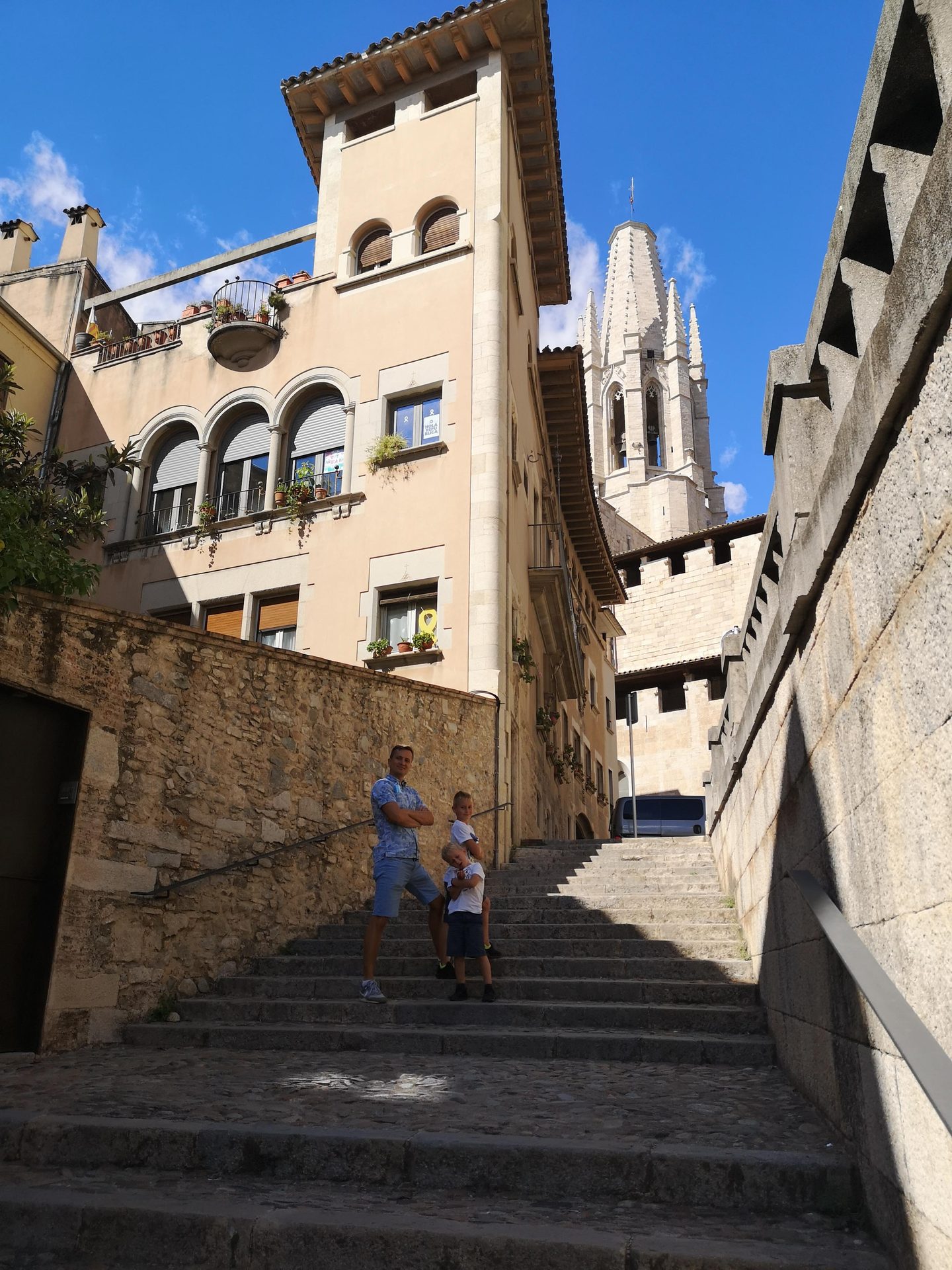
The steps
There are a lot of them, and the number is quoted differently everywhere — I’ve seen 86 and 90 in print and I’m not going to pretend I counted.
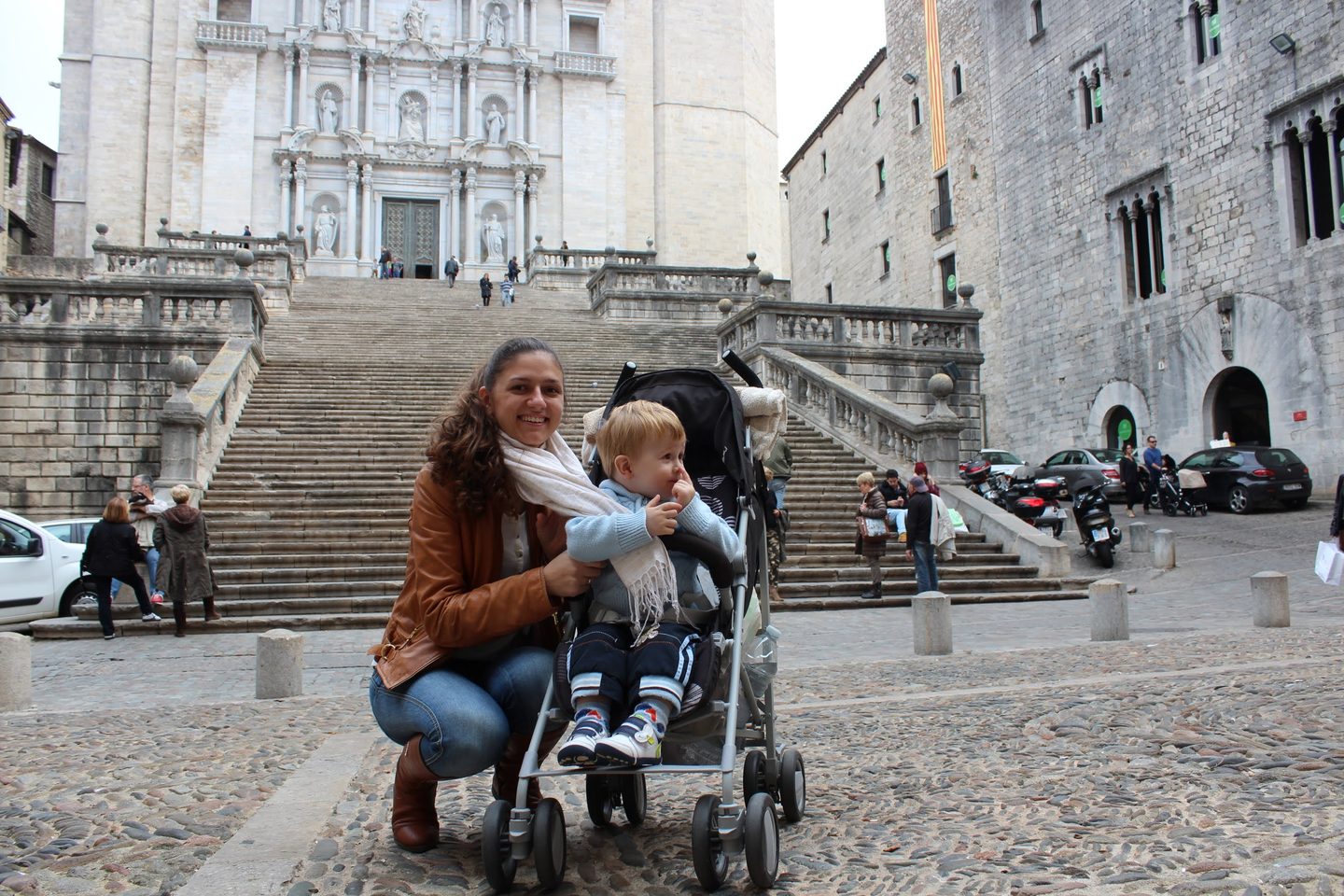
What matters practically: it’s a real climb, it’s stone, and there is no lift. With a pushchair you will be carrying it.
The city walls — free, and the best thing here with children
This is the part the ticket sites don’t lead with, because nobody earns anything on it.
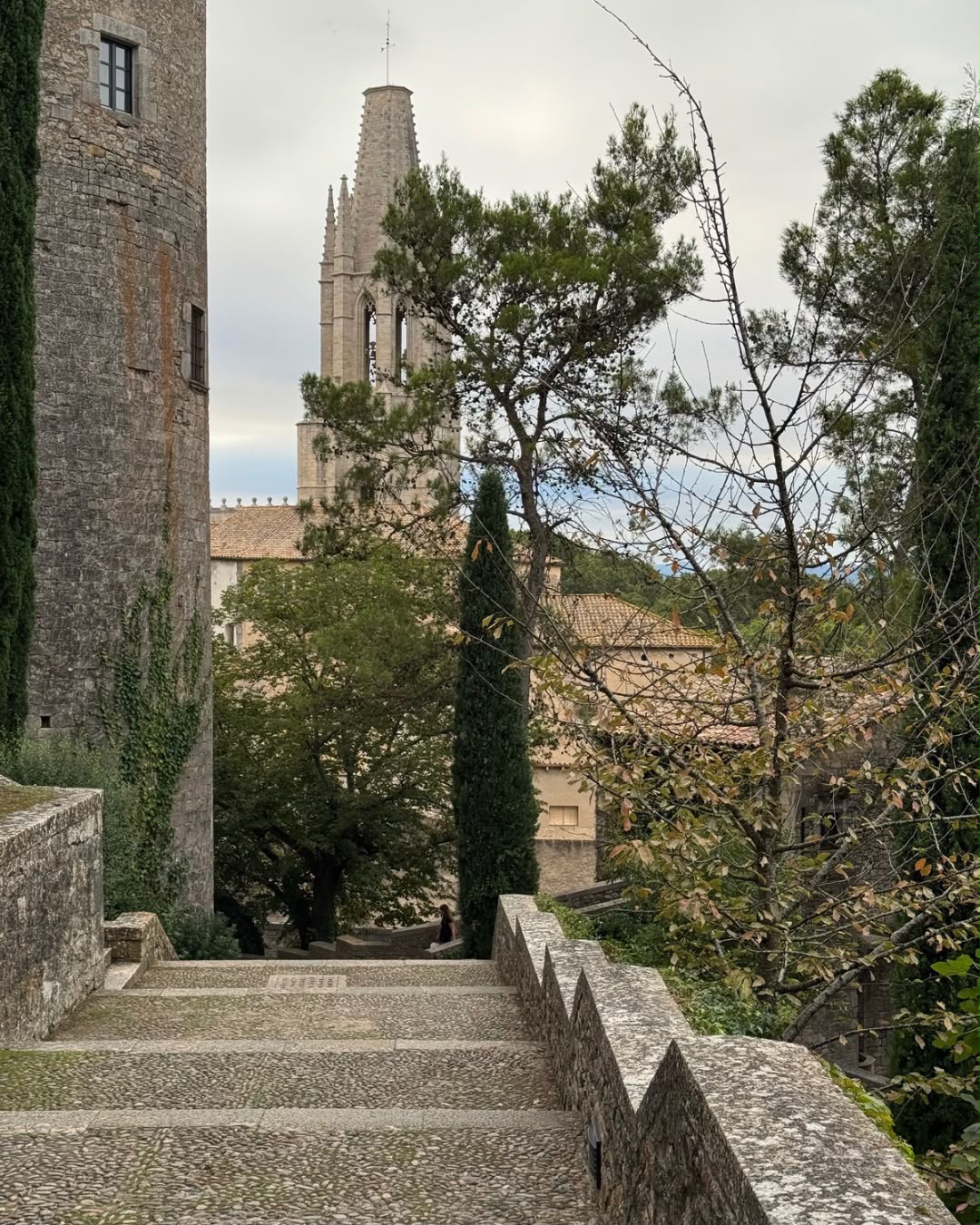
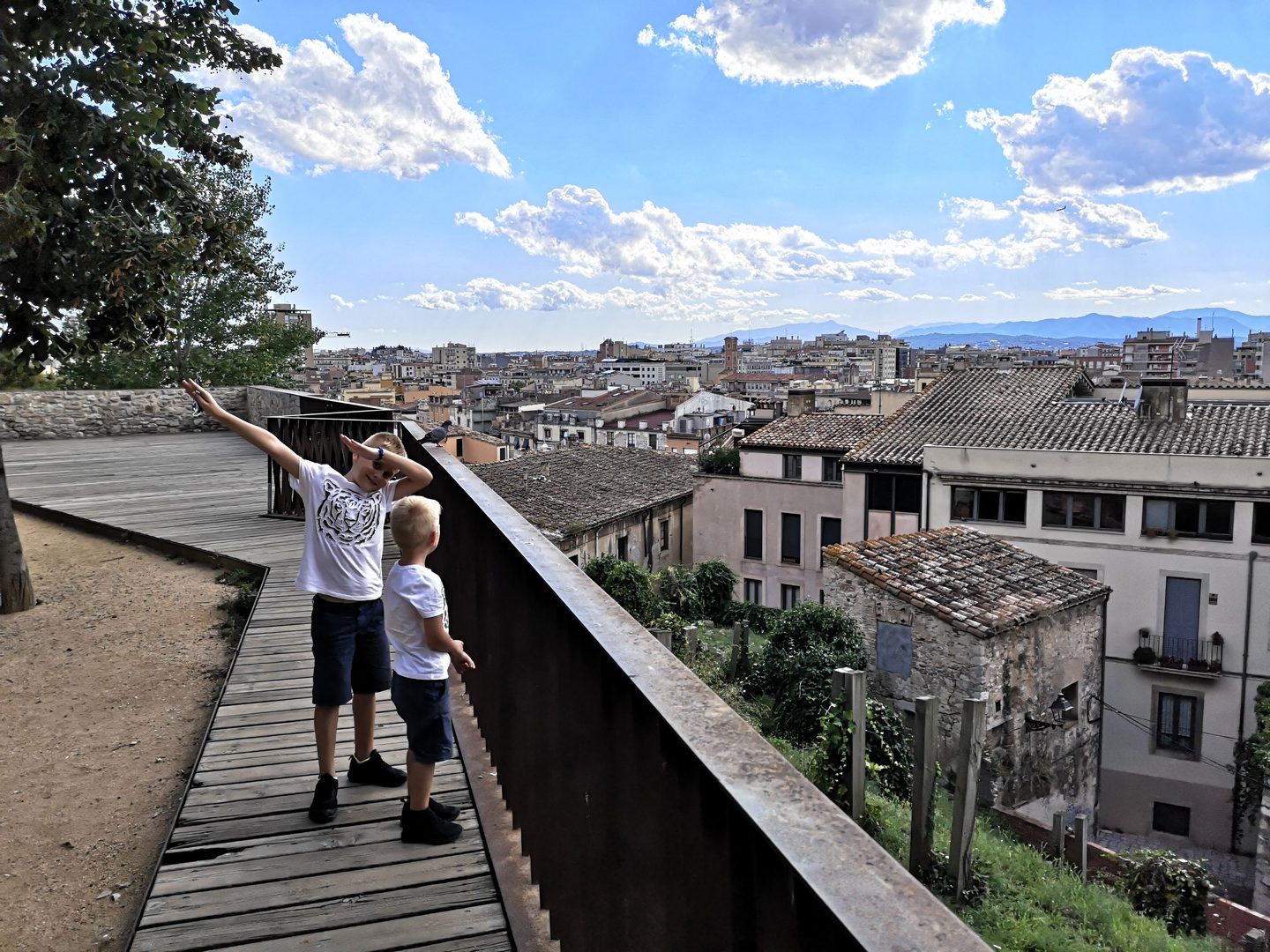
Girona’s medieval walls survive along the eastern edge of the old town, and you can walk on top of them for about two kilometres. It’s called the Passeig de la Muralla. It’s free, it’s open, and there are towers along the route you can climb for views over the rooftops to the Pyrenees on a clear day.
Why it works with children:
- They’re allowed to climb things. After an hour of being told not to touch anything in a cathedral, a two-kilometre wall with towers is a release
- It’s linear. You can’t get lost, and they can walk ahead
- It’s free, so you leave when they’ve had enough rather than extracting value from a ticket
- The views are the reward, and they arrive at regular intervals rather than all at the end
The honest caveats: there are steep sections and steps, some of the drops are open, and it is exposed — hot in August, cold in a January wind. Not a pushchair walk.
If you do one thing in Girona besides the cathedral, do this.
The Call — the Jewish quarter
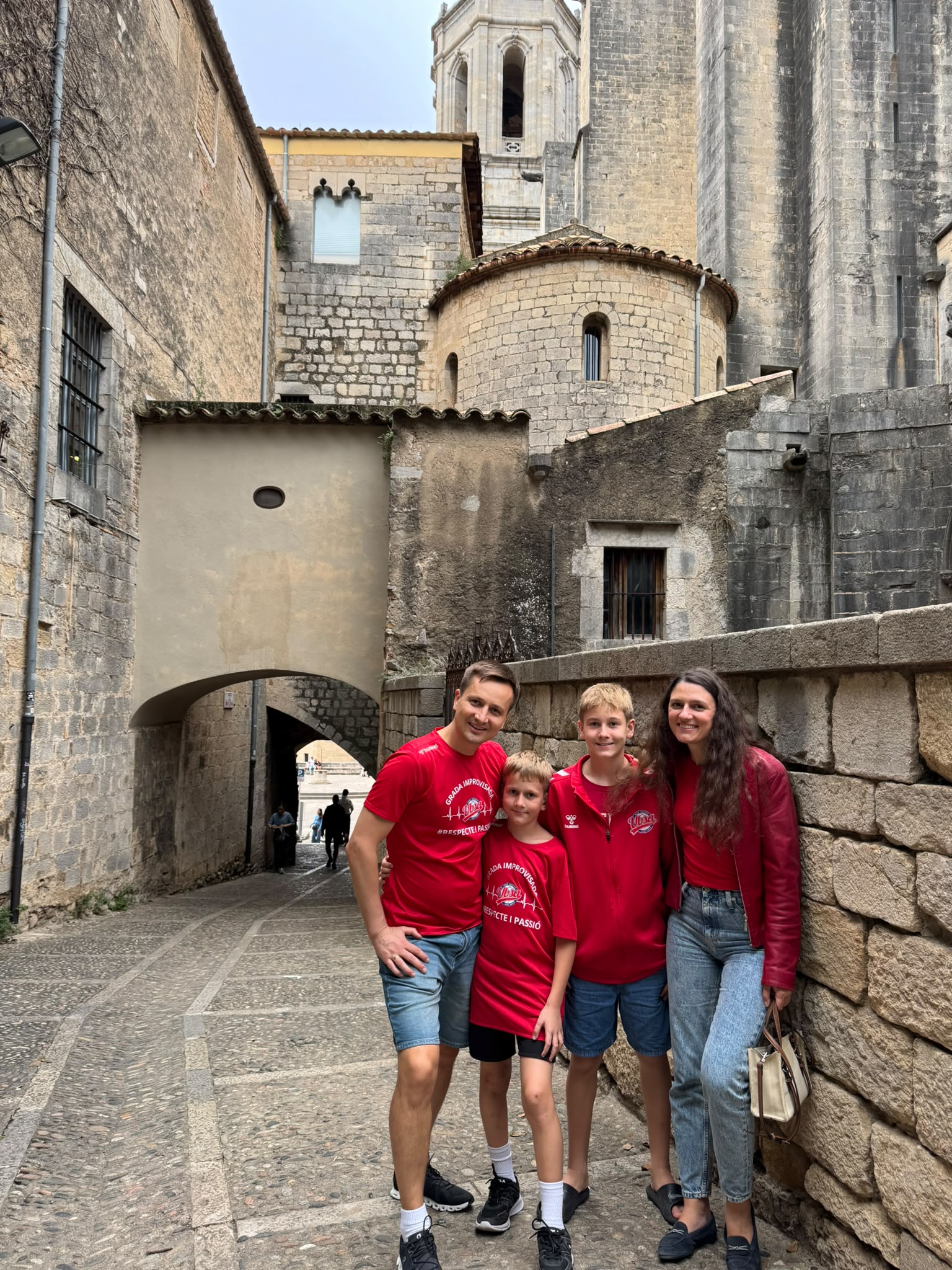
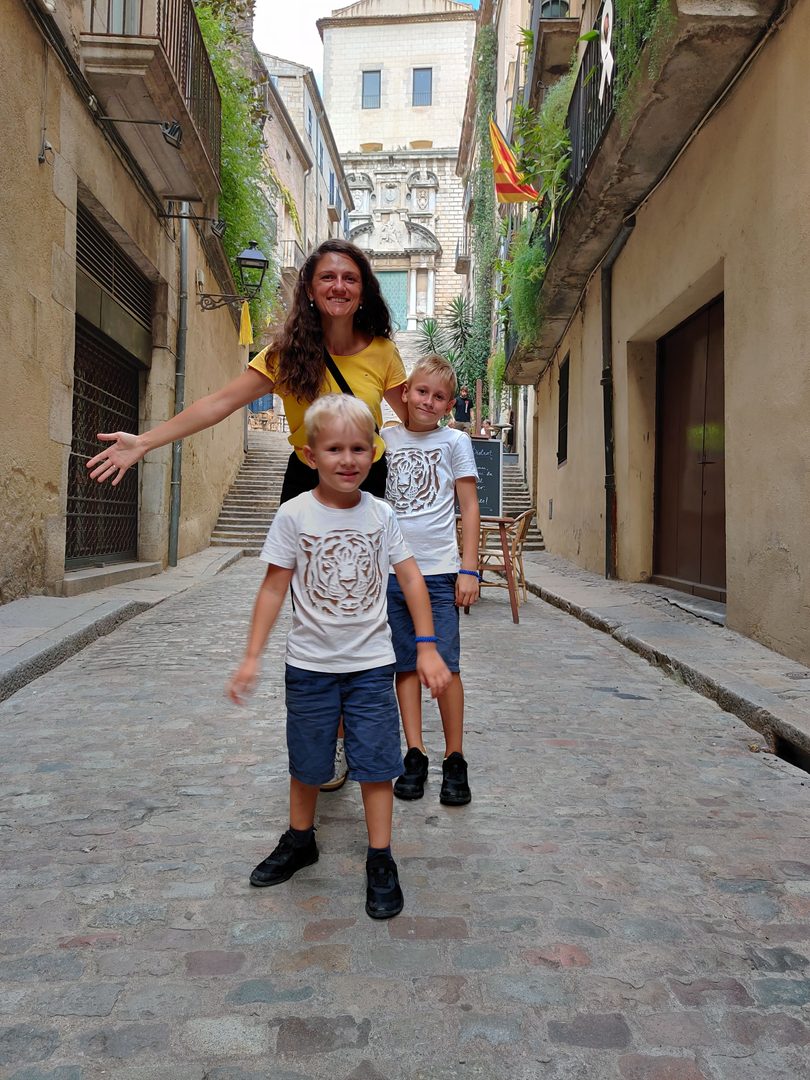
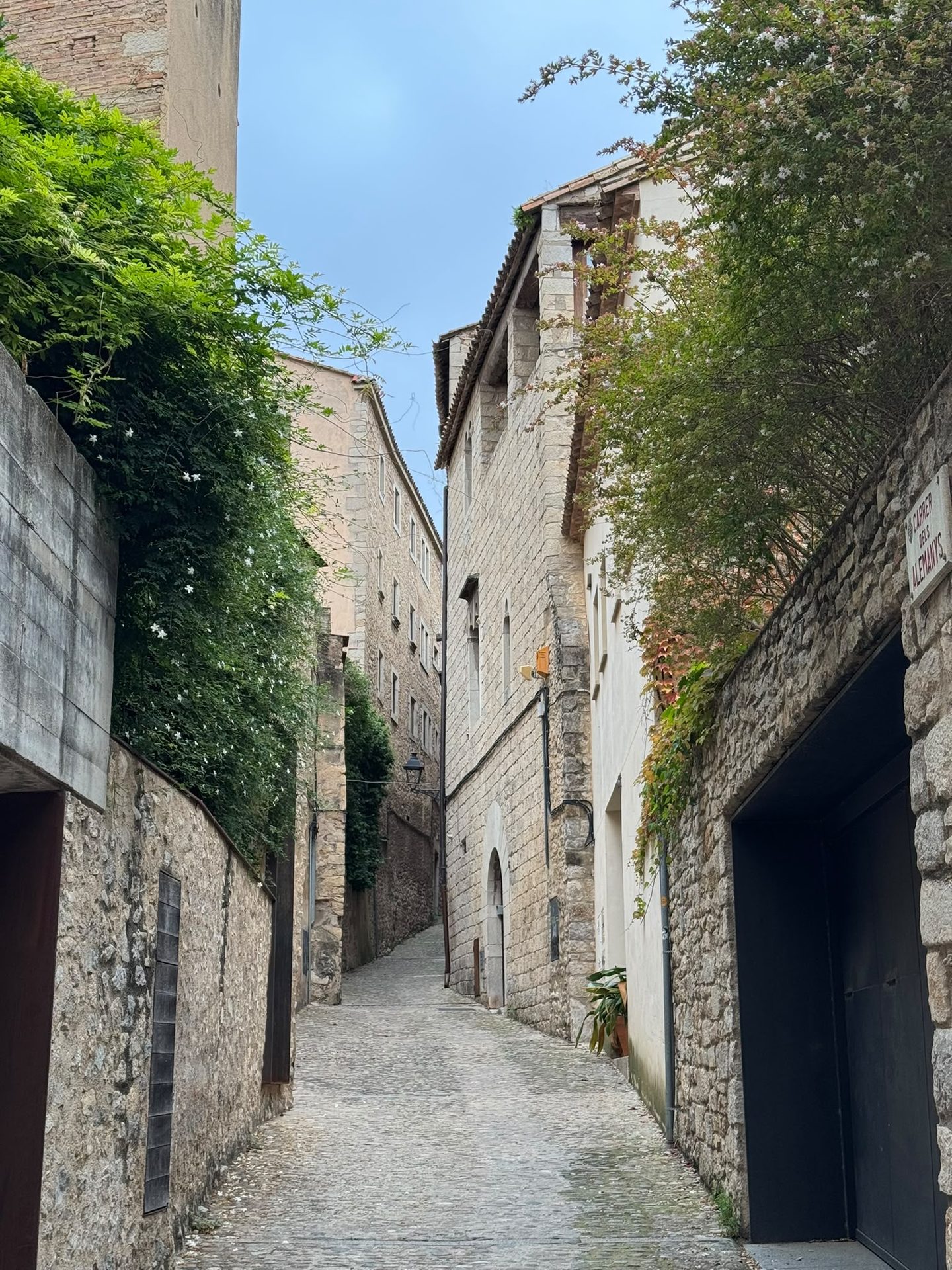
Girona’s Call is one of the best-preserved Jewish quarters in Europe: a dense knot of narrow stone lanes and stepped alleys climbing the hill below the cathedral, largely unchanged in plan since the medieval community was expelled in 1492.
It is not a museum district with signs on everything. It’s a set of streets you walk into and lose your bearings in almost immediately — which is, honestly, the correct way to experience it. The lanes are barely shoulder-width in places, the stone is worn smooth, and the light comes down in slices.
The Museum of Jewish History sits inside it, on Carrer de la Força, and costs around €4.
With children: the Call is a maze and children generally enjoy mazes. Give them the job of navigating.
The Onyar houses
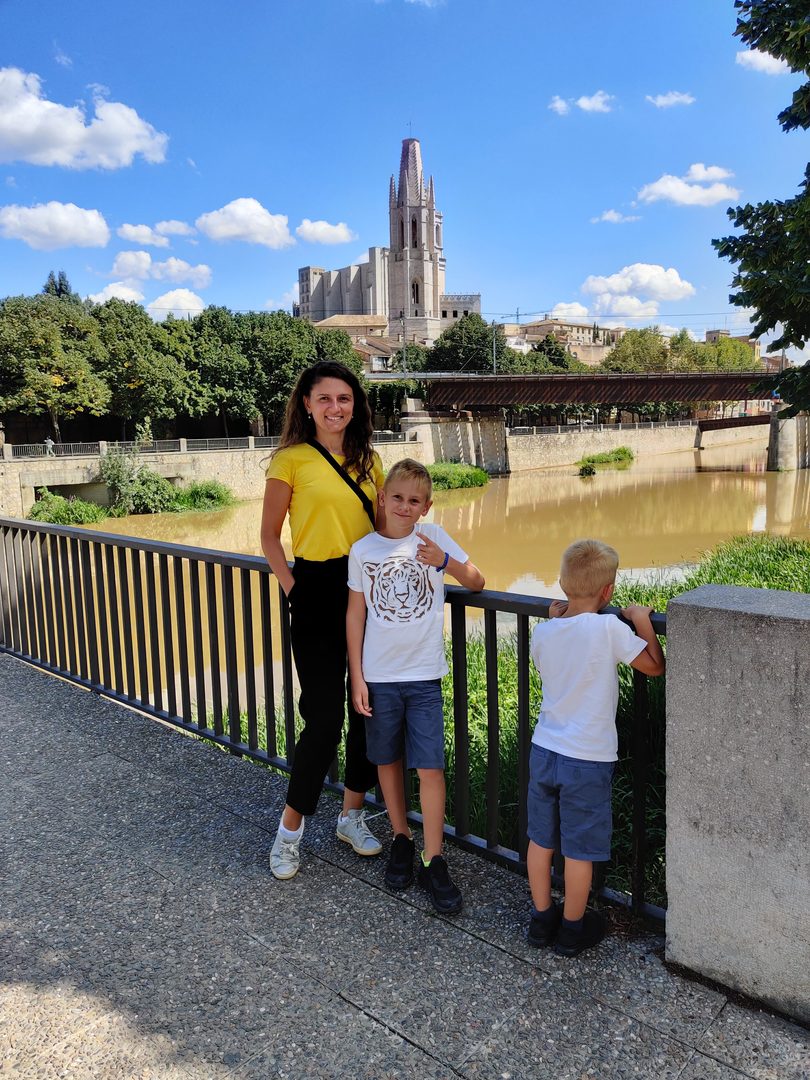
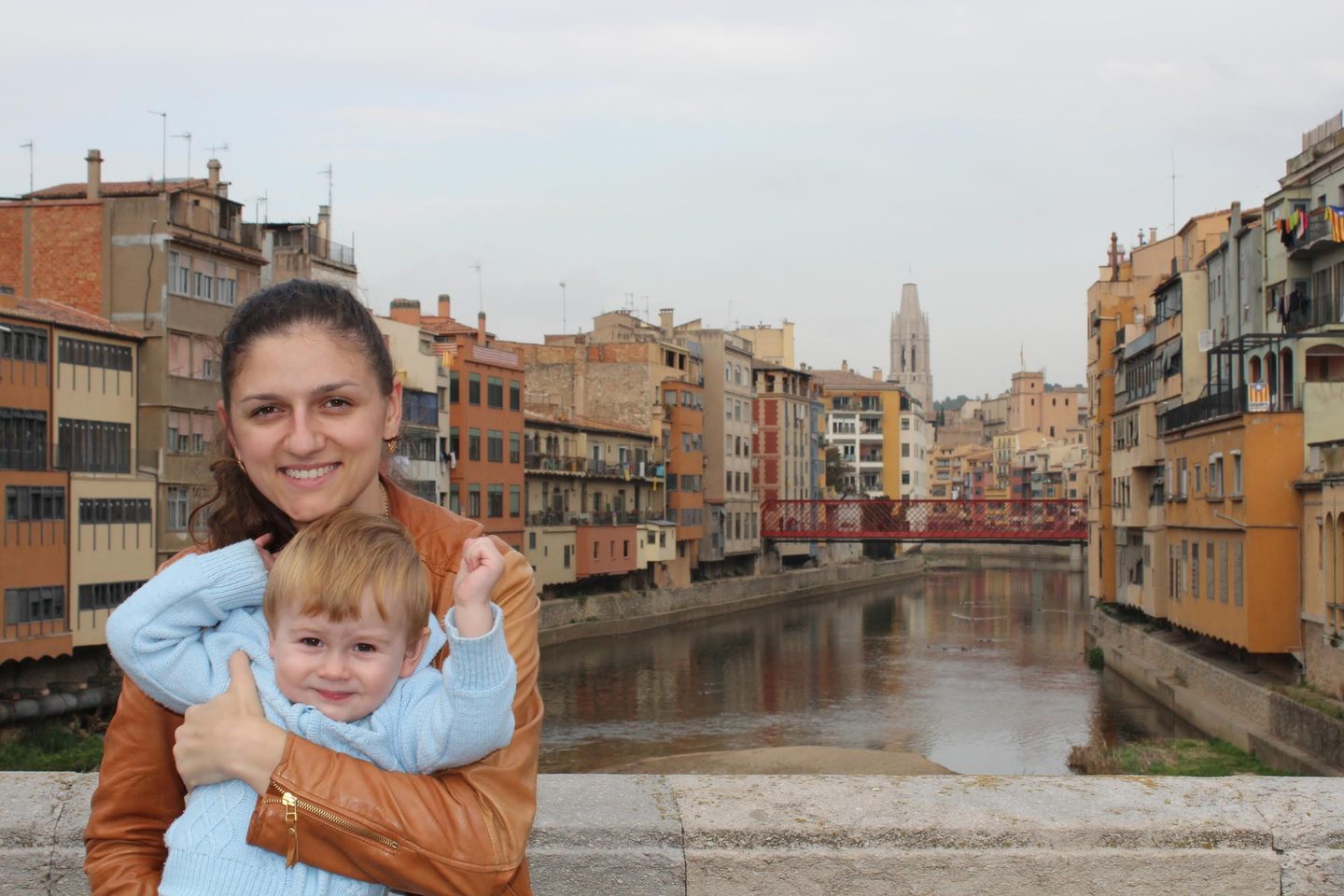
The picture everyone has seen of Girona: a row of houses stacked directly above the river in ochre, terracotta, mustard and faded pink, with the cathedral tower behind them.
They’re best from the Pont de Sant Agustí, and the trick is the time of day — the colours need light on them, which in practice means mid-morning to early afternoon. Come at six in the evening and the whole row is in shadow.
And a small thing worth knowing: one of the bridges over the Onyar, the red iron Pont de les Peixateries Velles, was built by Gustave Eiffel’s company in 1877 — a dozen years before the tower in Paris. It’s a footbridge, it’s free, and most people cross it without knowing.
Game of Thrones, if that’s why you’re coming
Girona stood in for Braavos and parts of King’s Landing in seasons six and seven, and a steady number of people come for exactly that.
The main locations:
- The cathedral staircase — the Great Sept of Baelor
- The Call’s narrow lanes — Braavos street scenes
- Sant Pere de Galligants and the Arab Baths also appear
You do not need a tour for this. The locations are the same places you’d visit anyway, all within ten minutes of each other, and they’re free from the outside. If you want the detail a guide gives you, take one — but nobody should pay to be walked up a staircase they can climb alone.
Two more things, if you have the full day
The Arab Baths — around €3, and misleadingly named: they’re a twelfth-century Christian bathhouse built in the Islamic style, with a beautiful octagonal skylit pool room. Small, cheap, quick, and the light in the main chamber is extraordinary.
Sant Pere de Galligants — around €6. A Romanesque Benedictine monastery just outside the old walls, now the archaeology museum, with a cloister worth the ticket on its own.
Eating, and the reason Girona is on food maps
Girona is where El Celler de Can Roca is — three Michelin stars, repeatedly ranked among the best restaurants in the world, and booked out months ahead. You are not walking into it on a day trip and that’s fine.
What you can do: the Roca brothers also run Rocambolesc, an ice cream shop in the centre, run by the family’s pastry chef. It’s a few euros, there’s usually a queue, and it is a genuinely good way to say you ate something by the Rocas without a reservation made in February.
Half a day in Girona, in order
- Fast train from Sants, early
- Walk in from the station — 10–15 minutes, across the river
- The Onyar houses from the Pont de Sant Agustí, while the light is on them
- Up through the Call, slowly, getting lost on purpose
- The cathedral — the staircase, the nave, and the Tapestry of Creation
- The city walls, as long as everyone’s legs last
- Rocambolesc on the way back down
- Train home for a late lunch
Add for a full day: the Arab Baths, Sant Pere de Galligants, and a proper sit-down lunch instead of ice cream.
When to go
- Spring and autumn — the right answer. Girona is inland and it gets genuinely hot in summer with no sea breeze to help
- Mid-May: Temps de Flors. For about a week the city fills its courtyards, staircases and patios with flower installations, and private houses that are closed the rest of the year open their doors. It is the single best week to come and also the busiest — book the train well ahead.
- August — hot, and some restaurants close. Go early in the day if you go
- Winter — cold and clear, the walls are empty, and the cathedral is better without a crowd in it
Is it worth the trip?
Of everything within an hour of Barcelona, Girona is the one I’d send someone to first.
It has a genuine medieval city rather than a preserved village, the cathedral interior is something you will remember, the walls are free and better than most ticketed attractions, and the fast train makes it small enough to fit into a morning.
Come if you want history you can walk through, and you don’t mind a climb.
It’s less good if you want a beach, or if anyone in your group can’t manage stairs — Girona is built on a hill and there is no way around that.
All twenty day trips from Barcelona, compared · Besalú, also in Girona province and a good pairing by car · Getting around Barcelona
Frequently asked questions
How do you get from Barcelona to Girona?
The fast AVE or Avant train from Barcelona Sants takes 38 to 45 minutes and costs roughly €18 to €35 depending on how far ahead you book. The regional R11 takes about an hour and twenty-five minutes and costs around €8 to €12. Girona’s station is a 10 to 15 minute walk from the old town.
Is Girona worth a day trip from Barcelona?
Yes, and it is the best day trip within an hour of the city. Girona has a genuine medieval old town, the widest Gothic nave in the world in its cathedral, one of the best-preserved Jewish quarters in Europe, and two kilometres of free city walls you can walk along and climb. On the fast train it fits into half a day.
How long do you need in Girona?
Half a day covers the cathedral, the city walls, the Jewish quarter and the Onyar houses. A full day lets you add the Arab Baths, the archaeology museum at Sant Pere de Galligants and a proper sit-down lunch.
What is special about Girona Cathedral?
Its nave is 22.98 metres wide — the widest Gothic nave in the world, against 14.65 metres at Reims. That means a single enormous vault with no columns interrupting the space, so the interior opens up all at once when you walk in. The cathedral museum also holds the Tapestry of Creation, a Romanesque embroidery from the eleventh or early twelfth century.
Are Girona’s city walls free?
Yes. About two kilometres of medieval wall survive along the eastern edge of the old town and you can walk along the top of them for free, climbing towers on the way for views over the rooftops. It is the best thing to do in Girona with children, and no ticket-selling site leads with it. There are steep sections and steps, so it is not suitable for a pushchair.
Where was Game of Thrones filmed in Girona?
Seasons six and seven used Girona for Braavos and parts of King’s Landing. The cathedral staircase stood in for the Great Sept of Baelor, the narrow lanes of the Call were used for Braavos street scenes, and Sant Pere de Galligants and the Arab Baths also appear. All the locations are within ten minutes of each other and free to see from outside, so you do not need a tour.
Is Girona good with kids?
Yes, mainly because of the walls — two kilometres of medieval rampart with climbable towers is a better proposition to a child than any museum, and it is free so you can leave when they have had enough. The Call is a maze they will enjoy navigating. The limitation is that Girona is built on a hill and there are a lot of steps, including up to the cathedral, so a carrier beats a pushchair.
When is the best time to visit Girona?
Spring and autumn. Girona is inland with no sea breeze and gets genuinely hot in summer. The single best week is Temps de Flors in mid-May, when the city fills with flower installations and private courtyards that are closed all year open to the public — it is also the busiest, so book the train early.
