
Platja d’Aro is a proper Costa Brava resort town: one long central beach, a seafront of restaurants, water parks, and in August a great many people.
We’ve been in winter, which almost nobody writes about, and it’s a completely different place — so this covers both.
The essentials
- Where: the Costa Brava, north of Barcelona in Girona province
- Getting there: by car — there’s no train station, which is the single most important practical fact
- Tolls: around €5–7 each way on the motorway
- Parking: free spaces in the centre of town — arrive early in summer
- Beaches: one big one, five quiet coves
- Best for: a family beach holiday rather than a day trip
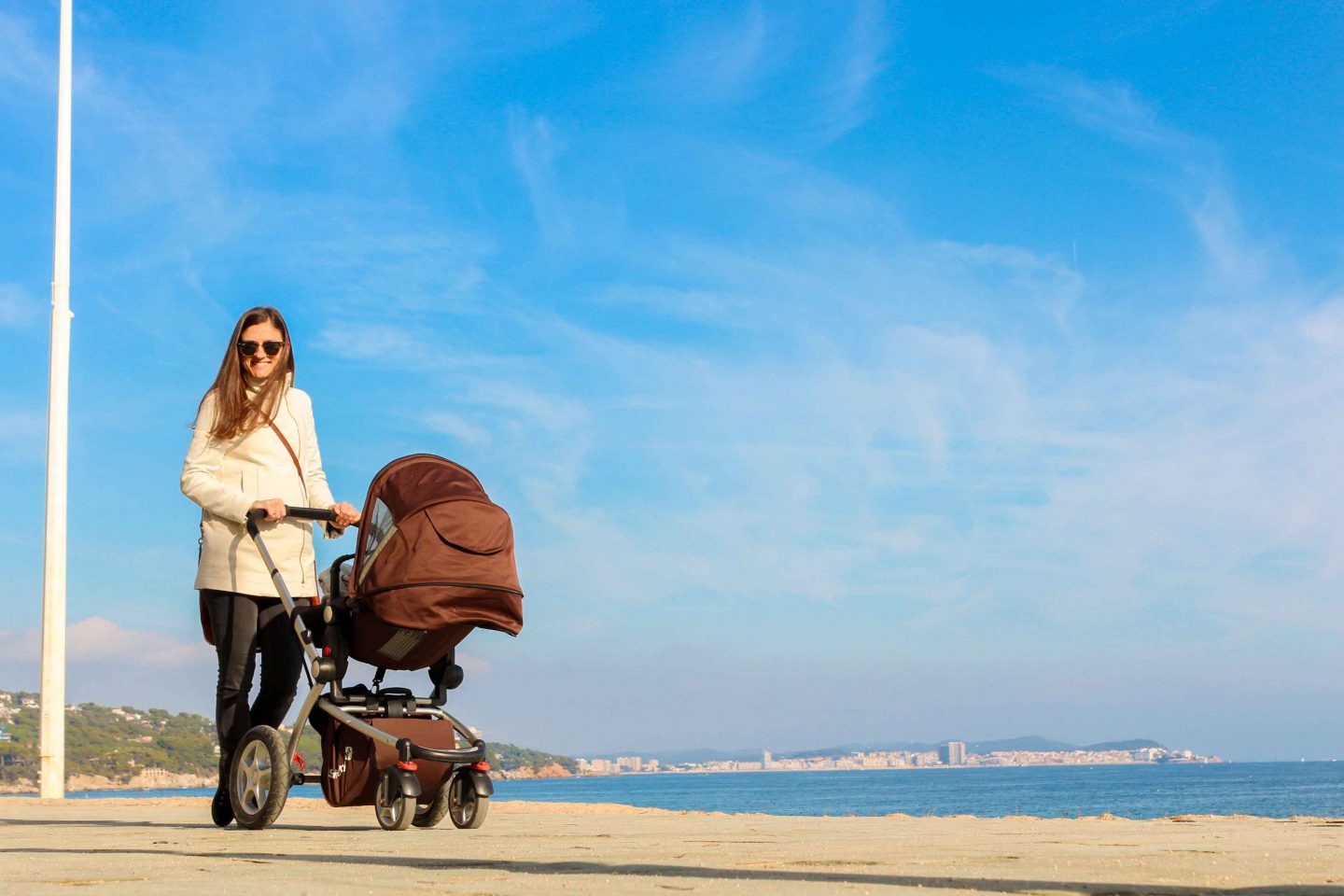
The beaches — and the five most people never find
Platja Gran
The main beach, right in the centre, long and wide with coarse golden sand. This is where almost everyone goes, and it has everything behind it — restaurants, bars, shops, the lot.
In summer it is full. Not Barceloneta-full, but full.
The five coves
This is the part that makes Platja d’Aro worth choosing over other resort towns, and the part the brochures skip. There are **five small coves** along the same coastline, and they’re where you go when the main beach is too much:
- Cala Rovira
- Cala del Pi
- Cala Sa Cova
- Cala d’es Canyers
- Cala Belladona
All small, all quieter, all with the same coarse golden sand. If you’re staying in Platja d’Aro for a week, the coves are the reason you won’t get bored of the beach — and they’re within reach on foot or with a very short drive.
The principle is the same as in Barcelona itself: walk past the obvious one and you get space.
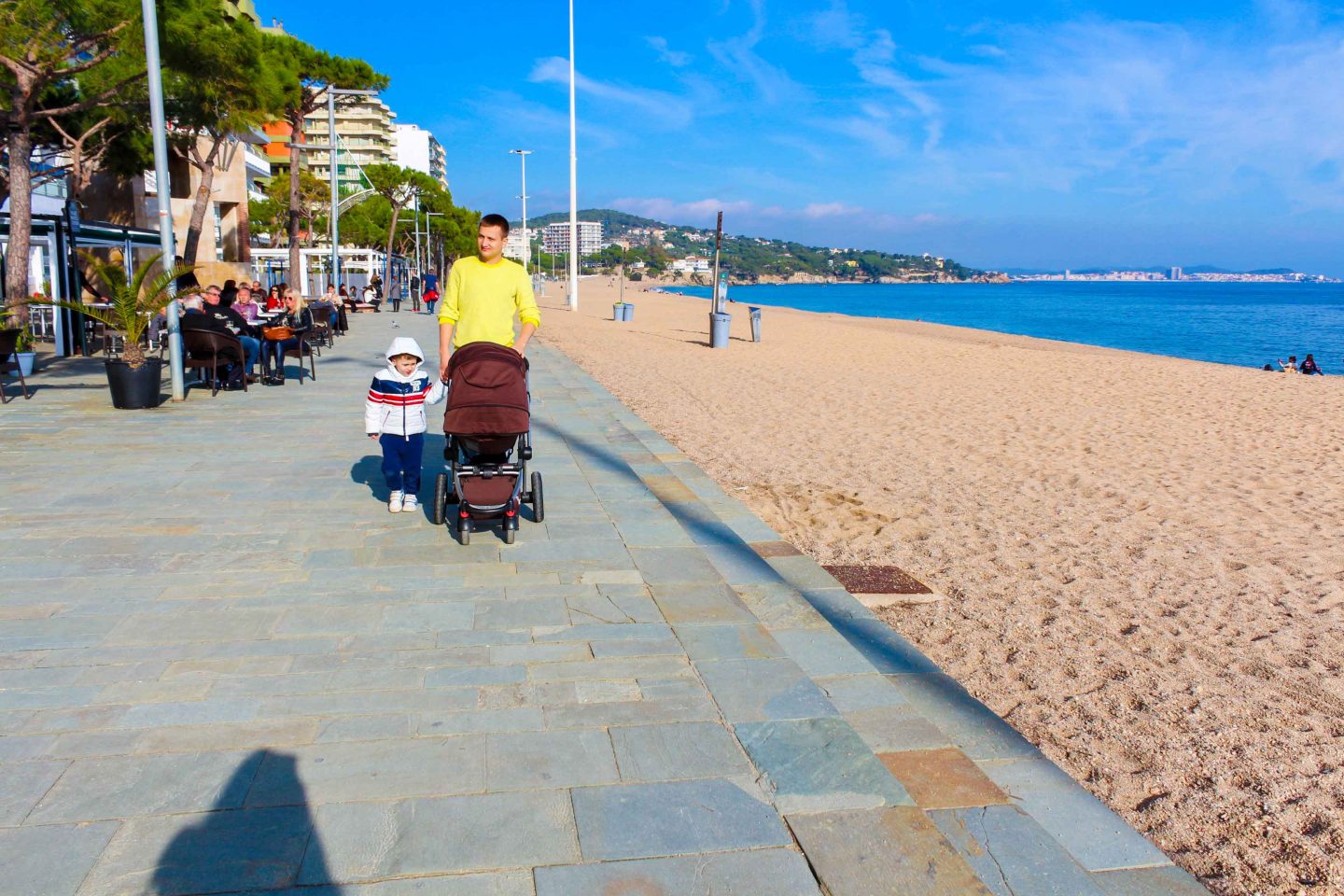
Why it works with children
Two things stood out, and both are the sort of detail you only notice with children in tow:
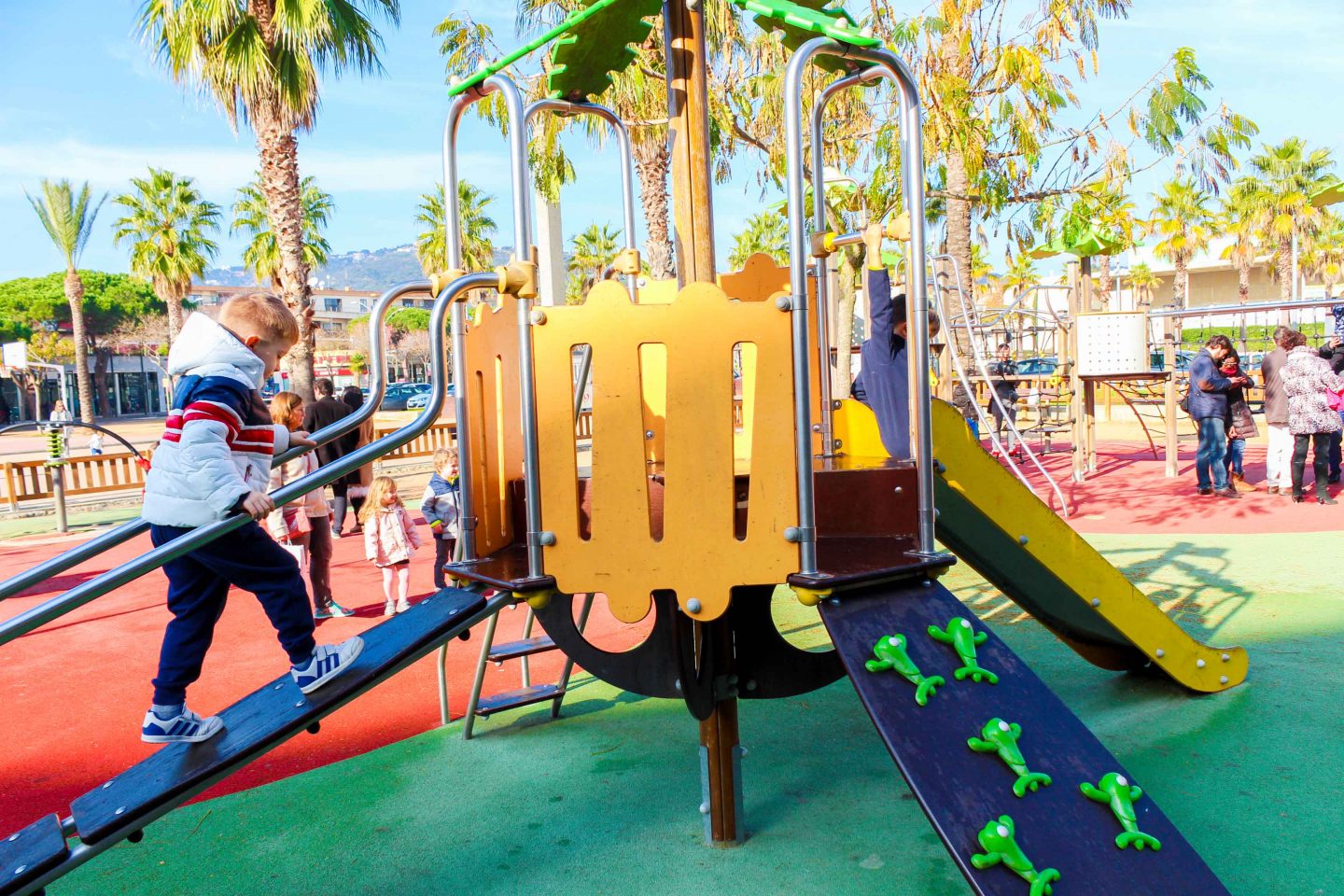
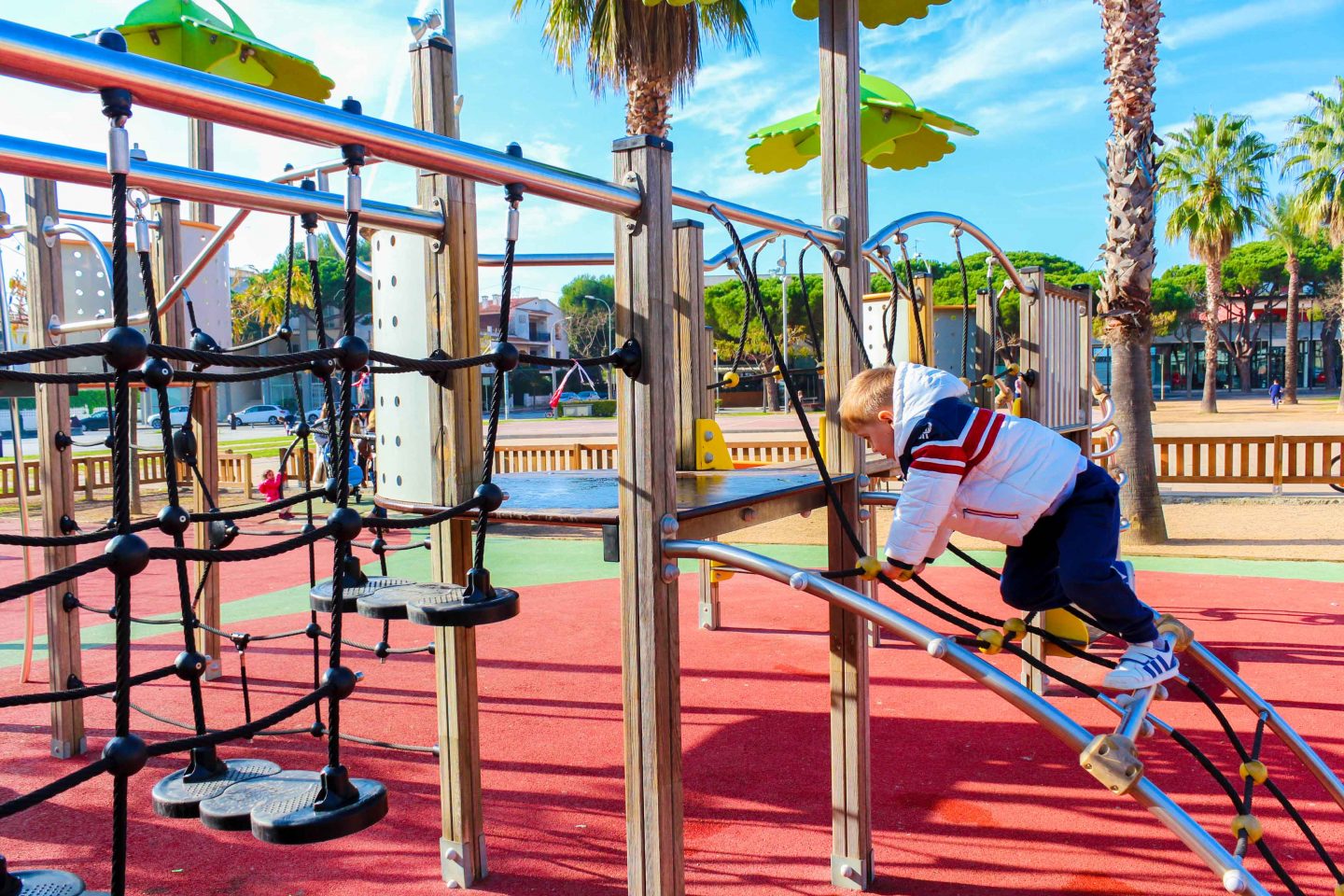
1. The playgrounds. There are children’s areas on the beach and along the seafront, and a lot more playgrounds in the centre of town. That’s unusual — most resort towns have one sad swing set — and it means the walk between the beach and wherever you’re eating has stops built into it.
2. The free parking. Free spaces right in the middle of town, which after a morning of loading a car with beach things is worth more than it sounds. In summer you need to arrive in the morning; come at midday in August and you’ll be circling, like anywhere on this coast.
Getting there — and the thing to know first
There is no train station in Platja d’Aro. The Costa Brava’s rail line doesn’t run along this stretch of coast, so unlike the Maresme beaches just north of Barcelona, you cannot do this on the R1 with a travel card.
By car: the motorway from Barcelona. When we drove it the tolls came to €5.35 going out and €6.56 coming back — the same route, two different prices, which we never worked out. Budget €5–7 each way and check current rates, because these are 2016 figures.
Without a car: long-distance coaches run from Barcelona to the Costa Brava resorts. It’s doable, and it’s why most people who come here without a car come for a week rather than a day.
Honest verdict on the journey: Platja d’Aro is a place to stay, not a day trip. If you want a Costa Brava beach day out of Barcelona, Tossa de Mar is the better call.
What else is there
- Restaurants and bars along the seafront, at every price point, Mediterranean and international. Plenty of choice rather than a handful of overpriced options
- Shops. It’s small but you can get anything — newspapers, children’s toys, brand clothes. Handy on a longer stay
- Water parks: Aquadiver and the activity park at Everest Costa Brava — check both are still operating and get current prices before you promise anything, since we visited out of season and couldn’t use them
- Diving. This stretch is good for it in summer
What there isn’t: much to visit. Platja d’Aro is a resort rather than a historic town — there’s no old quarter, no monument, no museum you’d travel for. If you want a Costa Brava town with something to look at, go to Tossa de Mar and its walled old town. If you want a beach and a comfortable week, this is the better choice.
Where we stayed: Silken Park Hotel San Jorge.
Platja d’Aro out of season — what it’s actually like
This is what almost nobody writes about, so here it is honestly.
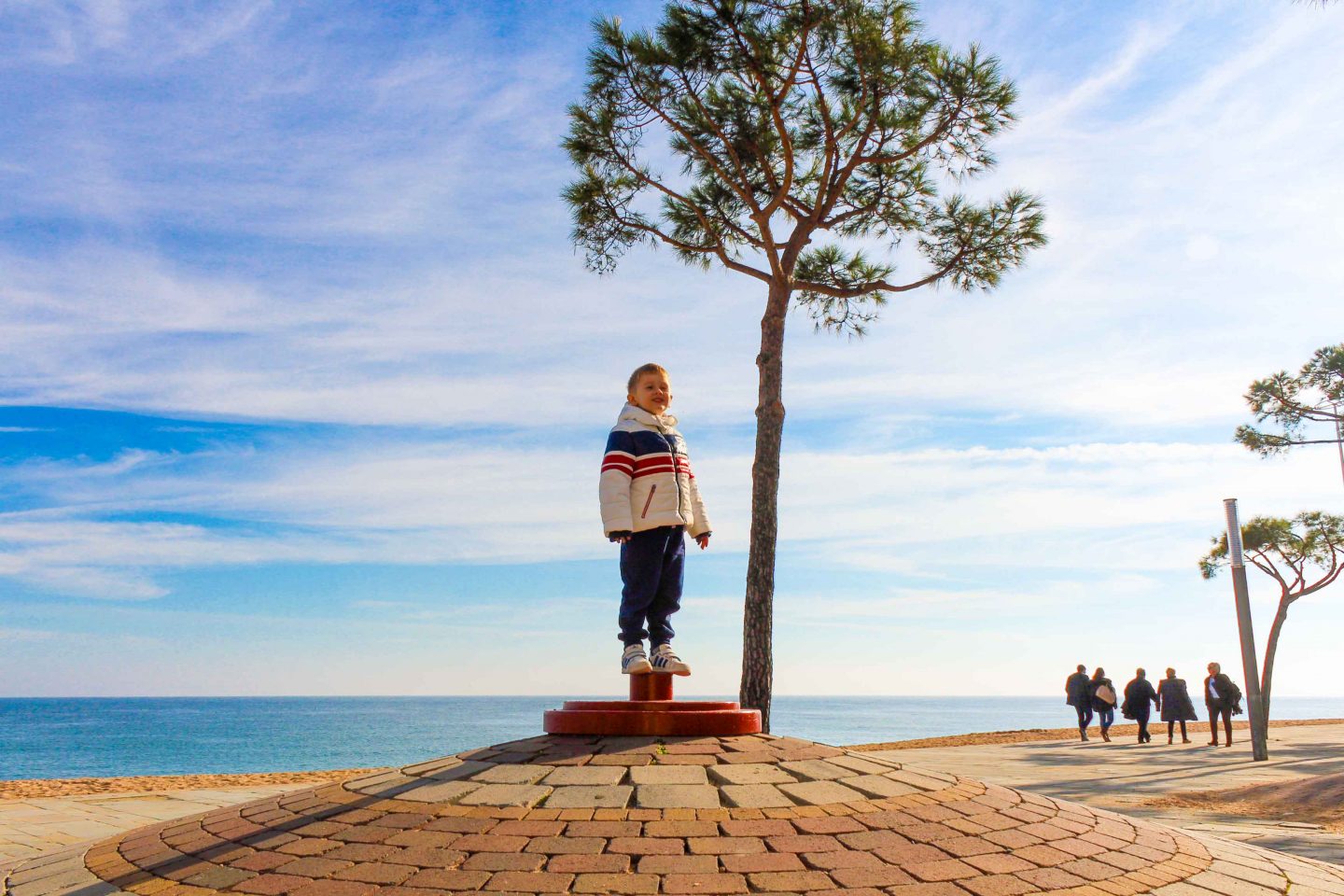
We went in winter. The beach was empty of anyone lying on it — and full of people walking, cycling and sitting in the sun, which on a clear winter day on this coast is genuinely lovely. **Almost all the seafront restaurants and bars were closed.** So were the water parks.
What out of season is good for:
- The walk. The seafront and the coves without a single other visitor
- Parking anywhere
- Prices. Hotels on this coast are a fraction of their August rates
- Clear light. Winter on the Costa Brava photographs better than August haze
What it isn’t good for:
- Eating. Check what’s open before you go, and be ready to drive to a bigger town for dinner
- Swimming
- Anything ticketed — the water parks, the diving, most of the activities
- Atmosphere, if that’s what you came for. A resort town out of season is a quiet town
Would we recommend it? For a day’s walk in the winter sun, genuinely yes — and it’s an hour and a half from Barcelona on a Sunday when you want to see the sea. For a holiday, come in season, but come in June or September rather than August.
So who is Platja d’Aro for?
Come here if: you want a week on a beach with children, you have a car, you want playgrounds and restaurants and a supermarket rather than heritage, and you’d like five quiet coves as a backup when the main beach fills up.
Go somewhere else if: you’re doing a day trip from Barcelona (Tossa), you want an old town (Tossa again, or Cadaqués), or you don’t have a car.
All our trips out of Barcelona, compared.

Frequently asked questions
How do you get to Platja d’Aro from Barcelona?
By car — there is no train station in Platja d’Aro, so you cannot reach it on the local rail network. It is about an hour and a half on the motorway, with tolls of roughly €5 to €7 each way. Long-distance coaches also run from Barcelona to the Costa Brava resorts.
What are the best beaches in Platja d’Aro?
Platja Gran is the main central beach, long and wide with coarse golden sand, and where almost everyone goes. The five coves — Cala Rovira, Cala del Pi, Cala Sa Cova, Cala d’es Canyers and Cala Belladona — are smaller and much quieter, and they are the reason to choose Platja d’Aro over other resort towns.
Is there free parking in Platja d’Aro?
Yes, there are free spaces right in the centre of town, which is unusual on this coast. In summer you need to arrive in the morning — come at midday in August and you will be circling.
Is Platja d’Aro good for families?
Yes. There are children’s areas on the beach and along the seafront plus a lot of playgrounds in the centre, which is more than most resort towns offer, and the free central parking makes a beach day with children much easier. It suits a week’s stay better than a day trip.
What is Platja d’Aro like out of season?
Quiet and rather lovely for a walk — the beach empty of sunbathers but busy with people walking and cycling in the sun — and almost entirely closed. When we visited in winter most seafront restaurants and bars were shut, as were the water parks. Good for a winter day out from Barcelona, not for a holiday.
Platja d’Aro or Tossa de Mar?
Platja d’Aro for a week on a beach with children, playgrounds and a choice of restaurants. Tossa de Mar for a day trip from Barcelona and for a walled medieval old town to look at. Platja d’Aro is a resort; Tossa is a town.

Beautiful family and photos 🙂 could you please write where this kids playground is located in the town?
Author
ohh, this was like 2 years ago, and we didn´t come back to exactly that place.