
Quick verdict
- Tamariu is the calm one. The third and least-visited of the Palafrugell villages, after Calella de Palafrugell and Llafranc, and the one that has escaped being developed.
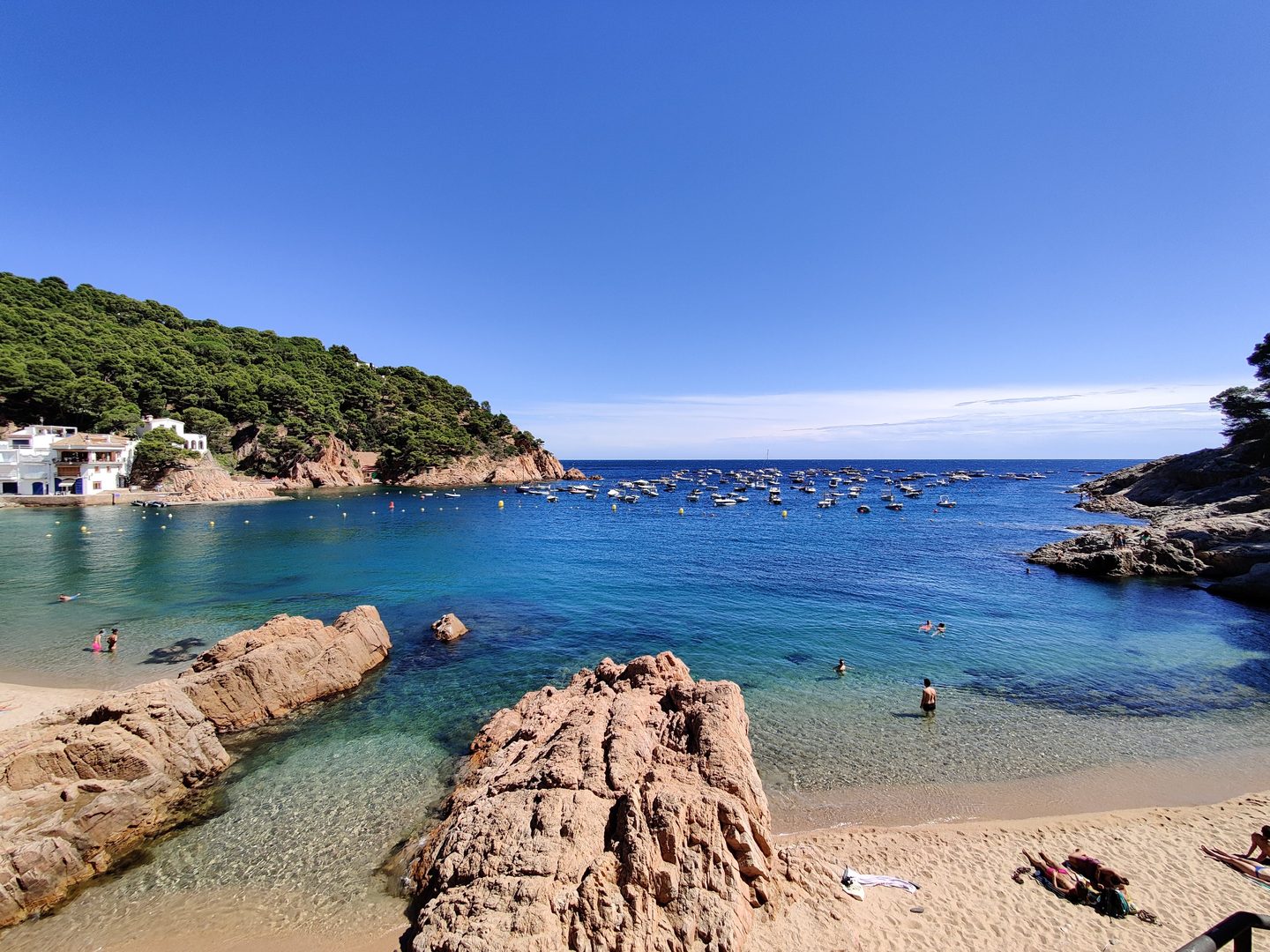
- The beach is one of the most sheltered on the Costa Brava — a small cove of coarse sand with Blue Flag status and unusually clear, calm water.
- That clarity makes it the best of the three for snorkelling. Bring masks.
- Parking is the problem. It is a small village at the end of a road with almost nowhere to put a car. Arrive early or do not come by car at all.
- Do not try to walk here from Llafranc with small children. That section of the coastal path is a serious walk, not a stroll — details below.
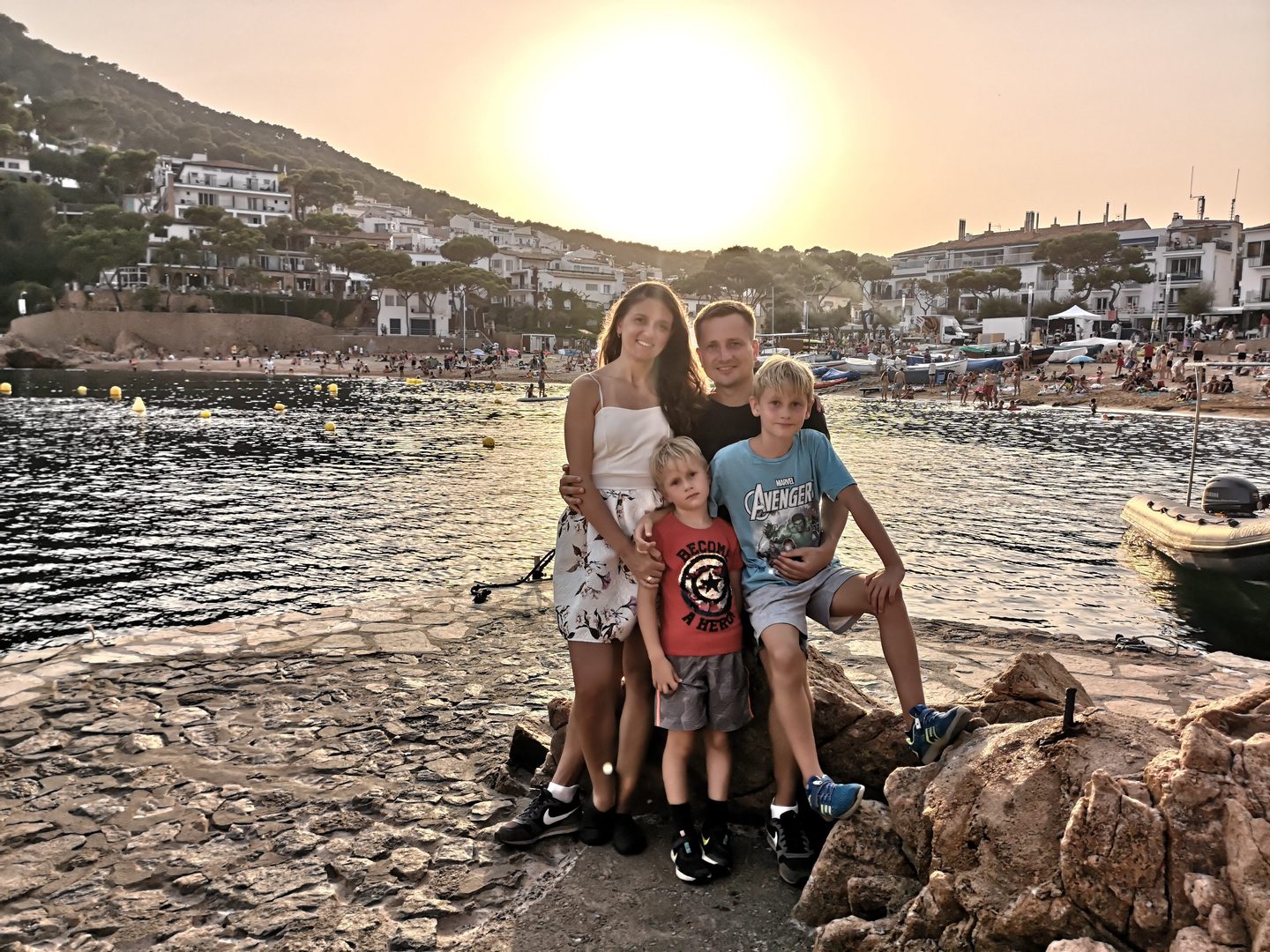
Tamariu is where you go when Calella de Palafrugell has too many people in it.
It is the third village of Palafrugell, tucked into a bay north of Llafranc, and it is the one almost nobody has heard of. Narrow streets, a handful of restaurants, pine trees coming right down to the sand, and a beach that sits in a bay sheltered enough to feel like a swimming pool on a day when the rest of the coast is choppy.
The village takes its name from the tamarisk trees that grow along this stretch of coast.
It has, as the Costa Brava tourism board puts it, escaped overdevelopment — which on this coastline is not a small thing.
Calella de Palafrugell, the famous one
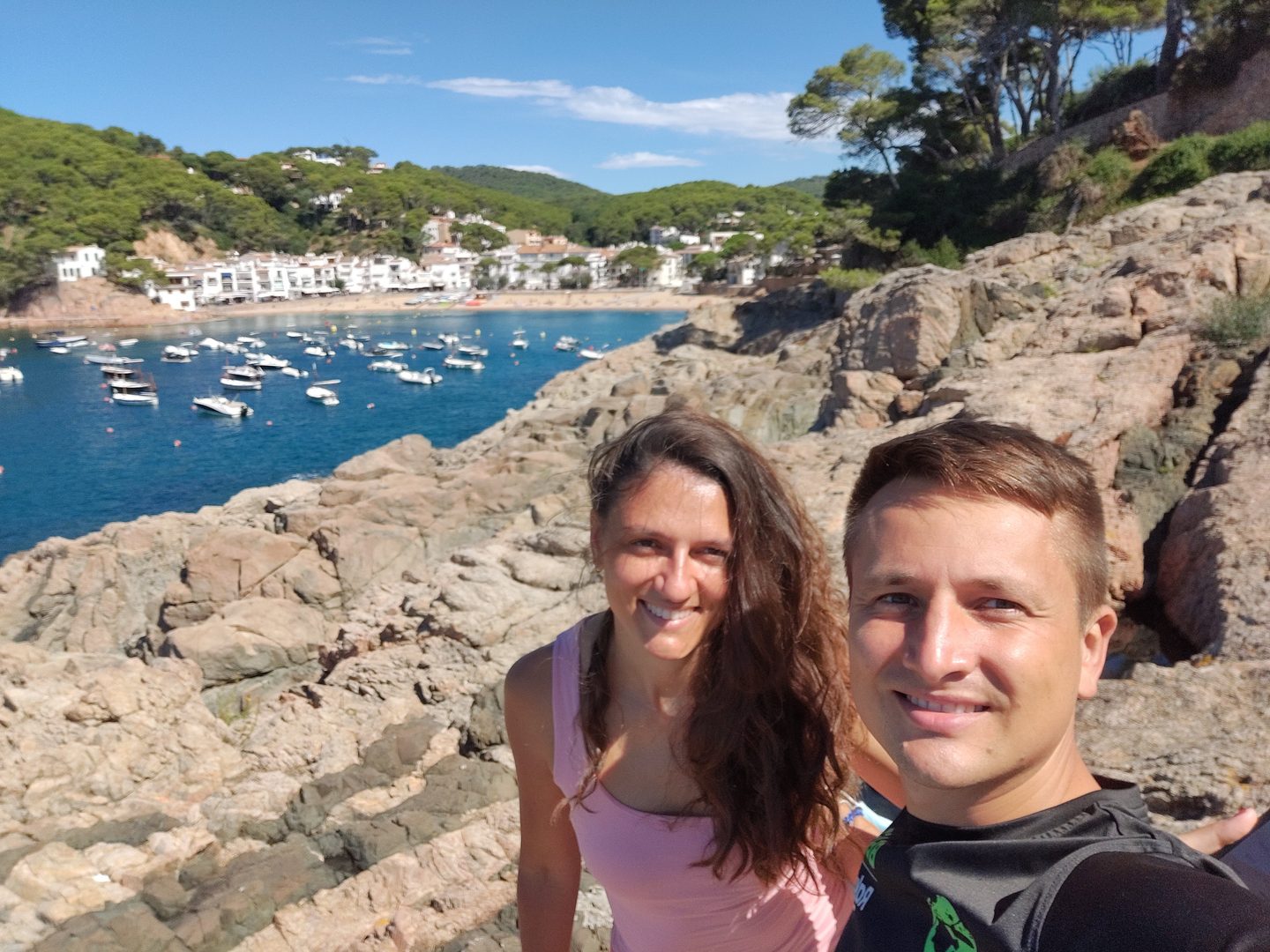
Where is Tamariu?
Tamariu is on the Costa Brava in Catalonia, part of the municipality of Palafrugell along with Calella de Palafrugell and Llafranc. It is roughly 135 km from Barcelona and about 1 hour 50 minutes by car — a few minutes further than the other two, because it sits at the end of its own road down to the sea.
There is no train. Girona or Flaçà, then a bus or taxi.
The geography matters more here than it does for the other two. Calella and Llafranc sit on a stretch of coast you drive along. Tamariu is at the bottom of a single road that ends at the beach. There is no through traffic, which is why it is quiet — and no overflow, which is why the parking is what it is.
Let’s talk about the parking, because it is the whole day
Most articles about Tamariu save this for the bottom. It belongs at the top, because it is the single decision that determines whether you have a good day here.
Tamariu is a small village at the end of a dead-end road with a very limited number of spaces. In July and August the spaces are gone early, and when they are gone there is no clever alternative — no big car park up the hill, no shuttle, nothing. You either found a space or you did not.
What actually works:
- Arrive early. Not “before lunch”. Early.
- Or arrive late — from about 17:00 the day-trippers start leaving and the light is better anyway
- Or stay in the village, which solves it completely and is the reason the two hotels there are worth their price in August
- Or come by boat or kayak, which sounds ridiculous and is what a lot of people do
When we visit Tamariu, we usually come at 8am the latest to be there if in July or August, and we still struggle to find a parking slot. Usually we paid for parking in Tamariu, never for free. In September and October it gets easier to find a slot, still with payment.
Tamariu beach — what it is like
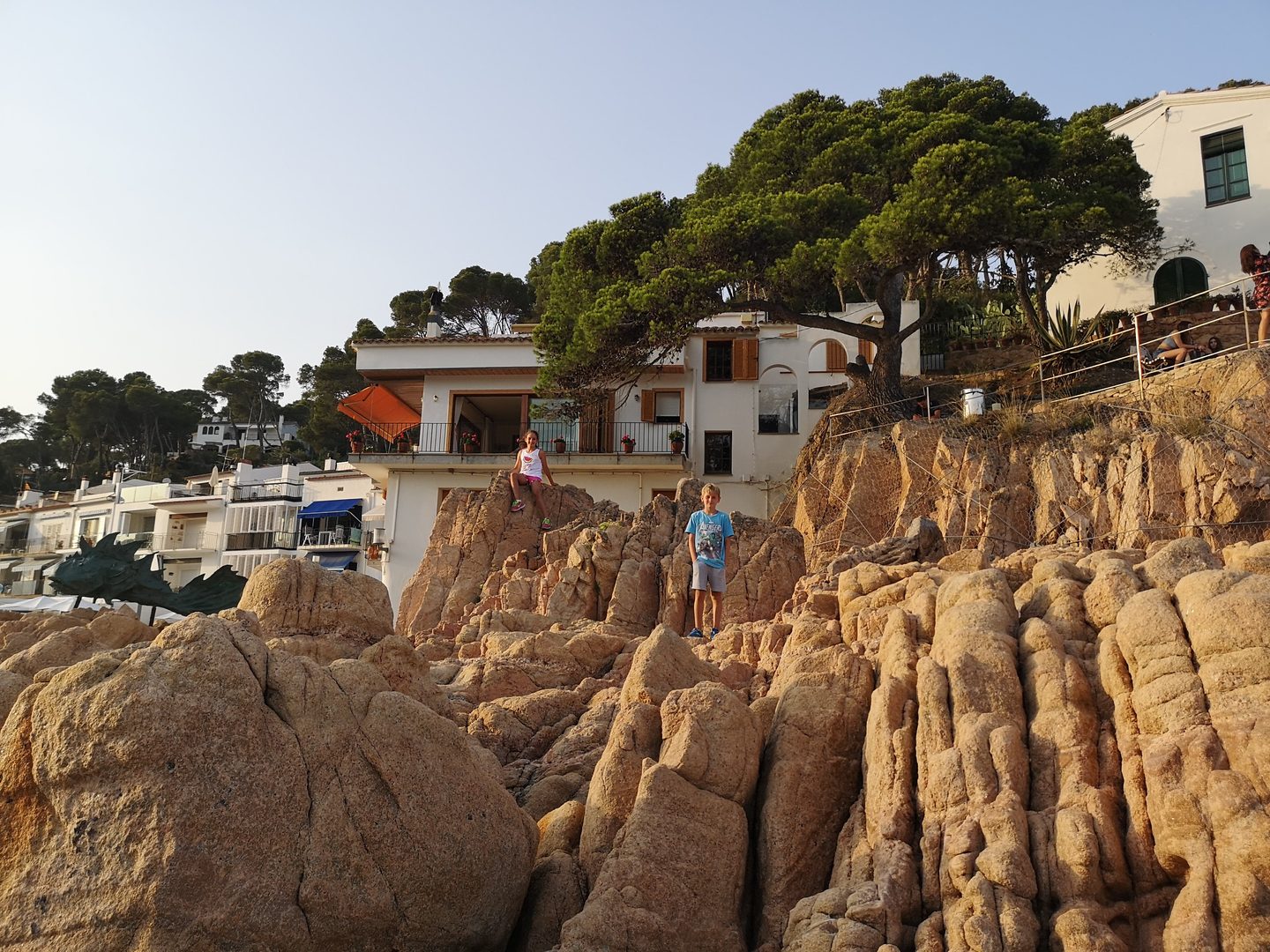
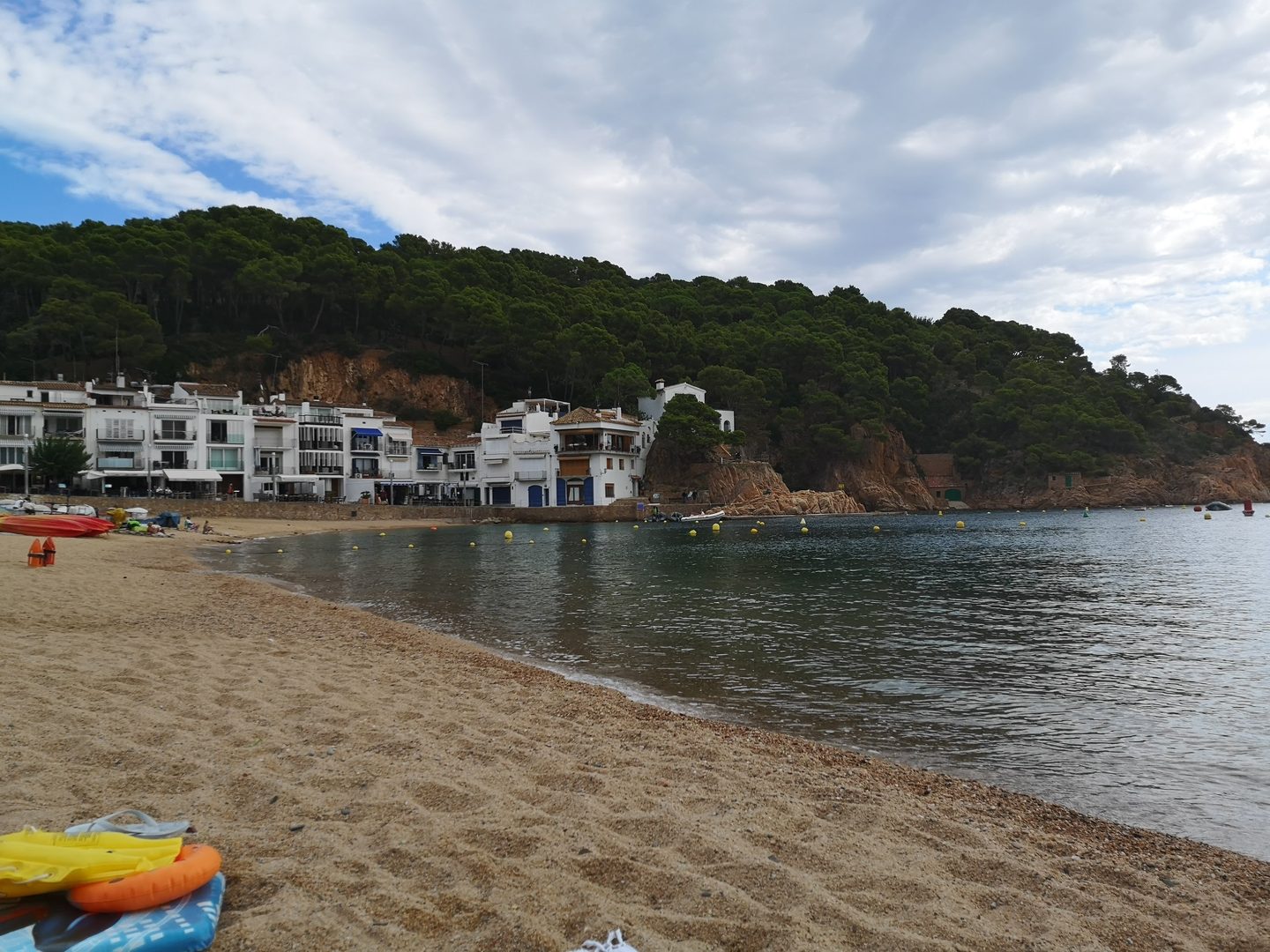
Platja de Tamariu is a small cove beach of coarse sand, backed by the village and framed by rock and pine on both sides.
The thing that makes it different from the other two villages is the shelter. Tamariu bay is one of the most protected on this coast, which means:
- The water is calm on days when Calella and Llafranc are choppy
- It is clearer, because less is being churned up
- It suits small children better than anywhere else in the three villages
It holds a Blue Flag, and there are restaurants directly behind the sand.
The trade-off is size. This is a cove, not a beach — it is small, and on an August afternoon “quiet” becomes relative. The village’s charm and its capacity are the same fact seen from two directions.
During high season (July-August) if you want to have space at the beach, arrive early in the morning, or during lunch time, when local people go for lunch. In September – October you can find place in first row at any time.
The coves around Tamariu
This is what people come back for, and it is the section that will separate your page from the listings.
Tamariu is the base for a series of small natural coves along the coast either side, most reachable only on foot or by water:
- Cala Pedrosa — south, remote, reachable only on foot or by boat. There is a former fishermen’s hut on it that is now a bar-restaurant serving traditional local dishes. Eating there is the memorable thing you do in Tamariu.
- Aigua Xelida — north, a rocky inlet, and the one people photograph
- Aigua Dolça — right next to the main beach
- Cala Marquesa — a small rocky spot north of the village
- El Cau / Cala de Gens — south
- Platja dels Lliris — adjacent to the main beach
Almost all of them are rock, not sand. Water shoes are not optional. With small children, most of these are for looking at rather than spending the afternoon on.
We did some hiking and enjoyed the views, but we never stoped for a swim. Other people, usually stop on the rocks and enjoy their privacy.
Snorkelling in Tamariu
Of the three Palafrugell villages, Tamariu is the one to bring masks to.
Sheltered water means clear water, and the rock and pine edges of the bay mean there is something to look at rather than an empty sand bottom. The coves either side, especially the rockier northern ones, are better again.
With children: the main beach is where you start, because it is calm and there are lifeguards. The coves are for confident swimmers.
Walking to Tamariu — and the warning nobody gives you
You can walk the Camí de Ronda from Calella de Palafrugell through Llafranc to Tamariu. You should know what you are agreeing to.
The full route is about 9 km and roughly two hours each way, graded moderate. With stops and the return, the official route description puts a full there-and-back day at around six hours.
More importantly, the walk is two completely different walks joined together:
| Section | What it is like |
|---|---|
| Calella → Llafranc (25–30 min) | Easy. Partly paved promenade, some steps. The official route notes call it ideal to walk with children. |
| Llafranc → Tamariu | A different proposition entirely. It climbs over the Sant Sebastià lighthouse headland, and then, in the official words, the road becomes savage — narrow paths along the sea rocks where you need to watch your footing. |
So: the first section is a family walk. The second is not.
I am labouring this because plenty of blogs describe “walking the Camí de Ronda between the three villages” as a pleasant afternoon, and someone is going to read that, set off from Llafranc at three in the afternoon with a six-year-old and no water, and have a bad time on a cliff.
What I would actually do: drive to Tamariu, or walk Calella–Llafranc and drive the rest. If you want the Llafranc–Tamariu section, do it with older children, in the morning, with water and proper shoes.
Where to eat in Tamariu
There is a short row of restaurants behind the beach and not much else — which is the point of the village.
The one worth planning around is the bar-restaurant at Cala Pedrosa, the converted fishermen’s hut on the cove south of the village, reachable only on foot or by boat, serving traditional local cooking. Getting there is the outing; lunch is the reward.
Where to stay in Tamariu
Straight answer: we did not stay here. So this is how I would choose, from fourteen years working in hotels, not a review of a stay.
Staying in Tamariu solves the parking problem entirely, and in July and August that is worth real money. It also gives you the village early in the morning and after six in the evening, when the day visitors have gone, which is when it is at its best.
There are only a handful of places, and the two names that come up are Hotel Tamariu, on the front, and Hotel Hostalillo, above the bay.
What to check before booking anywhere here:
- Parking included? The single most important question in this village.
- How far up the hill? Tamariu climbs steeply. Check the walk back up from the beach, not the distance on the map.
- Does it open all year? Several places on this coast close outside the season.
tourist tax in Europe — what you actually pay
Calella, Llafranc or Tamariu — which one?
The question every reader of all three pages is really asking. Answer it plainly and link all three.
| Calella de Palafrugell | Llafranc | Tamariu | |
|---|---|---|---|
| Known for | The arched houses, the postcard | The long beach and the lighthouse | Being quiet |
| Size | Nine small coves | One 347 m beach | One small cove |
| Crowds | Busiest | Middle | Quietest |
| Parking | Hard | Harder | Hardest |
| Buggy | Awkward | Fine on the promenade | Fine in the village |
| Water | Good | Good | Calmest and clearest |
| Snorkelling | OK | OK | Best of the three |
| Eating out | Most choice | Good, seafront | Few places |
| Best for | One perfect afternoon | A week with kids | Escaping the other two |
If you have one day: Calella. If you have two: Calella and Llafranc, walking between them. If you have been before, or you hate crowds: Tamariu, arriving early.
When to go
- June and September — the sweet spot. Warm sea, everything open, parking possible.
- July and August — the village is at capacity. Arrive before the day-trippers or after them.
- May and October — beautiful and empty, but some restaurants close and the sea is cold for children.
- Out of season — mostly shut. Fine for the walk, not for a beach day.
More Costa Brava with kids
- Calella de Palafrugell, the full guide → https://travelfamilyblog.com/calella-de-palafrugell-one-of-costa-brava-treasures/
- Llafranc — beach, lighthouse and parking → https://travelfamilyblog.com/llafranc-costa-brava/
- the best calas and hotels on the Costa Brava → https://travelfamilyblog.com/costa-brava-best-calas-hotels-guide/
- Tossa de Mar with kids → https://travelfamilyblog.com/tossa-de-mar-the-ultimate-guide-for-families-with-kids/
- 20 day trips from Barcelona → https://travelfamilyblog.com/20-coolest-day-trips-from-barcelona/
Tamariu, Costa Brava: FAQ
Where is Tamariu?
Tamariu is a small coastal village on the Costa Brava in Catalonia, Spain, part of the municipality of Palafrugell along with Calella de Palafrugell and Llafranc. It is roughly 135 kilometres from Barcelona, about an hour and fifty minutes by car, at the end of its own road down to the sea.
Is Tamariu good for families with children?
Yes. Tamariu bay is one of the most sheltered on the Costa Brava, so the water stays calm and clear when other beaches are choppy, and the beach holds a Blue Flag. The main limitation is size, because it is a small cove rather than a long beach.
Why is parking in Tamariu so difficult?
Tamariu sits at the end of a dead-end road with a very limited number of spaces and no overflow car park. In July and August the spaces fill early in the day. Arrive early, arrive after about 17:00, or stay in the village so that parking is included.
Is Tamariu good for snorkelling?
Yes, and it is the best of the three Palafrugell villages for it. The shelter of the bay keeps the water unusually clear, and the rocky edges of the cove and the coves either side give you something to look at. Bring water shoes, because most of the surrounding coves are rock rather than sand.
What are the best coves near Tamariu?
Cala Pedrosa to the south is the best known and can only be reached on foot or by boat, and it has a former fishermen’s hut that is now a bar-restaurant. Aigua Xelida to the north is the most photographed. Aigua Dolça, Cala Marquesa, El Cau and Platja dels Lliris are all within reach.
Can you walk from Llafranc to Tamariu?
Yes, but it is a serious walk rather than a stroll. The path climbs over the Sant Sebastià lighthouse headland and then follows narrow tracks along the sea rocks. The full route from Calella de Palafrugell to Tamariu is about 9 kilometres and roughly two hours each way, graded moderate, so it is not suitable for small children.
Which is better, Tamariu or Calella de Palafrugell?
Calella de Palafrugell is prettier and has far more to do, with nine coves and the famous arched fishermen’s houses, so it is the better choice for a first visit. Tamariu is quieter, calmer and better for swimming and snorkelling, which makes it the better choice if you have been to the Costa Brava before or you want to avoid crowds.
