
The deer in Nara bow. They also bite, kick, butt and knock people over — that isn’t me being dramatic, it’s what the official warning signs in the park say, illustrated, in four panels.
We took our two to Nara as a day trip from Osaka, fed the deer, saw the Great Buddha, got caught in a downpour on the way home and loved all of it. This is what I’d want to know before handing a child a packet of crackers.
The short version
- Deer crackers: ¥200 for a bundle of 10, from the wooden carts with green umbrellas. Don’t feed them anything else.
- The deer are wild. Not tame, not park animals — wild animals that have learned people carry food.
- When you run out, raise both hands with your palms open. It’s the recognised signal that you’re empty, and it works.
- Todai-ji Great Buddha Hall: ¥800. Open 7:30–17:30 April to October, 8:00–17:00 November to March.
- Use Kintetsu Nara if you can — about 30 minutes’ walk to Todai-ji, against 45 from JR Nara.
- Allow: a full day trip, though you can do it in half.
Where to stay in Osaka with kids
Hotel Hankyu Respire Osaka – Umeda, above the shops beside JR Osaka Station, with triple and quad rooms. Every line in the city starts downstairs, which is what makes day trips painless.
Mimaru Osaka Namba North – separate bedroom and living area, a short walk from Dotonbori but far enough back from the canal to sleep. Some units are Pokémon-themed.
The Park Front Hotel at Universal Studios Japan – under a minute from the USJ gates, triple and quad rooms. Worth one night before your park day, not a whole stay — the bay is far from everything else.
In Osaka we stayed with family, so none of these are our own stays — they’re the ones we’d book, chosen on room capacity and location. Affiliate links — we may earn a small commission at no extra cost to you.
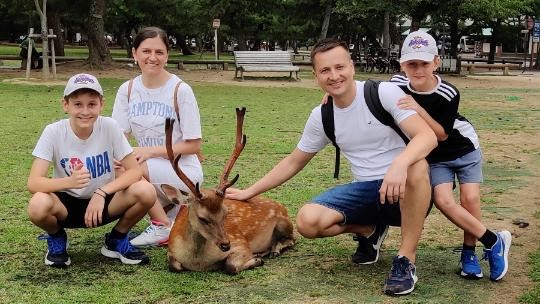
The deer: the honest version
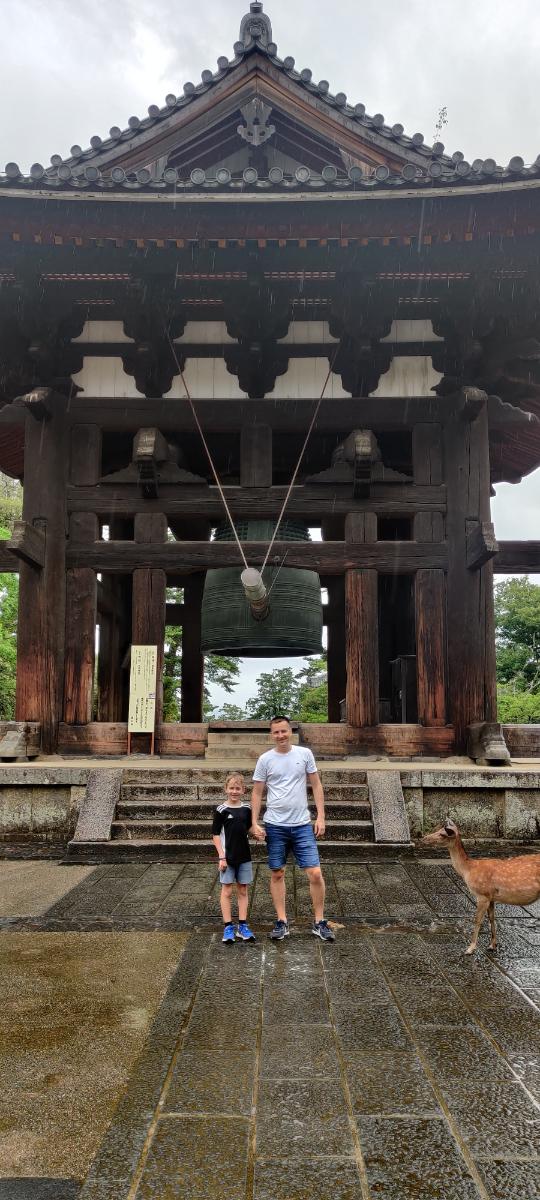
Everyone comes for the bowing. It’s real — hold up a cracker and the deer will dip their heads, and it is genuinely charming the first ten times.
What the photos don’t show is what happens in between. These are wild animals. They’re in the park because it suits them, not because anyone tamed them, and once they know you have food they commit to the project completely.
The park’s own warning signs illustrate four things they do: bite, kick, butt and knock down. Biting is usually a nip at someone teasing them with a cracker held out of reach. Butting is a shove with the head. The knocking-over happens more in the autumn mating season and in spring when there are calves about.
None of that means don’t go. We went, our two fed deer, and it was a highlight. It means go prepared, and don’t let the bowing photos convince you these are pets.
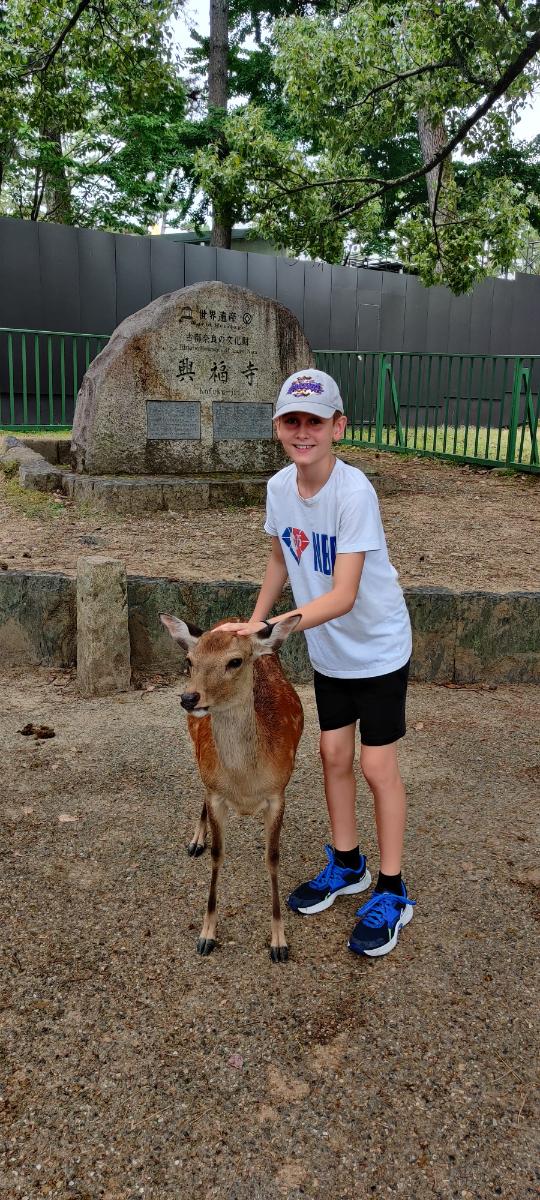
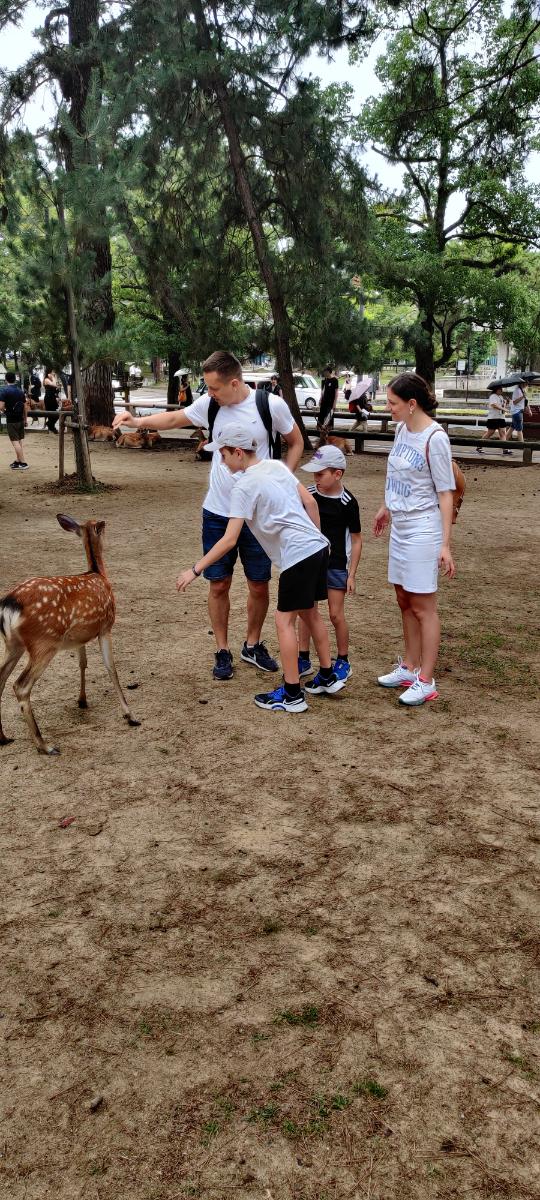
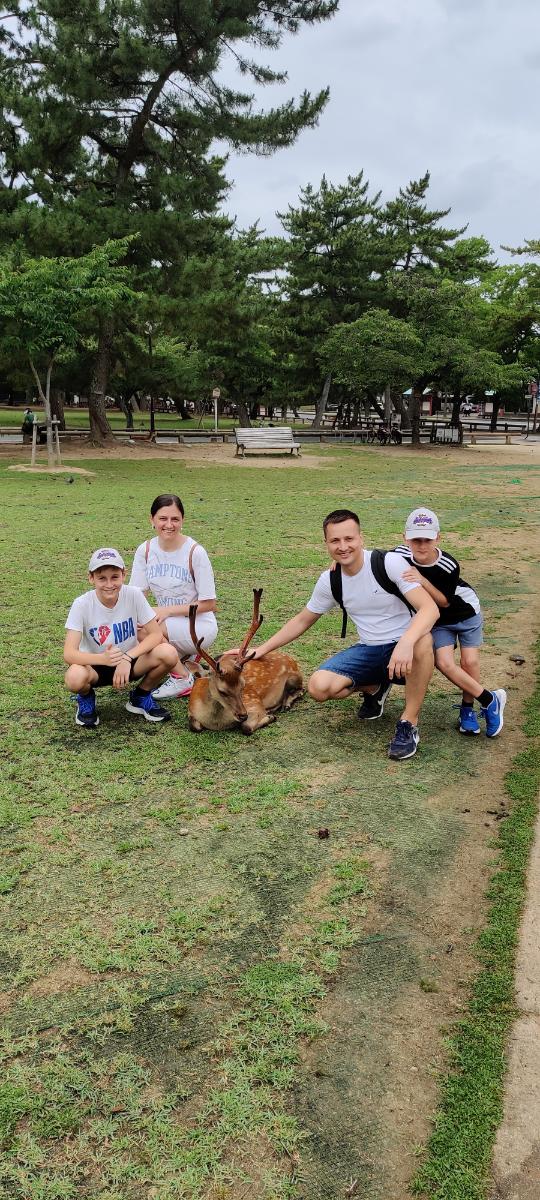
Feeding them with children: what actually works
- Buy one bundle at a time. ¥200 for ten crackers, from the wooden carts with green umbrellas. Buying three bundles for a child is buying three minutes of being surrounded.
- Hand them over fast. The longer a cracker is visible, the more deer arrive and the pushier they get. Teasing is what gets people nipped.
- Teach the empty-hands signal before you buy anything. Both hands up, palms open, showing you have nothing. The deer understand it and move on. This is the single most useful thing to know and hardly anyone mentions it.
- Don’t hide crackers in a bag or pocket. They can smell them and they will follow you and go through your things.
- Watch anything made of paper. Maps, tickets, guidebooks — deer will try to eat them, and there are well-known photos of exactly that.
- Only shika senbei. Human food, wrappers and plastic can kill them. The crackers are made for the purpose.
- Don’t leave children unattended with them, and keep the running and shrieking down — startled deer are the ones that react.
By age
- Toddlers: hold them, or let them watch. A deer at head height is a lot when you’re three.
- School age: the sweet spot. Ours were confident enough to feed them and old enough to follow the rules.
- Teenagers: fine, and it photographs well enough to hold their interest.
Todai-ji and the Great Buddha
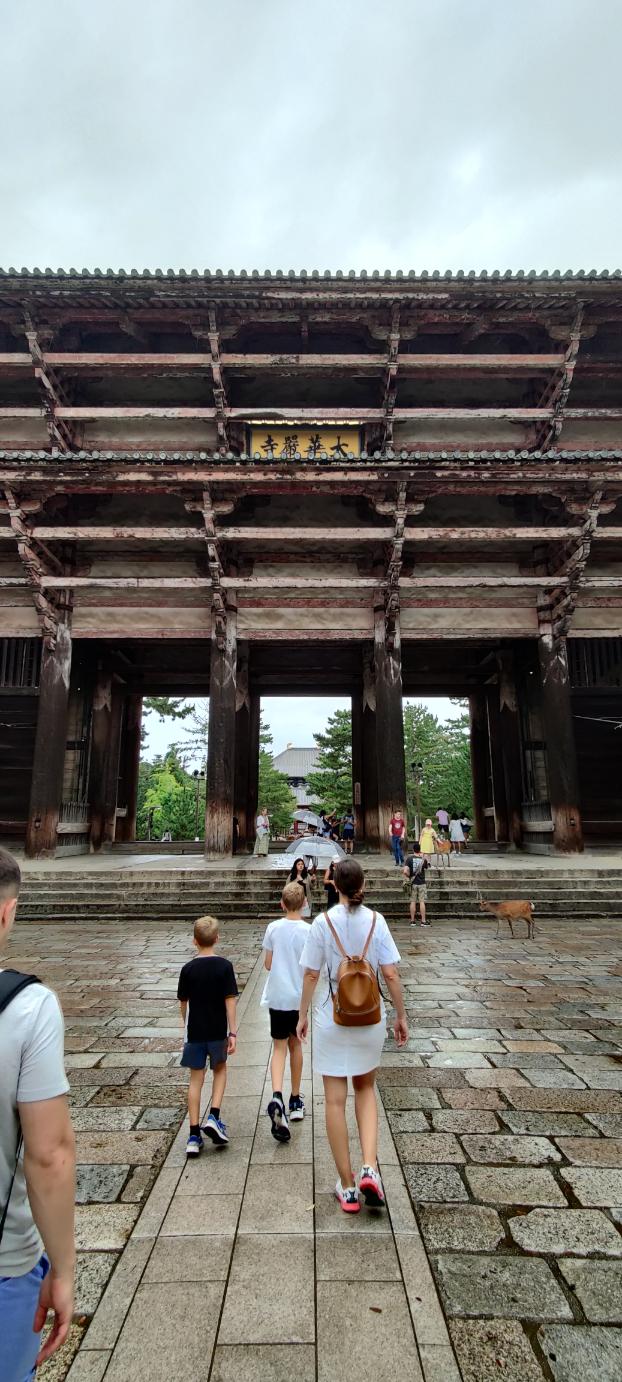
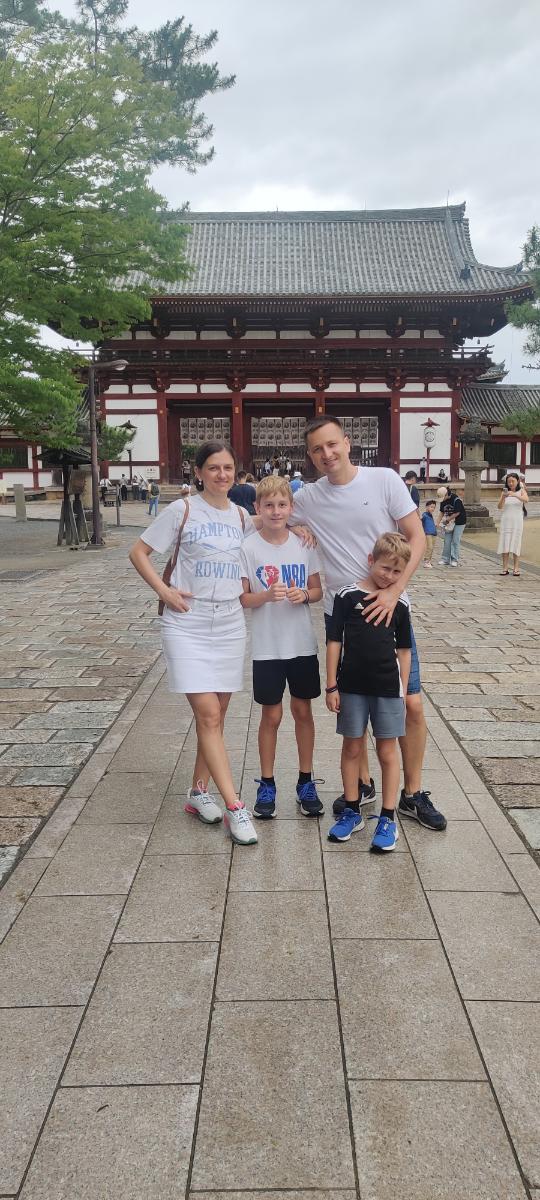
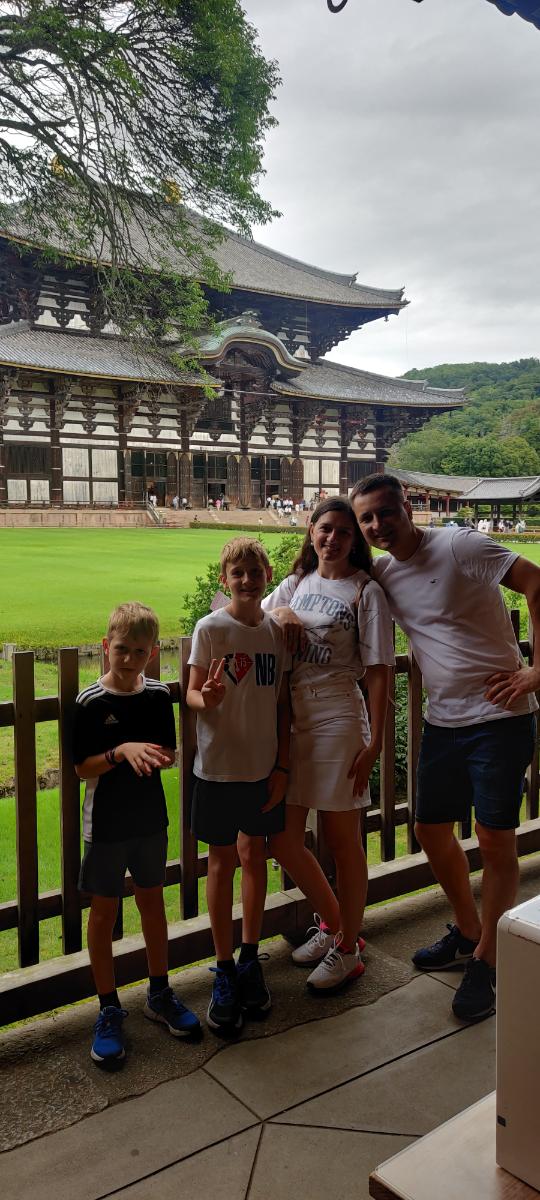
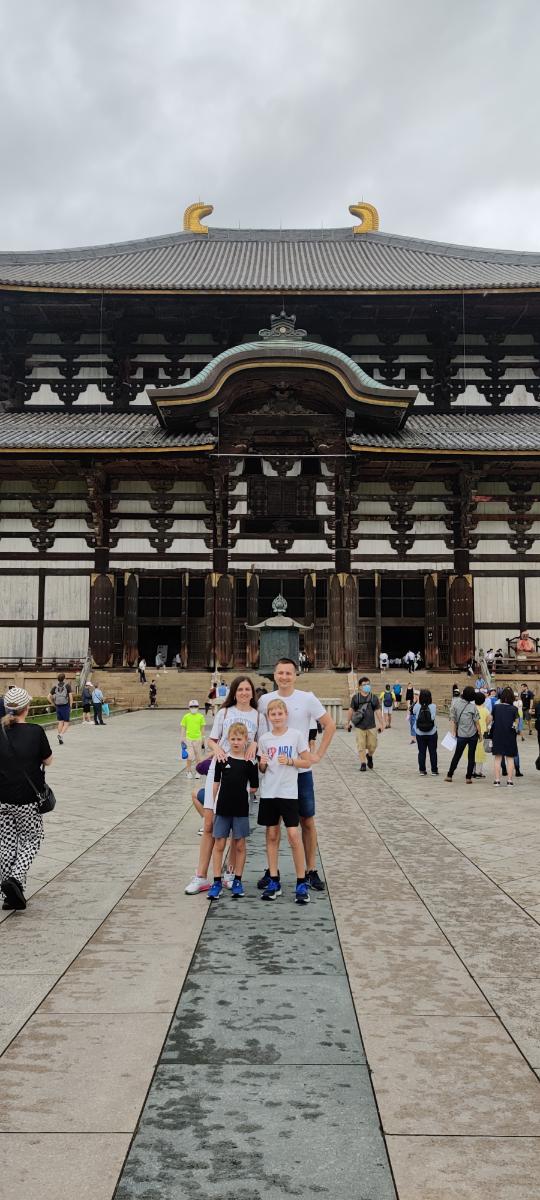
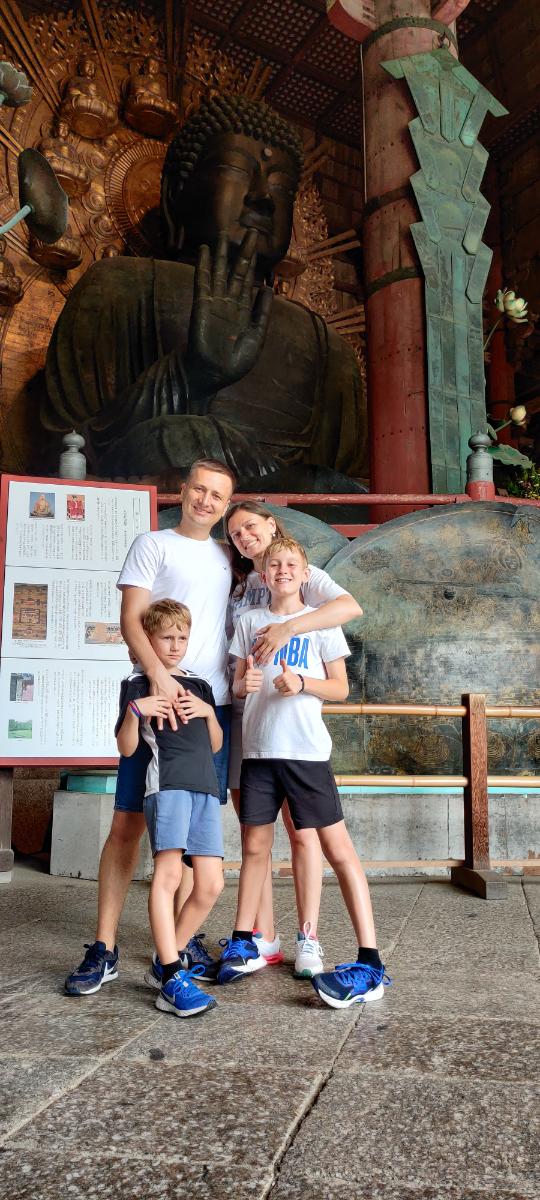
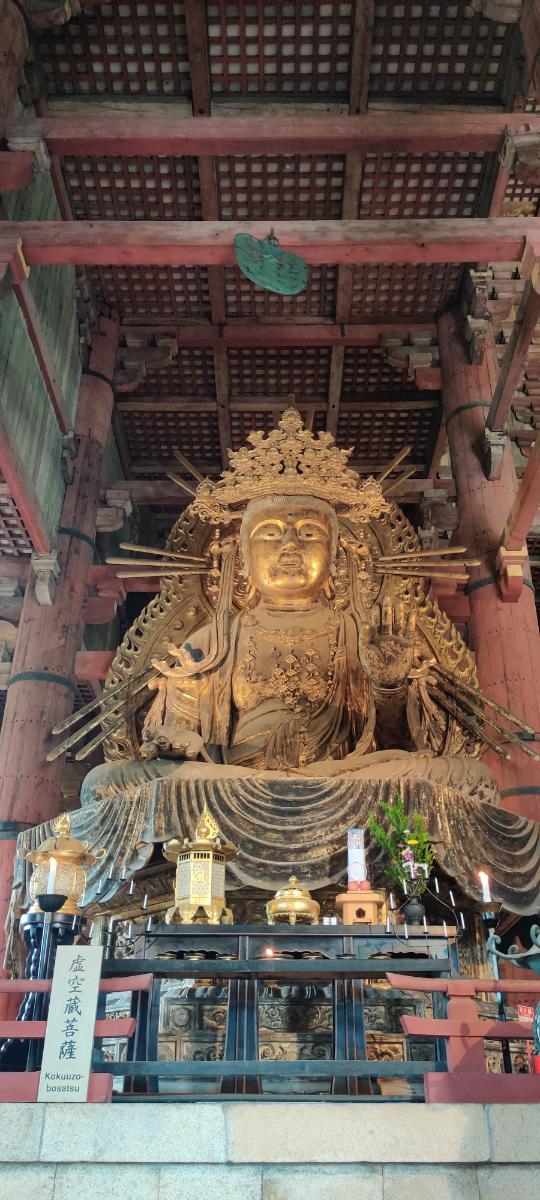
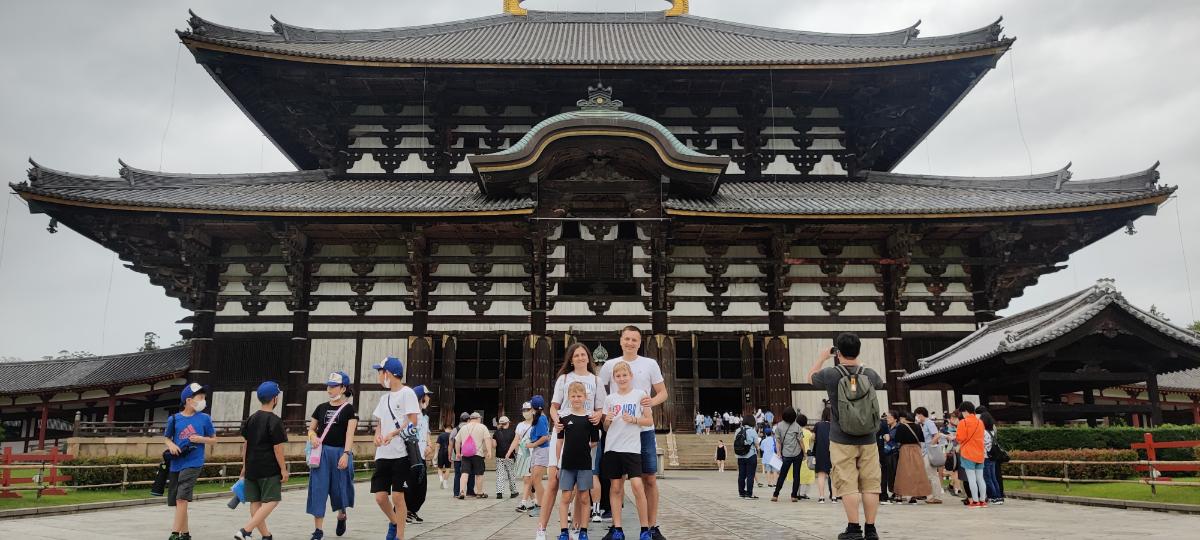
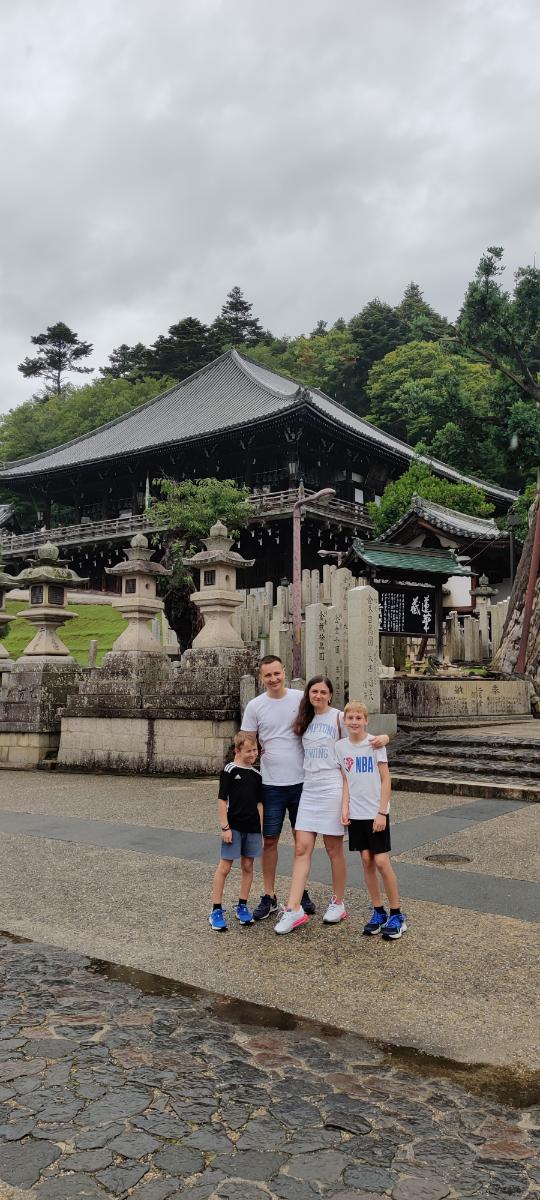
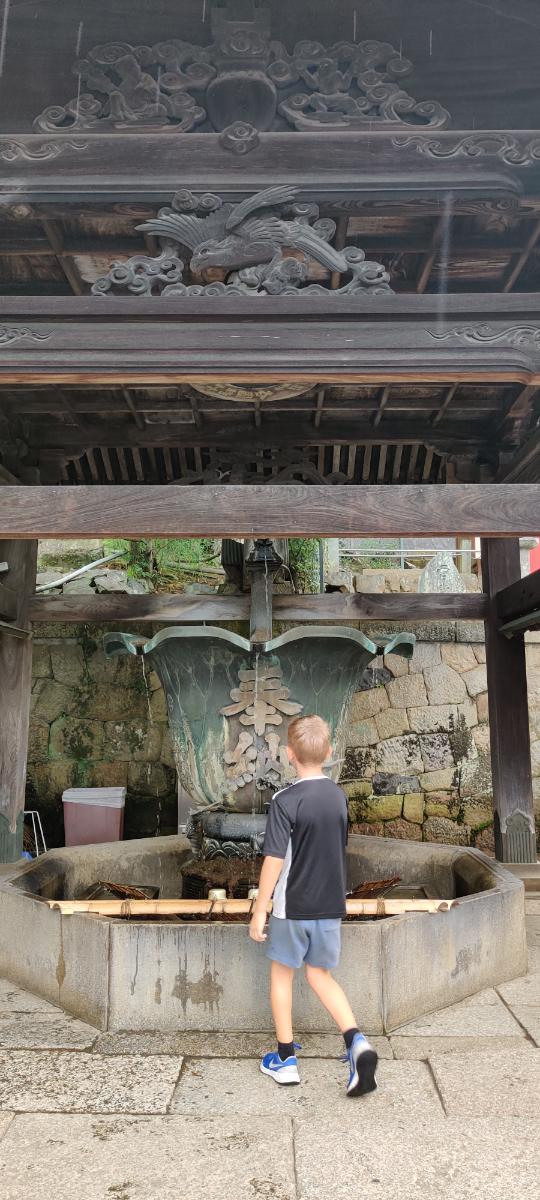
The other reason to come. You walk in through the Nandaimon Gate — enormous, wooden, with guardian statues — and then into the Great Buddha Hall, which houses the world’s largest bronze Buddha.
It’s the kind of scale that works on children without anyone having to explain why it matters. Ours were quiet in there, which doesn’t happen often.
Practical: ¥800 for the Great Buddha Hall. Open 7:30 to 17:30 from April to October, and 8:00 to 17:00 from November to March. Checked September 2026 — confirm before you go.
Himuro Shrine
The part of your day nobody else writes about, and worth keeping.
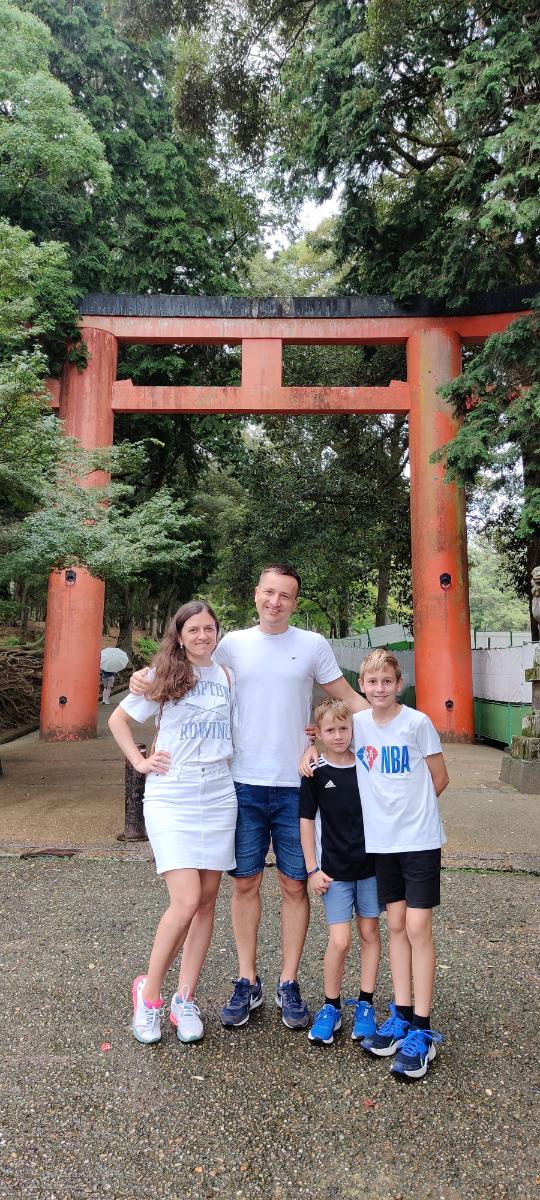
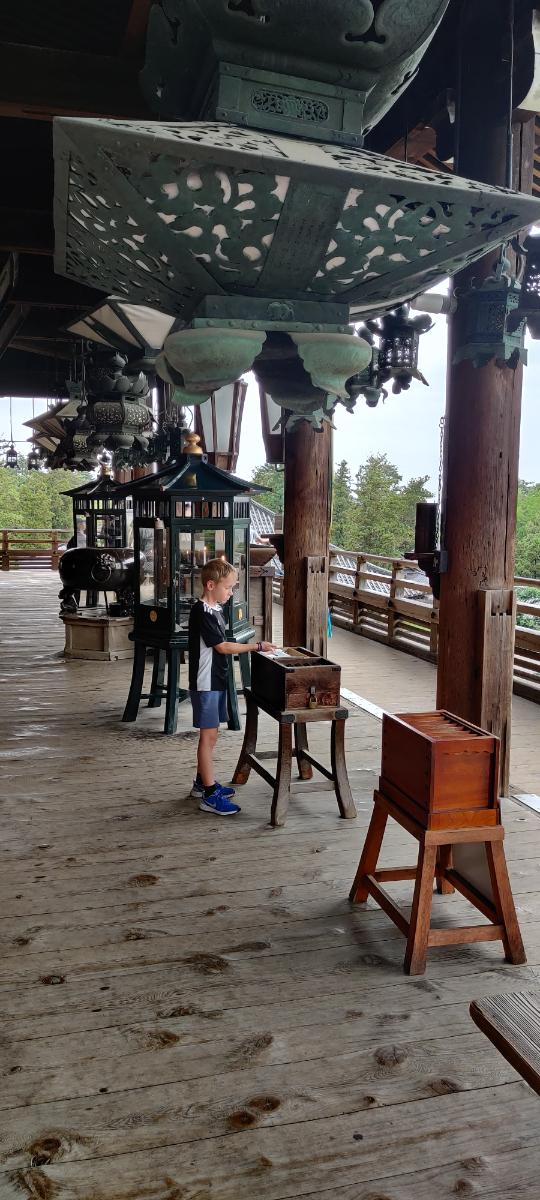
Himuro Shrine sits away from the main route and is quiet in a way Todai-ji is not. After a morning of deer and crowds, twenty minutes somewhere still is exactly what a family needs, and it’s the sort of stop that makes a day feel less like a checklist.
Getting there from Osaka
Around 40 to 50 minutes by train, and there’s a choice that matters more than it looks.
- Kintetsu Nara Station is the closer of the two — roughly 30 minutes on foot to Todai-ji, and it drops you nearer the park.
- JR Nara Station is about 45 minutes on foot from Todai-ji. It’s the one covered by the Japan Rail Pass, which is why plenty of visitors use it anyway.
- Buses run from both to the Todaiji Daibutsuden stop, from where it’s a 5–10 minute walk.
If you have a JR Pass, JR Nara plus a bus is the sensible combination. If you don’t, Kintetsu saves you a fifteen-minute walk at each end with tired children. Is the JR Pass worth it?
What to bring
- Cash — for crackers, temple admission and the small stalls.
- Comfortable shoes. Nara Park is large and you’ll walk more than you plan to.
- Rain gear. We got soaked on the way back and it was fine, but only because we laughed about it.
- Water and snacks — in your bag, not your hand, unless you want company.
The rain, and why it’s in this post
Our day ended in a downpour on the way back to Osaka. Properly soaked, all four of us.
What I remember is that it didn’t matter — the children splashed through it and were delighted with themselves, and we ended up eating conveyor-belt sushi in Umeda still dripping, which turned out to be one of the best meals of the trip. Kura Sushi Binario Umeda
July in Japan will do this to you. Bring a rain jacket, plan an indoor thing for the end of the day, and don’t rearrange the trip around a forecast.
How long you need
A full day is comfortable: train out mid-morning, deer and Todai-ji, lunch, a quieter shrine, train back before the evening rush. You can compress it into a half-day if you go straight to the park and skip the extras.
The rest of our Osaka days
- Osaka with kids — 2-day itinerary
- Osaka Castle with kids
- Round1 Osaka — Spo-Cha vs arcade
- Osaka’s underground city
- Universal Studios Japan with kids
- Japan with Kids — our 19-day trip
Staying in Osaka? Namba or Umeda both put you on a direct line to Nara, which makes this an easy day trip rather than a production.
This page contains affiliate links. If you book through them we may earn a small commission at no extra cost to you.
Frequently asked questions about Nara with kids
Are the Nara deer safe with children?
They are wild animals rather than tame park animals, and the official warning signs in Nara Park illustrate four behaviours: bite, kick, butt and knock down. Most incidents involve someone teasing a deer with a cracker held out of reach. Feed them quickly, buy one bundle at a time, never leave children unattended with them, and keep running and shrieking to a minimum — startled deer are the ones that react.
How much do the Nara deer crackers cost?
Shika senbei cost ¥200 for a bundle of ten, sold from the wooden carts with green umbrellas around the park. They are the only thing you should feed the deer — human food, wrappers and plastic can be fatal to them.
How do you get the deer to stop following you?
Raise both hands with your palms open, to show you have nothing left. It is the recognised signal, the deer understand it, and they move on. It is the single most useful thing to know in Nara Park and hardly any guide mentions it. Also avoid hiding crackers in a bag, because they can smell them and will go through your things.
How much does Todai-ji cost and what are the opening hours?
Admission to the Great Buddha Hall is ¥800. It opens 7:30 to 17:30 from April to October and 8:00 to 17:00 from November to March. Check the current figures before you travel, as temple fees do change.
Should you use JR Nara or Kintetsu Nara station?
Kintetsu Nara is closer — about 30 minutes on foot to Todai-ji, against roughly 45 minutes from JR Nara. If you have a Japan Rail Pass, JR Nara plus a bus to the Todaiji Daibutsuden stop is the sensible combination; without one, Kintetsu saves you a long walk at each end with tired children.
How long do you need in Nara with kids?
A full day is comfortable from Osaka — around 40 to 50 minutes each way by train, with time for the deer, Todai-ji, lunch and a quieter shrine. It can be compressed into a half-day if you head straight for Nara Park and skip the extras.


2 Comments