
Japan with Kids: Our 19-Day Tokyo, Kyoto and Osaka Trip
Nineteen days, two adults, two children, seven places: Tokyo, Nikko, Osaka, Nara, Uji, Kyoto and Kurashiki. This is the whole trip in one page, in the order we did it, with a link to the full guide for each stop.
Where We Stayed in Japan
Two hotels across nineteen days — in Osaka we stayed with family, so there’s nothing to recommend there.
The B Ochanomizu
JR Chuo–Sobu line, between Akihabara and the university district. Quiet at night, quick to leave in the morning.
Check pricesSakura Cross Hotel Kyoto Kiyomizu
Walking distance to Higashiyama. The location did more for our Kyoto days than any facility would have.
Check pricesAffiliate links — we earn a small commission at no extra cost to you. We’ve only listed the two places we actually stayed.
If you’re planning a first trip to Japan with children, start here and work outwards.
The trip in one box
- How long: 19 days, February–March.
- Who: two adults, two children (7 and 10).
- Route: Tokyo → Nikko → Osaka → Nara → Uji → Kyoto → Kurashiki.
- Getting there: Barcelona to Tokyo with ITA Airways, via Rome.
- Getting around: a JR Pass, activated after the Tokyo days rather than on arrival.
- Would we do it again: yes, with one fewer city.
How we structured 19 days
The one thing I’d tell anyone planning this: base yourself in three cities and do day trips out of them, rather than moving hotel every two nights. We stayed in Tokyo, Osaka and Kyoto, and Nikko, Nara, Uji and Kurashiki were all day trips from one of those three.
Packing and unpacking four people is the thing that quietly ruins a long trip with children. Three bases across nineteen days is manageable. Seven would not have been.
The other structural decision that saved real money: we didn’t activate the JR Pass when we landed. Tokyo runs on a metro the pass doesn’t cover, so the pass sat unused for the first stretch and we started it when we began moving between cities. Is the JR Pass worth it?
Getting there
Barcelona to Tokyo with ITA Airways, via Rome, as a family of four. ITA Airways Barcelona to Tokyo review
Tokyo
Where we started, and where the jet lag lives. We did one area a day — an immersive art museum straight from the airport, Shibuya, then Meiji Shrine and Harajuku — and used the metro constantly.
Tokyo is the easiest of the three cities with children, because so much of what’s good in it isn’t a temple: arcades, digital art, a four-floor coffee roastery, the crossing itself.
- 4 Days in Tokyo with Kids
- teamLab Planets Tokyo
- Starbucks Reserve Roastery Tokyo
- The B Ochanomizu hotel review
Nikko
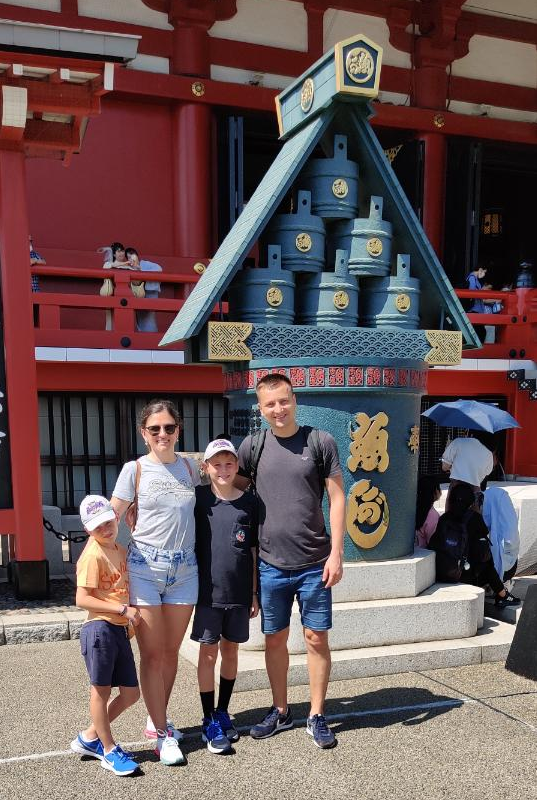
Our first day using the JR Pass, and a complete change from Tokyo: mountains, forest, and UNESCO-listed shrines a couple of hours north. A good way to see that Japan is not only cities.

Osaka
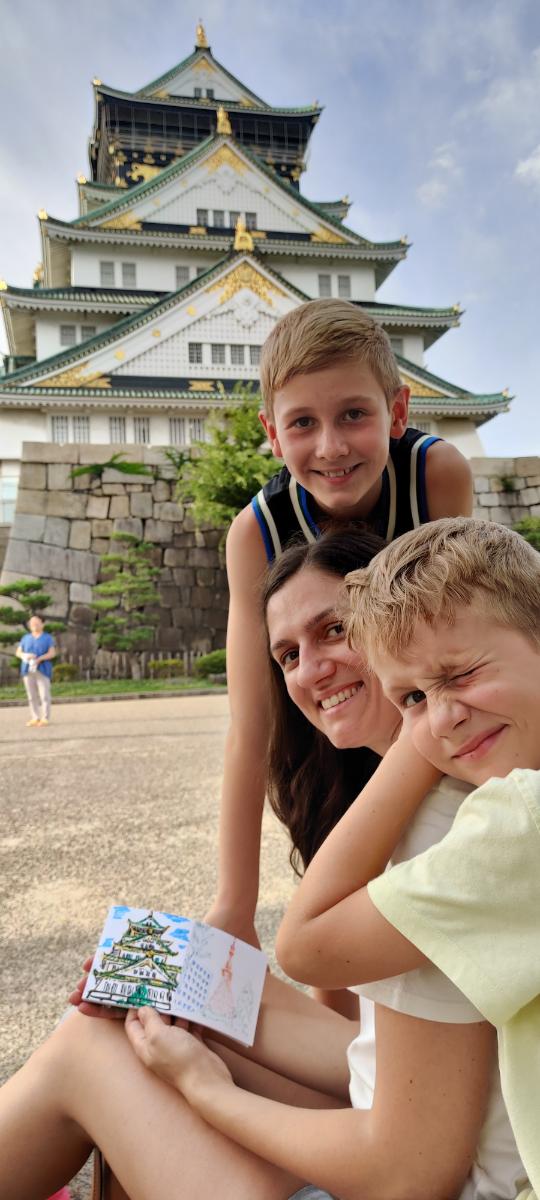
The city our two enjoyed most, which surprised me. A castle you can climb, a 24-hour arcade and sports complex, a theme park, and the best cheap food of the trip — my brother-in-law lives there, which is how we ate as well as we did.
- Osaka with kids — 2-day itinerary
- Osaka Castle with kids
- Round1 Osaka — Spo-Cha vs arcade
- Universal Studios Japan with kids
- Osaka’s underground city
- Ippudo ramen in Osaka
- Kura Sushi Binario Umeda
Nara
A half-day from Osaka, and the deer are exactly as good as everyone says. We came back in heavy rain and ended up at conveyor-belt sushi in Umeda, soaked, which is how the best travel meals usually happen.

Uji
Twenty minutes from Kyoto, and the quietest good day of the whole trip — tea, temples, and almost nobody there. If you have a spare day in the Kyoto area, spend it here rather than on a fifth temple in the city.

Kyoto
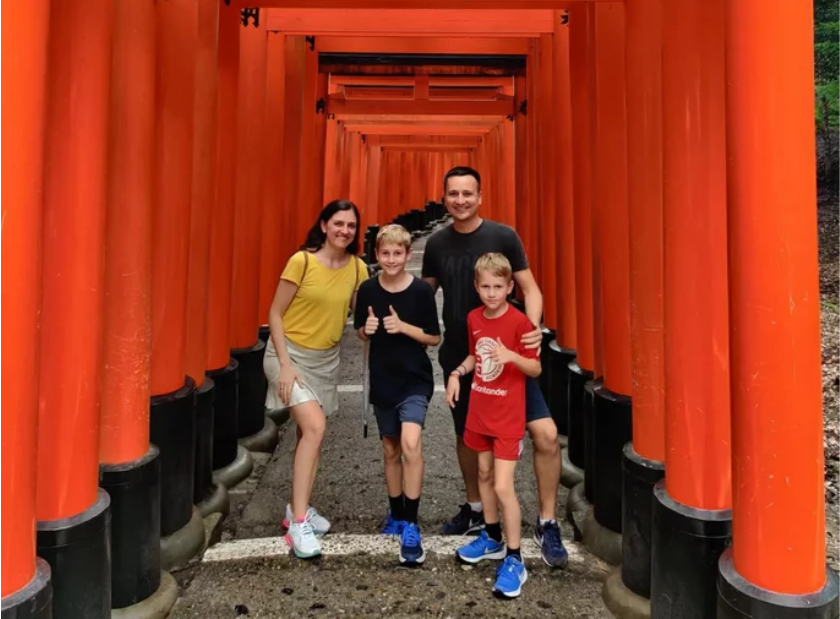
The most beautiful of the three cities and the one with the most walking. We did one district a day: Higashiyama, Arashiyama, Fushimi Inari, and the Golden Pavilion.
The single best decision we made in Kyoto was walking the old town twice in one day — once after dark with the lanterns lit and the streets empty, once first thing the next morning as the shops opened. Two completely different places.
- 4 Days in Kyoto with Kids
- Kyoto Old Town with kids
- Arashiyama Bamboo Grove
- Iwatayama Monkey Park
- Fushimi Inari with kids
- Kinkaku-ji, the Golden Pavilion
- Sakura Cross Hotel Kyoto Kiyomizu

Kurashiki
The one nobody’s heard of, and the one I’d send you to if you want a day away from the crowds — canals, willow trees and old white warehouses.

What we’d do differently
- One fewer city. Nineteen days sounds like a lot and still felt rushed at the edges.
- Activate the rail pass late — we got this right and it’s the advice I’d repeat loudest.
- Build in rest days. We didn’t, and by the last stretch everyone knew it.
- Book the big-ticket things before flying. The two that sell out are the digital art museum and the theme park.
Practical things worth knowing
- Cash matters more than you expect. Some temples and small restaurants are cash-only, including the Golden Pavilion.
- Get IC cards on day one — Suica, Pasmo or ICOCA. They cover the city transport your rail pass doesn’t.
- A data SIM or eSIM is close to essential. Navigating the rail network without live maps is much harder than it needs to be.
- Shoes off where indicated, quiet voices in temples, no eating while walking. Children pick this up faster than adults do.
- Conveyor-belt sushi is the easiest family meal in the country. Children choose their own food and nothing needs explaining.
Is Japan good with children?
Better than we expected, and easier than most of Europe. It is safe, spotlessly clean, the transport works, and there is far more for children than the temple-heavy reputation suggests.
The honest caveat is the walking. Japan with kids is a walking holiday whether you plan it that way or not, and the trip works or doesn’t on how much of that your children can take.
Every guide from this trip
Tokyo
4 Days in Tokyo with Kids · teamLab Planets · Starbucks Reserve Roastery · The B Ochanomizu · Nikko day trip
Osaka
Osaka with kids · Osaka Castle · Round1 Osaka · Universal Studios Japan · Osaka’s underground city · Ippudo ramen · Kura Sushi · Nara day trip
Kyoto
4 Days in Kyoto with Kids · Kyoto Old Town · Arashiyama Bamboo Grove · Iwatayama Monkey Park · Fushimi Inari · Kinkaku-ji · Sakura Cross Hotel · One day in Uji
Elsewhere and practical
Kurashiki with kids · ITA Airways Barcelona–Tokyo · Is the JR Pass worth it?
Planning your own trip? Three bases — Tokyo, Osaka, Kyoto — and day trips out of each is the structure I’d repeat.
This page contains affiliate links. If you book through them we may earn a small commission at no extra cost to you. We only recommend places we’ve actually stayed.
Frequently asked questions about Japan with kids
How many days do you need in Japan with kids?
We did nineteen and it still felt rushed at the edges. Ten to fourteen days is enough for Tokyo, Kyoto and Osaka with a couple of day trips, if you base yourself in three cities rather than moving hotel every two nights. Packing and unpacking a family is what quietly ruins a long trip.
Is Japan easy to travel with children?
Easier than most of Europe. It is safe, extremely clean, the transport is reliable, and there is far more for children than its temple-heavy reputation suggests — arcades, digital art museums, theme parks and conveyor-belt sushi among them. The real limit is walking: Japan with kids is a walking holiday whether you plan it that way or not.
What is the best route for a first trip to Japan with kids?
Tokyo, then Osaka, then Kyoto, with day trips out of each — Nikko from Tokyo, Nara from Osaka, Uji from Kyoto. Three bases across the trip means three hotel check-ins rather than seven, which matters more with children than the itinerary itself does.
Do you need a JR Pass for Japan with kids?
Only if you are moving between several cities. The pass does not cover the Tokyo Metro, the Osaka Metro or Kyoto’s city buses, so it earns its money on long-distance journeys. The most useful trick is not to activate it on arrival — do your city days first and start the pass when you begin travelling between cities.
What should you book before flying to Japan?
The two things that sell out are teamLab in Tokyo and Universal Studios Japan in Osaka, both of which use timed entry and both of which are worth booking around a month ahead. Almost everything else — shrines, the bamboo grove, Fushimi Inari, Osaka Castle — you can turn up for.
Do you need cash in Japan?
Yes, more than you would expect from a country this modern. Several temples are cash-only at the gate, including Kinkaku-ji, and plenty of small restaurants and shops are too. Carry yen and get an IC card for transport.

