
Catalonia is a vertical country. There are mountains in almost every view — Montserrat behind the plain, the Pyrenees to the north, Collserola above Barcelona, the hills that Cadaqués hides behind.
And then you drive two hours south, past Tortosa, and the land flattens out completely. Rice paddies to the edge of sight, water reflecting the sky, and no horizon line at all. Four-fifths of what you can see is sky.
It doesn’t look like Spain. People who have lived in Barcelona for twenty years drive out here and struggle to say what country they’re in. The comparison everyone reaches for is the Camargue, or somewhere in south-east Asia.
That’s the reason to come. Not the bird list.
The essentials
- Distance: about 180 km south of Barcelona, roughly 2 hours by car on the AP-7
- By train: to L’Aldea-Amposta-Tortosa, about 2 hours, then another 20 minutes to reach the delta itself
- Size: the delta covers about 320 km²; the natural park is 7,802 hectares, designated in 1983
- Rice: 22,000 hectares — about 220 km², roughly two-thirds of the whole delta
- Birds: 95 breeding species, and important for over 300 species in total
- Cost: the park itself is free. You pay for boat trips and the visitor centres
- Mosquitoes: June to September. This is not a minor detail
Cases rurals and apartments outnumber hotels here — with a kitchen and four people, a rural house is often the better buy. Mosquitoes June to September, whichever you pick. These are affiliate links — we earn a small commission at no extra cost to you.
What the Delta actually is
The Ebro is Spain’s largest river by volume, and where it meets the Mediterranean it has built a **wedge of its own silt sticking several kilometres out into the sea.** That wedge is the delta: about **320 km²** of land that is, in geological terms, extremely new and barely above sea level.
The natural park protects 7,802 hectares of it and was designated in 1983; it became a Ramsar wetland of international importance in 1993.
But the number that explains what you’ll see is this one: 22,000 hectares of the delta are under rice — around 220 square kilometres, **roughly two-thirds of the whole thing.** This is not a wilderness. It’s one of the most intensively farmed landscapes in Spain, and the wildlife lives inside the farming rather than beside it. The paddies *are* the wetland, as far as the birds are concerned.
Which is worth knowing before you arrive, because the mental image of a “natural park” is wrong here. You’ll be driving on raised tracks between flooded fields, past farm machinery, with herons standing in the rice.
When you go decides what you see — the rice calendar
This is the single most useful thing in this article and almost no English guide mentions it. The delta looks completely different depending on the month, because the rice cycle changes the colour of 220 square kilometres of ground.
- Spring, roughly April–May — the paddies are flooded and bare. This is the spectacular one. Sheet water across the whole delta, mirroring the sky, and the reflections are what make the photographs that get shared. If you come for the landscape, come now
- Summer, June–August — solid green. The rice is up and the water disappears under it. Still striking, less strange. And this is peak mosquito
- September — harvest. Machinery in the fields, gold instead of green, and the whole thing being cut
- Autumn and winter — stubble and mud, and the big bird numbers. Fewer visitors, cooler, no mosquitoes
If you only go once, go in spring for the flooded mirror. That’s the version of the Delta that looks like nowhere else.
The birds, and what you can honestly promise
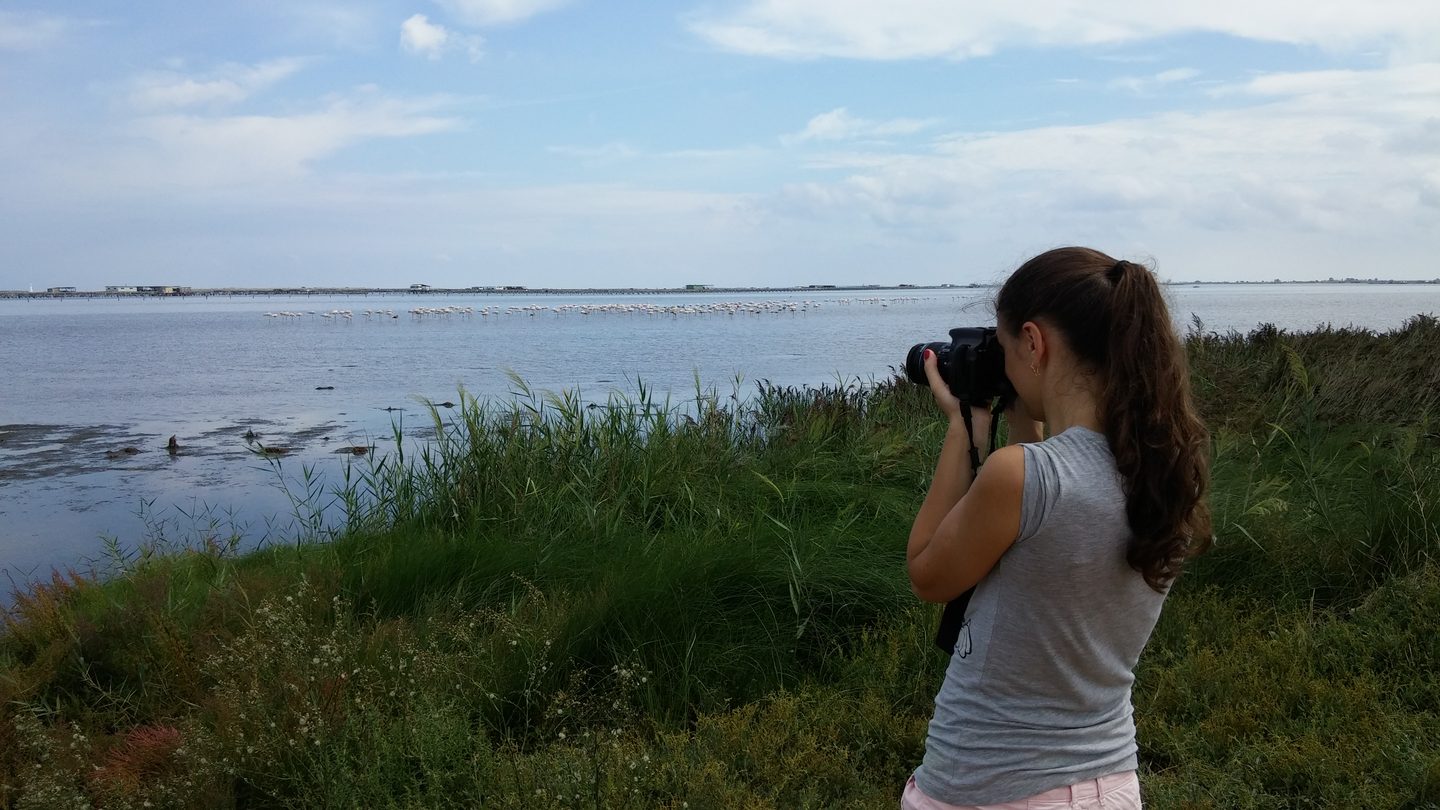
The delta supports 95 breeding species and is important for more than 300 species in total — it’s one of the most significant wetlands in the western Mediterranean.
Its genuine claim to fame is that it holds the world’s largest colony of Audouin’s gull, a rare Mediterranean seabird. That’s a real superlative and it’s the one to lead with.
About the flamingos
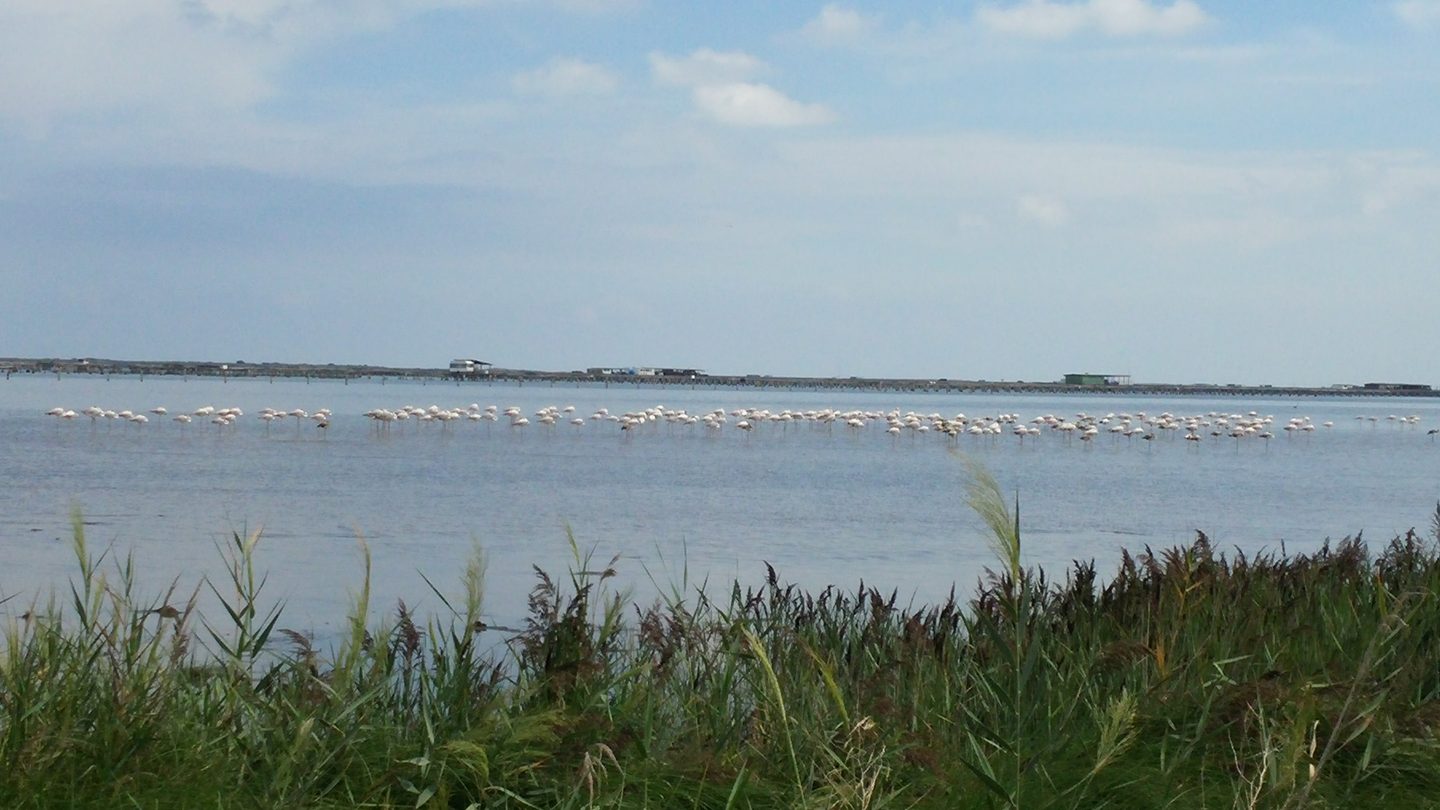
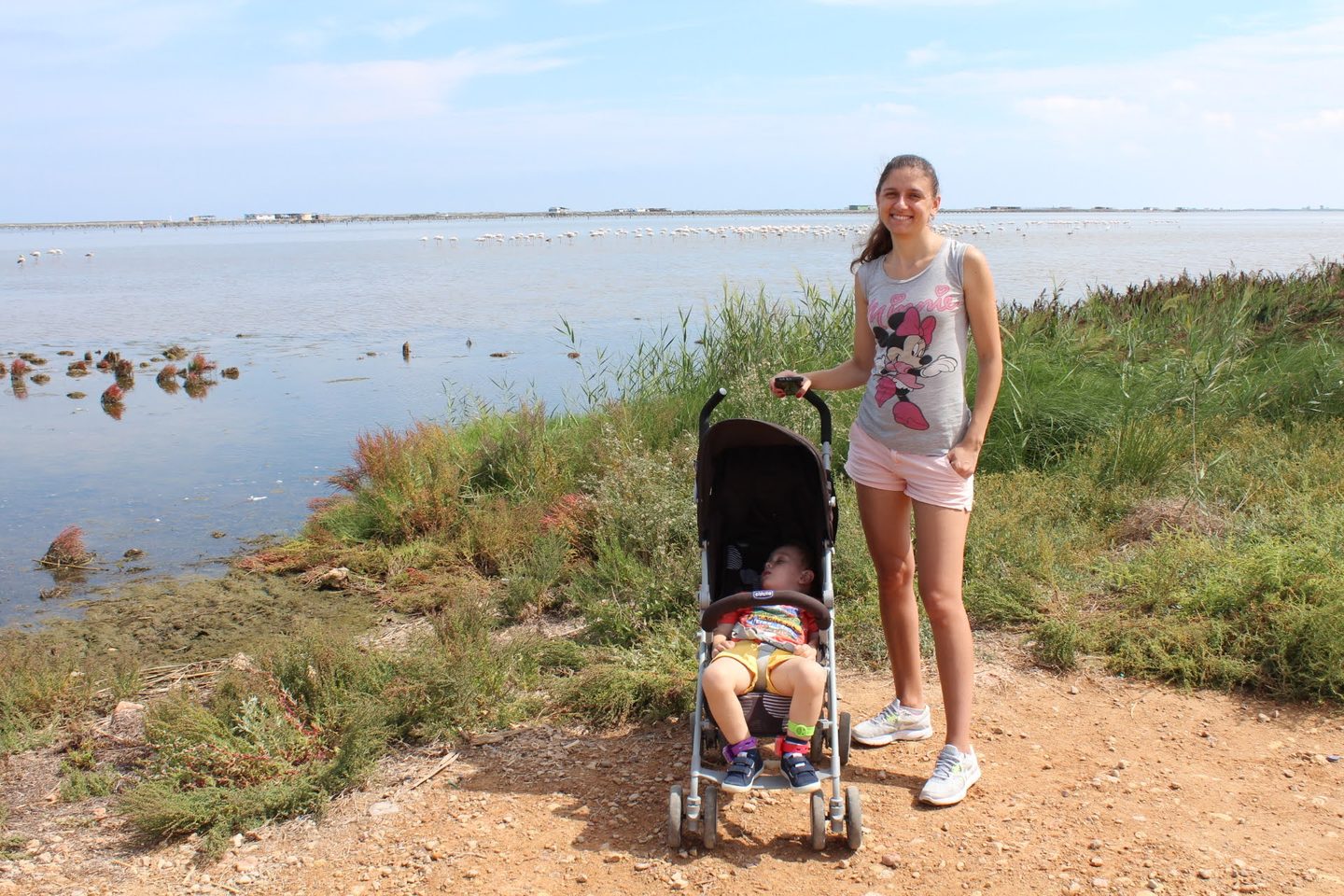
Flamingos are the reason most people search for this place, and the post needs to handle them carefully.
They are here, at the lagoons — Punta de la Banya and La Tancada are the names that come up. But they move, and a day visitor is not guaranteed to see them.
Where to go, once you’re there
The delta is big and flat and the roads run on embankments between fields, so decide before you arrive or you’ll spend the day driving between rice.
Deltebre, and the boat trip
Deltebre is the main town and the usual base. From here or nearby, boat trips run down the river to the river mouth — out through the last stretch of the Ebro to the point where it meets the sea.
This is the best single activity in the delta with children: it’s an hour or so, they’re on a boat, and the river mouth is a genuinely odd place to stand — the land just stops being land.
MónNatura Delta
A visitor centre and interpretation site with walkways over the lagoons, a viewing tower, and the traditional **salt pans**. This is the structured option — signage, a path, an explanation — and it’s the easiest introduction if you’ve got children and no birding experience.
The beaches — and the strangest one
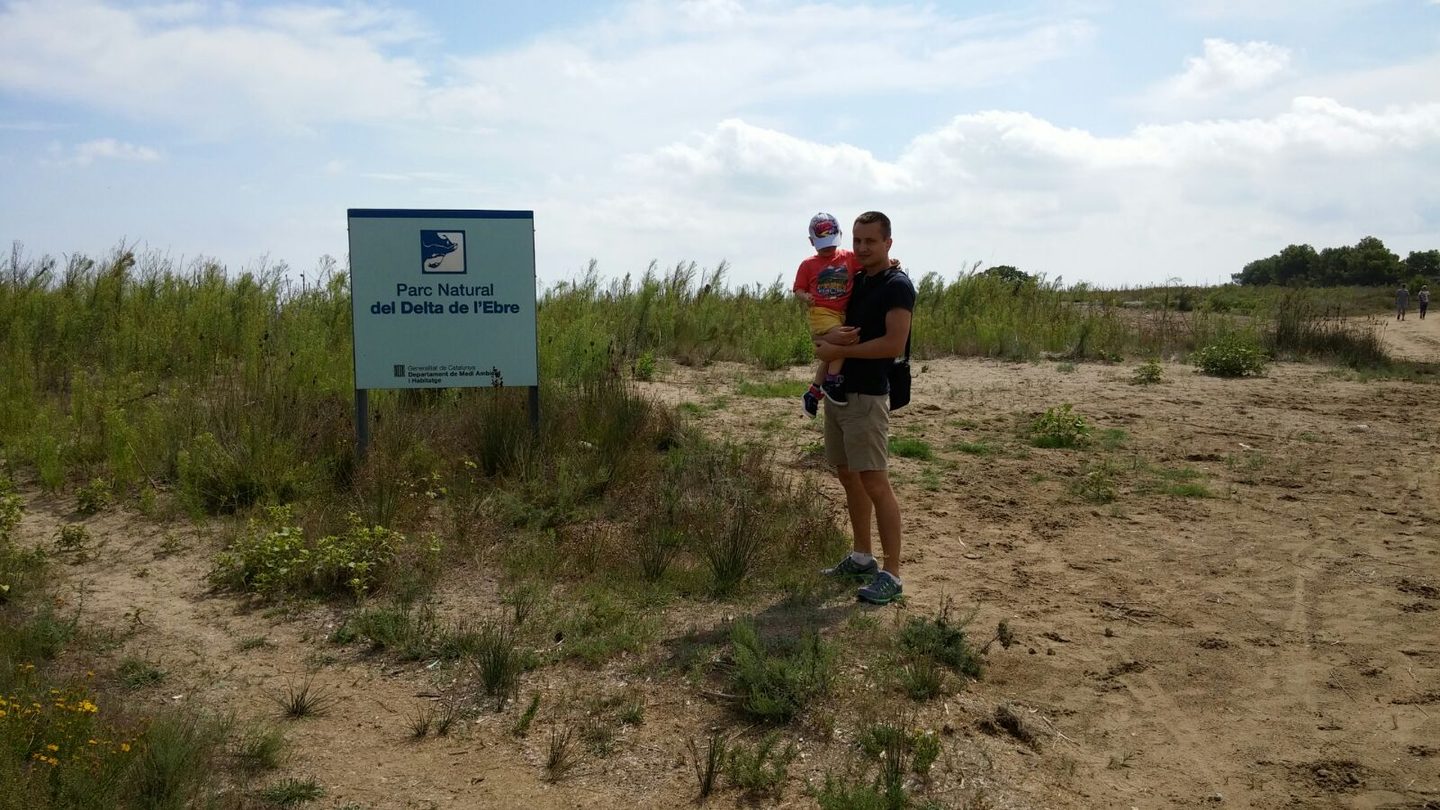
The delta’s beaches are unlike anything on the Costa Brava: enormous, flat, shallow and mostly empty, because they’re a long way from anywhere.
- Riumar — the most accessible, at the end of the road past Deltebre
- Platja de la Marquesa — wide and exposed
- Platja del Migjorn — long southern strand
- El Trabucador — the one to write about
El Trabucador is a sandbar several kilometres long and only metres wide, with sea on both sides, running out to the Punta de la Banya peninsula. You drive or walk along it with water on your left and your right at the same time. It is the most genuinely peculiar place in the delta and it photographs like nowhere else in Catalonia.
The shallow water is the family point: these beaches shelve very gradually, so small children have a long way of wading before it gets deep. That’s a real advantage over the Costa Brava coves. The trade-off is no shade whatsoever and wind — the delta is flat and exposed and there is nothing to break it.
The mosquitoes — plan around them, don’t be surprised by them
**220 square kilometres of standing water in a Mediterranean summer** produces exactly what you’d expect.
June to September, the mosquitoes here are serious. Not an annoyance — a reason people cut visits short. They’re worst at dawn and dusk, which is also when the birds are most active and when the light is best, so the times you most want to be out are the times they’re out too.
What to do:
- Go outside June–September if you can. Spring for flooded paddies, autumn or winter for birds. Both are mosquito-light and cooler
- If you go in summer: strong repellent, long sleeves and long trousers, and treat dusk as indoor time
- With small children this genuinely matters — a toddler covered in bites is the end of the day
The rice, and why it’s on your dinner plate
Worth a short section, because it connects the landscape to something the reader already knows.
The rice growing in these fields is the rice in Spanish paella. The delta is one of the country’s two main rice regions, and the short-grain varieties grown here are what the dish was built around. When you eat paella in Barcelona there’s a fair chance you’re eating the Ebro Delta.
Which makes eating rice, in the delta, next to the field it came from the obvious thing to do for lunch. The local dishes lean on rice and on eel and fish from the lagoons.
Getting there
By car — the realistic option
About 180 km and two hours from Barcelona on the AP-7 south, then east off the motorway towards Amposta or Tortosa and out into the delta.
You want a car here. The delta is large, flat and spread out, and the things worth seeing are ten or twenty kilometres apart on small roads. Without one you’re limited to one town and one beach.
By train
Trains run to L’Aldea-Amposta-Tortosa in around two hours, and from there it’s another twenty minutes or so to get into the delta itself — so you need a bus or taxi at the far end.
Doable if you’re basing yourself in Deltebre for a couple of days. Not practical for a day trip.
The way I’d actually tell people to do it
Break a longer drive.
- Barcelona to Valencia — the delta is directly on the route and it is by far the most interesting place to stop. Two hours down, a few hours in the delta, two hours on. You’ve added almost nothing to the journey and seen something nobody else stops for
- From Tarragona or PortAventura — about an hour further south. If you’re already down there for a few days, this is the day out
- Two nights in Deltebre — the proper version, and the only way to be out at dawn and dusk when the delta is at its best
Straight out and back from Barcelona in a day is four hours of driving for a landscape. It can be done and I wouldn’t lead with it.
Where to stay
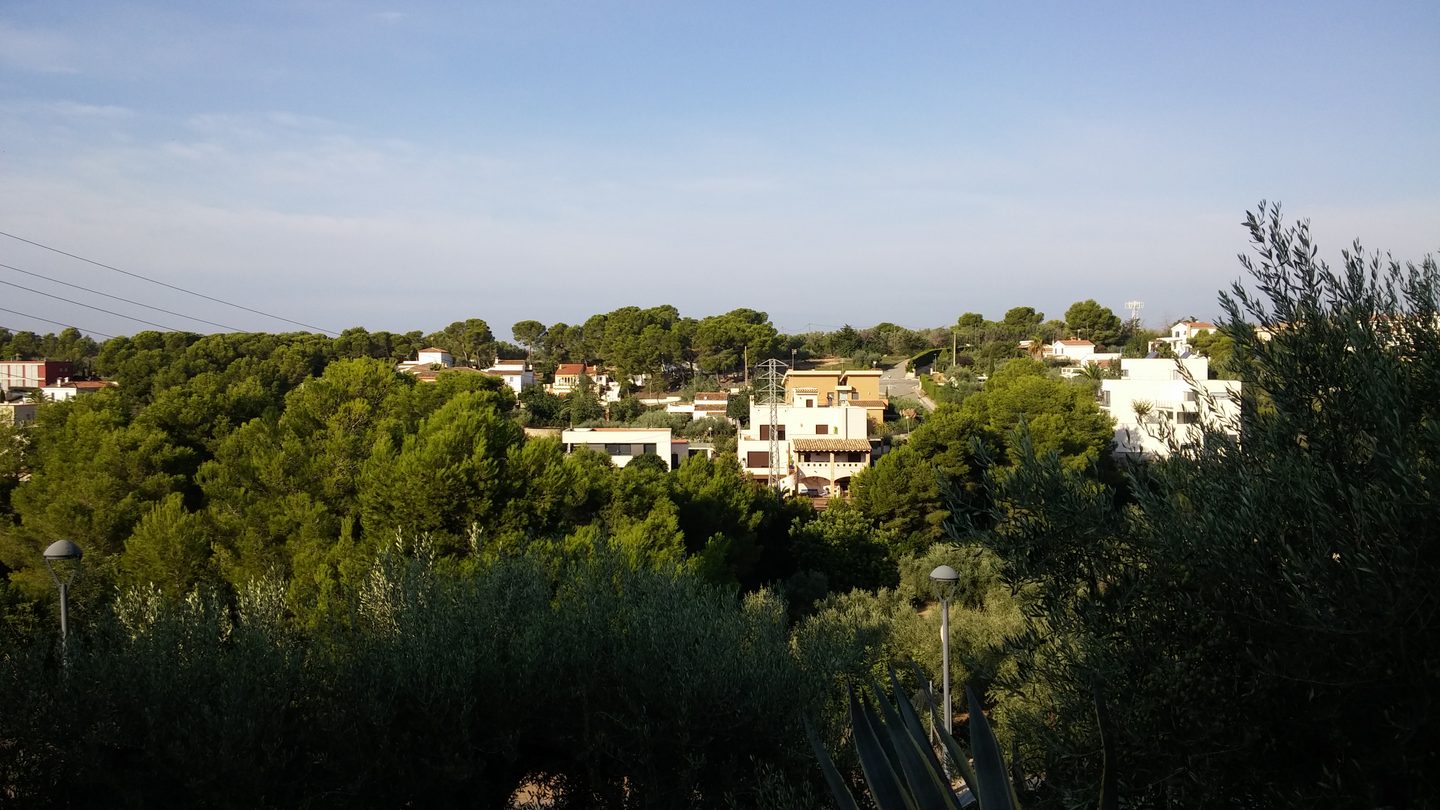
We were invited to stay at a guesthouse in Oliveres by a friend of ours, where we spent 2 nights.

Is the Delta de l’Ebre worth it?
Yes, if you understand what you’re going for.
You’re going for a landscape — the flattest, strangest, least Spanish-looking part of Catalonia, 220 square kilometres of rice and sky with no horizon. If that appeals, it delivers completely and there is nothing else like it in the region.
Go if you like flat empty places and big skies, you’re driving to Valencia, or you want shallow warm water and beaches with nobody on them.
Go in spring for the flooded paddies, or autumn for the birds. Both avoid the mosquitoes.
Don’t go if you want dramatic scenery — this is the opposite of that by definition — or you’re relying on public transport, or it’s July and anyone in your family reacts badly to bites.
And don’t build the day around flamingos. They’re often there, they’re not guaranteed, and the rice is the reason to come.
All twenty day trips from Barcelona · Tarragona, an hour closer
Park figures verified at the natural park’s official source, September 2026. Boat trip and visitor centre prices change — check before travelling.
Frequently asked questions
How far is the Delta de l’Ebre from Barcelona?
About 180 km south, roughly two hours by car on the AP-7. By train it is around two hours to L’Aldea-Amposta-Tortosa and then another twenty minutes or so to reach the delta itself, so you need a bus or taxi at the far end. A car makes a real difference here because the sights are spread ten or twenty kilometres apart on small roads.
Will you see flamingos in the Ebro Delta?
Often, but not reliably on any given day. Flamingos use the lagoons and they move, so a day visitor has no guarantee. Bring binoculars, ask at a park visitor centre where they have been seen that week, and do not build the trip around them. The delta’s genuine wildlife superlative is that it holds the world’s largest colony of Audouin’s gull, and it supports 95 breeding bird species and is important for over 300 species in total.
When is the best time to visit the Delta de l’Ebre?
Spring, roughly April and May, when the rice paddies are flooded and bare and 220 square kilometres of sheet water reflects the sky — that is the version of the delta that looks like nowhere else. Autumn and winter are best for bird numbers, cooler, and quiet. Avoid June to September if you can, both for heat and because the mosquitoes are serious.
How bad are the mosquitoes in the Delta de l’Ebre?
Bad, from June to September — this is 220 square kilometres of standing water in a Mediterranean summer. They are worst at dawn and dusk, which is unfortunately when the birds are most active and the light is best. If you go in summer, bring strong repellent and long sleeves and treat dusk as indoor time. With small children it is a good enough reason to choose a different month.
How big is the Ebro Delta natural park?
The delta as a whole covers about 320 km². The natural park protects 7,802 hectares of it and was designated in 1983, becoming a Ramsar wetland of international importance in 1993. About 22,000 hectares of the delta — roughly 220 km², two-thirds of the total — are under rice, so the wildlife here lives inside a working farmed landscape rather than beside one.
Is the Delta de l’Ebre good with kids?
Yes, with the right expectations. The beaches shelve very gradually, so small children have a long stretch of shallow water before it gets deep, and they are almost empty. A boat trip to the river mouth is the easiest hour to sell. The drawbacks are real: no shade anywhere, persistent wind, long distances between things, and mosquitoes in summer.
What is El Trabucador?
A sandbar several kilometres long and only metres wide, running out to the Punta de la Banya peninsula with sea on both sides at once. It is the most peculiar place in the delta and unlike anywhere else in Catalonia. It is also fragile and has been breached by storms, so check current access conditions with the park before planning to drive along it.
Is the Delta de l’Ebre worth a day trip from Barcelona?
Straight out and back is four hours of driving for a flat landscape, which is a stretch. It works much better as a stop on the Barcelona to Valencia drive, where it is directly on the route and easily the most interesting place to break the journey, or as a day out from Tarragona or PortAventura an hour to the north. The proper version is two nights in Deltebre, which lets you be out at dawn and dusk.
Is the rice in the Delta de l’Ebre used for paella?
Yes — the delta is one of Spain’s two main rice regions and the short-grain varieties grown in these fields are what paella was built around. Eating rice in Deltebre, next to the paddy it came from, is the obvious thing to do for lunch, and local menus also lean on eel and fish from the lagoons.
