
- Best for families: Sant Gervasi, Poblenou, Vila Olímpica and Diagonal Mar — quieter, greener, and built around schools rather than tourists.
- Best for young professionals: Eixample and Gràcia, close to the centre and to most offices.
- Cheapest realistic option: the towns of the metropolitan area rather than the city itself.
- Where locals don’t live: Ciutat Vella. It is busy day and night, and almost nobody with children chooses it.
- Renting: one month’s deposit by law, contracts now run to 5 years, and the landlord pays the agency fee.
We moved to Barcelona in 2010 and have lived here ever since, with two children. When you arrive as a tourist you see a completely different city from the one you live in — and the neighbourhoods that look best on a weekend are usually the ones locals avoid.
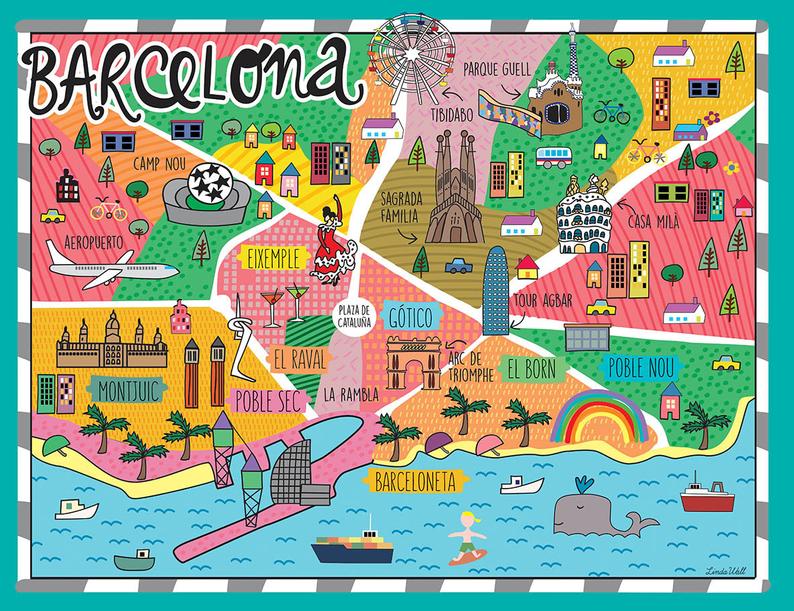
This is the district-by-district version of what I tell people who ask, followed by what renting here actually involves.
| District | Suits | Character |
|---|---|---|
| Ciutat Vella | Nightlife, short stays | Historic centre, busy day and night |
| Eixample | Professionals, couples | Modernist grid, commercial hub, expensive |
| Gràcia | Couples, longer stays | Village feel, squares and cafés, high rents |
| Poblenou | Families, tech workers | Former industrial, now the innovation district |
| Vila Olímpica | Families | Built for 1992, well connected, near the park and zoo |
| Diagonal Mar | Families | New seafront district, big park with playgrounds |
| Pedralbes | Families with budget | Quiet, exclusive, green, near the airport road |
| Sant Gervasi | Families | Below Tibidabo, strong community, popular with locals |
| Les Corts | Mixed | Old municipality, 19th–20th century plus modern |
| Sarrià | Families with budget | Old village character, Modernista houses |
Barcelona is divided into ten administrative districts, each one with its own district council. These districts are Ciutat Vella, Eixample, Gràcia, Horta-Guinardó, Les Corts, Nou Barris, Sant Andreu, Sant Martí, Sants-Montjuïc and Sarrià-Sant Gervasi.
Ciutat Vella
Ciutat Vella, meaning Old City, is the historic centre of Barcelona. This district, with its Roman, Medieval and Gothic architecture, narrow, winding streets and intriguing mix of old and new. The area features two of the best food markets of the city, Boqueria and Santa Caterina.
Main attractions of Ciutat Vella are Barcelona Cathedral, Plaça Sant Jaume and it’s beautiful
government buildings, the buzzing nightlife in and around Carrer de Ferran and Plaça Reial, and the interesting shops in the commercial area of Portal de l’Àngel. As a family I would never choose this district to live in. It is always full of people, by day and by night. But if you are a party person, then for sure you have to choose it.
Eixample
Many English people love this district. I really do not know why, but I know few of them, and they just love this district. The Eixample stretches from Plaça Espanya to Plaça de les Glòries Catalanes and from Ciutat Vella to Gràcia.
The Eixample contains the largest concentration of modernist architecture in Europe. It is also the economic and commercial hub of Barcelona and a high class residential neighborhood.
Passeig de Gràcia, home to most of Barcelona’s exclusive designer shops and restaurants, is at the heart of the Eixample. Also on this boulevard are two of Antoni Gaudí’s most iconic buildings: Casa Batlló and Casa Milà.
In this district you can find spacious apartments with high ceilings inside elegant Catalan Modernist buildings with long corridors and elaborate facades. But, of course this has its own price.
Gràcia
Gràcia is just off the upper end of Passeig de Gràcia, but it feels like you’re leaving Barcelona and going into a whole different world. Gràcia was in fact an independent village that was absorbed by Barcelona in 1897.
It has narrow streets and charming bench-lined squares. It is home to pavement cafés and bistros, low-key nightspots, alternative theaters and quirky shops that draw a youthful clientele.
Usually here live rich people, and the prices for the flats are high.
Poblenou
Poblenou was a traditional industrial area of Barcelona that at the end of the 20th century was full of abandoned factories and empty production premises. The city decided to transform 200 hectares of the postindustrial neighborhood into an innovative district offering modern spaces for intensive knowledge-based activities, creating an attractive place to live and to work.
The project was implemented successfully and helped it to be a new technological and innovation district, as well as a trendy neighborhood for young people and families.
All these changes made Poblenou one of the new preferred neighborhoods to live in.
Vila Olímpica
This part of the city was mainly created for the 1992 Olympic Games. And after the Olympics, the buildings were transformed into apartments, and the whole area was renovated to accommodate gardens, terraces and community areas.
Vila Olímpica is well connected to the rest of the city by metro, tram and bus services. It is also within walking distance of Parc de la Ciutadella, the Barcelona Zoo and the Poblenou neighborhood.
Diagonal Mar
It is a new neighborhood located at the final stretch of Diagonal Avenue on the edge of the Mediterranean Sea, developed as part of the whole regeneration of the city’s seafront.
There is a huge designer park with a lake and many playgrounds and recreational facilities. We often go there with our kids, and they enjoy it a lot.
Many of the apartments in this area are rented out to employees of the multinational companies that have set up offices nearby.
Pedralbes
Pedralbes is a quiet, exclusive residential area with luxury buildings and wide green spaces.
The area has easy access to motorways and the airport and is fairly well served by buses going to the city center.
Sant Gervasi
Sant Gervasi, at the foot of Tibidabo hill, is another quiet, upmarket residential area. The neighborhood has a great community atmosphere and is very popular with Barcelona families. It also offers a good selection of shops and restaurants.
Les Corts
Les Corts combines buildings from the 19th and 20th centuries with more modern constructions. This is the oldest and most central area of the old municipality of Les Corts which was incorporated into Barcelona in 1897.
Sarrià
Sarrià is a lovely old neighborhood that has preserved most of its original personality that so enthused the Catalan bourgeoisie in the 19th century.
At that time, Sarrià was very prosperous and the architecture reflects this splendor through many Modernista houses.
Now, after looking into each district, and choosing the best one for you, let’s see how to rent an apartment. When you first come, I think you have to think about short-term accommodations. You can decide whether you want to take a hotel for 2-3 weeks, or an airbnb. Apart from airbnb, there are lots of companies who offer apartments per month. This option is cheaper than taking a hotel, and you can have more time on looking for your perfect long-term rent. They usually provide cooking facilities and all the modern conveniences of home. This type of accommodation is ideal for families and large groups.
After some time of choosing your property to rent it is time to do the documents staff.
What a landlord will ask you for
- Your work contract
- Recent pay slips or other proof of income
- A copy of your passport or residence card
What you pay up front
- The first month’s rent.
- The deposit (fianza) — one month’s rent. This is set by law and it is not negotiable. It is returned when the contract ends.
- Any additional guarantee. A landlord may ask for up to two further months on top of the fianza, so three months’ rent in total is the legal maximum.
- Not the agency fee. Since the 2023 Housing Law, the landlord pays the estate agency. If an agency asks you for commission, that is not something you owe.
How long the contract runs
You commit to a minimum of six months. After that the contract renews automatically each year until it reaches five years if your landlord is an individual, or seven years if the landlord is a company. That extension is your right, not the landlord’s — you can leave earlier, they cannot push you out.
The energy certificate
Any property offered for rent or sale must have an energy performance certificate rating it from A to G. The owner has to give it to you before you sign.
Rental rules correct September 2026. Spanish housing law has changed three times since 2019 — check current rules before signing anything.
- Barcelona with kids: our full family guide
- Top places to visit in Barcelona
- Barcelona City Tour bus map
- Traditional Catalan food
- Parc de la Ciutadella with kids
- 8 common mistakes tourists make in Barcelona
Where to live in Barcelona: FAQ
What is the best neighbourhood to live in Barcelona with kids?
Sant Gervasi, Poblenou, Vila Olímpica and Diagonal Mar are the districts families choose most often — quieter streets, more green space, and built around residents rather than visitors. Ciutat Vella, the historic centre, is the one almost no local family picks.
How much deposit do you pay to rent in Barcelona?
One month’s rent as the legal deposit, or fianza, which is returned at the end of the contract. A landlord may ask for up to two further months as an additional guarantee, making three months’ rent the legal maximum up front.
Who pays the estate agency fee when renting in Spain?
The landlord. Since the 2023 Housing Law, agency fees are the owner’s responsibility and tenants should not be asked to pay commission.
How long is a rental contract in Barcelona?
You commit to six months minimum. After that the contract renews yearly up to five years if the landlord is a private individual, or seven years if the landlord is a company — and that extension is the tenant’s right rather than the landlord’s.

This is a great breakdown of the different areas. My parents lived in Barcelona when they were younger. Beautiful place!
Author
agree! each area of Barcelona has its own beauty
What a detailed post about life in Barcelona! Sounds like a great place to live
Author
It really is, we love living in Barcelona.
I have been to Barcelona and I love it there. I have a great move.
Author
lovely! i am so glad that you enjoyed this beautiful city
Spain is one of my dream destinations.
Author
Spain is a beautiful country to discover.